NASCAR Hall of Fame
The NASCAR Hall of Fame is a national treasure
What Makes the NASCAR Hall of Fame One of the Best Motorsport Destinations in America
NASCAR is one of those rare sports that was born in a specific place, by specific people, for specific reasons — and Charlotte, N.C., has never let anyone forget it. OK, technically, NASCAR started in Daytona Beach, Fla., but very quickly after that first meeting and race, Charlotte took on the mantle and hasn’t let it go.
DECEMBER 14, 1947 – Bill France Sr. organizes a meeting at the Streamline Hotel in Daytona Beach, to discuss and define stock car racing. It is here that NASCAR, the National Association for Stock Car Auto Racing, was conceived.
FEBRUARY 15, 1948 – NASCAR runs its first race in Daytona Beach at the beach road course. Red Byron(what a NASCAR name) wins in a Ford.
JUNE 19, 1949 – The first NASCAR “Strictly Stock” (current NASCAR Cup Series) race is held at Charlotte Fairgrounds Speedway. Jim Roper wins the race, Bob Flock wins the first pole, and Sara Christian, who finishes 14th, is credited as the first woman to race in NASCAR’s premier division.
OCTOBER 16, 1949 – Red Byron wins the first NASCAR Strictly Stock championship.
Peter Corn
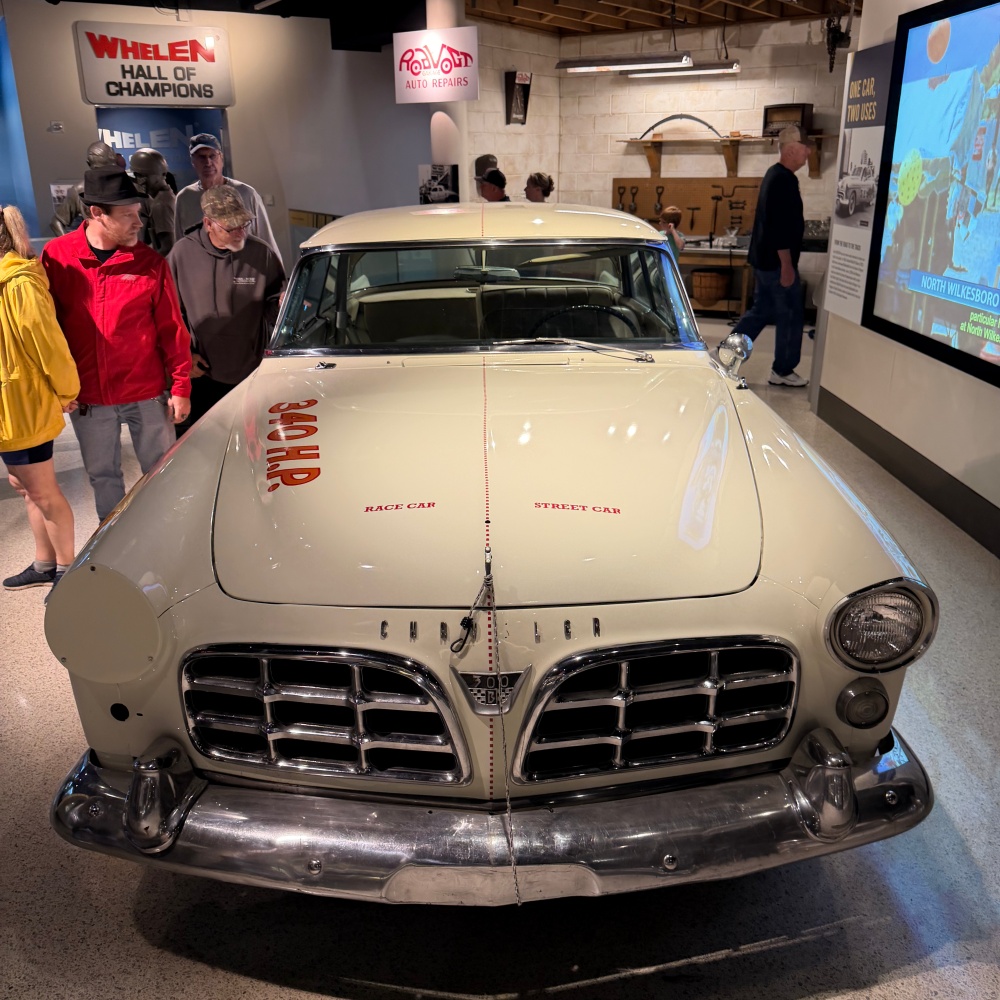
Fast forward through 65 years, and roughly 10 million cold beers later, the NASCAR Hall of Fame opened in May 2010 in the heart of uptown Charlotte, and like the sport it enshrines, what it delivered was not a static tribute but a living, evolving institution that takes seriously the task of explaining why stock car racing matters to racing fans and the wide reach of American culture. The building itself is impossible to miss — a 150,000-square-foot glass and steel structure on Martin Luther King Jr. Boulevard whose most iconic interior feature, Glory Road, is visible from the street before you even walk in. The spiraling banked exhibit, featuring the most iconic cars from NASCAR's history, arranged along a genuine embankment that replicates real track banking, greets fans as they enter the four-story building.
What separates the NASCAR Hall of Fame from a conventional sports museum is its commitment to staying current. Glory Road is refreshed every few years with a new curatorial theme — past editions have been guest-curated by Dale Earnhardt Jr. and focused on champions, icons, and now team owners. The current "Glory Road: Owners" edition features 18 historic cars spanning model years 1937 through 2025, representing seven manufacturers across six racing series, with 14 of the featured owners being NASCAR Hall of Fame inductees. The exhibit changes and shifts, and the collection grows. The Hall of Fame functions less like a time capsule and more like an ongoing argument about what the sport means and why it matters to so many people.
The Story Behind the NASCAR Hall of Fame
NASCAR was founded on January 21, 1948, by Bill France Sr. — a man who looked at a bunch of literal bootleggers, moonshiners, mechanics, and generally unruly Southerners racing on beach courses and thought: There is a sport in here somewhere. And money. He was right, and what followed over the next seven decades was one of the most distinctly American sporting institutions ever built. By the time the Hall of Fame opened in Charlotte in 2010, the sport had grown from dirt track racing in the rural South to a national phenomenon with television contracts, corporate sponsors, and superspeedways in nearly every region of the country. Charlotte was the natural home for the institution — the city has been the operational hub of NASCAR for decades, with more race teams, shops, and industry infrastructure concentrated there than anywhere else on earth.
Peter Corn
Each year, three inductees are selected from a list of 15 nominees to secure their place in NASCAR history and the Hall of Honor, which gives the institution an annual heartbeat that keeps it connected to the living sport rather than just its past. The induction process, the annual weekend of events surrounding it, and the ongoing expansion of the collection have made the Hall of Fame something rarer than a good museum — it is a genuinely relevant cultural institution that the sport actively engages with rather than simply a place to send tourists.
Three Exhibits You Cannot Walk Past
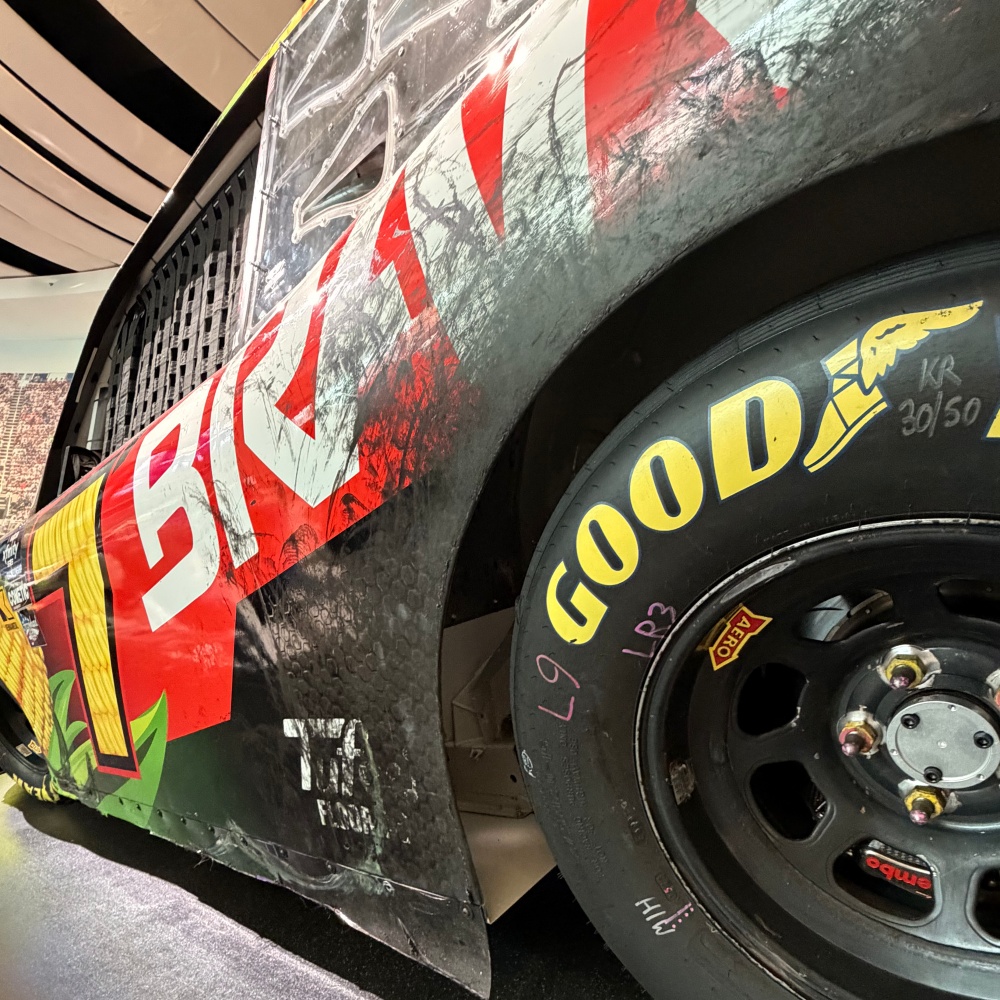
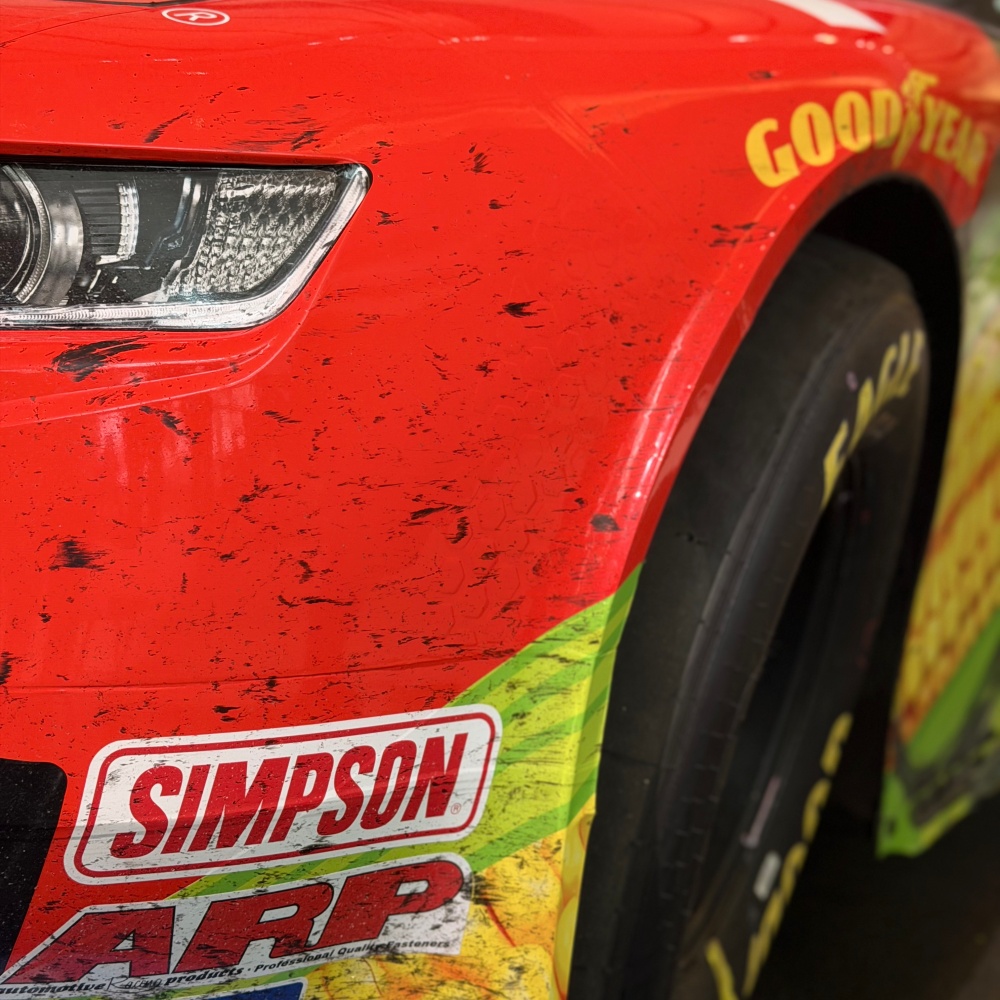
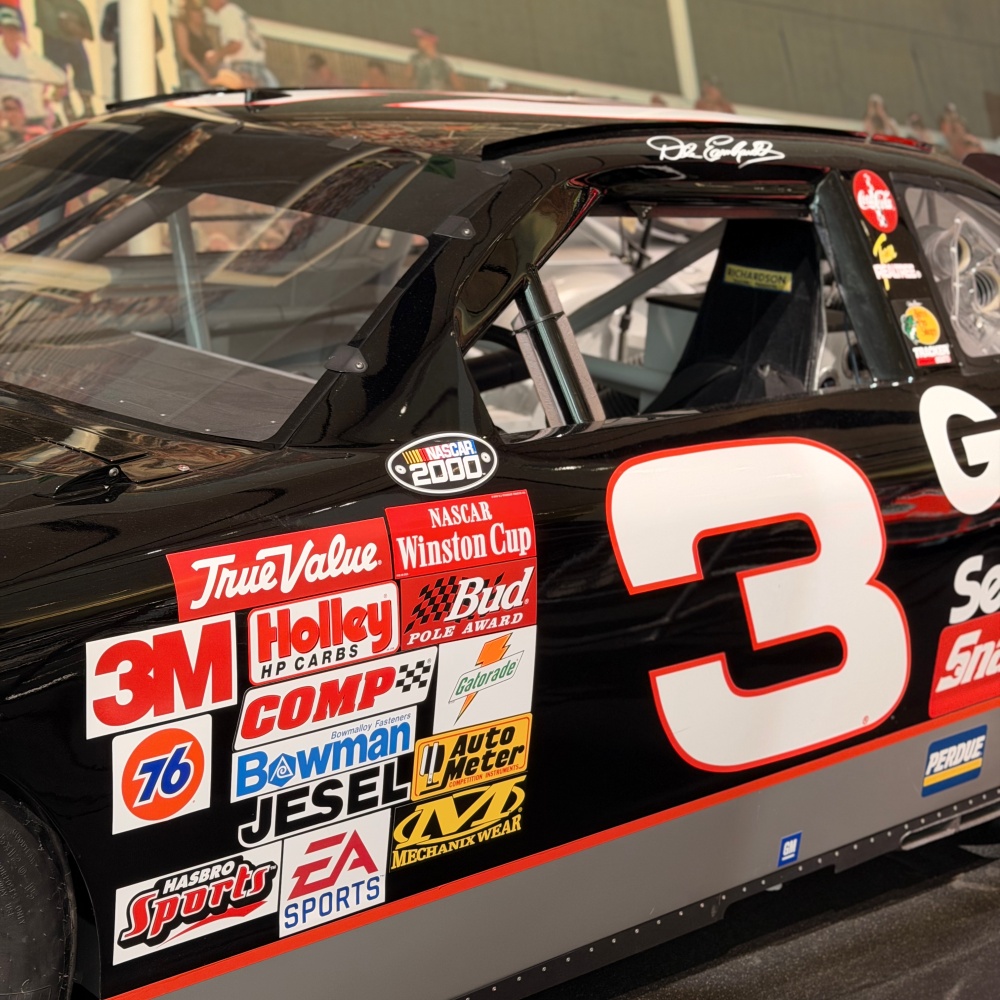
Glory Road: Owners – The sixth edition of the Hall of Fame's signature exhibit places ownership at the forefront, highlighting the leaders who helped steer NASCAR through nearly 80 years of competition. The cars run from a 1937 race car all the way to a 2025 Chevrolet Camaro from JR Motorsports, arranged along a banked track that physically replicates the experience of standing trackside. Among the owners represented are Junior Johnson, Roger Penske, Rick Hendrick, Joe Gibbs, the Wood Brothers, and Wendell Scott. This lineup covers the full spectrum of NASCAR's history from its moonshining roots to its modern corporate era. It is the best single exhibit currently on display and is worth the price of admission by itself. This is especially true when you notice the persistent knot of visitors huddled around a certain black, white, and red car with a big ol' 3 on the side.
Peter Corn
The Hall of Honor – The beating heart of the institution — the permanent installation honoring every inductee in the sport's history, from Richard Petty and Dale Earnhardt to more recent classes. Each inductee's display includes race-worn equipment, career artifacts, and the kind of context that makes the numbers — championships, wins, poles — feel like what they actually were: a human being's life's work. Standing in front of Dale Earnhardt's display, or Junior Johnson's, or the Petty family section, is the closest most people will ever get to understanding what NASCAR actually meant to the communities that built it.
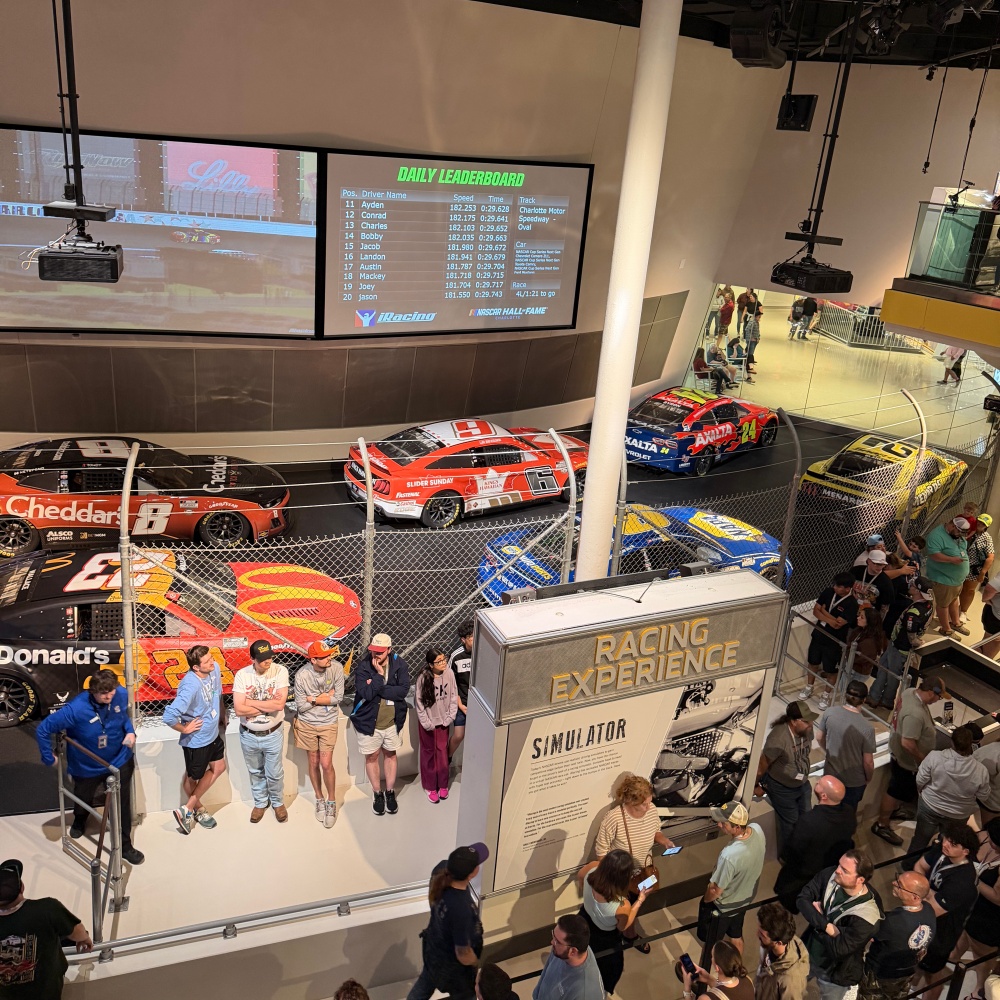
NASCAR Simulator – Dominating the middle floor of the museum is a recreation of the starting grid of a NASCAR race, with something like 10 scale replicas of race cars where museum visitors can race, wheel to wheel, against one another. The races are played on a giant screen while the next batch of drivers wait. The soundtrack of the museum is the collective groans, cheers, and judgmental roaring when someone takes out the pack with some silly driving. It may not be the most sophisticated sim in the world, but it’s easily one of the most fun I’ve ever tried. The best part is the museum saves the top 50 best times every day, which breeds a bit more competition and pressure than you might imagine. Note: the sim isn’t included with the basic general admission ticket, but the add-on is well worth it.
Peter Corn
Key Facts About the NASCAR Hall of Fame
Address: 400 E. Martin Luther King Jr. Blvd, Charlotte, NC 28202 — in the heart of uptown Charlotte, within walking distance of major hotels
Hours: Summer hours (starting June 12): Monday–Thursday 10am–5:30pm, Friday–Sunday 10am–6pm
Admission: General Admission: $27 adults | $24 seniors (65+) | $20 youth (ages 4–12) | Combo packages available from $36, including simulator access and a Hall of Fame lanyard
Size: 150,000 square feet across four stories
Opened: May 2010
Inductees: A growing roster selected annually, three per year from a field of 15 nominees
Plan for: Minimum two hours; simulator and pit crew challenge add significant time, but it's so worth it.

Peter Corn
Peter Corn is an automotive writer and storyteller. Peter has spent nearly a decade writing about cars, trucks, and motorcycles for some of the best publications in the business. He believes the best automotive stories aren't really about the machines at all, but instead, the people who love them.
Read Peter Corn's articles
Latest News
Comments
Comments are disabled until you accept Social Networking Cookies. Update cookie preferences
If the dialog doesn't appear, ad-blockers are often the cause; try disabling yours or see our Social Features Support.