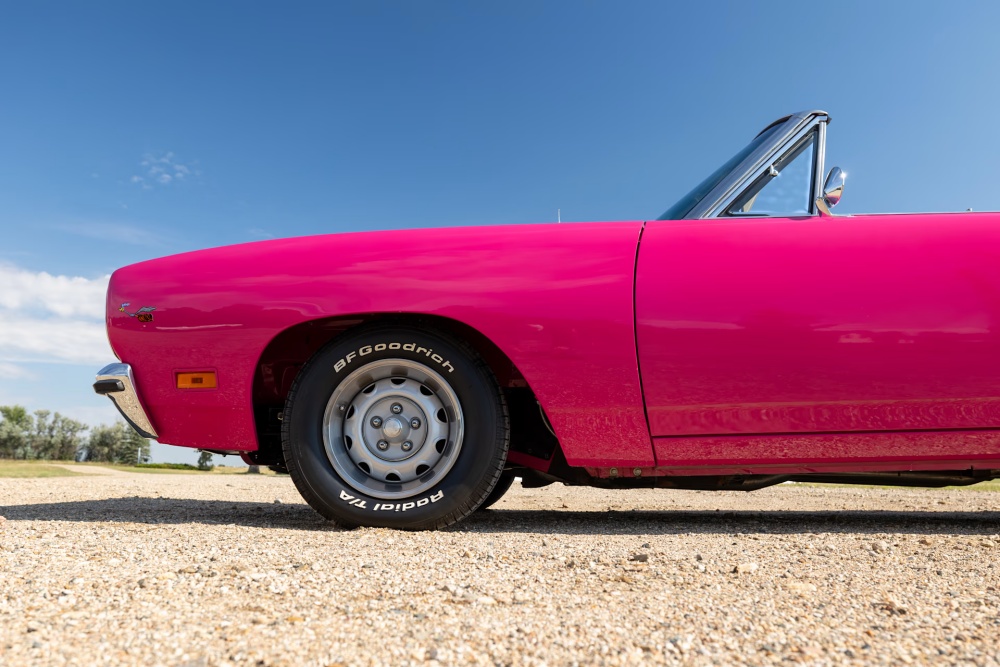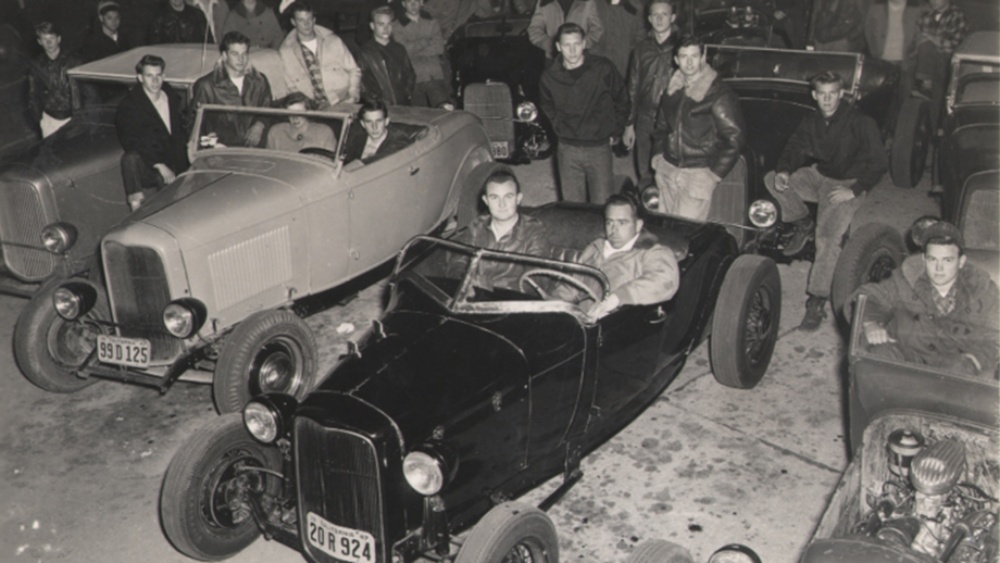
NHRA/National Dragster
Factories made the cars, but hot rods made them ours
The history, traditions, legends, and lore are hard to parse out. This is a deep and rich pool full of life. Hot rods are more organic in nature than mechanical, at least in their formation. Like sheet metal flowers, or malformed rats, these crunched, slammed, chopped, low, loud, rough, doom machines bloomed from shops and backyards, behind old barns and abandoned gas stations. Early hot rods are so treasured that even their bits and pieces are more closely hunted like fossils than car parts. Hot rods and the culture they’ve borne are one of the most effectual and genuine in all of automotive culture.
Hot rodding is indelibly linked to cars and car culture. As soon as Americans got horseless carriages, Bubba ‘nem started tearing them down for lightness, adding power, and racing them. And, although hot rodding has spread to include much more than that, this is, at its core, hot rodding.
Ford
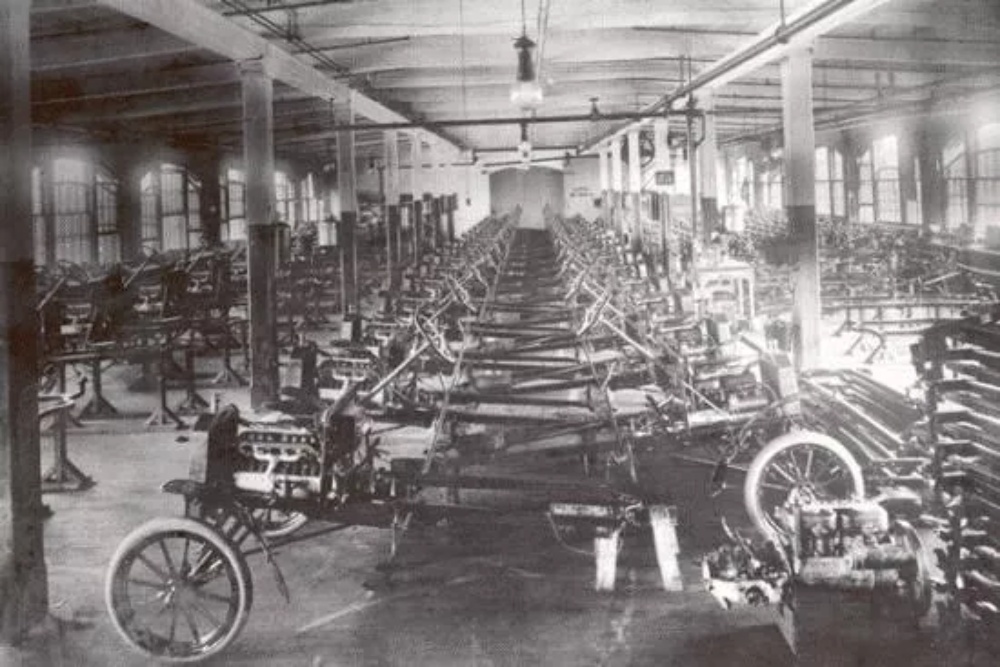
Now, at risk of contradiction, these early motorcars, while hot-roddish in spirit, weren’t quite ready for folks to start hot rodding in earnest. A key part of hot rods is taking old parts and reworking them to make something else that they weren’t intended for: speed. Car production wasn’t big enough to really find old parts until Ford started spitting out Model Ts like they were bonbons. A key part of Ford’s paradigm shift in production was that cars were finally being made in numbers high enough to be sold cheaply. Cars were suddenly something many Americans could afford to get. And if you couldn’t afford a new one, you could find an old broken one for really cheap, and, most importantly, crashed cars and parts were suddenly everywhere.
Pay dirt.
The birth of hot rodding
The Model T changed everything. Yeah, it changed car culture or whatever, but it changed nearly every part of life in America. It democratized personal travel. It slingshotted American industrialism into the stratosphere. It was a paradigm shift in every sense of the word. Trying to quantify the effects of the Model T will take more time and words than we have. Onward.
Ford didn't invent the hot rod, but it accidentally gave us the raw materials needed to build an entirely new form of American culture. From the earliest Model Ts starting in 1908 to the last one built in 1927, Ford made over 15 million Model Ts. This also means that frames, axles, wheels, bodies, engines… were all suddenly available and in numbers so large that prices were friendly.
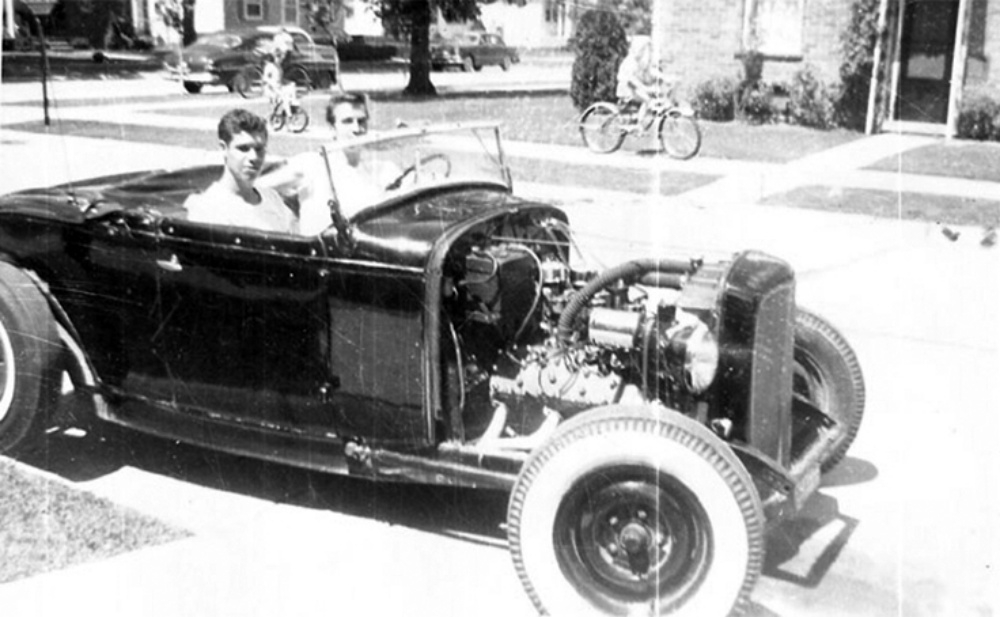
NHRA/National Dragster
The important thing was not just that these parts were cheap. It was that they were plentiful enough to experiment with. These things weren’t precious. It was actually the complete opposite. Why not chop roofs, ditch fenders, cut bumpers, and rebuild engines? If you messed it up, just get another. It was here that hot rodding really took off.
The first speedsters were crude things, even by hot rod standards. The main way to make these cars faster was by simply reducing weight. Bodies were stripped down to nothing more than was necessary to keep the car driving and a driver semi-secured. Fenders disappeared. Seats were improvised. Engines were modified. Weight was treated like a cancer that, if allowed to remain, would kill. Anything that did not make the car faster was doomed.
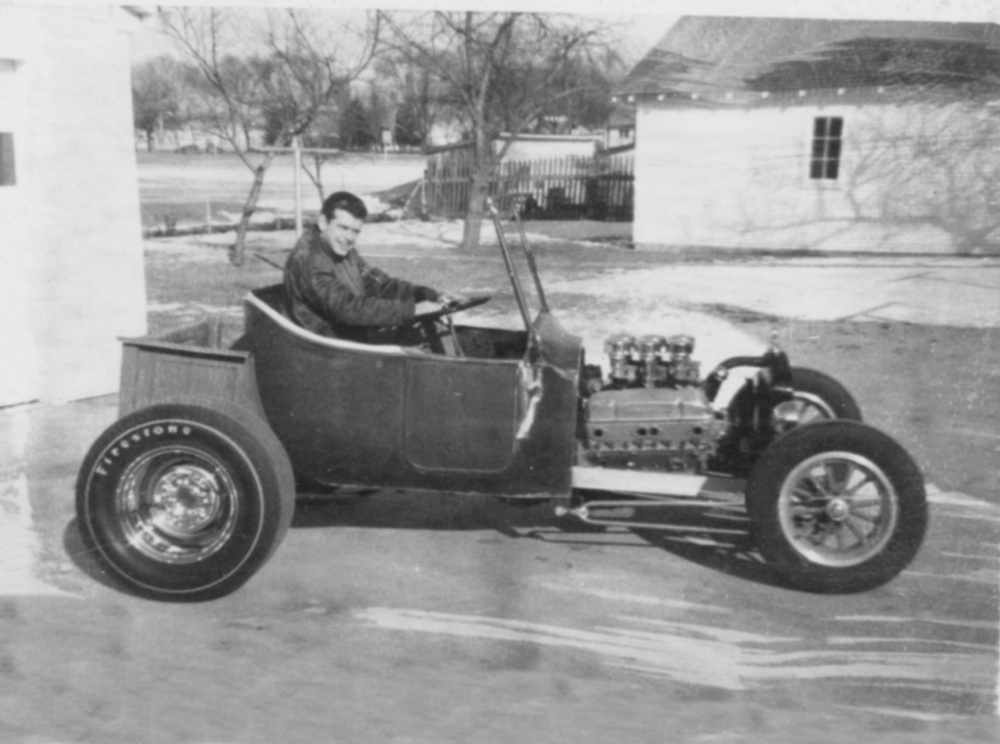
Museum of American Speed
This was not yet the hot rod as we would recognize it. It was something closer to mechanical chemistry: take an automobile, remove everything that isn't necessary, make it faster, and then find somewhere to see how fast it will go.
The dry lakes of Southern California provided the perfect test tracks
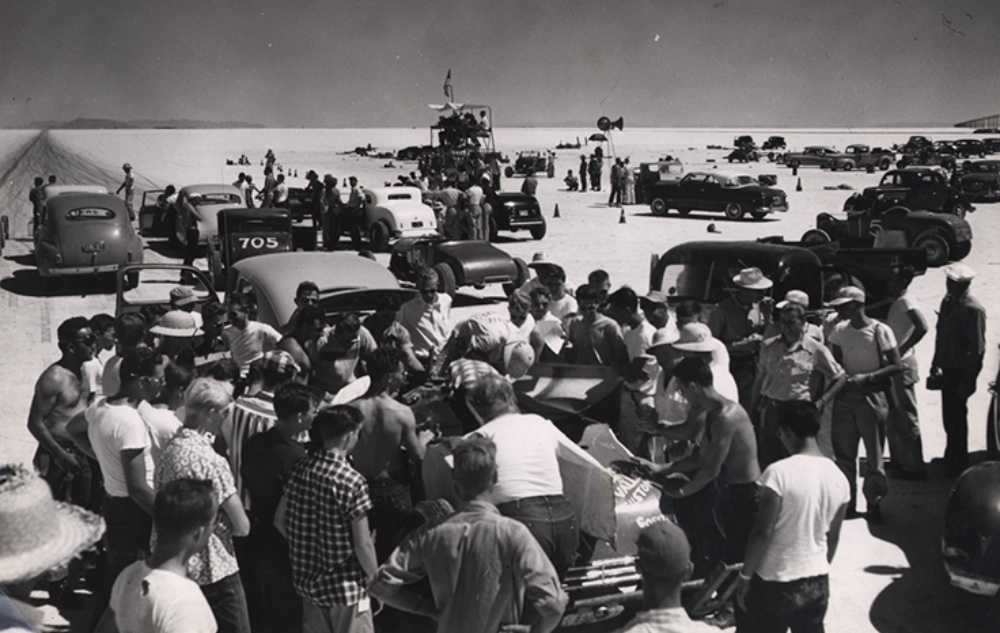
Places like Muroc and El Mirage operated like laboratories for these mad scientists. They offered wide, flat expanses where speed could be tested without much interference from the rest of civilization. What began as informal racing gradually became organized competition. Builders learned from one another. Tricks became techniques. Techniques became standards. Eventually, these standards became tradition. The guy who figured out how to make his Ford faster had something worth sharing, and the guy who went faster still had something worth bragging about. That exchange of information was as important as the racing itself. Culture was blooming.
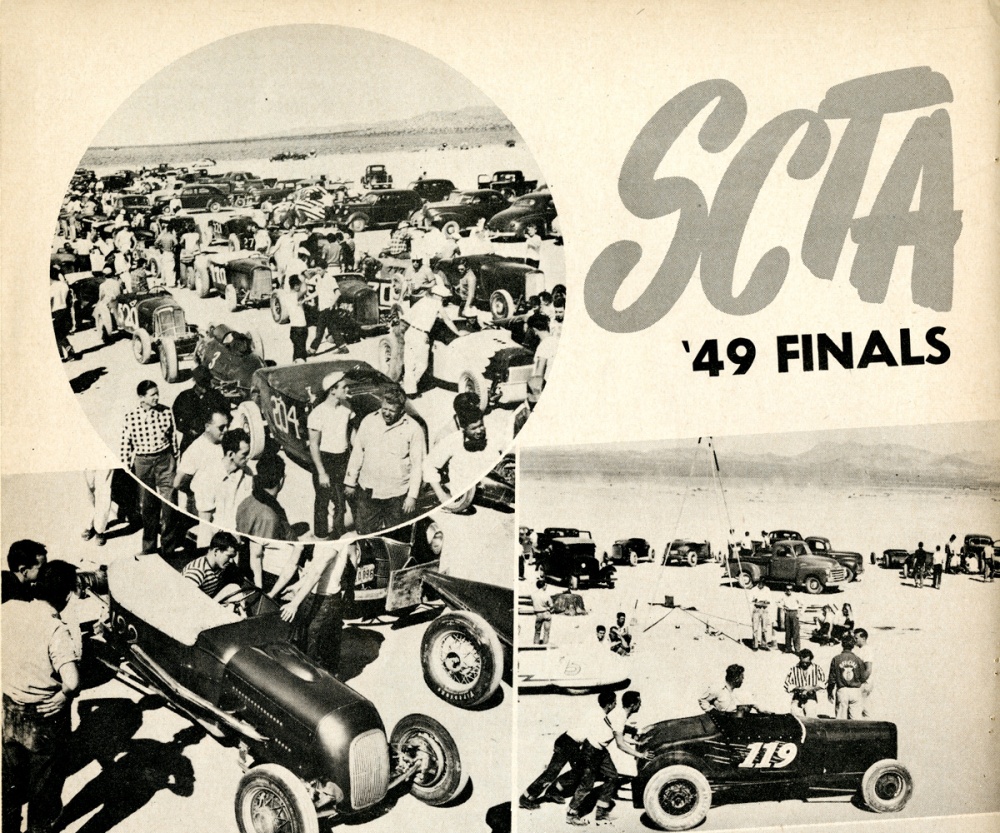
SCTA
Hot rodding became a community
As Ford moved from the Model T to the Model A and then introduced its flathead V8 in 1932, the cars improved dramatically. They became faster nearly overnight – a lot faster. But something more important was happening. Speed equipment became a business. Junkyards became parts departments. Garages became the office. Magazines began telling people what other people were doing to their cars. There was money to be made here, and that changed everything.
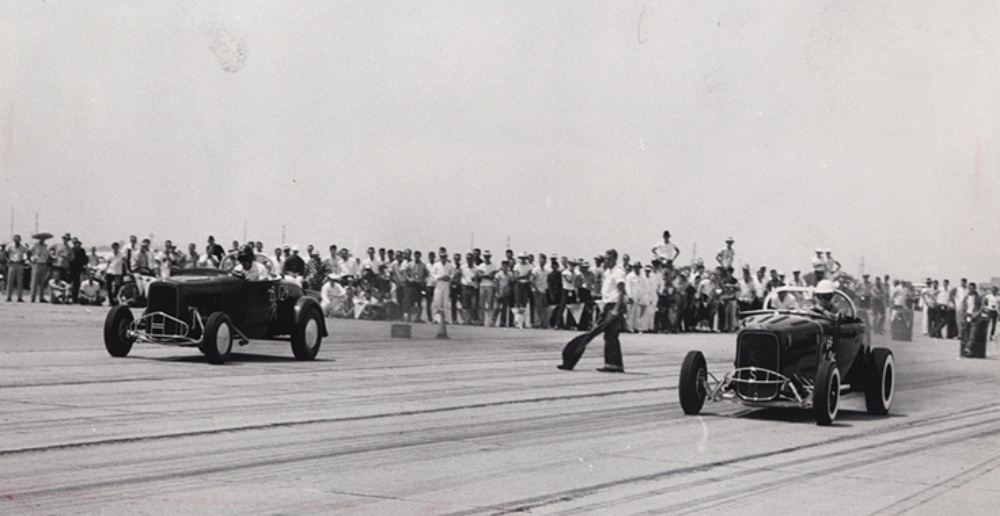
NHRA/National Dragster
The automobile was no longer simply something you bought. It was something you worked on. Something that could be uniquely yours. It became fashion. Expression. There was real pride in building your own car, not just buying one. This is what launched the car from being another household appliance, like a washing machine, into something set aside in its own category. The car now could be someone’s identity. That distinction sounds almost trivial now. It isn't. It is one of the foundational ideas of American car culture.
The “gow job” era of the 1930s pushed this idea even further. Cars were being stripped, lowered, lightened, and modified with whatever their owners could find. The aesthetic was often a byproduct of the mechanical work, aka necessity. Fenders came off because they weren't needed. Hoods disappeared because they were heavy and got in the way. Engines were given more compression, more fuel, more of whatever the local hot rodder believed would make them go faster.
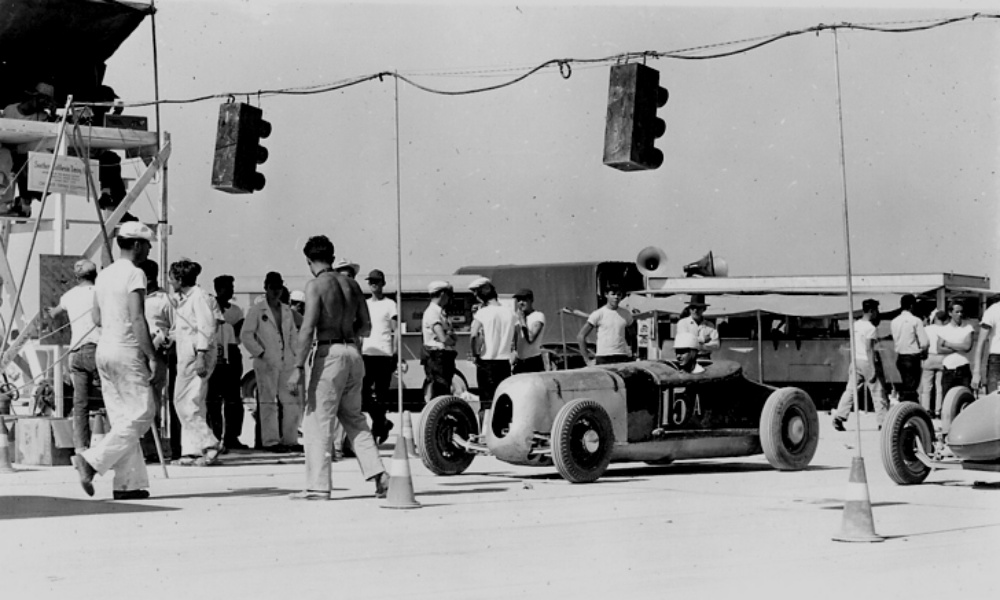
NHRA/National Dragster
There was no universal recipe. It was as simple as “do whatever you can do to make the car faster.” That was the only goal.
A hot rod was a record of its builder's resources, knowledge, and imagination. Two cars could start as the same production Ford and end up looking and behaving completely differently. One might be crude and terrifying. Another might be surprisingly sophisticated. Both belonged to the same family because the important ingredient was not the finished car. It was the process of making it.
Then came the war
Hot rodding didn't disappear during World War II, but the young men who had been building and racing these cars were suddenly stripped of their tools, given rifles, and scattered across the world. Cars sat in garages. Projects waited on jack stands. The lake beds were at peace.
NHRA/National Dragster
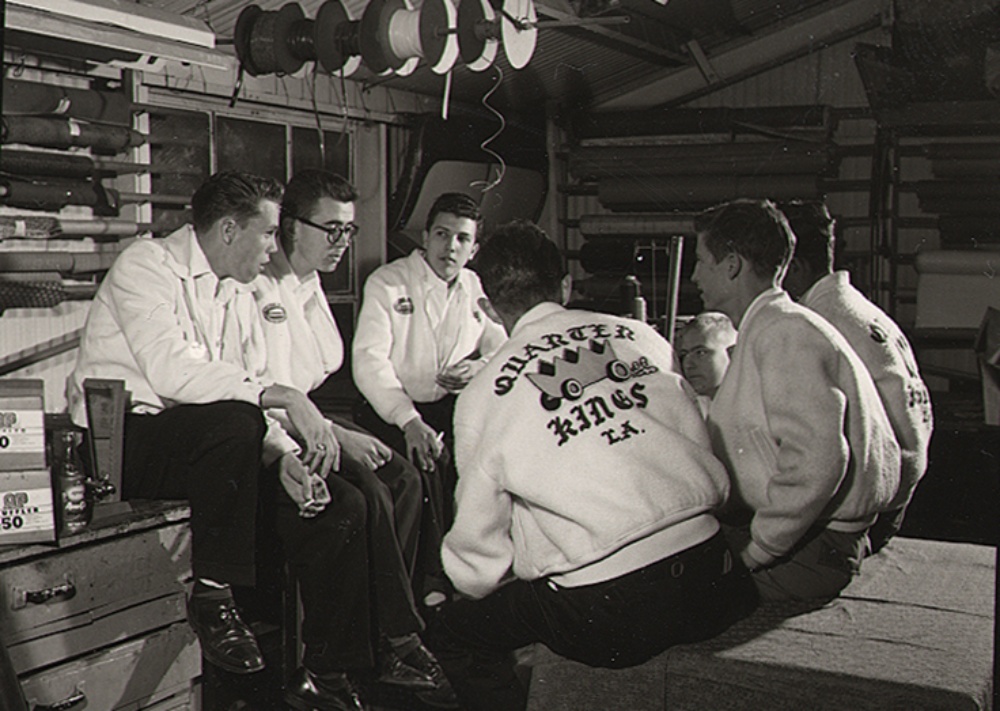
But the culture traveled because the people living it did. Young Americans from different parts of the country met in military camps and overseas and discovered that the weird guy back home with the stripped-down Ford was not nearly as weird as he had seemed. Stories about cars and racing passed between servicemen. Mechanical skills learned in the military would later find their way into garages at home. This exchange of knowledge exploded hot rodding. Suddenly, guys from Alabama, building cars a certain way, were sharing their tricks with dudes from California, and vice versa.
NHRA/National Dragster
When the war ended, millions of young Americans returned to their hometowns with a little money, mechanical training, and an enormous appetite for doing something that didn't involve killing. So they built cars, motorcycles, trucks, anything they could get their hands on with wheels and a motor. This is when hot rodding as we know it really took form.
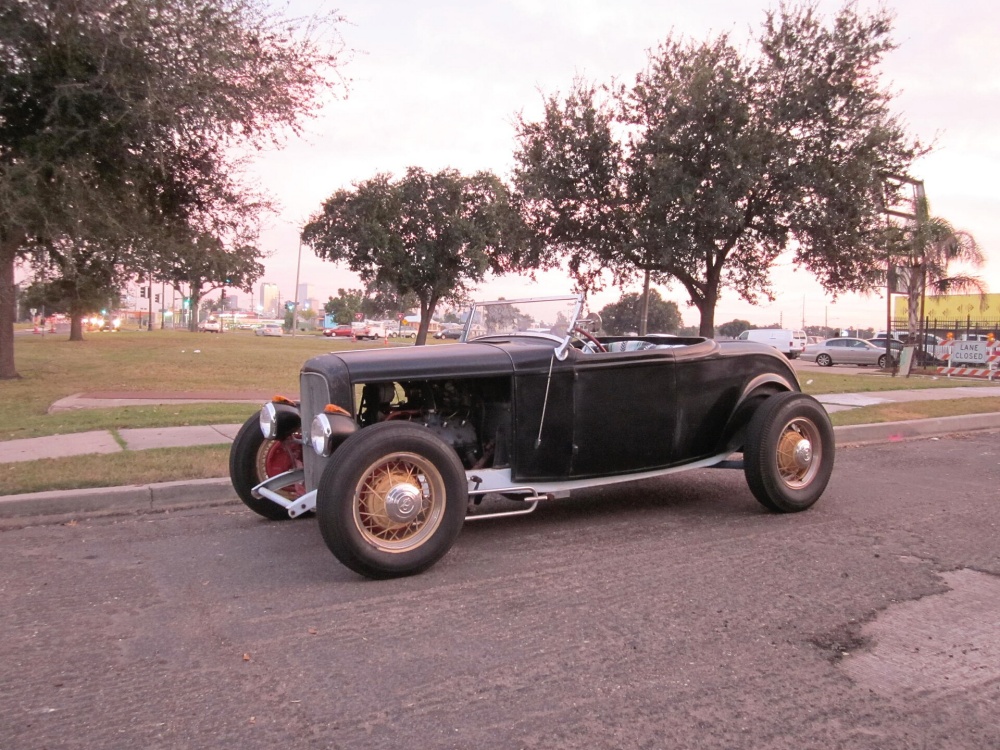
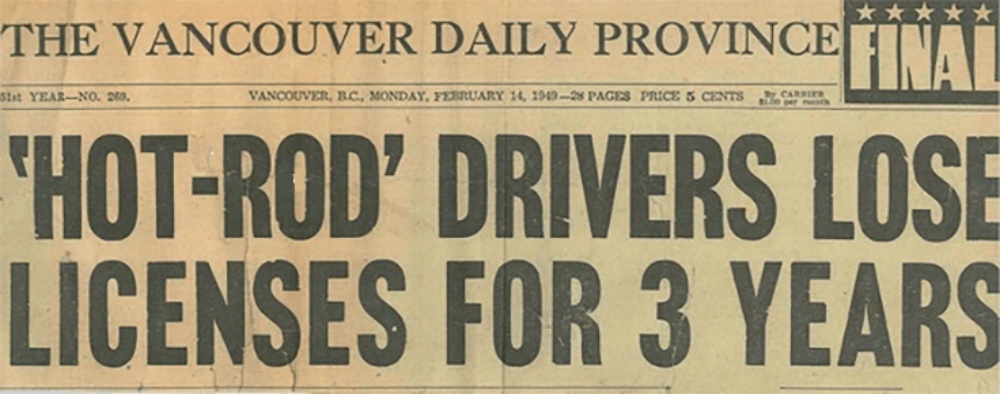
The postwar years turned what had been a disparate hobby into a national trend. Hot Rod magazine began publishing in 1948, giving builders across the country a way to see what everyone else was doing. Speed shops spread across the country like oil on water. Car clubs organized. Dry-lake racing became more formal. Drag racing emerged as a distinct form of competition, and the National Hot Rod Association was founded in 1951. The culture had institutions now; it also had enemies. People were quick to despise these marauding gangs of youths, piled into their screaming machines that only now sort of resemble cars, blasting rock and roll music. They were young, broke, and loud, but in numbers, there's power.
Wikimedia Commons
Magazines, clubs, races, heroes, trend setters, businesses, and rules took the young people's Friday night shenanigans and molded them into a culture that new people could step into. It had an economy, a vocabulary. Chopped. Channeled. Sectioned. Blown. Finned. Dropped axle. Flathead. Like all cultures throughout time and geography, the language gave a unifying way to communicate and make people feel a part of something bigger. All of this sort of insulated hot rodders from being wholly run out of town at the end of a pitchfork.
NHRA/National Dragster
Hot rodding was no longer about only going faster
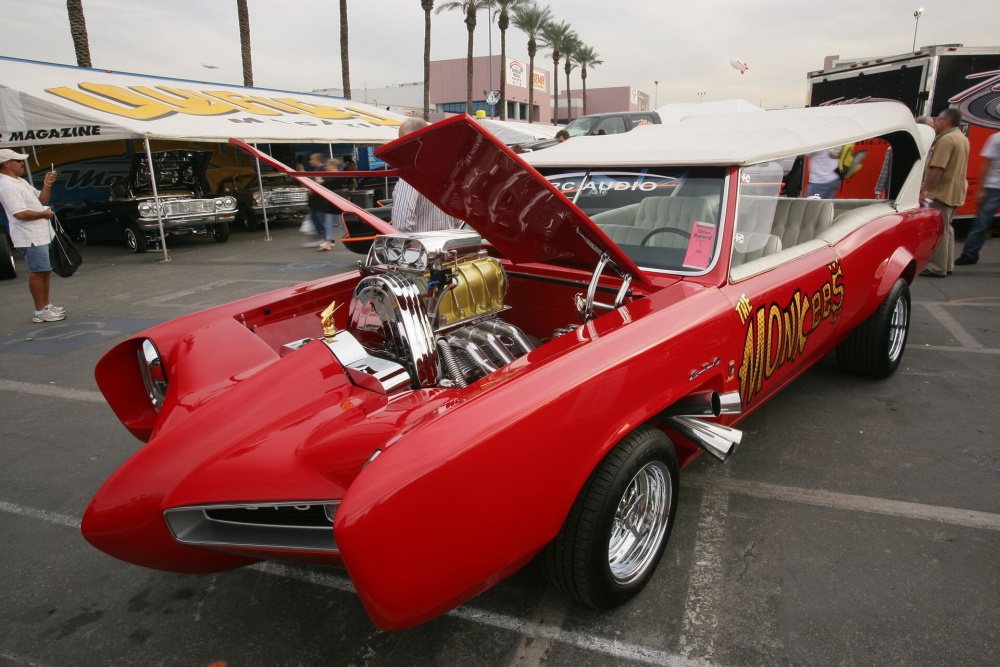
It was becoming an art form. Design and aesthetic choices started taking shape that weren’t only byproducts of making the cars lighter and faster. The same culture that produced stripped-down race cars produced radically customized street cars. Roofs were chopped. Bodies were sectioned and channeled. Fenders were reshaped. Paint and bodywork became as important as horsepower. Builders such as George Barris, Ed Roth, and Dean Jeffries pushed the cars toward something that had less to do with transportation and more to do with artistic expression. Eventually, hot rods would reach escape velocity and puncture pop culture: The Monkeemobile, Billy Gibbons' Eliminator, American Graffiti, The Munster Koach, Rat Fink, Little Duece Coupe, Grease....
Wikimedia Commons
The factory built cars for everyone. Hot rodders built cars for themselves. That distinction would echo through almost every corner of car culture that followed. Drag racers chased shorter times. Customizers chased perfect lines. Lowriders turned suspension into sculpture. Muscle-car owners collected horsepower. Later generations would build import cars, drift cars, off-roaders, pro-touring machines, and absurdly powerful street cars all to be more detailed reflections of themselves. Many different tribes. Same basic idea.
Buying a car is only the beginning
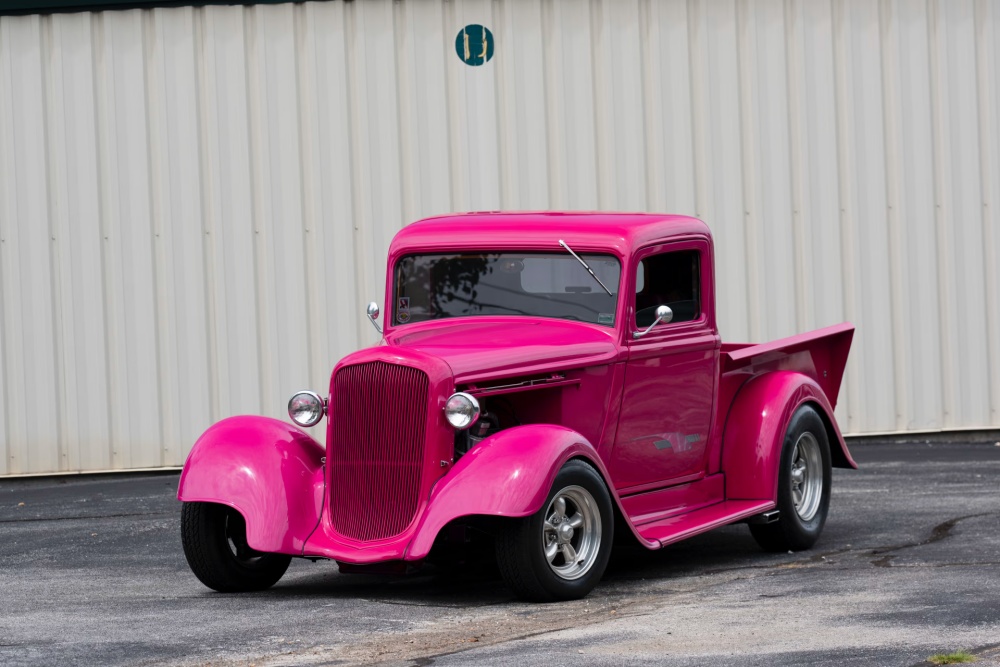
This is also why hot rodding has always been prone to arguments about what counts as a “real” hot rod. Purity tests are a foolish game that, if picked apart enough, will disavow anyone’s argument about purity. However, like it or not, this argument is practically part of the culture's DNA. By the 1980s, the billet era had produced cars covered in exquisitely machined aluminum, elaborate wheels, flawless paint, and impossibly tight panel gaps. Real expertise and a mastery of the craft elevated hot rods to something nearly unrecognizable from their early days as buckets of power unburdened by bodywork and seats. To some builders, this was the natural evolution of craftsmanship. To others, it was proof that hot rodding had lost the plot. Traditional hot rods are still very much a thing, but the larger world of custom car culture has expanded into dizzying reaches.
Courtesy of Mecum
The old cars had been built from junk. Now people were buying expensive parts and hand-crafting all-new bodywork to make their already-expensive cars look like something nobody could have afforded when hot rodding began.
But even that argument proves something important. Hot rodding had become big enough to have factions. Capitalism worked its way in, and found a very comfortable home. Hot rodding was a business. The bigger point is that it has survived long enough to develop a history, and most importantly, a future that people could fight over.
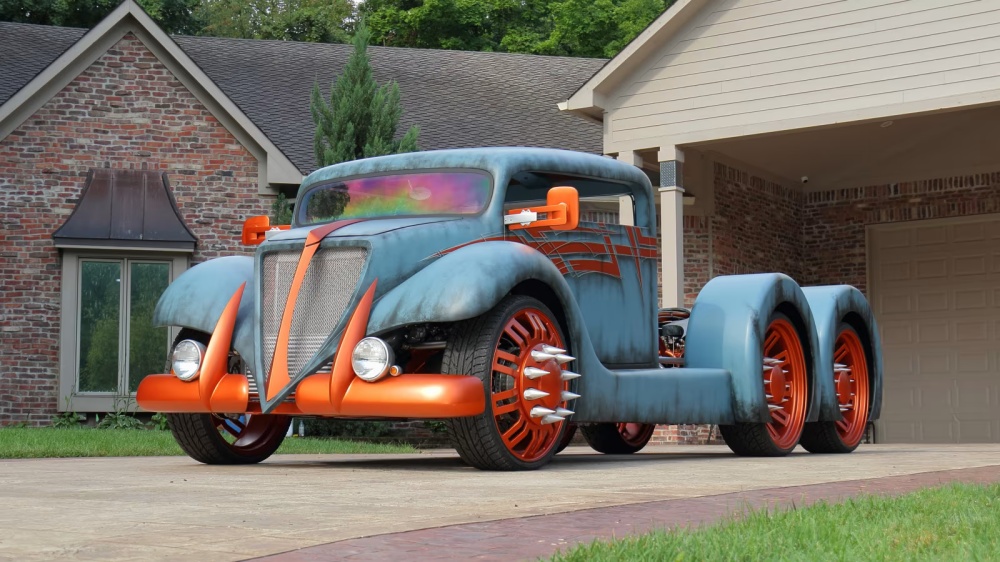
Photo Courtesy of Mecum
And that may be its greatest contribution to car culture. We don't always have to love everything this shift has led to, but hot rodding established the idea that automobiles could be personal, that mechanical knowledge could be shared outside the factory, that speed and style could be pursued for their own sake, and that a car could be a project rather than a product.
The terminology changed again. The cars changed. The technology changed. The internet replaced the magazine rack, CNC machines replaced some of the hacksaw-and-file work, and computer-controlled engines eventually replaced the intricacies of tuning carburetors. Still, we are in it. We cannot separate today's many variations and niches in car culture from those early days of stripped-down, knuckle-draggers built by kids.
Change doesn’t mean death
The definition of hot rodding has changed more than it’s stayed the same, and that’s ok. The many changes offer a widening of ways we can interact with this culture. We can watch these artistic doom sleds being built on television, and blogs crammed full of hopeful builders are smeared across the internet. Young people are still finding old cars, still deciding it would be better lower, faster, louder, stranger, purpler and sparklier, or painted like a dragon. We still look at a machine that was designed, engineered, assembled, and sold as a finished project and think, essentially, “Yeah, but wouldn’t it be cooler if…?”
That question is the beating heart behind every hot rod, and every custom car since. It’s the same question that guides the fastest racing drivers, the craziest off-roaders, and every foundational aspect of car culture. Hot rodding did not simply give America a type of car; It gave America a new way to think about cars. The factory might have made the car, but hot rodding made the car ours.

Peter Corn
Peter Corn is an automotive writer and storyteller. Peter has spent nearly a decade writing about cars, trucks, and motorcycles for some of the best publications in the business. He believes the best automotive stories aren't really about the machines at all, but instead, the people who love them.
Read Peter Corn's articles
Latest News


Comments
Comments are disabled until you accept Social Networking Cookies. Update cookie preferences
If the dialog doesn't appear, ad-blockers are often the cause; try disabling yours or see our Social Features Support.