Wikimedia Commons
Jeff Beck played music like a hot rodder
Jeff Beck spent his life doing something difficult to explain without resorting to cliches like innovative, experimental, and genre-defying, all of which are accurate and all of which have been whacked into a pulp of nothing by rock writers. Beck was a guitarist, but ending his description there would cut short so much of what made him, not only an interesting guitar player and songwriter, but also an interesting person.
Jeff Beck was a serious hot rodder. Unlike many rich and famous rock stars, he didn’t just buy and collect hot rods. He built cars. He learned to weld, fabricated parts, worked on his own machinery, and developed friendships with some of the most respected names in the American hot rod world. Don’t get me wrong, Jeff Beck owned some cars now, but his garage wasn't simply a place to store a collection of valuable automobiles; It was a workshop.
That is what makes Jeff Beck's car collection interesting: not only what it tells us about him personally, but also as a lens to view his music through; and a pretty good one, at that.
Jeff Beck stood on some mighty shoulders
Beck came up during an interesting time in British music. In the early 1960s, English musicians first heard, and feverishly adopted (not the only word that could be used here) the music of the American South.
In the 1930s, black Americans were still trying to recover from the crushing grip of enslavement, while fighting against the malice of Jim Crow laws. Throughout the South, from east Georgia, up the coastal Carolinas, Alabama, Mississippi, Arkansas, Tennessee, Louisiana, and Texas, black Americans were imprisoned by an economic and political scheme designed to pulverize them: mind, body, spirit.
They resisted.
From the crucible of horrors of the Jim Crow South, chattel slavery, and the systematic dismantling of a variety of African cultures and religions and cosmologies over the course of a few hundred years, African-Americans in the South had been slowly, quietly, and painfully forming new traditions, beliefs, food, and ultimately a somewhat cohesive Southern American culture.
At risk of being overly reductive, one of the most enduring and magnificent pillars of Southern culture to come from this time was the Blues. It came in many shapes and timbres, with endless variations. The Blues, particularly as it pertains to our British friends, the early Delta Blues, were a sort of primordial, one-of-one kind of music that the world had never heard outside of the South. The Blues was almost closer to some new species of lizard that evolved in isolation. Segregation kept black and white music apart. This music was written, recorded, and played live across the South for over 40 years before white listeners and musicians had any sort of mass engagement with it.
In 1961, Columbia published The King of the Delta Blues, a compilation of Robert Johnson recordings as early as the 1920s. This record began the proliferation of the Blues joining the mainstream. It was from the popularity of this compilation, among many other, even more influential blues players, that Jeff Beck’s love of music and career took root. One of Beck's earliest major claims to fame was replacing Clapton early on as the lead guitar player for the Yardbirds, after his pal, Jimmy Page, recommended him for the job. These three guitar players, Clapton, Page, and Beck, became some of the most influential and famous guitar players of all time. All of them built their sounds off of the hardened fingers and blown reeds of American blues players: Bukka White, Son House, Mississippi John Hurt, Elizabeth Cotton, Reverend Gary Davis, Blind Lemon Jefferson, Lightnin’ Hopkins, Fred McDowell, Henry Thomas, Leadbelly, Robert Johnson, Skip James, Johnny Shines, Sonny Boy Williamson, and on and on. This music was revelatory, and the British Rock gods took it and ran.
Riding the wave of the British blues explosion of the 1960s, after joining the Yardbirds, Beck, while being heavily influenced by these blues players, pushed the band's guitar sound into increasingly adventurous territory. He went on to form the Jeff Beck Group with Rod Stewart and Ronnie Wood, then spent the rest of his career moving farther away from the idea that a guitarist was supposed to stick to only one musical tradition.
Blues was the foundation, but Beck didn't treat it as a set of rules. He moved through blues rock, hard rock, jazz fusion, funk, rockabilly and electronic music, often combining those ingredients in ways that weren't particularly interested in preserving their original shapes. Albums such as Blow by Blow and Wired demonstrated just how far he could take an electric guitar away from its traditional role.
The important distinction is that Beck wasn't rejecting those traditions. He knew them too well for that. He was modifying them, beating them into a new shape entirely.
That is exactly what a hot rodder does. Take a Model T. Henry Ford built millions of them to be essentially identical, but the hot rodder sees a starting point rather than a finished object. There is a shape and a general outline. The body gets chopped. The suspension gets changed. The engine gets replaced. Parts from entirely different machines find their way into the build. Other parts get removed. The finished car might still be recognizable as something that was once a Model T, but it has become something that could never have rolled out of a Ford factory.
At the risk of oversimplifying his expansive discography, Beck's music worked somewhat the same way. The blues, Jazz, and early Rock and Roll provided a base. Beck took those bases and began taking them apart and rebuilding them in his own way. The result is a body of work spanning decades that, though you can easily enough spot the individual components and where they came from, come together to form something uniquely and wonderfully his.
Jeff Beck loved hot rods way before he ever played guitar
Beck's fascination with cars began long before he became a famous musician. His uncle had a small workshop behind his flat. According to many interviews, it was the chrome, in particular, that first fascinated him. He couldn't understand why anyone would take a dirty, mechanical component and cover it in such a shiny finish. The answer didn’t really matter; he was hooked.
He also encountered American hot rods through magazines and movies. For a British kid growing up in the postwar era, the American hot rod was a distinctly exotic object. The world was only beginning to open up and become more connected. These cars were bigger, louder, and more radically modified than anything he was likely to encounter on the streets of Surrey. HOT ROD magazine became an important source of inspiration, and one of the images that stuck with Beck was Gray Baskerville's famous 1932 Ford roadster.
That early fascination is revealing because hot rodding is fundamentally a culture of modification. The hot rodder doesn’t want what anyone else can buy. The entire point is to understand the machine well enough to change it into something uniquely yours. That drive would follow Beck for the rest of his life.
Jeff Beck didn't just collect hot rods. He built them.
Calling Beck a car collector is kind of like calling a wolf a dog; it’s true but not exactly right. He was a collector, eventually, but he only collected as a result of his interest in building and modifying cars. Around 1968 or 1969, while visiting the United States, Beck met a hot rodder in Boston who eventually taught him how to weld. Welding is one of the foundational skills of hot rodding. He later developed a close relationship with legendary California hot rodder Andy Brizio, whom Beck regarded as one of his heroes. He became acquainted with the Brizio family and their shop.
Beck's involvement went well beyond signing checks. He understood the mechanical side of the craft and enjoyed the process of building. He could spend hours working on a car, discussing fabrication and figuring out how to make an old machine perform the way he wanted. At one point, HOT ROD reported that Beck had considered leaving music behind to work at Roy Brizio's shop.
That sounds like hyperbole until you remember what Beck was actually like. For a musician whose career was built around experimentation, the garage offered another place where curiosity could become something tangible. You could hear the result of a musical experiment, but with a hot rod you could also crawl underneath it, cut something apart, weld it back together and drive the result down the road. Building cars and writing songs are different things, but through the Jeff Beck lens, they seem nearly connected, like one lifetime project.
The 1932 Ford Was Jeff Beck's Kind of Car
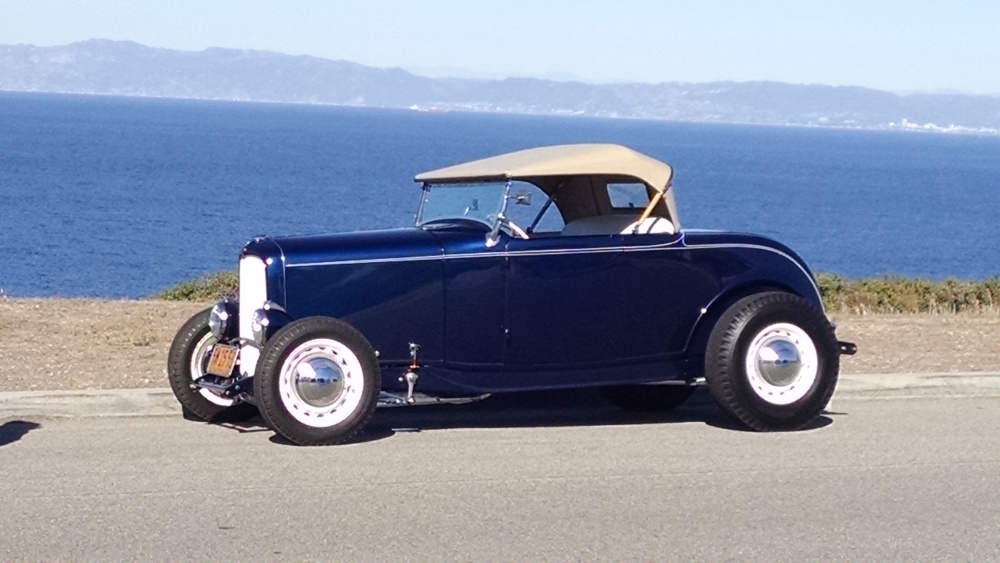
If there was a recurring favorite in Jeff Beck's hot rod collection, it was the 1932 Ford, in many different iterations. The “Deuce” is practically the cornerstone of American hot rodding, a car whose shape has been modified, chopped, channeled, blown, and otherwise reinterpreted by generations of builders. When American GIs came home from Europe and the Pacific after WWII, they had a little cash and ‘32 Fords were cheap and plentiful. These naturally became the go-to for young car builders in America.
Wikimedia Commons
Beck owned multiple 1932 Fords, including a three-window coupe and a roadster, and he built a replica of the famous yellow Deuce Coupe from American Graffiti. The movie had made an impression on him, and when the opportunity came to buy the actual car used in the film, Beck lost the bidding. So he did the proper hot rodder thing: he built his own.
Beck studied photographs and measurements of the movie car and modified his own until the proportions were right. He reproduced details from the original, including its THX 138 license plate, and eventually acquired the actual plate years later. The story is almost comically appropriate. Jeff Beck couldn't buy the thing he wanted, so he had to figure out how to build one himself. That’s Jeff Beck and somehow, hot-rod culture all wrapped up in a nice little package.
Jeff Beck liked some other cars too
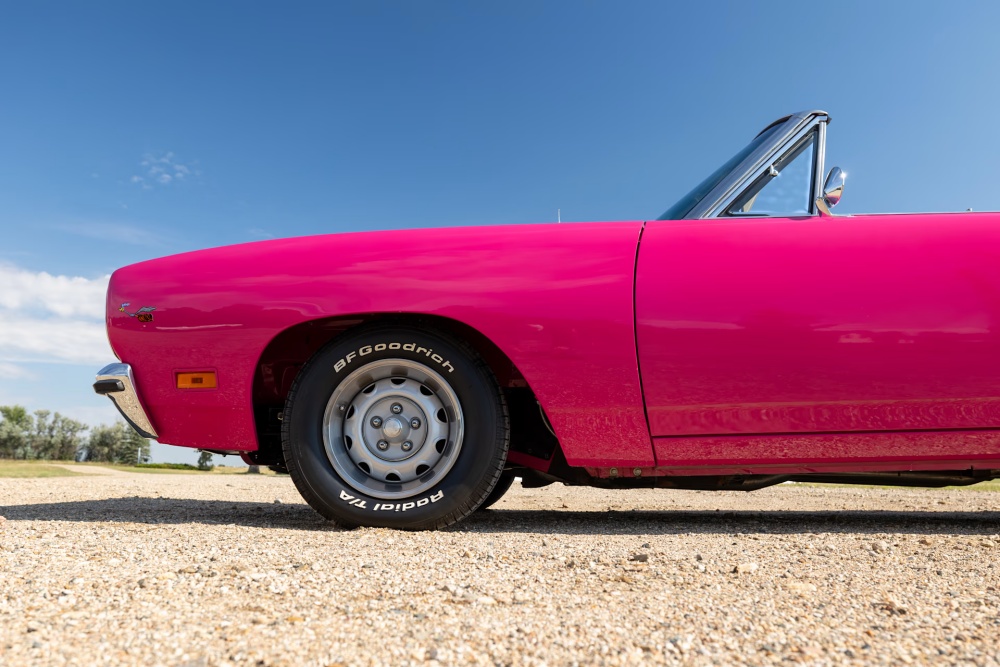
The same philosophy showed up elsewhere in his collection. Beck owned a 1963 Corvette Sting Ray that had been extensively modified with a custom chassis, five-speed transmission, and rack-and-pinion steering. He described it as a "Corvette hot rod," which is probably the most useful description of his automotive philosophy.
Beck wasn't particularly interested in preserving old cars either. He liked old machinery, but he wanted to use it. Modern brakes, improved steering, better transmissions and other upgrades didn't destroy the character of an old car in his mind. They made the car more usable and, therefore, more interesting. That attitude also explains his affection for restomods. The purist argues that an old car should remain as close as possible to its original specification. Beck's answer was essentially that the factory had already had its turn. Now it was his turn.
Wikimedia Commons
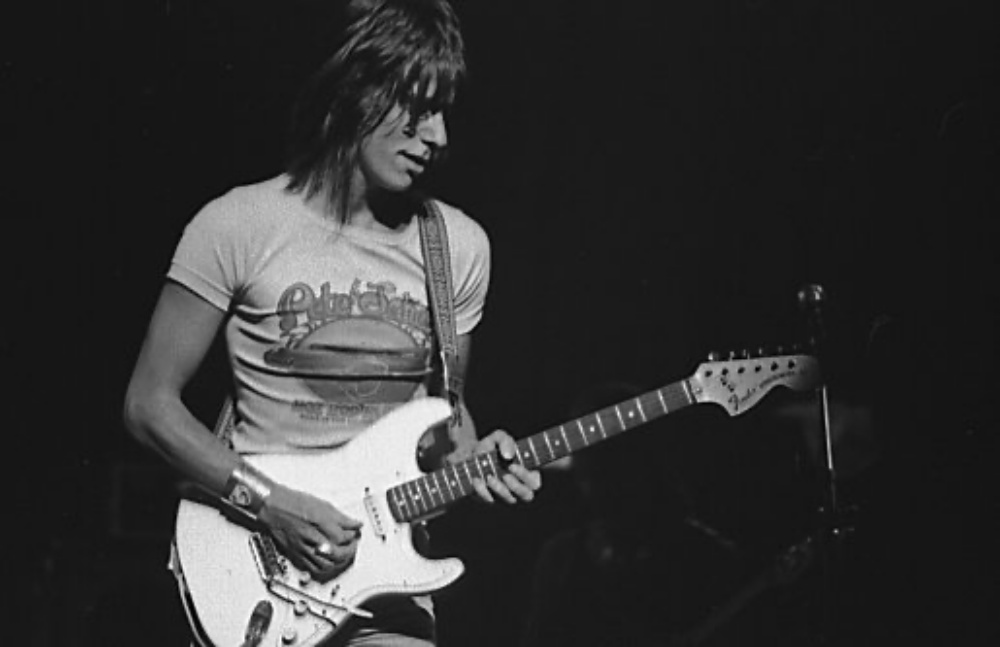
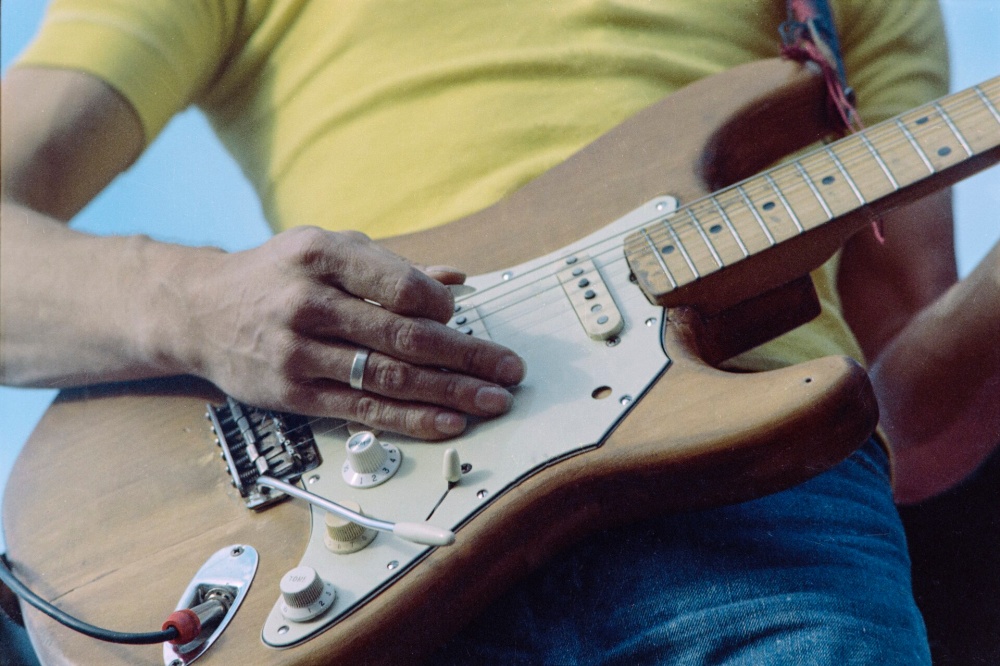
If you look at his stable of guitars over the years, you’ll see the same ethos play out. He had a few vintage (mostly) unaltered guitars like his 1957 Fender Telecaster dubbed “Workhorse,” which, while battered, remained mostly original. He famously played a 1959 Les Paul “Burst” with a modified headstock veneer from a 1930s Gibson L5 while in the Yardbirds. In fact, that guitar would eventually be passed around to Jimi Hendrix and Jimmy Page. He was a hot rodder, so many of his guitars reflected that. The “Tele-Gib” was created using a modified ‘57 Tele body, factory neck, and Gibson Les Paul pickups. He had a number of Custom Shop Fenders later in his career, piles of amps, and more. When things needed modifying, he modified them. When they did what he wanted stock, he left them that way.
In one interview, Beck put it plainly: "We're hot-rodders. We do alter things. We want them to be better." There is an enormous amount of Jeff Beck on display in that sentence.
Jeff Beck saw the same thing in cars and music
The connection between Beck's music and his cars wasn't something we're inventing after the fact. Beck himself recognized the similarity. He talked about the patience required to construct a hot rod and compared that process with making music. Both required precision, experimentation, courage, and the willingness to spend enormous amounts of time getting tiny details right.
That philosophy is clear throughout his career. Beck didn't throw away the blues when he moved into jazz fusion, just as a hot rodder doesn't necessarily throw away a Model T parts simply because he made new ones. The original machine remains the foundation. What changes is what the builder does with it.
Beck took blues phrases and bent them into unfamiliar shapes. He used the electric guitar in ways that made it sound less like a conventional guitar and more like a synthesizer, a human voice, or some alien electronic instrument beamed in from a million miles away. He took jazz voicing, rock phrasing, funk grooves, and technological wizardry and mixed them until the individual ingredients became difficult to separate from himself.
Bend, twist, polish, break, grind
There is a temptation to treat a famous person's hobbies as amusing little windows into their private lives. Jeff Beck's cars offer something more useful and more straightforward than that. They provide a way of understanding the musician himself, not some “other” part of his life or something.
The six-year-old who saw a chromed engine and wondered why someone had bothered to change it eventually became the guitarist who spent his entire career asking essentially the opposite question: Why leave it alone? Why try to play the blues like Lightnin’ Hopkins? Why use the guitar exactly as the manufacturer intended? Why preserve the original when you could make something new? Better?
Beck's answer was always to start with something good, understand how it worked, and then begin changing things. The blues gave him a foundation. Jazz gave him the courage to step away from genre. The electric guitar gave him sounds with almost limitless possibilities. He took these ingredients and created something uniquely his.

Peter Corn
Peter Corn is an automotive writer and storyteller. Peter has spent nearly a decade writing about cars, trucks, and motorcycles for some of the best publications in the business. He believes the best automotive stories aren't really about the machines at all, but instead, the people who love them.
Read Peter Corn's articles
Latest News

Comments
Comments are disabled until you accept Social Networking Cookies. Update cookie preferences
If the dialog doesn't appear, ad-blockers are often the cause; try disabling yours or see our Social Features Support.