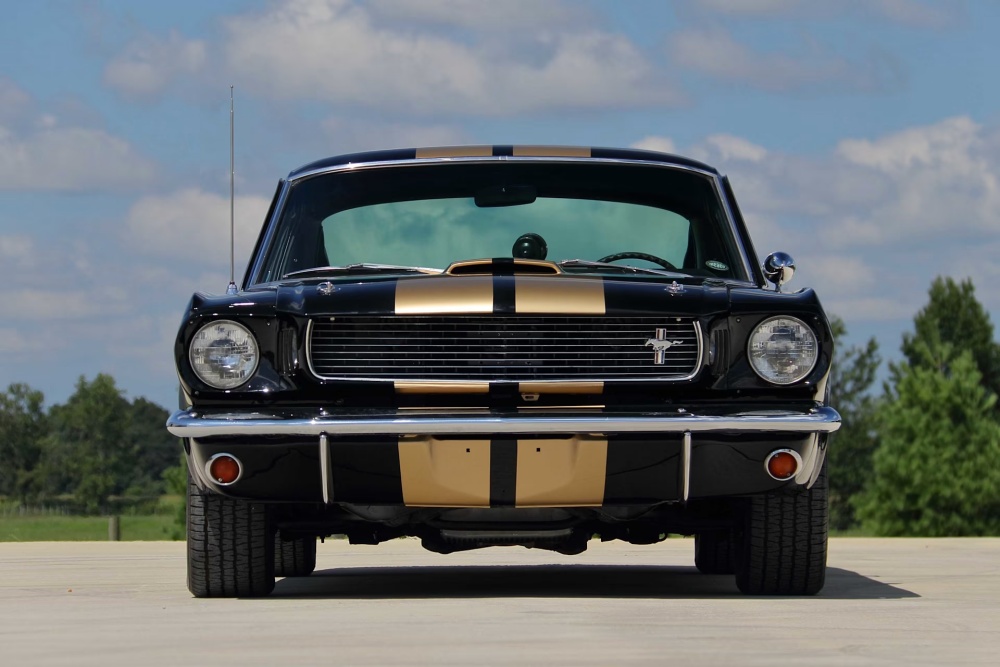
Photo courtesy of Mecum
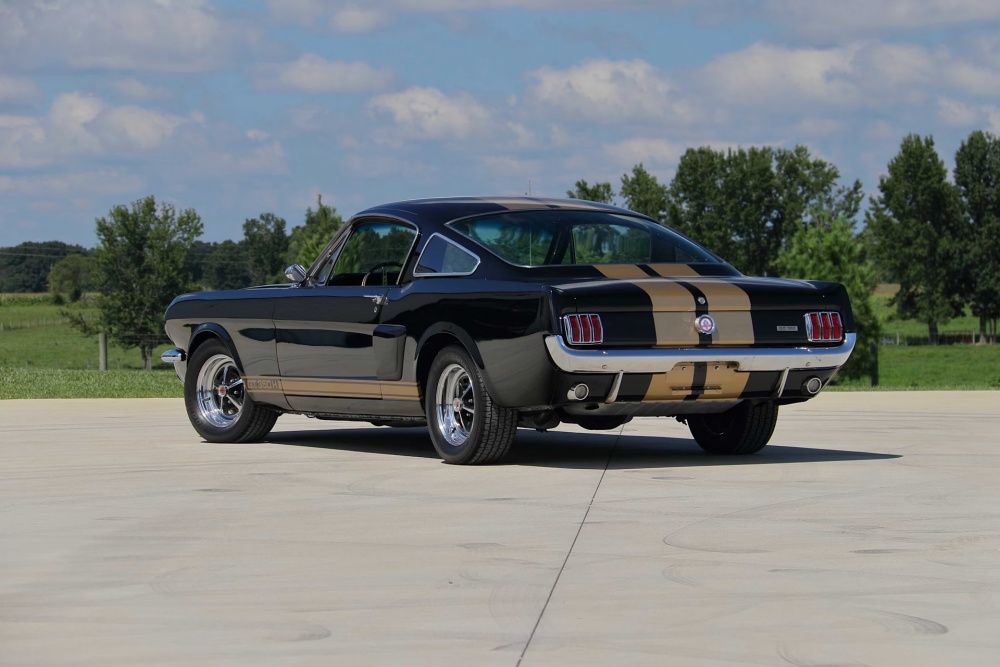
Behold the 1966 Shelby GT350H, the coolest rental car of all time
There are plenty of strange chapters in the history of the Ford Mustang. Still, few are stranger than the moment Shelby American decided that one of its most serious performance cars should become a rental car.
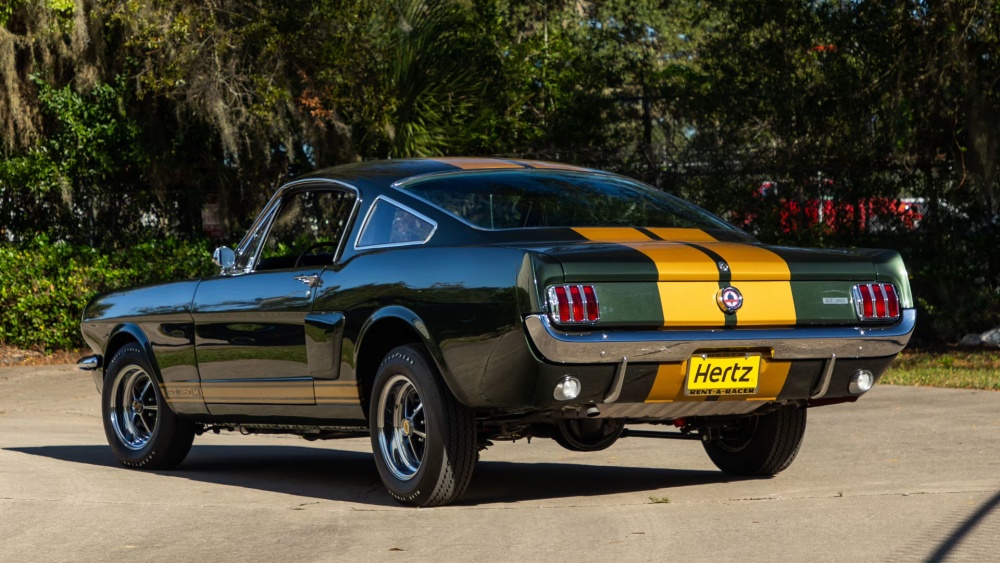
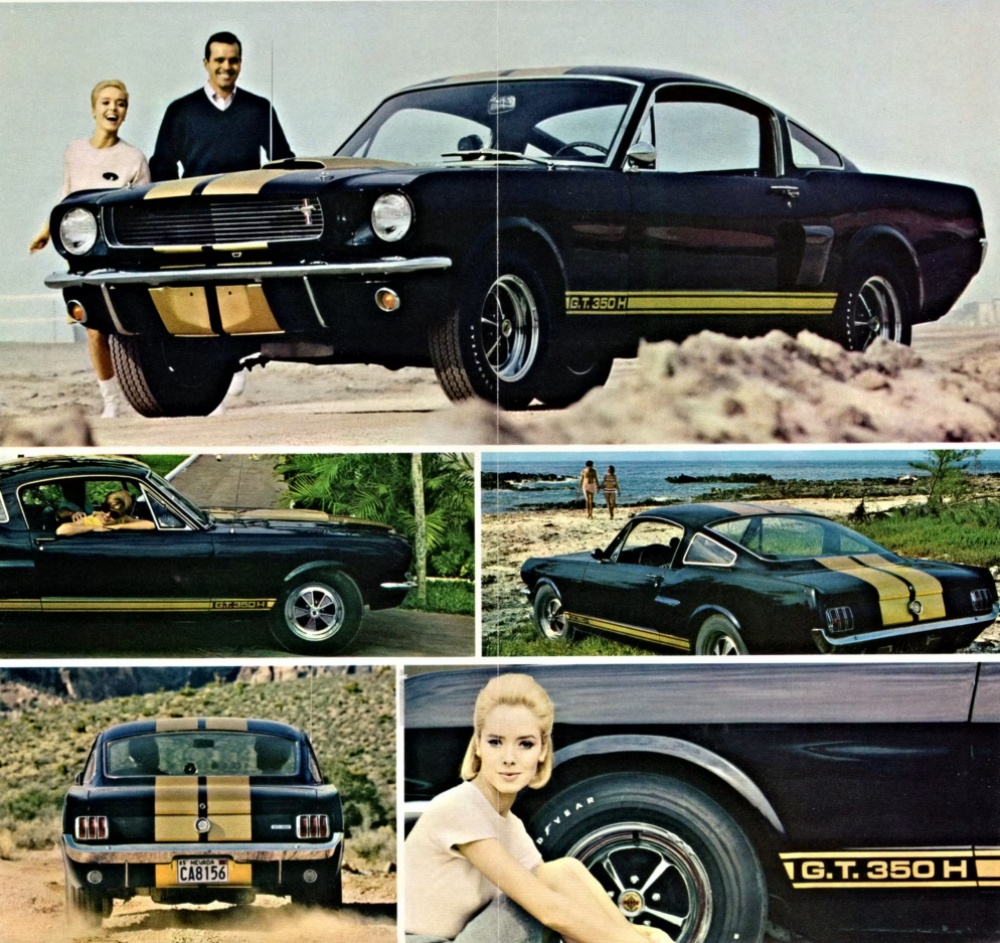
Not a rental car in the modern sense, either. This was 1966, when the Mustang was barely two years old, and Carroll Shelby's GT350 had already established itself as a legitimate road racing weapon. Hertz, meanwhile, wanted something exciting for its Sports Car Club rental program. The resulting deal put roughly 1,000 Shelby GT350s into rental fleets around the country, where ordinary customers could walk up to a Hertz counter and, for a little extra money, drive away in a genuine Shelby Mustang.
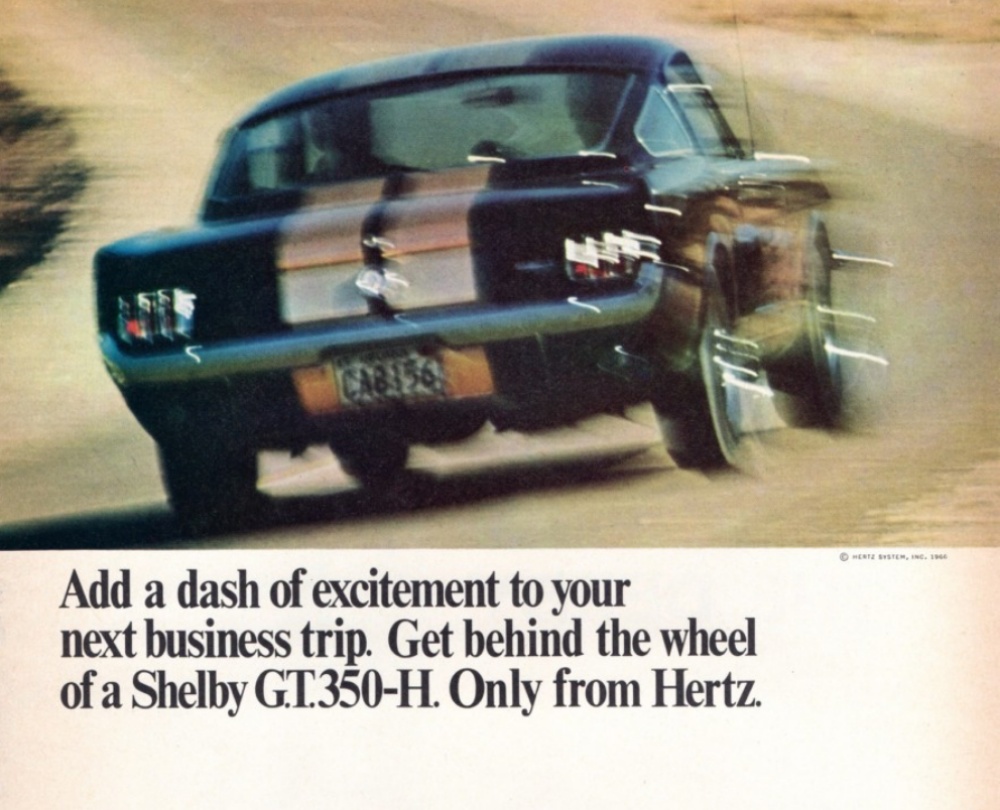
Courtesy of Hertz
The result was the Shelby GT350H, the H standing for Hertz. It would become one of the most recognizable and coolest Mustangs ever built, and the source of enough stories about weekend racers, abused clutches and mysteriously missing engines to keep Shelby historians busy for decades.
The Shelby GT350
The story starts with the GT350 itself. When the Mustang arrived in 1964, Ford had a sales phenomenon on its hands but not necessarily the performance credentials it wanted. Lee Iacocca turned to Carroll Shelby, who had already established his reputation with the Cobra and Ford's racing programs, and asked him to give the Mustang a serious sporting identity.
The 1965 Shelby GT350 was the answer. Shelby American took Mustang fastbacks equipped with Ford's 289-cubic-inch high-performance V8 and transformed them into cars suitable for SCCA B-Production racing. The recipe included suspension modifications, stronger brakes, traction bars, a four-speed manual transmission and a host of weight-saving and structural changes. The engine received a Cobra aluminum intake, Holley four-barrel carburetor and Tri-Y headers, producing a rated 306 horsepower.
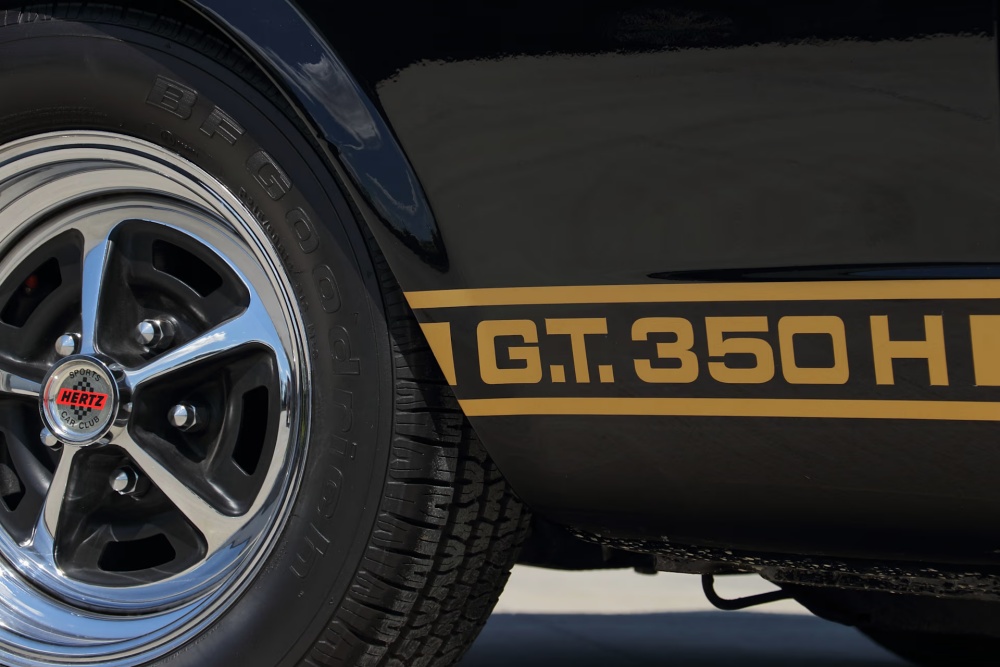
Courtesy of Mecum
The GT350 was not merely a styling exercise or a model to boost Mustang sales. Shelby had to build production cars to satisfy SCCA homologation requirements, and the resulting GT350 quickly proved its metal. Shelby's GT350 won the SCCA B-Production National Championship in 1965, establishing the Mustang as something more than a fashionable new pony car. It was a race car.
For 1966, Shelby softened the GT350 somewhat and made it more civilized. The cars gained more creature comforts and additional colors, while automatic transmissions became available. The basic formula remained, however: a Mustang fastback with a high-performance 289, Shelby suspension and brakes, distinctive fiberglass bodywork, functional scoops and enough racing DNA to make the average Mustang look positively suburban.
The Hertz Sports Car Club inspired the Shelby GT350H
Shelby American general manager Peyton Cramer saw an opportunity. Hertz had a Sports Car Club program that could use something more interesting than the usual rental fare. This was a welcome idea because Shelby needed a way to put its cars in front of more potential customers. A GT350 sitting at an airport rental counter could accomplish something a Shelby dealer could not. Instead of convincing buyers to seek out a bareknuckle performance car, Shelby could put thousands of them directly into the hands of customers for less money and no commitment.
The initial proposal called for just 100 black-and-gold cars, matching Hertz's corporate colors. The idea proved considerably more popular than expected. The order grew from 100 to 175, then 200, and ultimately to approximately 1,000 cars. That makes the GT350H an unusual piece of automotive marketing and now, a very rare crop of cars, indeed.
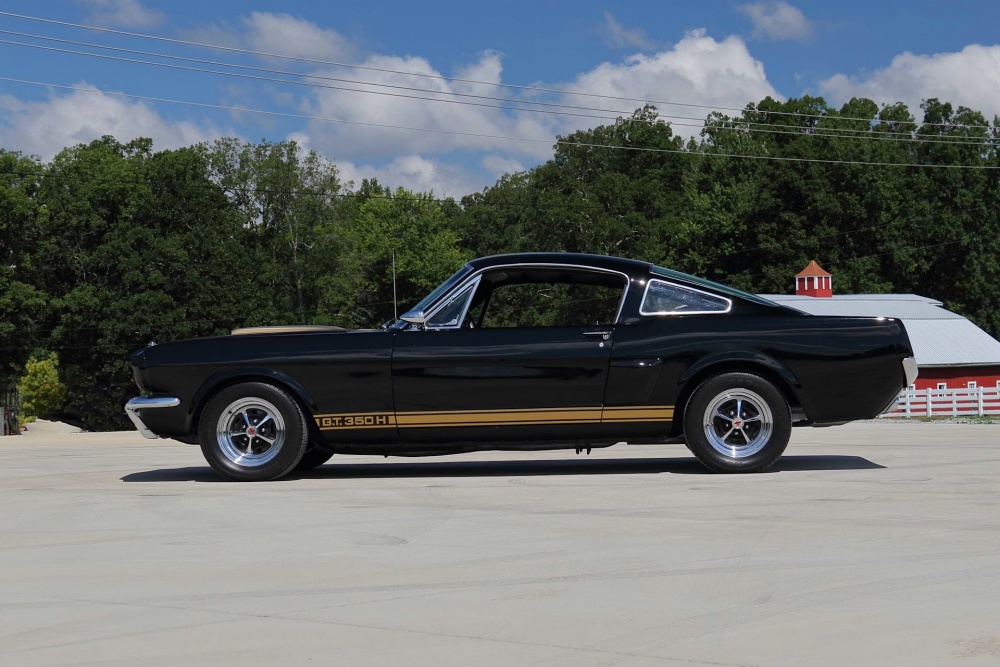
Courtesy of Mecum
The cars were mechanically based on the “regular” 1966 GT350, retaining the 289 High Performance V8, which Shelby modified to Cobra specifications. The engines were rated at 306 horsepower, and the cars retained the Shelby suspension and braking hardware, fiberglass hood, side scoops, plexiglass rear quarter windows, competition seat belts, wood-rimmed steering wheel, and dash-mounted tachometer.
The transmission story is even stranger – the original plan called for a roughly even split between four-speed manuals and automatics. After the first 85 four-speed cars reached Hertz, however, the company switched to automatics for the remainder of the program. Including the prototype that ultimately entered the fleet, there were 86 four-speed GT350Hs. The decision makes considerably more sense when you remember that Hertz was handing these cars to the general public rather than professional drivers. A high-strung Shelby with a clutch was one thing. A high-strung Shelby with a clutch being rented by anyone with a driver's license was apparently another.
Courtesy of Mecum
The brakes created their own headache. Because the GT350's racing pedigree was baked into its design, it used metallic competition brake pads designed to withstand repeated high-speed stops without fading. That was excellent news on a racetrack and rather less excellent news for someone trying to stop a rental car at the first traffic light after leaving the airport.
Shelby even demonstrated the difference to Hertz, showing that standard brake pads could fade badly after repeated 100-to-0-mph stops. The problem was that most Hertz customers were not doing repeated 100mph stops. At low temperatures, the competition pads could feel alarmingly ineffective. Some GT350Hs were fitted with an unusual Minnesota Automotive, or MICO, power-brake system before Shelby abandoned it after only a few hundred cars because of inconsistent operation. Later cars used standard Ford master cylinders. Warning stickers were also placed on the dashboards telling drivers that heavier-than-normal pedal pressure might be required.
GT350H colors
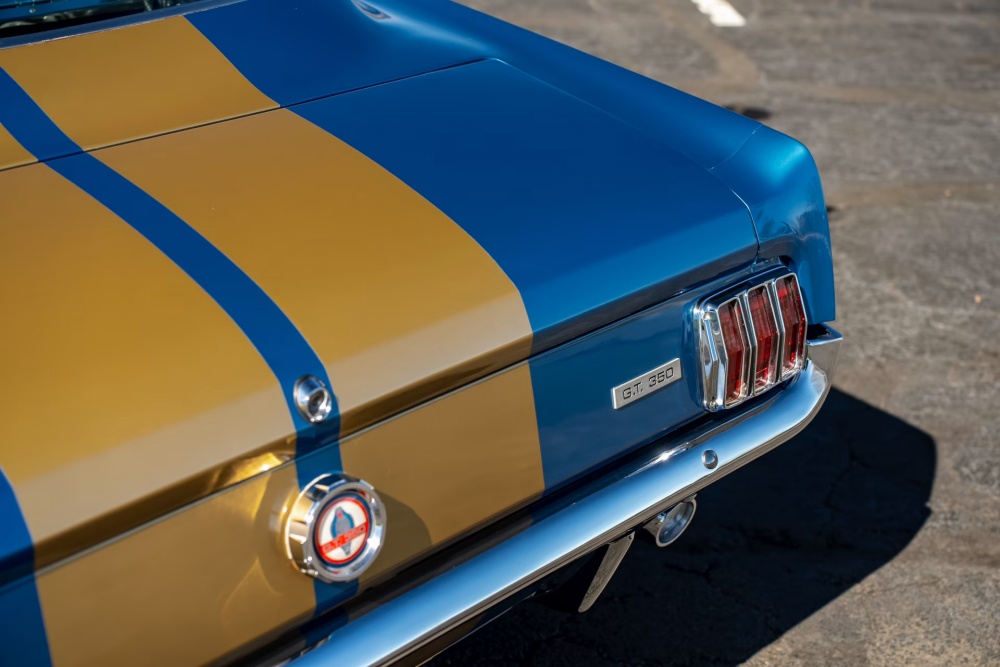
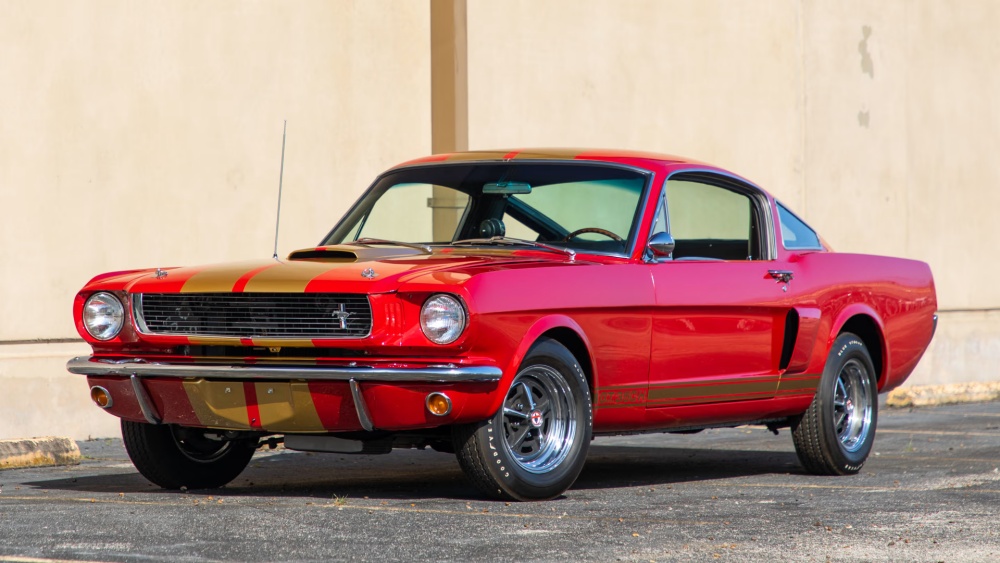
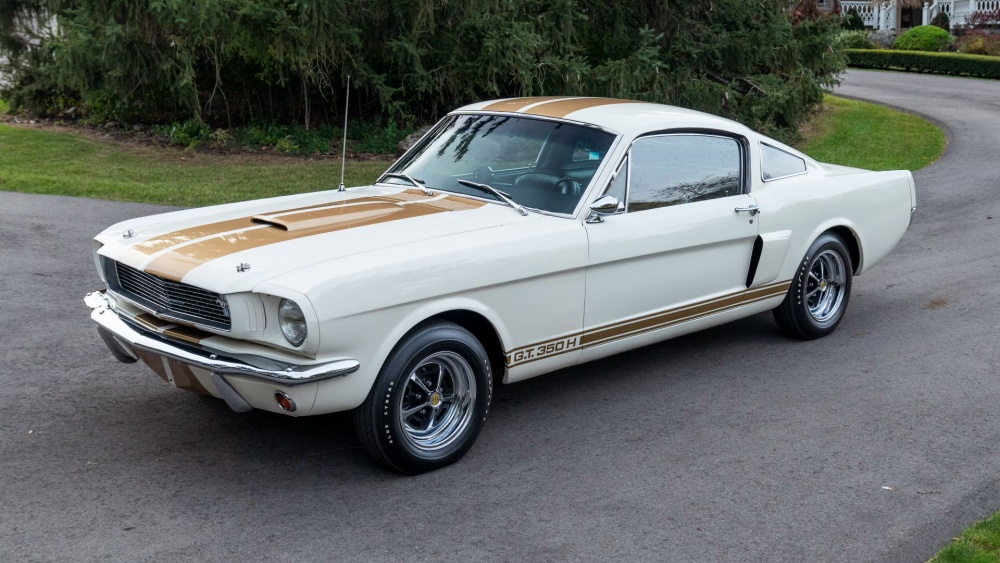
The famous black-and-gold combination was not actually universal, although that is the poster car for the Hertz cars. Hertz actually ordered cars in the five colors available for the retail GT350: Raven Black, Wimbledon White, Candy Apple Red, Ivy Green and Sapphire Blue. Though the majority were black with gold stripes, which is why that combination became inseparable from the GT350H, surviving factory documentation has established that the colorful cars were very real.
Courtesy of Mecum
Adding to the mythos of it all, there were only ever three Hertz shops that ordered every color of the GT350H. According to Hagerty, as far as anyone can tell, there isn’t a photo of that colorful palette of ponies all in one place. If you can step back to the mid- to late-‘60s and envision driving past the airport rental car lot and seeing that bouquet of Mustangs, you’d understand exactly why Shelby had wanted this Hertz partnership.
This is where the GT350H‘s mythology takes over
For decades, stories have circulated about renters taking these cars to drag strips and autocrosses, installing roll cages, swapping engines and generally treating Hertz's Shelby fleet as a no-deposit racing program. There is certainly truth buried inside some of those stories, but, as with most matters of mystery, the reality is more interesting than the mythology.
Courtesy of Mecum
There are documented cases of GT350Hs being used in competition-related escapades. One Hertz manager in West Virginia actually allowed a local sports car club to use one in an autocross, provided its Cobra-driving president also displayed the Shelby at the club's concours the following day. Racer Tom Yeager famously borrowed a carburetor from a Hertz GT350H during an SCCA race at Marlboro, Maryland, after his own Mustang developed carburetion problems. And Cobra racer Mel Wentzel once rented a GT350H from Hertz in California and used it to tow his Cobra race car to Riverside Raceway, where the rental Shelby doubled as an emergency parts source.
Courtesy of Mecum
Even the famous story of a Hertz GT350 engine being pulled and installed in a race car has a kernel of truth. Racer Ray Heppenstall did remove an engine from a former Hertz GT350 and install it in a Falcon, but the Shelby had already been sold after being wrecked. It wasn't an active rental that mysteriously disappeared from the Hertz lot.
That's an important distinction because the truth is already plenty strange. Hertz really did put Shelby GT350s into its rental fleet. People really did race them, borrow their parts and abuse them. Ford itself anticipated the possibility, noting during the program's development that Hertz might see a run on the cars on drag-racing nights.
Courtesy of Mecum
The GT350H therefore became something more than a special Mustang. It became a cultural oddity: a race-bred Shelby that ordinary people could rent by the day.
And then, after it served as a rental, the GT350H had another life. Hertz sold the cars to the public, often through Ford dealers. For years, former rental status actually hurt their value. Owners sometimes tried to conceal the cars' histories, and the assumption that they had been abused or mechanically detuned made them less desirable than ordinary GT350s.
Hertz
That perception eventually reversed, and then some. Once factory documentation established what the GT350Hs really were, their Hertz history became an asset rather than a liability. Today, the rental story is a huge part of what makes them collectible. A GT350H is not merely a Shelby Mustang. It is a super-rare, surviving piece of one of the strangest marketing experiments in American automotive history, painted in some of the best color combos known to humankind.
A 1966 GT350H headed to Mecum
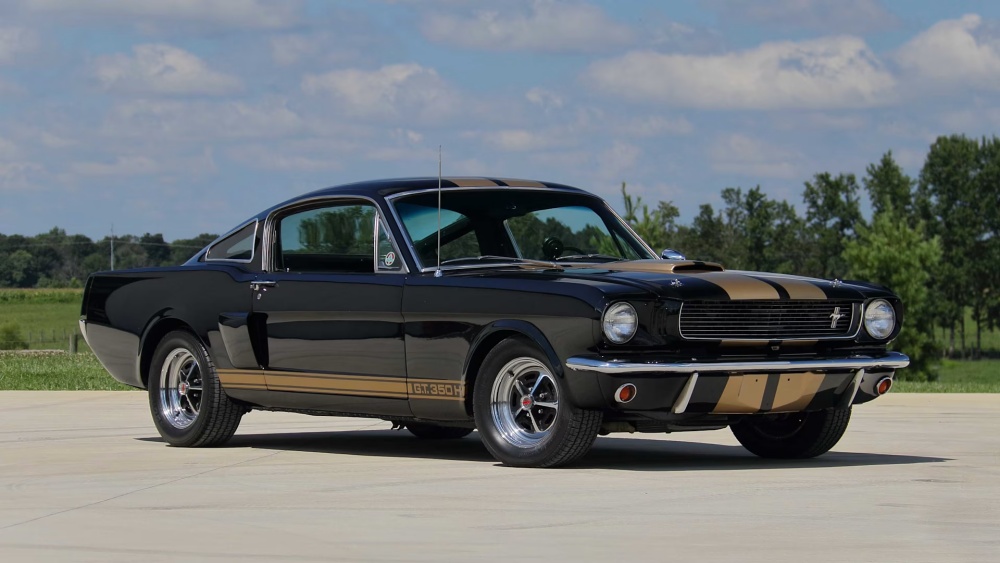
That history is a huge part of what makes the 1966 Shelby GT350H offered by Mecum at the upcoming Nashville auction on Sept. 26 so interesting. This is not simply another beautifully restored first-generation Shelby. It represents the peculiar moment, a tiny subset of special cars that all have strange and unique histories, when a race-developed Mustang became something you could pick up at a rental counter.
Courtesy of Mecum
The particular Mecum car is a Raven Black GT350H with the familiar gold Hertz graphics, a combination that has become almost shorthand for the entire program. Its history includes documentation of its delivery to Hertz. The car has been restored with the details that distinguish a genuine GT350H from the many Mustang-based tributes that have appeared over the years.
The distinction matters. The GT350H's appeal isn't really that somebody once rented a fast Mustang. It is that Ford, Shelby and Hertz pulled back the veil that separated regular folks from a parking lot and the racetrack. The GT350 was born from homologation and competition. The GT350H took that machinery and put it into the hands of the people.
The GT350H was a race car built to be rented, and somehow that made it one of the most memorable Shelbys of them all. For a brief moment, you didn't need a specialized race car, much money, a Shelby dealer, or a garage full of expensive hardware to experience a proper race car. You just needed to know which Hertz counter to walk up to.

Peter Corn
Peter Corn is an automotive writer and storyteller. Peter has spent nearly a decade writing about cars, trucks, and motorcycles for some of the best publications in the business. He believes the best automotive stories aren't really about the machines at all, but instead, the people who love them.
Read Peter Corn's articles
Latest News
Comments
Comments are disabled until you accept Social Networking Cookies. Update cookie preferences
If the dialog doesn't appear, ad-blockers are often the cause; try disabling yours or see our Social Features Support.

_.jpg?environment=live)