McLaren Hypercar program looks to be ahead of the curve
There’s positivity to be found everywhere you look within the McLaren Hypercar operation, as it edges closer to homologating its MCL-HY LMDh prototype ahead of its maiden WEC campaign in 2027.
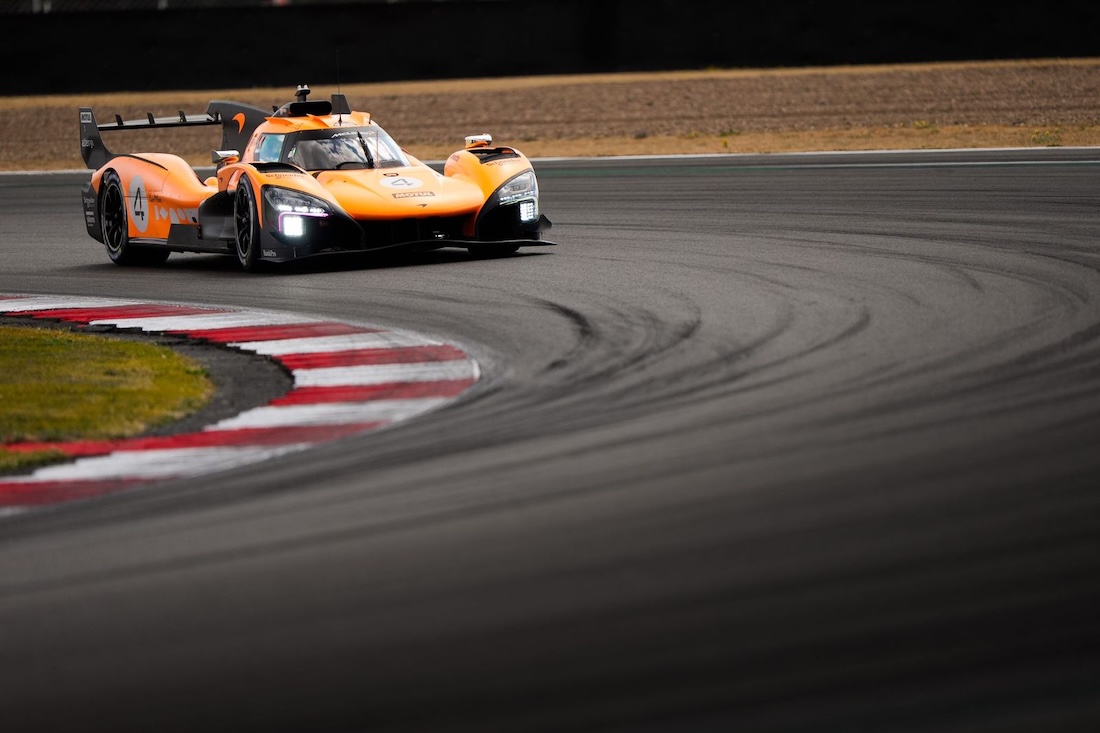
RACER was on hand for the United Autosports-operated team’s most recent test at Silverstone last week in mixed conditions, which demonstrated the progress that has been made in a short space of time. Everything looks to be either on track or ahead of the curve when it comes to the team’s roadmap to 2027. The big headline from the visit was that the car had already completed its first full endurance test, allowing the team to begin focusing on understanding its performance potential.
The 30-hour run came at Spain’s Motorland Aragón, where the MCL-HY ran longer than planned, replicating the demands of an endurance race while stress-testing the car, its systems, and the newly assembled McLaren Hypercar Team. It is a significant step for a program to tackle an endurance test so soon, as the car only began on-track running in May with its first shakedown at Varano. Since then, McLaren has taken the MCL-HY to Imola and Magny-Cours too.
Team boss James Barclay isn't ready to put a number on how much running it has completed so far, simply saying, “We've got a lot of mileage.” But there don’t appear to be any major concerns to address in the critical weeks ahead.
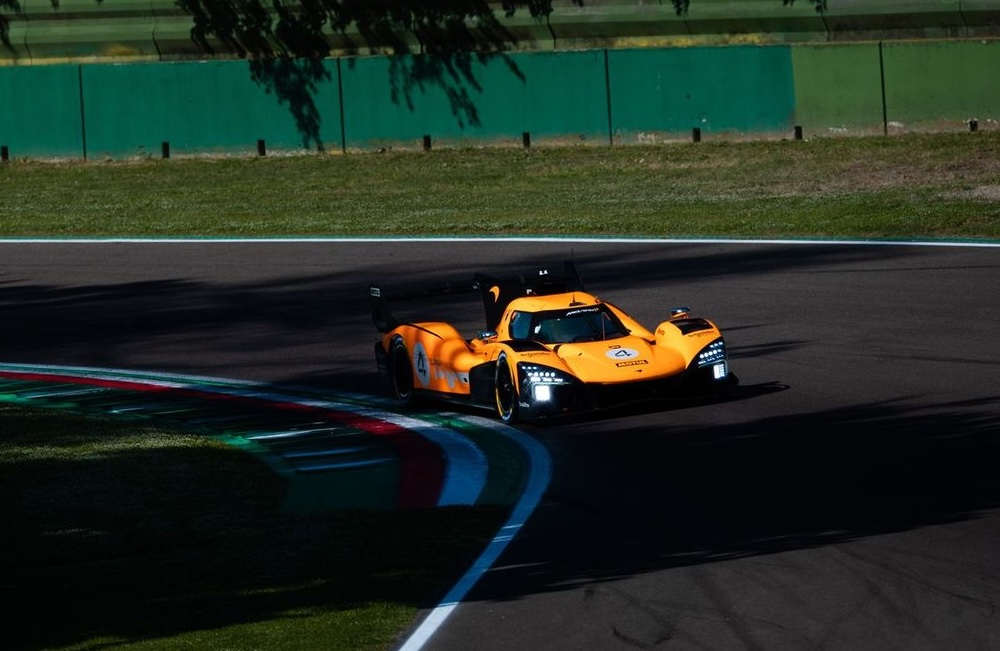
The MCL-HY is not simply a new prototype being developed by an established race operation. The Hypercar project represents the creation of an entirely new team, now fully staffed with almost 100 people, combining experience from Formula 1, Formula E and sports car racing.
The test at Aragon was hugely important from a personnel standpoint, as it was not just a completely uninterrupted 30-hour run for the car; it allowed the team to bond and simulate scenarios. McLaren made short stops to inspect the car over the two days to ensure nothing was damaged unnecessarily, but it did not need to abandon the test for extended periods before returning to the track.
“We did our 30-hour test as planned, which was great,” said Barclay. “We did over 30 hours, so we went beyond.
“We were running it as if we were running a race. There are things we want to stop and check for because we don't want to damage something inherently. We do a quick stop and a check and go again, but it was a 30-hour test.”
That was precisely the point of undertaking the test so early in the development cycle. The MCL-HY uses a known Dallara LMDh spine, but much of what surrounds that platform is unique to McLaren, including its aerodynamic package and its purpose-built 2.9-liter twin-turbocharged ATM V6 engine. Questions can be both asked and answered during these key milestones.
“Systems-wise, does everything work as it should do? It's everything from refueling… It's the team operation side of things. It's the powertrain, absolutely the ICE side," Barclay noted. "You can do dyno, but doing dyno is one thing. But when you're riding over curbs for a race distance, does everything hold together the way it should do?
“We're in that kind of fail-fast phase as well to see where we are with certain life and mileage on parts,” he explained. “There's only so much we can do on a dyno. We have to kind of pound around and see where we are on some of those bits and pieces in the car.”
The result of Aragón was therefore encouraging without being treated as a declaration that the MCL-HY is finished.
“We weren't confident. We weren't unconfident,” Barclay said of the team's expectations before the test. “You know, we had good tests, but we didn't really know. What we don't know, we don't know. The whole point of doing it early is to understand where we are.”
Barclay admitted that there were minor issues related to "maturity" in some areas from "the usual things that you'd expect, the things we've designed that are bespoke to us. We're making small tweaks and changes to certain fixings, mountings, brackets, and you might see some cooling elements on the car change."
The Aragón driver line-up featured factory drivers Mikkel Jensen and Laurens Vanthoor, plus Ben Hanley, Grégoire Saucy and Richard Verschoor, while Jensen, Vanthoor and Hanley subsequently handled the Silverstone test. More drivers have been signed, but due to contractual commitments to other manufacturers, they’ll have to wait until the current racing season ends to get behind the wheel of the McLaren.
McLaren's progress has also allowed it to move away from simply asking whether the MCL-HY works and towards understanding how to get the most out of the package. The initial stages of testing were focused on basic systems integration: making sure the engine, hybrid system, chassis and software were communicating correctly and that the car was fundamentally operating as intended. Those checks have now given way to broader performance and setup work.
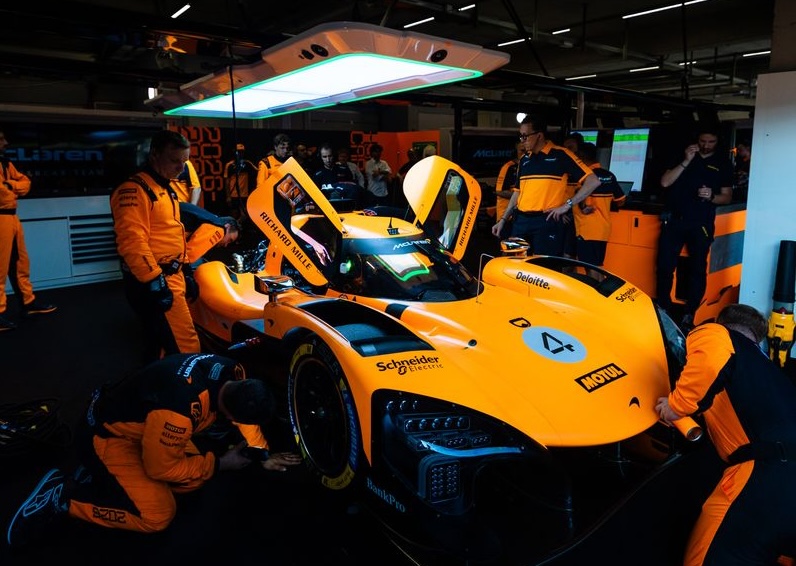
At Silverstone, the team conducted "sweeps" across brake balance, aerodynamics, aero mapping, systems and controls, as the team continues to get a feel for the car's performance potential running at full power. This marks the start of a more sophisticated phase, in which McLaren is looking not merely for a headline lap time but for the car's operating window across a complete stint.
The MCL-HY can already run at full power, having done so from the first day of its initial shakedown. At Silverstone, however, the team was deliberately exploring different ranges rather than simply chasing the maximum permitted Balance of Performance output.
The next challenge is to understand how the car behaves throughout the BoP window it will encounter in competition, while also establishing which of the available Michelin tires best suit the MCL-HY.
“We're not running low fuel,” Barclay said at Silverstone. “We're being realistic and understanding where, with the BOP window as well in terms of weight and power, and understanding how the car performs across that range, which we'll have to race with as well.
“And everyone is racing the new tire already. So now it's starting to understand the different compounds, how they overlap, where the overlap is, how they differ, what suits the car as well.”
That learning process is being supported by another major piece of infrastructure at McLaren: a dedicated driving simulator for the project from Dynisma, now installed at the McLaren Technology Centre. The new driving-loop sim became fully operational in early July, giving the Hypercar program a dedicated tool with which to prepare drivers before tests and correlate what happens on track afterwards.
The process is already becoming cyclical: prepare in the simulator, test on track, return to the simulator and close the correlation gap.
“Mikkel's example was in the sim before coming here, and then we'll do a correlation after,” Barclay said. “Every test we can kind of prep, test, come back and close that gap. The closer we get the correlation, then we can really start relying on that for setup information, for tuning as well.”
The car is approaching its final specification before being taken to the WindShear tunnel for homologation. Although McLaren will continue developing the MCL-HY ahead of homologation, Barclay says there will be no major visual changes to the car seen at Silverstone. However, the team intends to continue developing with a single car until it is confident that it is effectively ready to be frozen for its debut season, before adding a second chassis into the mix. The same philosophy applies to the remainder of the test program, which is still being mapped out after plans to run in the Middle East before homologation were scrapped due to the ongoing conflict in the region.
Still, McLaren has more endurance running planned, including tests that will take the MCL-HY beyond the 30-hour benchmark, while shorter tests will increasingly concentrate on performance. The balance will be critical: enough running to uncover weaknesses, but enough development time between tests to make each subsequent outing meaningful.
“It's great to say we'll test again next week,” Barclay says. “But if we roll out exactly the same thing with no updates, kind of pointless.”
Barclay is keenly aware of how much ground McLaren still has to recover against Toyota, Ferrari, Cadillac and BMW – manufacturers with years of experience in the category – in all areas, especially in software, where development is free and open, but he is encouraged by the foundations laid during the opening months.
For now, the most important achievement may be that McLaren's ambitious roadmap to its race debut has remained intact. The MCL-HY rolled out when promised, has progressed through a varied program of circuits (and made a public appearance at Goodwood), operated at full power, experienced wet running, begun meaningful performance work and now completed its first 30-hour endurance exercise. Most importantly, it did so without a fundamental reliability problem bringing the program to a halt.
“We're in really good shape here,” Barclay summarised “The baseline of the car is really positive, and the fact that we're on time, we have no showstoppers, which is really important as well.
“It's going to be a long journey. We got out, the drivers are smiling, with full power on the first full day; it has potential, but that doesn't mean anything right now. When the green light goes in pit lane, and we do our first competitive session, our first qualifying or two or the first race or two, then we can judge where we are. But the indications are that we're in that ballpark.
"We've got an outline of a painting. We're kind of coloring it in.”

Stephen Kilbey
UK-based Stephen Kilbey is RACER.com's FIA World Endurance Championship correspondent, and is also Deputy Editor of Dailysportscar.com He has a first-class honours degree in Sports Journalism and is a previous winner of the UK Guild of Motoring Writers Sir William Lyons Award.
Read Stephen Kilbey's articles
Latest News
Comments
Comments are disabled until you accept Social Networking Cookies. Update cookie preferences
If the dialog doesn't appear, ad-blockers are often the cause; try disabling yours or see our Social Features Support.