Colin McMaster/Getty Images
It's too early to pick F1's 2027 champion. But there are already clues to how the fight will play out
Even with three grands prix remaining – geopolitical situation allowing – the question of who is favorite for 2027 Formaula 1 championship is already being asked.
That’s an inevitable consequence of the championships being done and dusted in favor of Kimi Antonelli and Mercedes long before they were mathematically secured in recent races. Tantalizingly, you can make a case for any of the big four teams as next year’s frontrunner, which in itself means that it could be the close battle everyone hopes for.
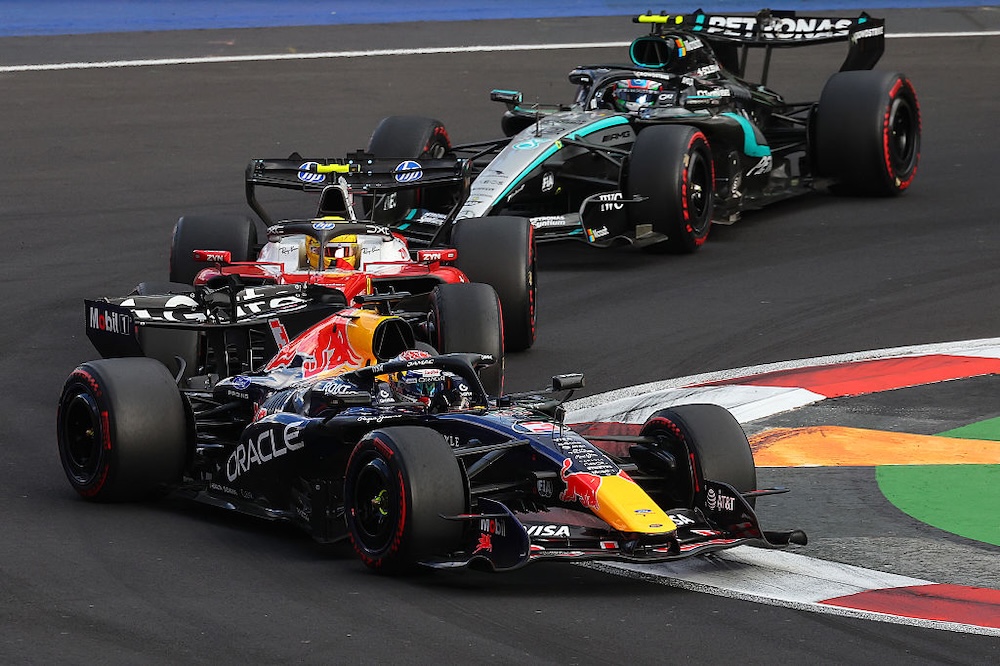
This season has been a Mercedes walkover, but its surefootedness turned to stumbles after its early domination. In the last 13 grands prix, a run starting with Barcelona, the wins have been shared between the four teams. Mercedes is the winningest with six, but Red Bull and McLaren have three apiece, with Ferrari taking two. And one of those Mercedes wins, at the Madring, would have gone McLaren’s way but for an ill-timed – for Lando Norris – virtual safety car period. If this pattern were repeated next year, Mercedes would still lead the way, but it would be too close to call with any confidence.
You can take the evidence of what we’ve seen from Mercedes in 2026 and use the same facts to support diametrically-opposed arguments. The first is that it stole a march on the opposition, both in terms of car design and power unit performance/understanding, laid the foundations for its title wins early and cashed that in. The long hiatus in terms of significant upgrades between Canada in May and Malaysia in October suggests it front-loaded its development, and the narrow operating window that makes it tricky to get the most out of the improved car can support the idea it’s fallen away. As a result, Mercedes has gained in the short term, but is already losing ground.
However, if you apply the famous Juan Manuel Fangio adage of winning at the slowest possible speed, you could also conclude this represents strategic brilliance from Mercedes. It established this unassailable position, paid out what it needed to to stay there under the cost cap and has plenty of spending headroom to ensure that ‘27 development isn’t compromised.
Which of the two positions is correct? Most likely, there’s a little of both, but it won’t be until next season is well-advanced that Mercedes can be fairly judged.
“The competition has been getting tougher between Ferrari, McLaren, Red Bull and ourselves,” said team principal Toto Wolff after clinching the constructors’ championship in Brazil. “It's four teams that can win races and will be challenging for a world championship. I have no doubt that it's going to be very difficult for us next year.
“For me, the 2027 season has started now. It's about learning in the three last races. What is it we can optimize? What didn't we spot when we put the upgrade on the car? What is it we can learn from today and attack these last three races full blast, while also making sure that we have the learning for next year's power unit and car?”
One team Mercedes stole a march on by dint of its works status in 2026 was McLaren. Its title defense has been disappointing insofar as it was non-existent, but perhaps that was inevitable given the ongoing development late into 2025 and the fact it was behind the curve in understanding how to get the most out of the power unit. Yet McLaren has turned that around and won three races this year, including the most recent triumph at Interlagos.
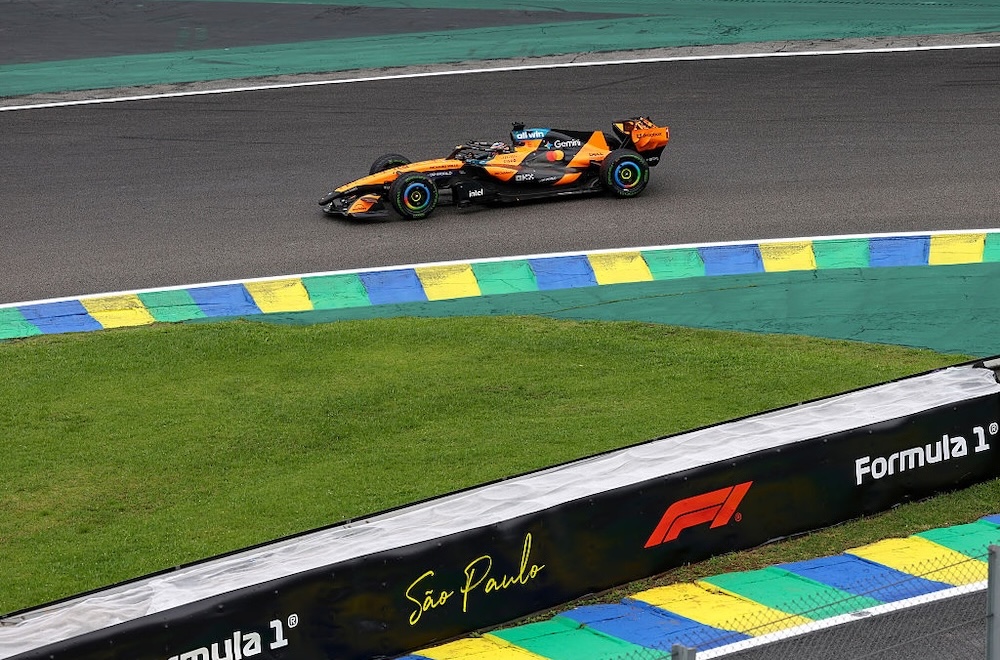
McLaren has a great opportunity to unlock more performance from its car in 2027. Can it do the same for Piastri? Simon Galloway/Getty Images
There are obvious gains for McLaren next year. It will adjust its gear ratios, which were a little too short this year, have a slightly less draggy car and exploit the full allowance in terms of wheelbase length, which it did not do in 2026. That should increase the aerodynamic potential. The car still has some knife-edge qualities that make it difficult to drive, but the introduction of a new front wing, characterized by aero head Peter Prodromou as the 2027 direction concept-wise, suggests it is going the right way.
It’s also a team with a formidable record of successful upgrades established over a number of years, which means it has to be taken very seriously. The key question is whether this year was just a consequence of effectively having to take a year out thanks to the hangover from 2025 combined with the natural advantages of the Mercedes works team, or whether McLaren’s development curve isn’t steep enough. But you can make a strong case for it in 2027, even if there are question marks in terms of depth given Piastri’s struggles. While Lando Norris has thrived, Piastri has only occasionally shown the pace upon which he built his reputation, particularly in races. Along with George Russell, he is perhaps the most high-profile of those to have battled with the characteristics of the current cars.
“Coming from the fight for the championship in 2025, coming as a customer team, somehow we started with the equivalent of three months’ delay in terms of technical know-how and lap time,” says McLaren team principal Andrea Stella.
“We have tried this season to add as much lap time as possible – not necessarily work on the drivability elements, because we thought there’s more in just adding downforce to the car. The car now is much more competitive than the start of the season, by more than one second, but it looks like we have now achieved a point in which we need to try to pursue both the downforce and the drivability. If I see the work that is being done on to 2027, I’m reassured that we are looking at both.”
The next candidate is Red Bull, which has come on in leaps and bounds this year. At times early in the season, it struggled to stay clear of the midfield. But as time has gone on, it’s gotten on top of the car, created a more connected balance, and the brand-new Red Bull Ford power unit has shown its worth.
Rated under ADUO as the strongest V6 in the field, the PU has also improved in terms of harvesting and deployment as the year has gone on. Now it delivers more effective performance on the straights as well as responsiveness.
On top of that, Red Bull has Max Verstappen. And the one thing we do know about Verstappen is that if you put him in a car that has even a sniff of fighting for the world championship, he will be right there. Isack Hadjar, meanwhile, has had a promising first season alongside Verstappen, although without a real halo weekend where he’s nailed a big result. But he talked in Brazil about it only being a matter of time before he wins.
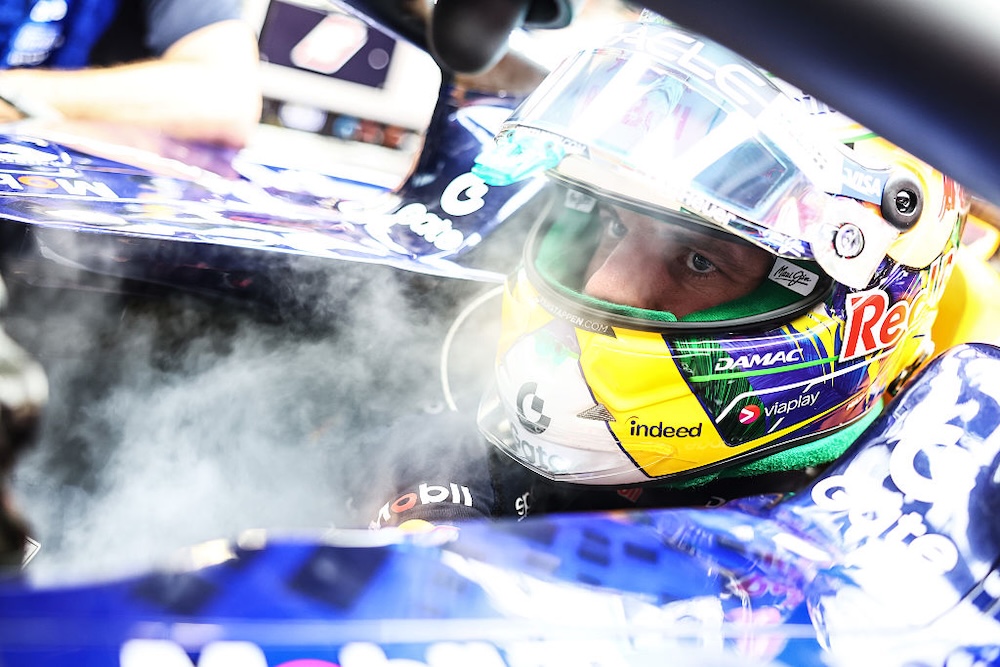
Red Bull has been laying the groundwork for a much more consistent 2027 campaign - and Verstappen will be ready to make the most of it. Mark Thompson/Getty Images
As for Ferrari, there are clear gains to be made with its power unit, which runs a smaller turbo, partly as a consequence of misunderstanding the combustion potential of these power units. Decisions made early in the process design process meant it knew it would carry these disadvantages into 2026, so there’s a notional big step forward to be made next year. Maybe not to the point where it’s at Mercedes’ level, but certainly reducing the deficit that Lewis Hamilton has put at between two and six tenths of a second per lap on the straights this year.
Aerodynamically, the car is very strong, perhaps on balance the most impressive chassis. So if it can continue to plow that development furrow, add further aerodynamic performance and make gains with the power unit, it’s easy to argue that Ferrari should be in a great position. Provided, of course, it can keep its warring drivers, Charles Leclerc and Lewis Hamilton, under control and ensure it’s consistently executing on race weekends. None of this is a foregone conclusion.
So we have four teams, for each of which you can weave a compelling narrative explaining why it will be best off next year. But there is a confounding factor. The limitations imposed by the regulations on aero geometry restrict what you can do in terms of driving the floor harder, say by running a little more rake to get the maximum downforce – something Aston Martin and Williams tried this year, but both struggled with. This could mean they’re all bouncing off a performance ceiling while finding it difficult to control characteristics such as through-corner balance.
It may be that certain characteristics of the car become hardwired. You must choose where you’ll be strong, which could mean the baton being passed between as many as four teams at the front event-by-event, as we’ve seen increasingly as this season has progressed. That would be the ultimate triumph of the aerodynamic side of these regulations, at least partial compensation for the negative effects of the PUs on the way these cars are driven.
Wolff is right that the battle for 2027 has already started. In many cases, the aerodynamic specification for pre-season testing will be close to being signed off. With the lag in aerodynamic development, the work going on in wind tunnels now may not see the light of day until the early races of 2027. That’s what makes it impossible to predict who will be at the front.
The one thing we can say with confidence is that it won’t be any of the other seven teams. There is still a big gap between them and the big four, the consequence of years of spending baking in an advantage. Despite the introduction of the cost cap and regulations designed to keep the big teams from running away, catching up is a long-term project.
The teams with the best opportunities for ‘27 would appear to be Alpine, Williams, Racing Bulls and perhaps wildcard Audi. The latter has enjoyed a very promising first season with its power unit allied to a car produced, of course, by the well-established Sauber team. Aerodynamically, you can make a case for that car being the strongest in the midfield.
There are other teams you have to count out for now. Aston Martin with its Honda engine will make gains, but the power unit is still going to be a limitation next year. Cadillac obviously isn’t ready, and there are question marks over Haas because it’s not operating at the cost cap and has struggled with consistency in the performance of its parts, with manufacturing, preparation and build issues holding it back this year.
You can’t rule out one of the front-running midfield teams making a break for it and moving into the no-man’s land between the two groups, but anything more than that is unlikely. That is something we can say with high confidence.
As for the fight at the front, all we can conclude is that the prospects for 2027 are exciting. What started as a Mercedes steamroller has become an increasingly interesting season where it’s impossible to anticipate who will be on top going into a weekend, or even after Friday practice gives us a pointer. And this is what we want to see. We want to not know who’s going to win.
We want there to be swings within the weekend, where a team can recover after a bad Friday and leap ahead. We could well see races where one team is dominant, then at a different track the next week it cannot win. That means intriguing performance swings at the front. I
So there is at least some upside to these rules. Whether it’ll play out this way, or someone will run away with it, maybe even Mercedes again, is another question. But in November 2026, the sky is the limit for how close ‘27 might be.

Edd Straw
Edd Straw is a Formula 1 journalist and broadcaster, and regular contributor to RACER magazine. He started his career in motorsport journalism at Autosport in 2002, reporting on a wide range of international motorsport before covering grand prix racing from 2008, as well as putting in stints as editor and editor-in-chief before moving on at the end of 2019. A familiar face both in the F1 paddock, and watching the cars trackside, his analytical approach has become his trademark, having had the privilege of watching all of the great grand prix drivers and teams of the 21st century in action - as well has having a keen interest in the history of motorsport. He was also once a keen amateur racing driver whose achievements are better measured in enjoyment than silverware.
Read Edd Straw's articles
Latest News
Comments
Comments are disabled until you accept Social Networking Cookies. Update cookie preferences
If the dialog doesn't appear, ad-blockers are often the cause; try disabling yours or see our Social Features Support.