Mark Sutton/Formula 1 via Getty Images
Why Russell’s Austrian GP pole lap was legal
When Max Verstappen lost control at Turn 9 on his final lap of Q3 at the Austrian Grand Prix, the entire world watching – myself included – thought a Ferrari front row lock-out had been secured. Cars behind would come across the incident and be forced to slow, and have their lap times deleted.
But one key detail meant there were at least two cars that still had a chance to improve their lap time. And George Russell took that opportunity, leading to confusion for a spell as he ultimately took full advantage of the way the regulations require him to react in such a situation.
RELATED: Russell on controversial pole after Verstappen crash
As soon as Verstappen stated to spin, the marshal posted at Turn 9 hit the yellow flag button to display a single waved yellow on the trackside boards. That also alerts race control, who can make a decision on what need to happen next.
On this occasion, with Verstappen in the barrier on the exit of Turn 9, race control was looking for cameras that would show the position of the car but also any debris or objects on track that could impact other drivers coming through.
With less than a minute on the clock, a red flag is not a realistic option unless immediate medical attention is required. Unlike Charles Leclerc’s crash in Barcelona in the last qualifying session, there was not enough time to restart, so the intention is to only upgrade to a double waved yellow at worst in order to allow any drivers ahead of the incident to complete their laps.
Had Verstappen been the final car on track and crashed at Turn 1, for example, then a red flag would prevent anyone from continuing despite not actually needing to pass the incident. A double yellow would alert drivers on their cool-down laps, but allow them to continue unhindered on their timed efforts. Given the session wouldn’t restart under red, then race control is also weighing up whether double waved yellows are required for safety reasons. If the incident could be covered under single yellows – requiring drivers to reduce their speed and be prepared to change direction – then the session can continue, whereas lap times are automatically deleted under double waved yellows.
The reason for a decision being made over the severity of the yellow flag is to avoid ruining everyone’s laps just for a car running wide or spinning and rejoining. In the case of Verstappen, it was clear he had gone off at speed, but through a large run-off area and race control took 15 seconds to find and analyze enough angles before upgrading to a double waved yellow.
The FIA deems sub-10 seconds to be a good response, so it was a surprisingly long time given the position of Verstappen’s car and the corner he was at. And the delay was a window in which both Mercedes drivers passed while the sectors was still covered by single waved yellows.
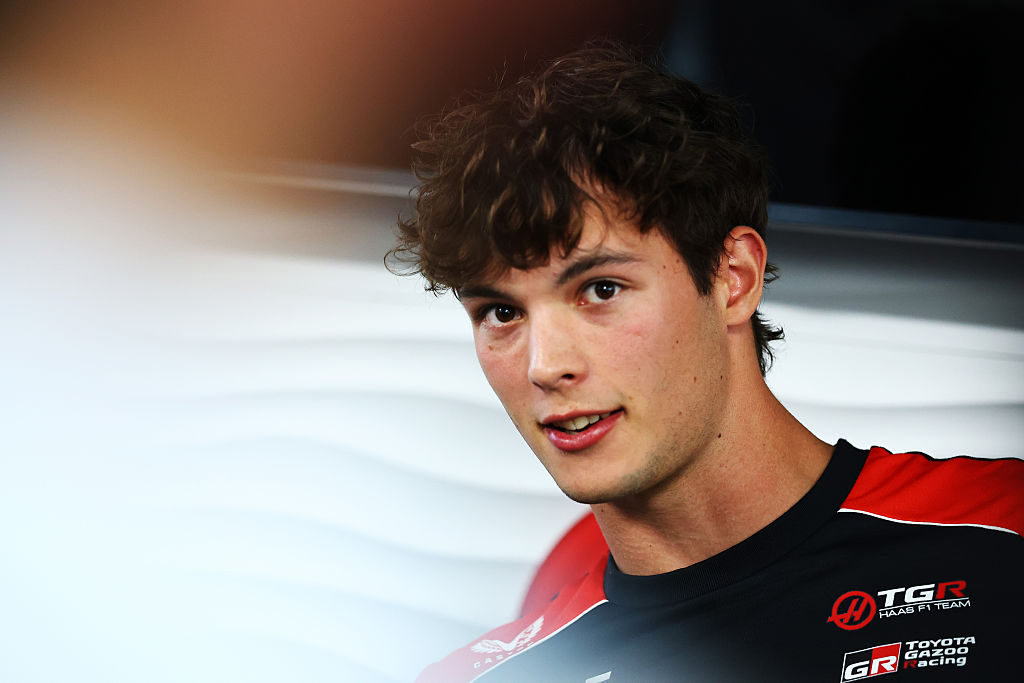
Kimi Antonelli – who was first on the scene – believed he was going to face double yellows based on the radio message he received, and aborted.
“It was unfortunate…realistically it was a mistake from my side because I thought I saw the [double] yellow, instead it was a single so I completely aborted the lap when I could’ve just done a lift like George did,” Antonelli said. “I think I was a tenth slower than George up to that point so it would still have been difficult to get pole, but at least front row was there.”
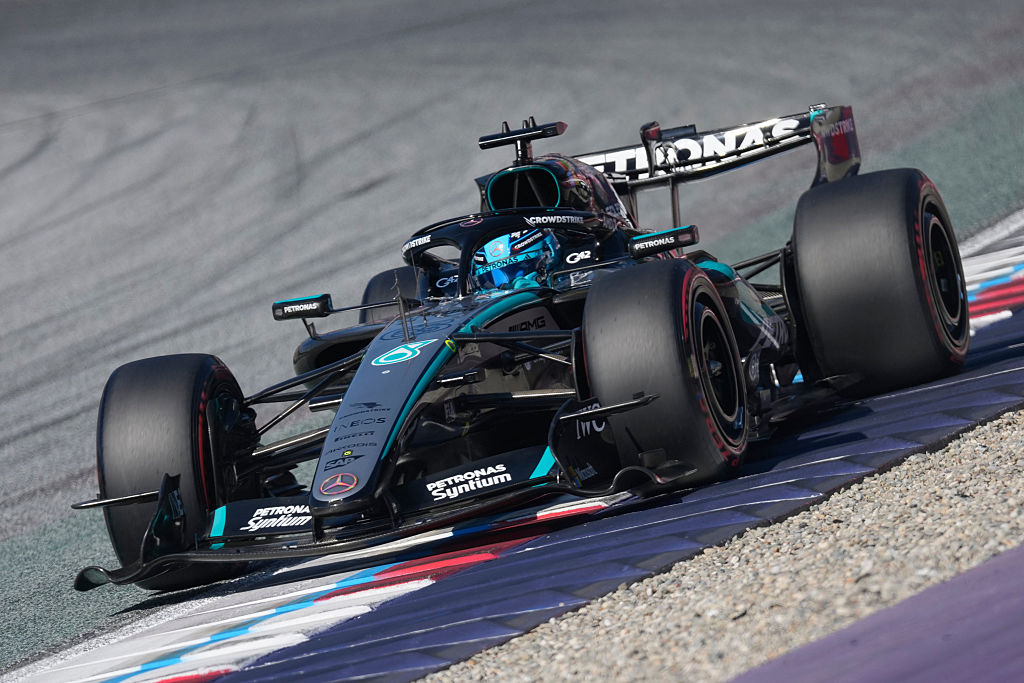
Faced with a split-second decision, Russell made the right call, and it won him pole position. Guenther Iby/SEPA.Media/Getty Images
As Antonelli pointed out, Russell noticed the difference in light panels before the corner and continued with his lap. A single waved yellow appears as a full flashing yellow panel, so the entire light panel alternates between on and off. A double waved yellow is displayed by the panel being spilt into half diagonally, alternating which half is illuminated. The fact that one half is always showing yellow appears as a far quicker – and clearly different – indicator.
So then Russell had to show the stewards that he had clearly lifted, and according to the FIA he fully lifted off the throttle 100 meters earlier than on his previous timed lap, and got back on the throttle 50 meters later. Losing around two tenths of a second, it was deemed to be a clear reaction to a single waved yellow that kept him in full control of his car, something a driver from another team agreed would be the case, as did McLaren team principal Andrea Stella.
“It’s a corner where you can see quite a lot, and I just did a huge lift and I was going to assess the situation as soon as I got to the corner, if the car was there,” Russell said. “But as it was a single yellow, I was pretty confident there was no danger.
“And as soon as I turned into the corner, I already saw the green up ahead, and I actually thought the car had continued, because I didn’t see the car at all. It was so far off the track, I didn’t see the car whatsoever. It was only when I saw the replay afterwards, I saw it was well off into the wall. So, I was glad common sense prevailed there.”
According to the rules, Russell reacted correctly and was fully entitled to complete his lap. That he still took pole is surprising, but time was clearly lost in Turn 9. Race control also followed protocols that are well-considered for a number of situations, but the question has to be asked why it took so long to make the decision to upgrade to double yellows. A car in the barrier on the outside of a high-speed corner is extremely likely to require them, and as much as the single yellow can help in specific situations, the delay could have led to a safety issue had there been an external reason for Verstappen crashing there.
How the reaction from race control was handled, and what the response should be in similar situations in future is up for debate. But the legality of Russell’s lap time given the scenario he was faced with is not.

Chris Medland
While studying Sports Journalism at the University of Central Lancashire, Chris managed to talk his way into working at the British Grand Prix in 2008 and was retained for three years before joining ESPN F1 as Assistant Editor. After three further years at ESPN, a spell as F1 Editor at Crash Media Group was followed by the major task of launching F1i.com’s English-language website and running it as Editor. Present at every race since the start of 2014, he has continued building his freelance portfolio, working with international titles. As well as writing for RACER, his broadcast work includes television appearances on F1 TV and as a presenter and reporter on North America's live radio coverage on SiriusXM.
Read Chris Medland's articles
Latest News
Comments
Comments are disabled until you accept Social Networking Cookies. Update cookie preferences
If the dialog doesn't appear, ad-blockers are often the cause; try disabling yours or see our Social Features Support.