Jakob Ebrey/Getty Images
What do the new Hypercar regulations mean for the future of sports car racing?
The Le Mans 24 Hours is in the rearview mirror, but the sportscar racing season powers on, with the IMSA Endurance Cup round at Watkins Glen this weekend and the FIA WEC’s six-hour clash at Interlagos right around the corner. Time passes quickly, and while the focus for the factory teams in Hypercar and GTP is locked on the business end of their respective campaigns, there’s now an increased sense of urgency to plan for the medium- to long-term of their programs.
This is because at Le Mans the ACO, FIA and IMSA have finally set the direction for the incoming 2030 Hypercar regulations in public. Sure, it wasn’t the unveiling of a full published set of technical regulations, but it was the first major step towards securing the future of sportscar racing’s top class.
The full set of regs is on target to be published by the end of this calendar year. After that, the boardrooms for all the OEMs involved in the top level of sportscar racing will have decisions to make and budgets to sign off, to allow their race teams to go away and develop cars in time for track testing before the next-gen cars are homologated for Q1 of 2030.
The broad direction is now clear. What remains unclear is whether the detail to come will satisfy enough stakeholders to preserve the momentum that has transformed the current era into one of endurance racing’s greatest success stories.
At a basic level, the new regulations are essentially a merger of LMH and LMDh, though this long-awaited single-platform solution appears set to lean more heavily toward the LMDh philosophy.
Cars will all be hybrid-powered (using either a bespoke system or a common one from a nominated supplier), two-wheel drive, with open rules on engine architecture and frozen from performance updates for five years, though RACER understands that mechanisms will be put in place to allow teams that lag too far behind to update their cars.
Gone, supposedly, is the current arms race which sees multiple factories bringing EVO ‘Joker’ updates to their cars each year. In its place is a more stable system that should prevent cost spikes down the line and, in turn, lead to closer racing.
These new cars will be built around survival cells which meet new FIA safety standards, weigh more than 1040 kg and feature a mandated weight distribution and center of gravity. The spine, like the hybrid system, may either be a bespoke solution or an off-the-shelf one from a supplier, like the current LMDh ruleset (assuming suppliers agree to come forward to offer one).
Aerodynamically, they’ll all run with a prescribed underfloor and diffuser, and fit into a tighter window than the current regulations. Heavier (1200kg) liquid hydrogen-powered prototypes will also be allowed and balanced in via an ‘Equivalence of Technology’ process, with specific tires.
Add it all together, and if the rule-makers get it right, they’ll confidently roll out a single ruleset that keeps cost contained, makes performance balancing easier, and appeases as many of the current band of manufacturers as possible.
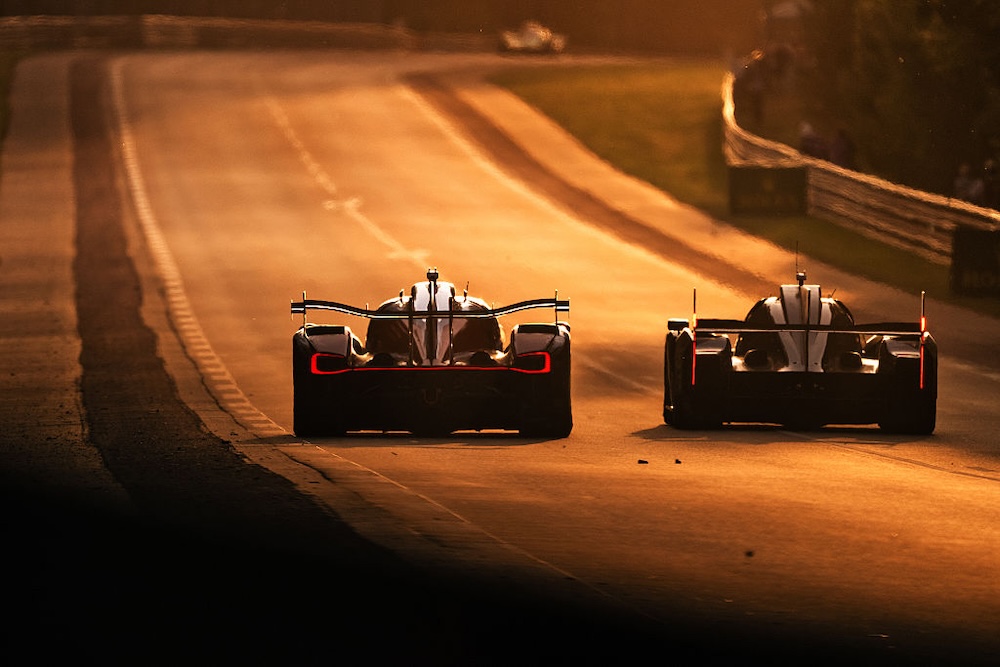
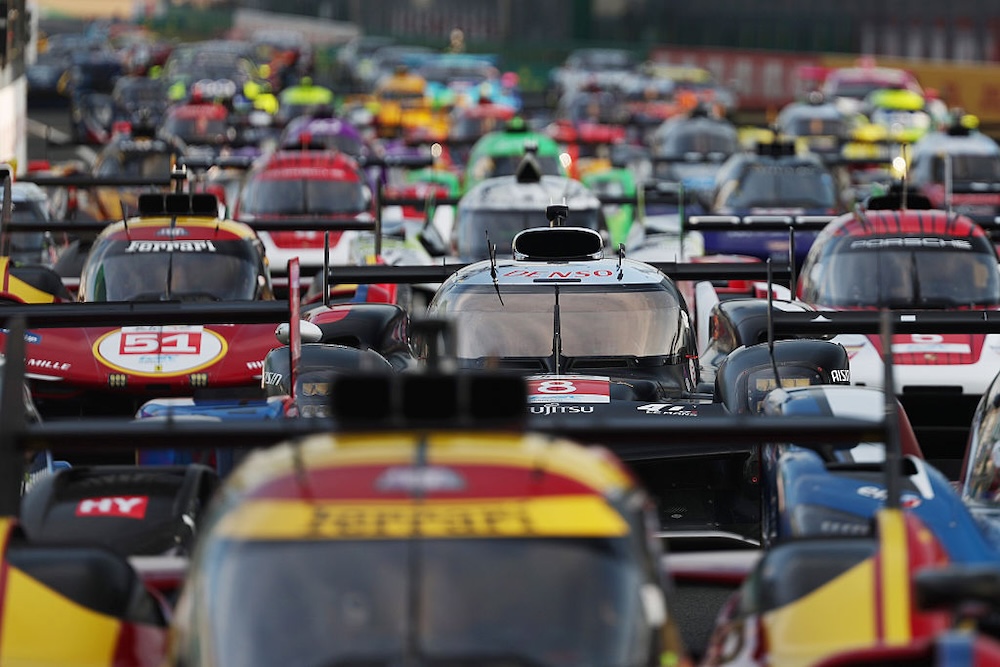
The new rules effectively merge Hypercar and LMDh regulations - with an emphasis on the LMDh side of the equation. James Moy/Getty Images
The initial reaction from key figures to the journey to this point has largely been positive.
Frederic Lequien, the WEC’s CEO, feels the move to a single platform with the parameters outlined is “in the interest of everyone,” telling RACER that “the direction is clear, everybody agrees, and it makes sense.”
IMSA President John Doonan, who confirmed to RACER that the aim is to debut the new rules at the Rolex 24 Hours in January of 2030, believes the timeline is workable.
“It takes time to develop the cars and get ready,” he added. “So getting it out here five seasons in advance, you can’t ask for more.”
Yet despite the consensus around the concept, a recurring theme emerged from manufacturers and suppliers in the wake of the announcement. The direction may be set. The detail is not.
For the current LMH manufacturers in particular, the biggest question is whether the new formula will remain technologically relevant enough to justify investment.
Ferrari, Toyota and Peugeot all point out that the current rules work for them because they benefit from R&D in building their own cars with their own hybrid systems. Whether the new philosophy can continue to provide that value remains open for debate.
“I would not call it convergence. I would call it an alignment,” Toyota Racing’s technical director David Floury told reporters in the wake of the conference, and on the eve of the Japanese brand’s historic sixth Le Mans win. “It’s more or less in line with the picture we are seeing here. Clearly we LMH have to align with LMDh regulations.
“The reason why we, as Toyota, go racing is to develop technology to support road car development and develop people.
“The fact that the grand context from an environmental point or view or an energy point of view, it would make sense and be responsible to make a step in the direction to be relevant in this respect. I don’t see that at all.”
That concern was echoed by Stellantis Motorsport boss Olivier Jansonnie, despite his support for the proposed development freeze.
“It’s something they should have done 10 years ago,” he said of the freeze, before turning to the bigger issue.
“We like to understand the technological roadmap they were to put in place. What do you want to promote as a group in terms of technology? Those cars are Hybrid. What are we doing on the energy? What are we doing on the power? Do we keep the same amount of electrical power on the car energy? Which one, then, LMH or LMDh? Or something in between? How do we want to balance the cars in the future? It’s very early in the process.
“Now it needs to be analyzed. Where can we put the technology while keeping the cost completely under control? There’s probably room to increase the amount of electrical energy compared to LMDh translation for the current LMDh.”
Ferrari’s shares a similar view, but its main concerns lie elsewhere.
The manufacturer has consistently emphasized the importance of maintaining the ability to create a truly bespoke racing car, and according to the proposed framework that option remains available.
“When we have the Prancing Horse on the car, the car has to be built 100 percent in Maranello,” Ferrari’s global head of Endurance and Corse Clienti, Antonello Coletta, stated to the press.
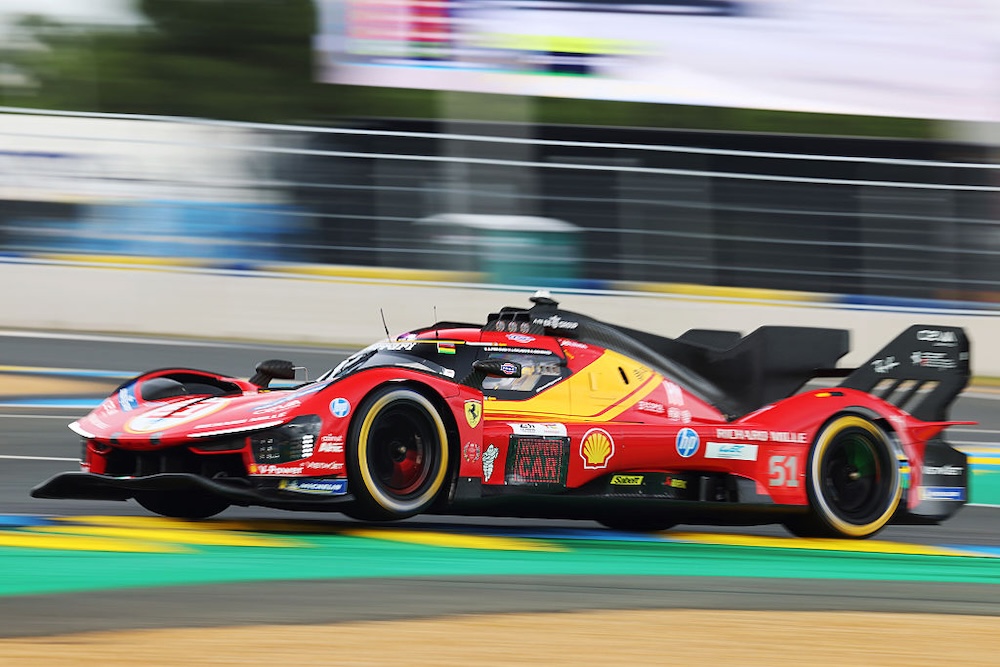
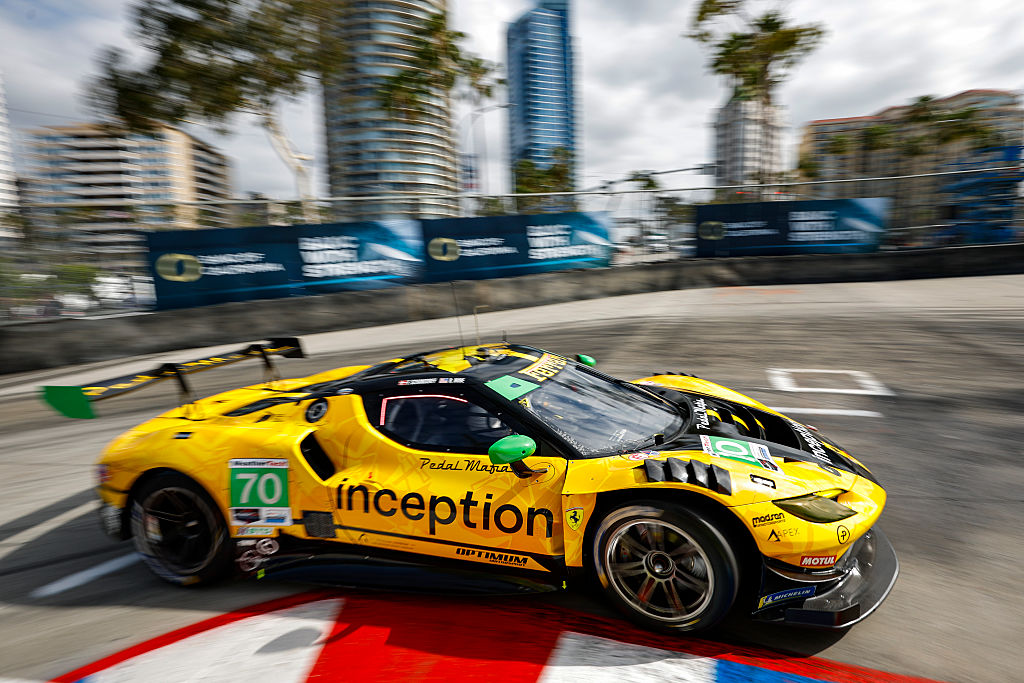
From Ferrari's standpoint, it's imperative that manufacturers retain the ability to build their own cars under the new rules. Jakob Ebrey/Getty Images
Aston Martin arrives at the discussion from a different starting point. Its Valkyrie is currently the only non-hybrid Hypercar on the grid, meaning the shift to a mandatory hybrid platform would require a significant change in approach. Yet the British manufacturer appears encouraged by the direction being taken.
“Regulation direction as it is means it’s definitely a change for Aston Martin’s approach to Hypercar racing in the future,” AMR endurance boss Adam Carter told RACER. “2030 will require us to get a different platform. However, we absolutely love endurance racing; it’s right at the heart of Aston Martin. We are very supportive of what the FIA, ACO and IMSA have done.
“If you look at the platform they’ve created in terms of popularity and the engagement and growth in WEC races, we’ve got full trust in them to develop a platform which will continue this great success in endurance racing.
“We’ve been fully engaged with the regulation development process to this point. We understand what 2030 will require, and the world will have changed from where we are today by 2030, and as we march towards 2035 as well. It will align with Aston Martin’s roadmap for propulsion systems.
“The direction has been set, the detail has not. We have to work collaboratively as a group of manufacturers with the regulatory bodies to get the detail nailed down. All of a sudden we’ll need to be building cars in 2028 and that’s not far away, and it’ll be 2027 before we know it.
“(Staying committed to both IMSA and the WEC going forward) That’s our intent. It’s a long way into the future. Le Mans is super important to Aston, and America is a huge market. Having Le Mans, Silverstone and America is a great alignment.”
Beyond the manufacturers, another critical question hangs over the future platform: what is the business case for the chassis constructors currently involved: Dallara, ORECA, Ligier and Multimatic?
Designing and producing an off-the-shelf spine only makes sense if sufficient volume exists to justify the investment. Unlike the original LMDh concept, there is currently no planned carryover into a future LMP2 platform, removing a potential revenue stream.
As a result, several key questions remain unanswered. Among them: what exactly constitutes a spine under the new regulations? Is supplying multiple manufacturers more commercially attractive than developing bespoke solutions? Will manufacturers even want a shared spine a second time around? Could cost-capped components be written into the regulations?
The same uncertainty surrounds carryover from the current generation.
When discussions first began, several LMDh manufacturers pushed for a pathway that would allow existing cars to evolve into the next era rather than be replaced outright. Cost reduction was the obvious motivation.
New FIA safety standards and increased crash-test requirements appear likely to necessitate entirely new monocoques, removing the possibility of direct carryover in one critical area. But significant opportunities may still exist elsewhere.
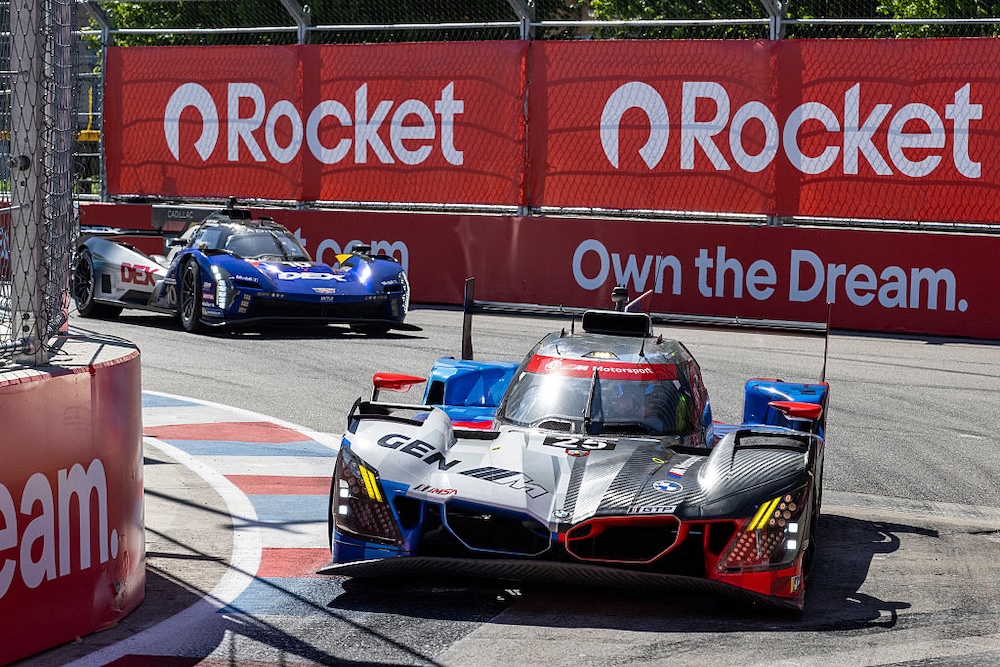
Updated safety standards and crash test requirements mean that existing LMDh manufacturers will likely still need to build completely new cars, however IMSA President John Doonan hopes that other components such as engines can carry over to help control costs. Geoff Miller/Getty Images
“I think one of the things that we want to make sure of is that the investments that these companies have made do not become obsolete,” Doonan told RACER.
“So from an engine standpoint, my hope would be that they could carry those on. The same with most of what they’ve developed from a spine standpoint. The four constructors – Dallara, Multimatic, ORECA and Ligier – have dedicated so much to their work with the manufacturers. None of those things do we want to become completely obsolete.
“Will there be updates to the cars based on the new regulations, or will others competing in the top category have to modify their strategy and develop a car to these regulations? Yes. But the goal would be to make sure that we don’t completely make obsolete what people have today.”
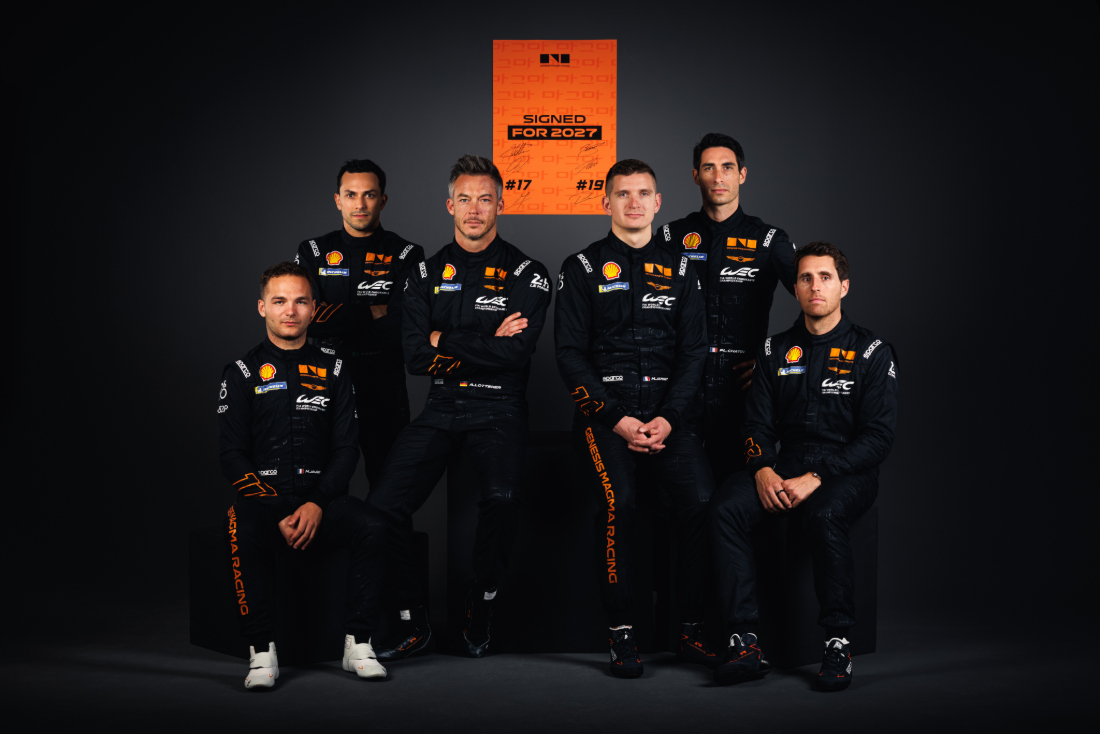
That position has already found support among the two incoming manufacturers for 2027, McLaren and Ford.
“We arrive in 2027, it’s not a particularly long period (until the next rules cycle), so the ability to carryover elements of the car would be a positive not just for us but we’re sure for many others,” McLaren endurance racing boss James Barclay explained to RACER.
“We hope we can find a balance, so keeping some key elements of the car which are significant in cost, and then in other areas where there’s a requirement to change, such as safety with the chassis. We support that.”
Ford Racing’s Mark Rushbrook added: “There will be changes to the chassis required, but details of that will be worked on in the coming weeks. It’s not a major sticking point, but it makes sense budget-wise as we look at how we spend our money.”
Elsewhere, several major decisions remain unresolved.
There is still no confirmation of a future spec hybrid supplier (though Bosch is tipped to be in talks), while tire manufacturers, including Michelin and Goodyear, continue to wait for the outcome of a delayed tender process.
“It’s taken more time than we expected,” ACO President Pierre Fillon said of the tire tender. “We plan to make an announcement, maybe just after São Paulo (next month).”
Taken individually, none of these issues appears insurmountable. Collectively, however, they will determine whether the 2030 regulations merely preserve the current success or provide the foundation for another decade of growth. And that is ultimately the challenge facing the ACO, FIA and IMSA.
There are still too many variables to predict what the top-class grids will look like in 2030. Beyond the contents of the rulebook itself, economic pressures, changing corporate priorities and geopolitical uncertainty will all influence future manufacturer decisions.
Some brands may stay. Others may leave. New names may arrive. Existing manufacturers could expand, reduce or even revive programs that have already been scaled back.
Porsche, which scaled back its 963 program to IMSA-only this year, is monitoring developments closely, with motorsport VP Thomas Laudenbach acknowledging that moving toward a single set of regulations “is what we wanted”. Acura, meanwhile, may view the proposed development freeze as one step toward reactivating its paused GTP effort.
For now, what matters most is that the process has begun. The framework is in place. The philosophy has been outlined. The destination is visible.
But while the train bound for 2030 has undoubtedly left the station, the task now is ensuring enough manufacturers are still on board when it finally arrives.

Stephen Kilbey
UK-based Stephen Kilbey is RACER.com's FIA World Endurance Championship correspondent, and is also Deputy Editor of Dailysportscar.com He has a first-class honours degree in Sports Journalism and is a previous winner of the UK Guild of Motoring Writers Sir William Lyons Award.
Read Stephen Kilbey's articles
Latest News
Comments
Comments are disabled until you accept Social Networking Cookies. Update cookie preferences
If the dialog doesn't appear, ad-blockers are often the cause; try disabling yours or see our Social Features Support.