IndyCar's 2028 car breaks cover
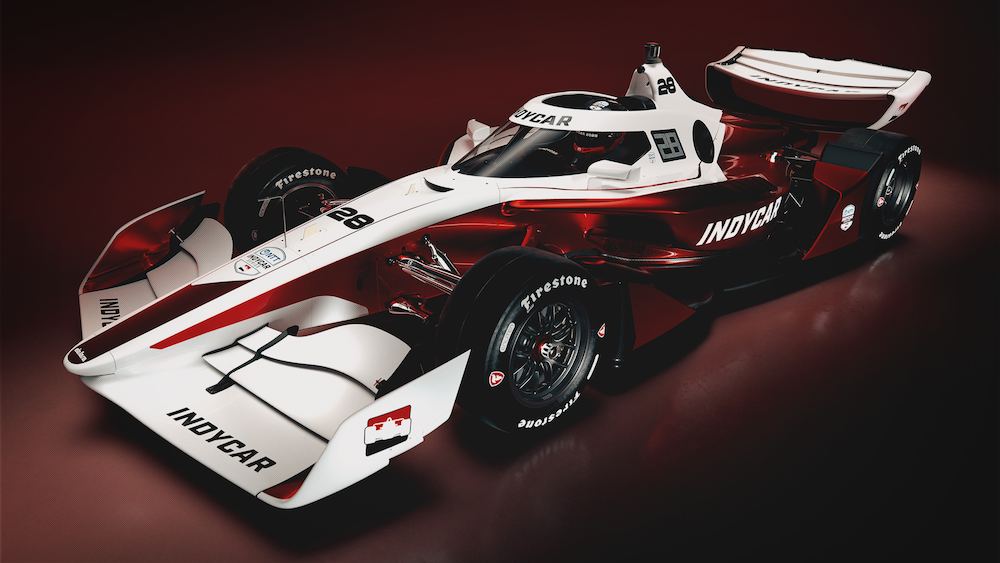
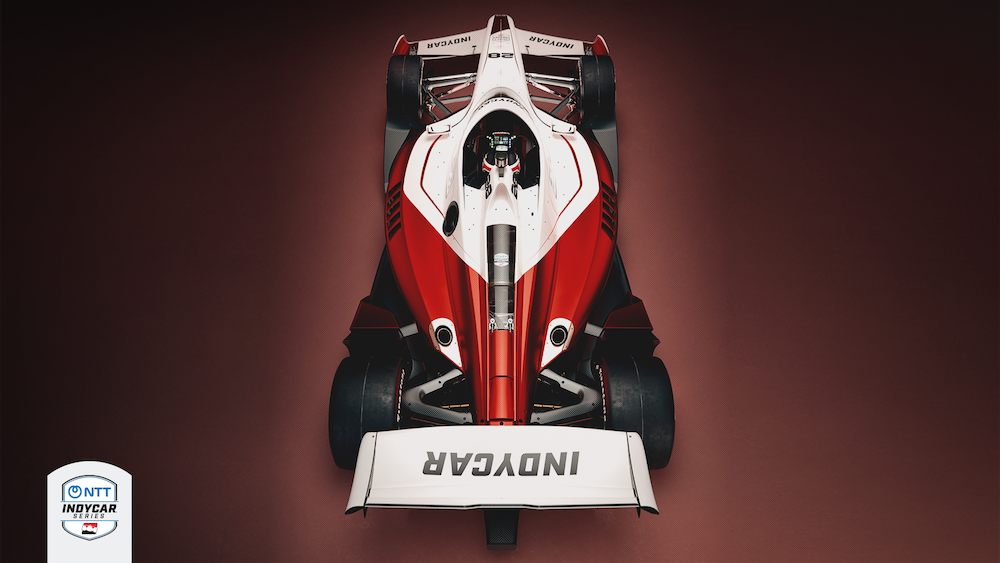
The IndyCar Series has revealed its new-for-2028 chassis, Dallara’s Indy Racing 28 (IR28).
“We are pleased to unveil renderings of the new chassis that will take our sport into an exciting new era,” said IndyCar president Doug Boles.
“As you can imagine, a project of this magnitude takes an incredible amount of planning, collaboration and execution. I would like to thank all of our partners including Dallara, Chevrolet, Honda, Firestone and Shell, who have worked tirelessly to create a package that will enhance IndyCar’s already incredible competition and industry-leading growth.”
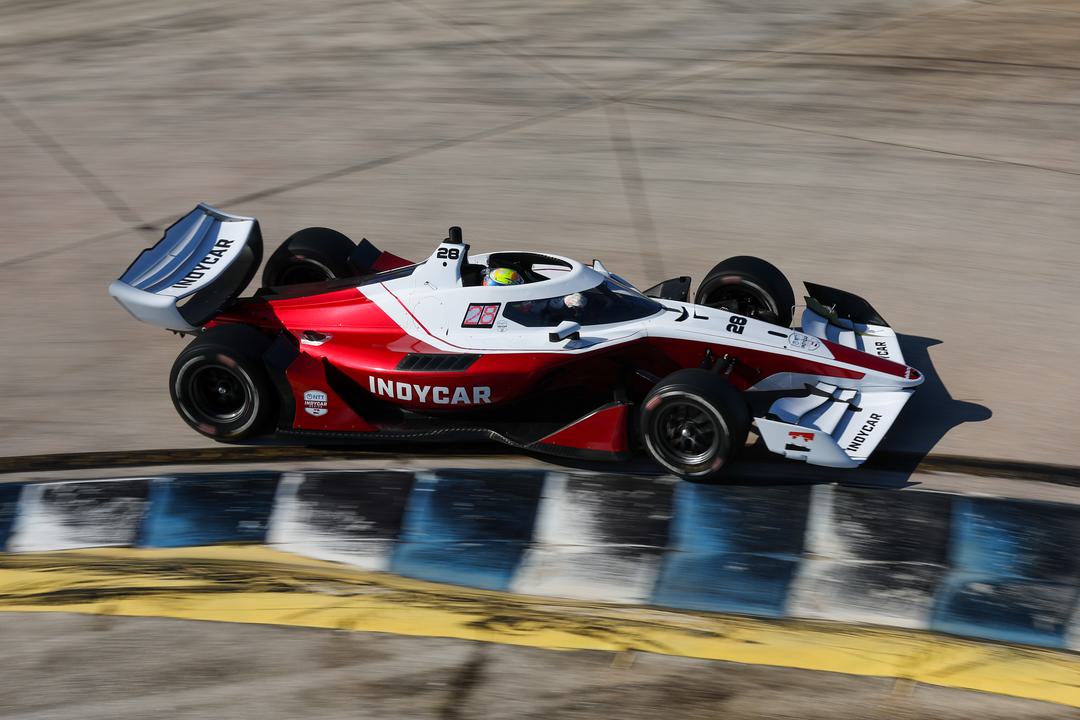
The IR28 will replace the Dan Wheldon 12 (DW12) at the end of the 2027 season, and soon, renderings of the IR28 will be replaced with a real car. As RACER revealed during the recent Nashville IndyCar event, the IR28 is set to break cover later this week and perform validation testing with a new unbadged 2.4-liter twin-turbo V6s engine supplied by Ilmor, makers of Chevy's engines.
The venue has not been confirmed by the series, but the Indianapolis Motor Speedway road course would be the closest option for the series and its vendors. Just prior to May’s running of the Indy 500, a pair of IR28 prototype tubs arrived at Dallara USA’s base next to IMS, and it’s believed both will take part in the test with their respective 2.4s installed.
“With initial testing to begin this week, there is still plenty of work to do before 2028, but we are well on our way to showcasing a new era of IndyCar, which will include enhanced wheel-to-wheel competition, track records, standards in raceability and new benchmarks in safety,” Boles said.
“We are confident the IR-28 is the ideal package to move IndyCar forward for our teams, drivers, partners and fans.”
Compared to the existing and highly stressed 2.2-liter twin-turbo V6s supplied by Chevy and Honda, the increase of 200ccs should allow for more power to be made without placing the 2.4-liter units under the same extreme internal pressures. The previous target of 800hp has been reduced to a starting point of 760hp, with the goal to reach 800hp in the future.
A brand-new six-speed transmission from Xtrac was commissioned to deliver the hybrid power through a lighter design. Weight savings have been found throughout the car, but the new transmission is said to be the largest contributor to the mass reduction initiative with the carving of 25 pounds from the DW12’s gearbox.
Bridging the engine and transmission, a significant alteration was made to the bellhousing design in order to fit a larger battery pack for the car’s all-new low-voltage hybrid system.
Like the more robust 2.4-liter combustion engines, the new energy storage system (ESS) and motor generator unit (MGU) form a package that’s intended to contribute more power – approximately 100hp, which is roughly double what’s on tap in the DW12, has been the ambition held by the series – and for a longer duration, thanks to the added space created to install more capacity in the ESS.
A complete change in hybrid vendors has been orchestrated, with Spain’s BOLD Technology responsible for a switch from supercapacitors to a battery-based ESS that IndyCar says will offer 14 times the energy storage over the DW12’s system. The motor generator unit (MGU) is being handled by England’s Helix, which serves as a supplier to Formula 1 and Formula E teams. Together, the IR28’s hybrid package is expected to come in 20 pounds lighter than the existing system made by Skeleton (ESS) and Empel (MGU).
IndyCar says the collective weight loss efforts for the IR28 will lead to a completed car that weights 100 pounds less than the DW12.
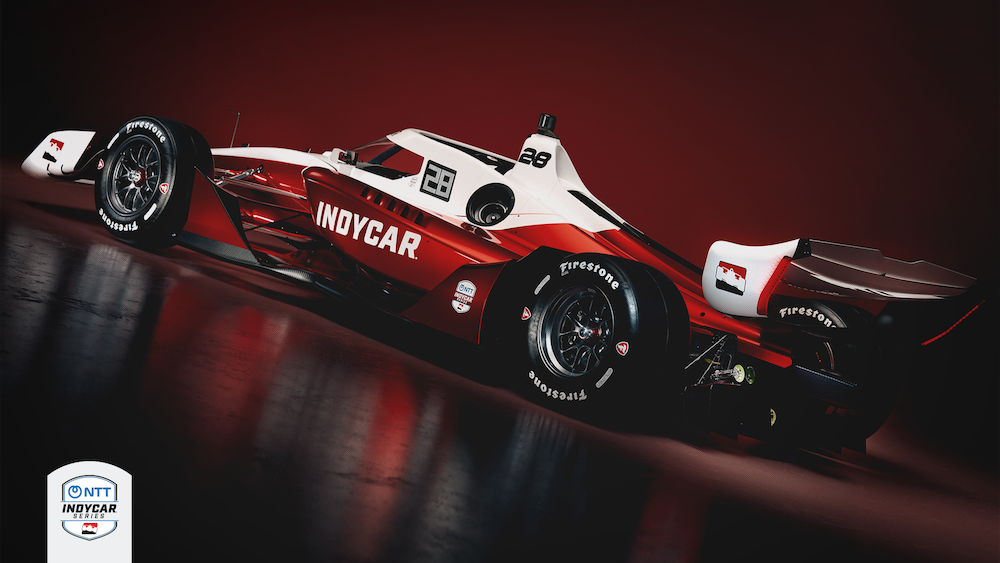
Dallara is responsible for the majority of the IR28 chassis design. After team owners were shown the first version of the car, which was met with unflattering responses late in 2024, the series took the feedback to heart and incorporated styling assistance from IndyCar’s Tino Belli and digital artist Chris Beatty, which led to the visuals shown here.
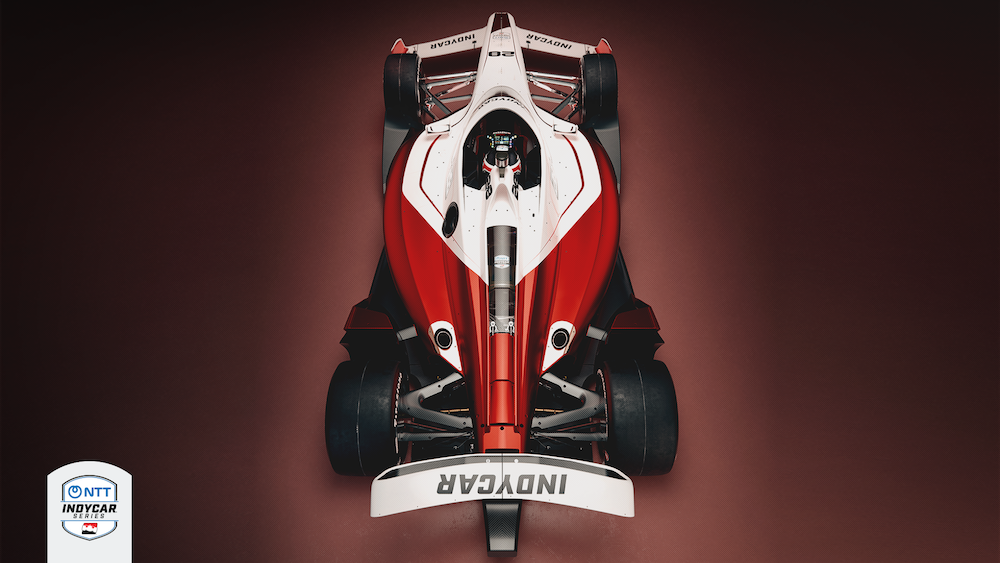
The IR28 incorporates an aeroscreen that was part of the car’s original concept, which is a change from the 2012’s DW12 which had its first aeroscreen bolted atop the car as an add-on safety device in 2020. As a result, the IR28’s titanium halo, carbonfiber frame, and laminate screen blend into the new car far more harmoniously. The sides of the aeroscreen bring a return of digital information panels to IndyCar; multiple versions were tried and ultimately abandoned on the DW12.
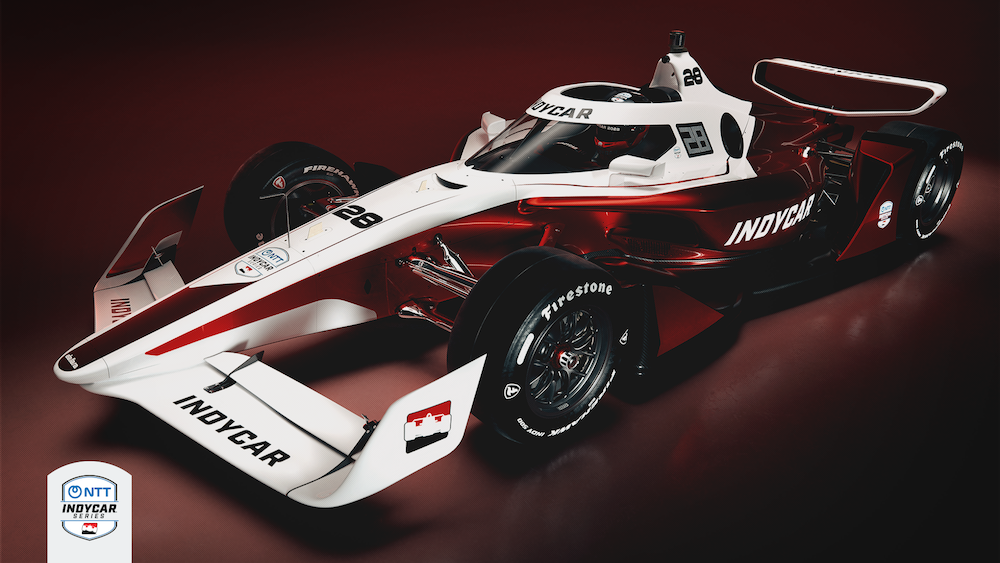
IndyCar’s longstanding practice of developing three aerodynamic packages continues with the IR28, which features a maximum-downforce street racing wing package, a high-downforce road racing package, and a streamlined superspeedway package. IndyCar’s short and intermediate oval aerodynamic configurations use a blend of road/street wings and underbody downforce options to suit tracks like Milwaukee and Nashville, while the Indy 500 has its own speedway wings and underbody rules.
Of note, the IR28 includes the return of the anti-interlocking extensions on the outer leading edges of the floor that were required on the DW12 from 2012-2017 to prevent tire-to-tire contact behind the front tires. But the larger extensions on the IR28 do more than simply prevent interlocking; the pieces serve to shape airflow behind the front tires and reduce aerodynamic drag.
The engine cover contains a rectangular viewing portal where one can see a sliver of the motor and engine bay from overhead, which is another new item for the IR28.
“New front and rear wings, optimized for style and efficiency, give the road and street course car an aggressive stance, while the superspeedway wing configuration provides maximum downforce with limited drag in a sleek, high-speed looking package,” the series said.
“For the first time ever, the car’s aerodynamic architecture has been purpose-built to optimize the wake from the front to the back in order to enhance overtaking opportunities. Additional benefits of the 2028 design include reduced outwash and, for Indianapolis Motor Speedway, a more aerodynamically stable speedway front wing.”
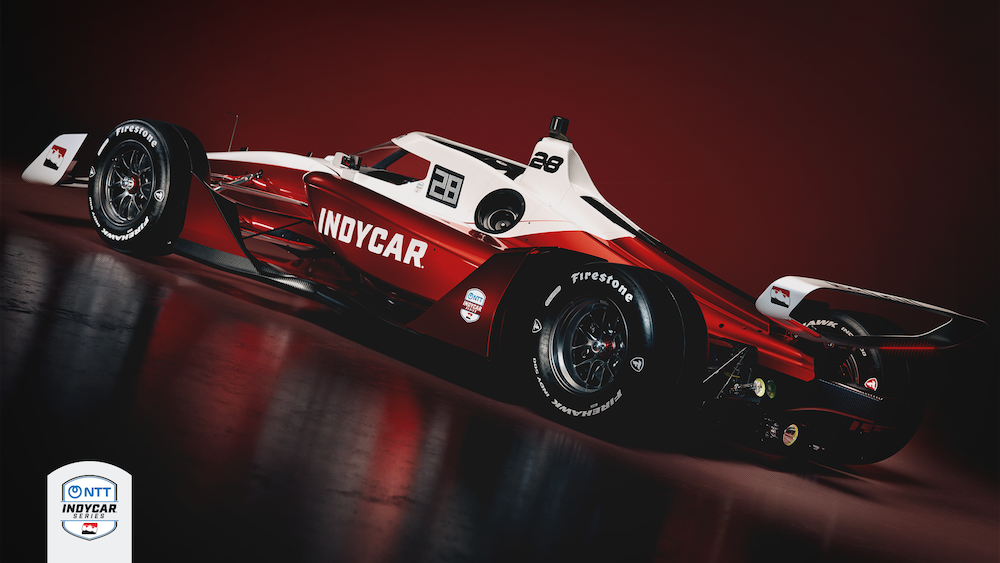
IndyCar has asserted control over damper development with the IR28, which is a significant change from the DW12 where teams were afforded significant freedoms with their choice of shock absorber vendors and the technology used within those units.
AXIS, a division of Penske Racing Shocks, will provide dampers for the car, which makes use of a traditional pushrod and coilover spring package with third-spring heave control at the front and rear. A new element for the IR28 comes with the replacement of anti-roll bar (ARB) adjustment levers in the cockpit; front and rear ARB tuning will be done electronically by the drivers.
Unveiling of the IR28 has been many years in the making. Upon the DW12’s release, the series spoke of replacing the car within three to five years, but for a variety of reasons, the decision to continue using the 2012 car for more than a decade was made as IndyCar went through ownership and leadership changes in the 2020s.
The 2.4-liter twin-turbo V6s, which were originally announced by IndyCar in 2018, and went as far as track testing at the IMS road course in early 2022 by Chevy and Honda, have been revived. At the time, the IndyCar versions of those engines were mothballed as the auto companies diverted their money and labor to assist the series with the creation of IndyCar’s first hybrid system, which debuted in June of 2024.
Honda, through its Acura IMSA GTP program that went live in 2023, has used a lower-revving 2.4-liter twin-turbo V6 in its ARX-06s cars and amassed considerable mileage and knowledge within the program. Chevy restarted development of its 2.4-liter powerplant once all parties agreed to repurpose the 2022 engines for 2028.
“Everyone at Chevrolet is looking forward to this next era of the IndyCar Series and the debut of the IR-28 in 2028,” said GM’s Eric Warren. “This new car builds on more than a decade of collaboration with IndyCar, and we’re confident the new 2.4-liter, twin-turbo V6 engine will deliver the performance, sound and excitement IndyCar fans expect from Team Chevy – the same standard that has produced 16 manufacturer championships and 13 Indianapolis 500 victories.
”Honda Racing Corporation USA President David Salters shared Warren’s enthusiasm.
“For more than 30 years, Honda has built upon its racing heritage as a key partner of the IndyCar Series, and we are excited to begin this next chapter with the IR-28 powered by our new American-made HRC V6 Hybrid powertrain,” he said.
"IndyCar delivers some of the best racing on the planet, and this evolution of the formula creates new opportunities to enhance it—a lighter car, a more powerful hybrid powertrain, an even safer chassis and exciting chassis, and aerodynamic engineering challenges for our Honda associates and teams.
“Together, these advancements will help usher IndyCar into a new era. Honda is proud to be part of that future, supported by the long-term commitment we made to the series earlier this year. We can’t wait to see the IR-28 on track entertaining our IndyCar fans."
Additional details related to the IR28 will be released in the near future.

Marshall Pruett
The 2026 season marks Marshall Pruett's 40th year working in the sport. In his role today for RACER, Pruett covers open-wheel and sports car racing as a writer, reporter, photographer, and filmmaker. In his previous career, he served as a mechanic, engineer, and team manager in a variety of series, including IndyCar, IMSA, and World Challenge.
Read Marshall Pruett's articles
Latest News
Comments
Comments are disabled until you accept Social Networking Cookies. Update cookie preferences
If the dialog doesn't appear, ad-blockers are often the cause; try disabling yours or see our Social Features Support.