Sim Racing Expo exposes a fertile middle ground between car culture and motorsport
It’s a distinct environment within the car world. In fact, I’m hardly sure it is completely of the car world. Nearly as a religious allegory, sim racing is unquestionably in the car world but certainly not of it. The haptic feedback devices, screens, acuators, hydrolics, CPUs, graphics cards, electric motors, and light years of coding carve out the gulf that seems to separate the sim racer from the car world, but that’s not the end of the story. Because what at first feels like a separation, upon further investigation, is something less like a gulf and more like a portal to connect two disparate places and their peoples.
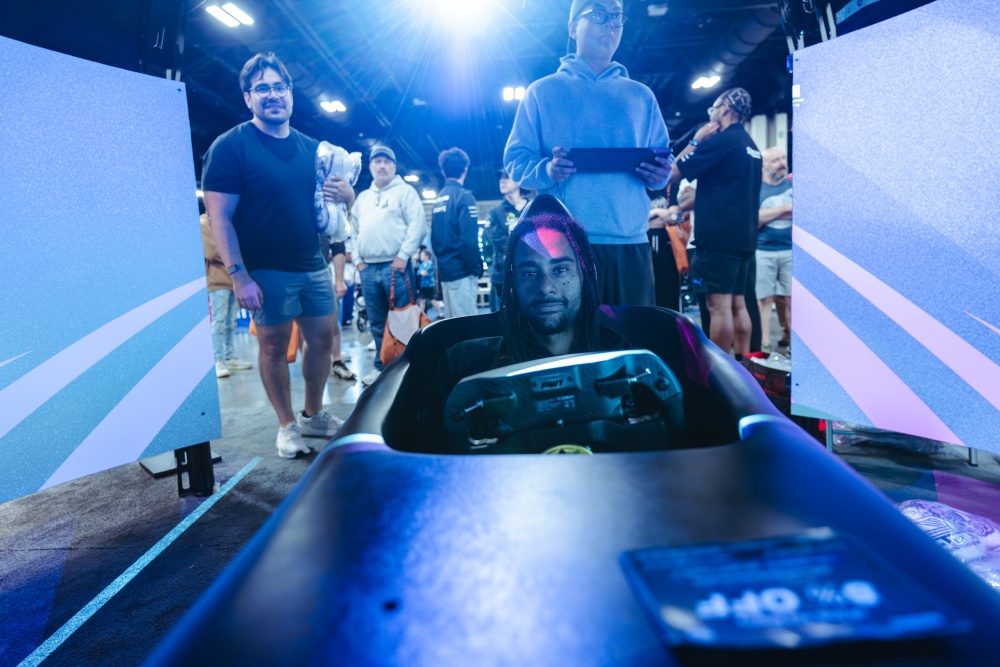
After a weekend at the Charlotte SimRacing Expo, slammed full of racing (mostly crashing) on WRC stages, the NASCAR Cup Series, the Indy 500, and nearly any other racing dream a man could have, I am more convinced than ever that sim racing is the friendly, squishy middle connecting the lofty heights of professional racing and the rest of us.
Sim racing is the great equalizer
There is no shortage of people who harbor the fervent belief that they could be the next great hot shoe. I would argue that it’s an immutable fact that most people who have spent any part of their life as car enthusiasts hold or held this honest, even if immodest, belief. Whether for good or bad, sim racing makes the hypothetical nature of this indulgent belief a lot harder because they have lowered the barrier to entry for racing by orders of magnitude, not only in the very massive pile of money racing requires but also in the time commitment and the risk of pulverizing your body.
We know this is true because of the rise in young gamers who go on to put down proper hot laps in real life and, in some rare cases, even go on to become professional racing drivers.
I recognize this rubs some people the wrong way. We love the idea that someone has to pay in equity with blood and sweat in a hot race car to earn the skills, but, again, like it or not, that simply isn’t true anymore. You can develop proper racing skills in modern sims, not unlike what pilots have been doing with flight simulators for years. That said, there are certainly parts of racing, particularly the visceral parts of grabbing your guts in one hand and the wheel in the other to bash out a crowded corner at 100+mph. No amount of digital practice prepares you for your guts getting thrown around in your belly from G-force and terror.
Interestingly, the great filter that is sim racing isn’t a one-way, upward ascension of skill building leading to becoming a pro. The technology in modern sims is now helping already-seasoned pro drivers at the highest level practice and fine-tune skills that are otherwise only workable on track. It’s this mid-point between casual car people and hardcore racers that the 2026 Sim Expo in Charlotte focused on.
A lot is going on in the Simulator world
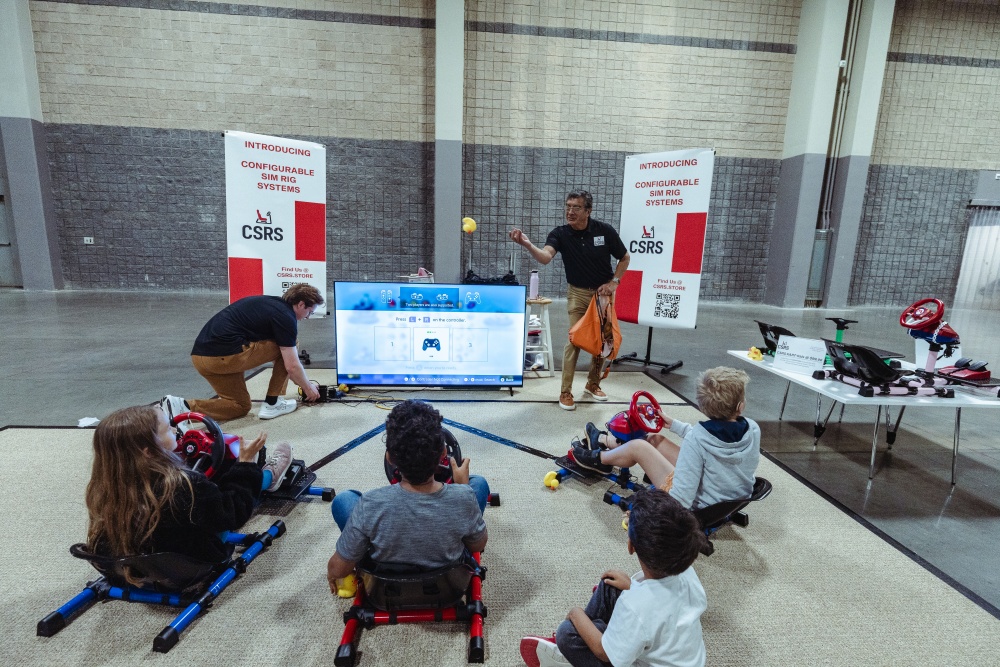
I played a ton of simulators this past weekend, from rigs made for Mario Kart for $150 up to military training simulators that fetch up to $250k+. In that sort of range, it’s hard to say many definitive things about the industry as a whole, other than that, for far less money and sweat equity, you can learn the real skills needed to safely and quickly drive race cars of all varieties.
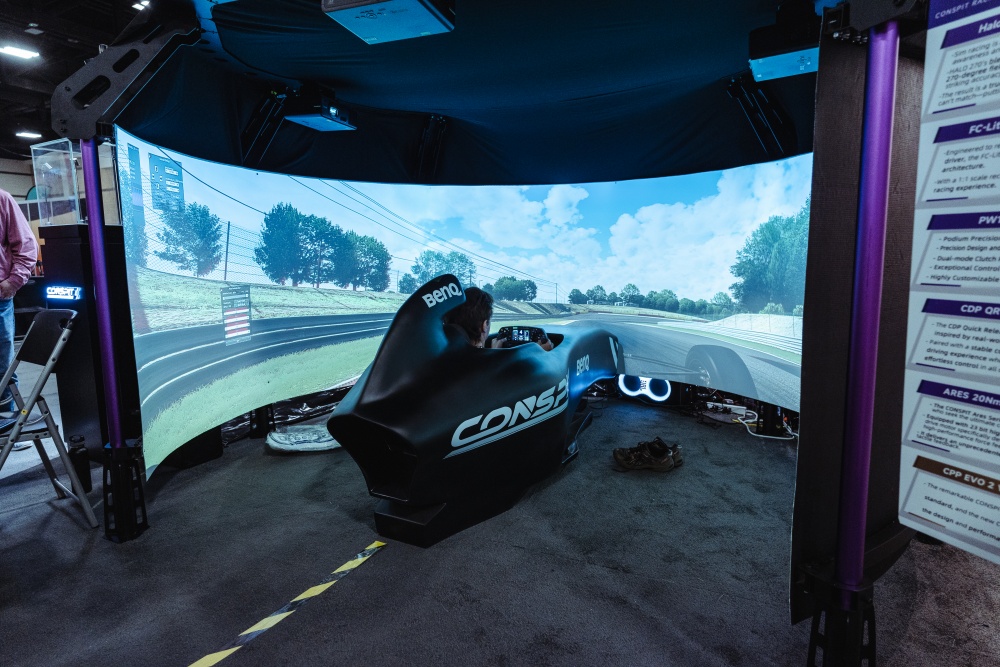
I spent some time with Asetek CEO Andre Eriksen, who, in no uncertain terms, is working hard to build racing sim hardware that mirrors real racing cars as accurately as possible. This isn’t a unique goal in the space, but Asetek’s approach is a bit different. In the Simulator market, fancy actuators, large hydraulics, and fiberglass bodywork seem to be the way many companies strive for accuracy. Still, Asetek insists that building racing sims should mirror the mechanical nature of actual racing cars. Calling these rigs “simple” is probably unfair, but in respect to the rest of the market, Asetek rigs are significantly simpler and cheaper, ranging between $1,500-$5,000. The Asetek packages are refreshing thanks to their size, price, and overall presence. I don’t have enough experience to say that the more haptic rigs are better or worse, but I can say that I noticed that the better the sim, the less you think about the rig itself and what it’s doing. Asetek had me jonesing for the next lap, not belt tensioners and seat motion.
On the far opposite end of the spectrum are the fine folks of Podium 1
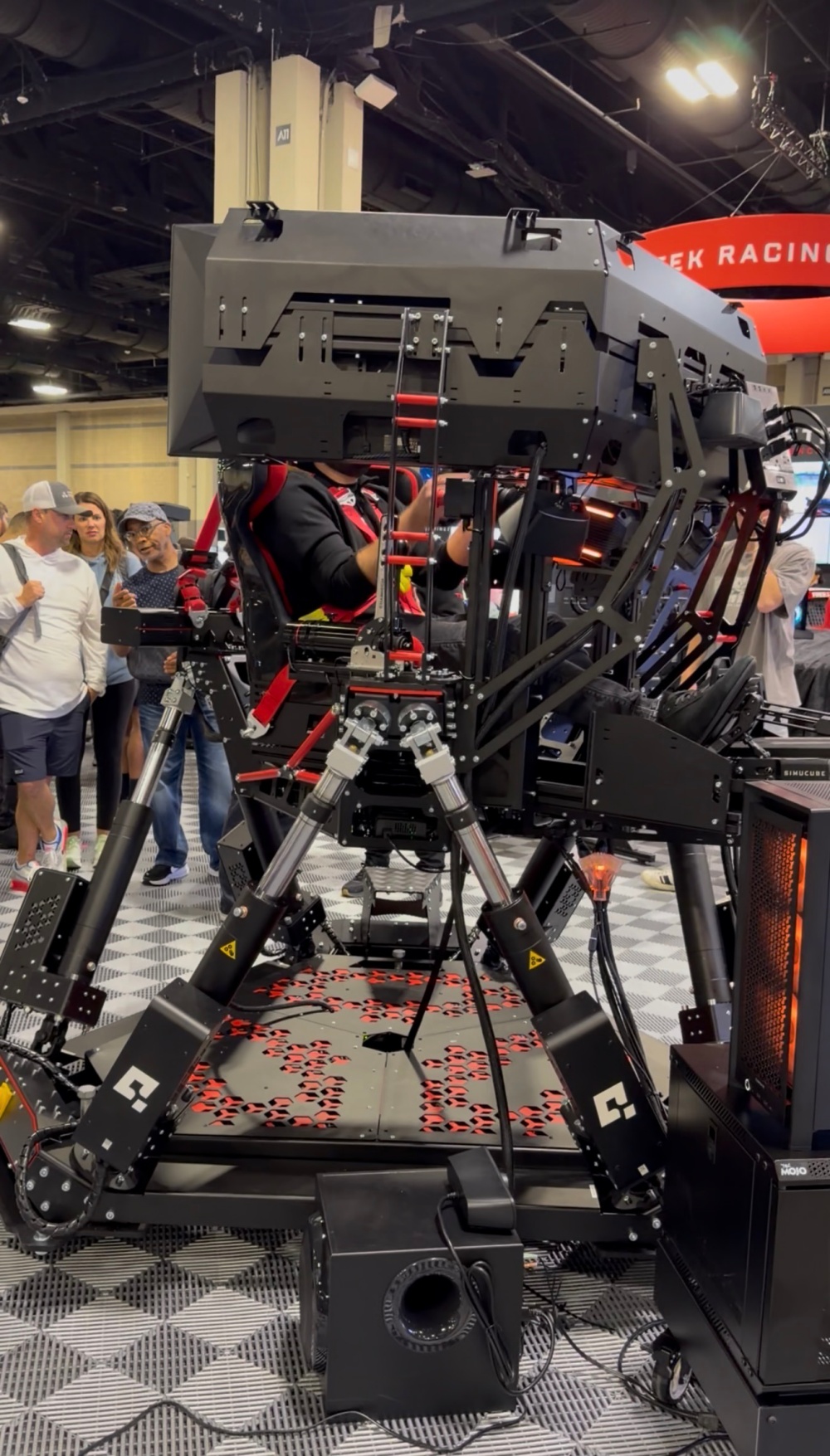
There are many ways to think about simulators, but the entire market can be crudely jammed into two camps. Some treat sim rigs like stripped-out track weapons: lean, efficient, almost apologetic about taking up space. Podium 1 goes the other direction entirely. Their philosophy, born from CEO and founder Steve Palido’s own years of racing experience, seems to be that if a simulator can become more immersive, more theatrical, more mechanically loaded, then it probably should. Triple 55-inch Ark displays. 6DOF motion platforms. Wind simulation. Surround sound. RTX 5090-powered PCs stuffed into turnkey systems that arrive looking less like gaming equipment and more like the bridge module from a private aerospace contractor.
Peter Corn
And they don’t stop at racing. Podium 1’s catalog sprawls into high-end flight and military-adjacent simulation. Their custom Cirrus and Cessna flight simulators are built around fully integrated cockpits with replica controls, force-feedback yokes, motion systems, and switchgear designed to eliminate the keyboard-and-mouse illusion. The company talks constantly about immersion, but what they’re really selling is frictionless fantasy: giant wooden crates arrive at your house containing a fully configured alternate reality. In a hobby full of people proudly zip-tying together DIY aluminum extrusion rigs in the garage, Podium 1 occupies the opposite end of the spectrum entirely.
Simcraft gets in your head
The last stop in the triangle of sim theory is the brain. If Aestek is going for mechanical realism, Podium1 is going with all the bells and whistles, then Simcraft is doing a mix of both, but that focuses on how your specific brain reacts to the physics of racing.
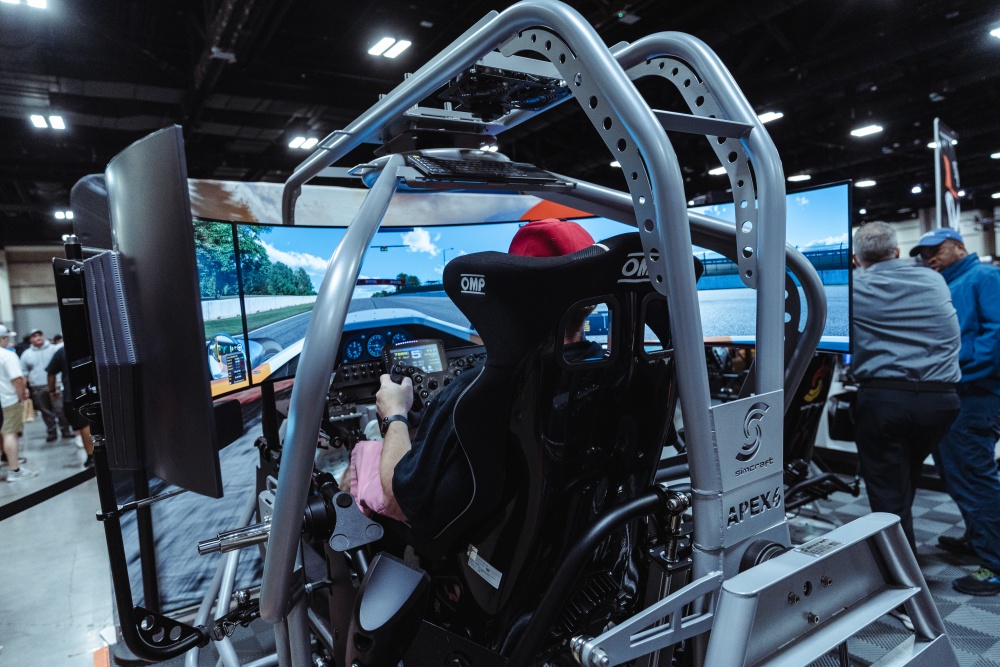
No matter who you talk to in the sim world, everyone is basically going for the same goal: to make you feel like you're driving a real race car (or plane or whatever). There are many different companies going about many different works to get customers to this place of reality. Simcraft is the only one I came across that focuses on your subjective interaction with the rig. The Georgia-based company has spent more than 25 years developing motion simulators built around what it calls a “center of mass” architecture, where the entire cockpit rotates around the driver the way a real car moves in space, rather than simply shaking the seat around on pistons. SimCraft claims that distinction creates more accurate motion cues and better “seat-of-the-pants” feedback for driver training, leaning hard into the idea that their systems are less gaming peripherals and more professional tools for muscle memory, vehicle dynamics, and driver development. The $150k Simcraft rig I tried started with an eye-exam-esque calibration of all planes of motion: Roll, Pitch, Yaw, Surge, Sway, and Heave.
This perception-of-physics-first approach has pushed SimCraft into a rare lane where hardcore sim racing collides with actual brain science. The company says its systems are used by NASCAR teams, driver development programs, racing schools, and champions ranging from Jimmie Johnson to Ben Keating. Their APEX simulators can scale from compact home setups to massive six-degree-of-freedom motion rigs. Still, even the smaller systems are sold with the same language usually reserved for aerospace hardware: rigid-body dynamics, translational motion fidelity, and neurological realism. SimCraft’s whole identity revolves around the argument that realism is not about spectacle. It’s about whether or not your brain believes there’s a car underneath you.
Racing comes in many shapes and bright colors in 2026
Peter Corn
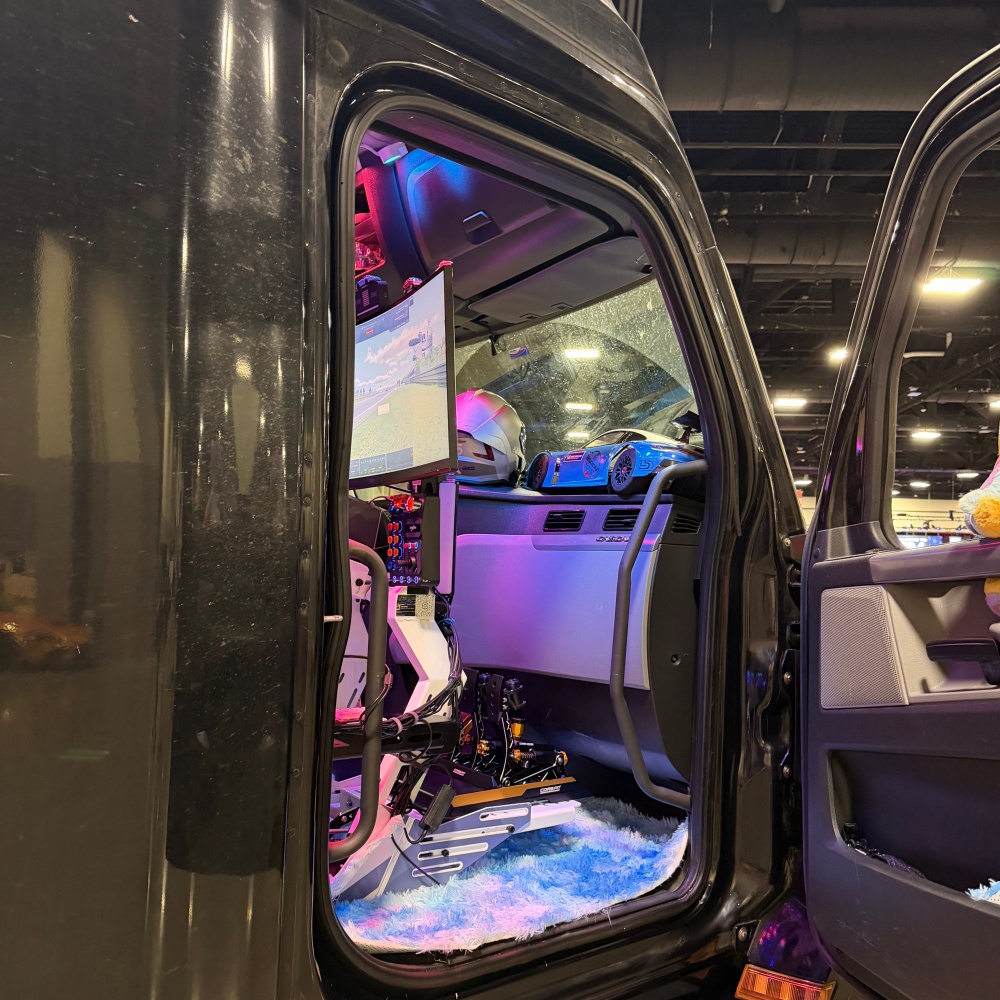
As someone who has had the opportunity to race in real, 3D life and gotten to spend some time on and around racing simulators and the people who love them, I can say with certainty that, while racing sims simply can’t replace the visceral fizz and snap of convincing your brain to charge at corner at speed with other cars only inches from you, it can offer a very fun and exciting way to develop real-life racing skills, knowledge, and racecraft in a practical and financially reasonable way. Sims are a powerful tool in any racer’s paddock, whether you’ve only ever raced in Mario Kart or if you just won the Indy 500.

Peter Corn
Peter Corn is an automotive writer and storyteller. Peter has spent nearly a decade writing about cars, trucks, and motorcycles for some of the best publications in the business. He believes the best automotive stories aren't really about the machines at all, but instead, the people who love them.
Read Peter Corn's articles
Latest News
Comments
Comments are disabled until you accept Social Networking Cookies. Update cookie preferences
If the dialog doesn't appear, ad-blockers are often the cause; try disabling yours or see our Social Features Support.