Image by Simon Galloway/Sutton Images
STRAW: Formula 1 2020 car launch spotter's guide
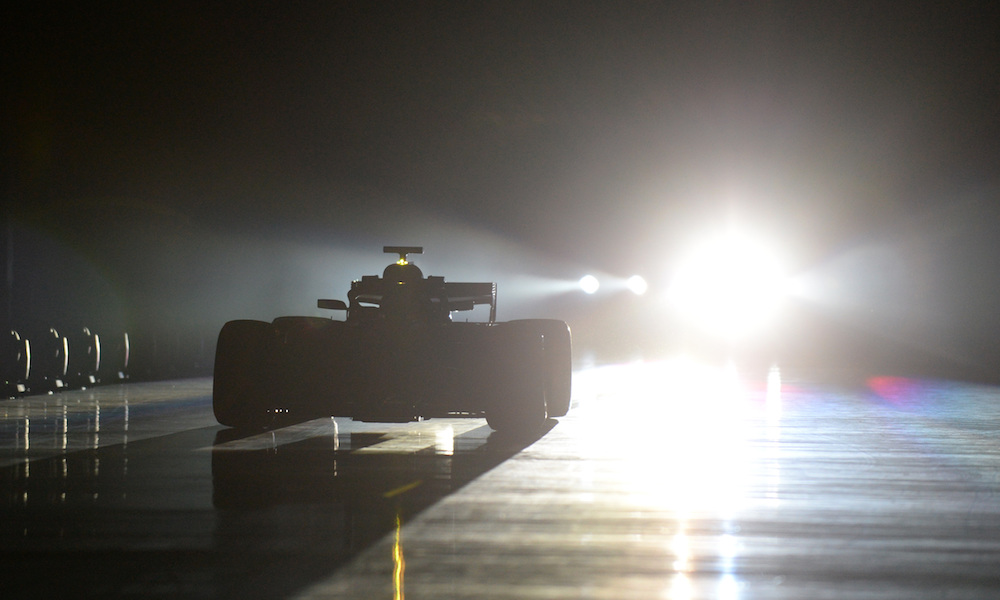
During the coming weeks, all 10 Formula 1 teams will reveal their 2020 machines, then run them on track for the first time during a quick-fire six days of pre-season testing. All the hopes, dreams and expectations for the season will be bound up in the performance potential of their cars, and some teams will come to love them. But others will eventually be sick of the sight of them, even though right now they are objects of excitement with simulations numbers encouraging them to expect a season of targets hit and objectives achieved.
But while these are new cars, every team has its own unique technical story. This year is effectively 2019 part two, with no significant regulation changes to throw a curveball into the mix. But that doesn’t mean the new cars will be identical to last season. Instead, it will be the changes – or lack of them – that reveal much about the approach and challenges for each team.
Here's what to look out for when each new car breaks cover.
MERCEDES
Every year, there’s speculation surrounding whether Mercedes will make a dramatic shift in design concept, perhaps to running significantly higher rake or adopting some other conspicuous design favored by Ferrari or Red Bull. And every year, Mercedes comes out with a car that doesn’t reinvent the wheel, but does further refine its concept in countless, often invisible, ways that ensure it remains a potent package. Last year, for example, the most obvious change was the modified rear suspension, a development made for aerodynamic gains while maintaining the stiffness and kinematic behavior.
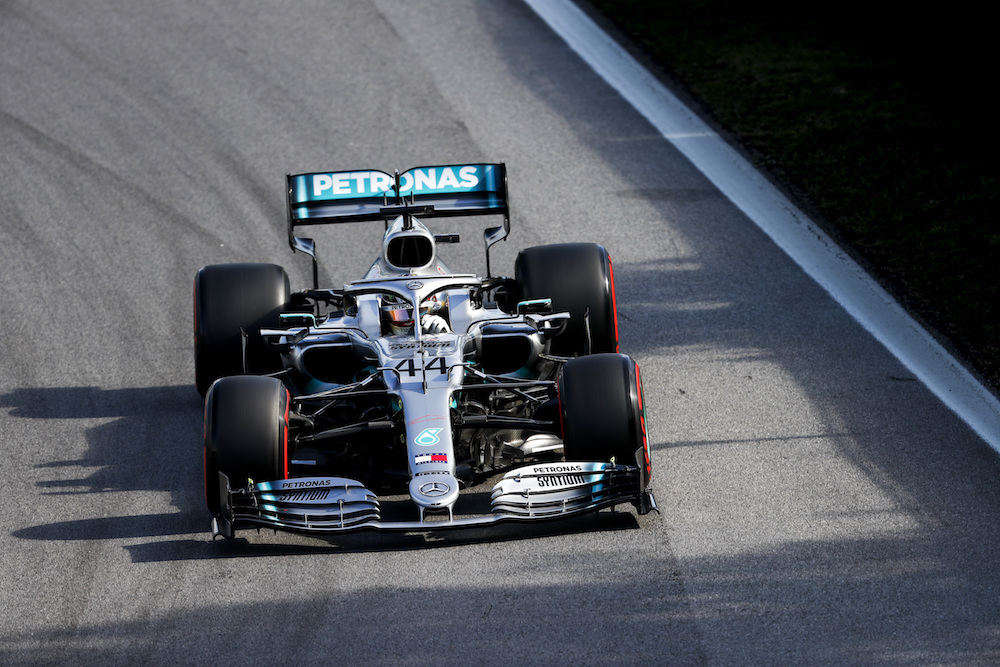
Expect more refinements to a winning concept by Mercedes. Image by Mauger/LAT
For years, Mercedes has produced a well-rounded package with a performance profile that makes it potent throughout the season, so it would be a surprise to see any big changes to its concept. But it’s often the imperceptible and unflashy changes require enormous engineering detail and, cumulatively, confer the most significant gains.
Perhaps the most important question is what Mercedes High Performance Powertrains comes up with. The engine package was still a strong one last year but, while it remained the class of the field in race trim, Ferrari – some of the time – had a big advantage over a single lap. Mercedes has redoubled its efforts to improve the power unit package, and history suggests it will succeed.
FERRARI
January is always a time for endless rumors to swirl around concerning changes to the Ferrari car – some accurate, some wide of the mark. One that appears likely to be true is a switch to a front wing concept closer to that of Mercedes and Red Bull with what is called the loaded outboard design. Rather than the wing profile dropping away as it moves outboard to the endplates, this involves having more wing surface to create downforce.
All teams have been working on both loaded and unloaded designs. While the loaded concept has greater potential for producing downforce, it is trickier to control the airflow and ensure that it is channeled towards the center of the car to maximize the crucial bargeboard area. It’s a logical concept for Ferrari to pursue, given it fell a little short in terms of front aero load last season, but it will likely test its ability to control airflow significantly.
If this change is indeed made, it will likely result in a change in the enormously complex zone around the bargeboard. If Ferrari goes this way and it works, it could unlock greater performance potential. But as Renault and Haas found last year, it can also create problems if you aren’t completely in command of the airflow.
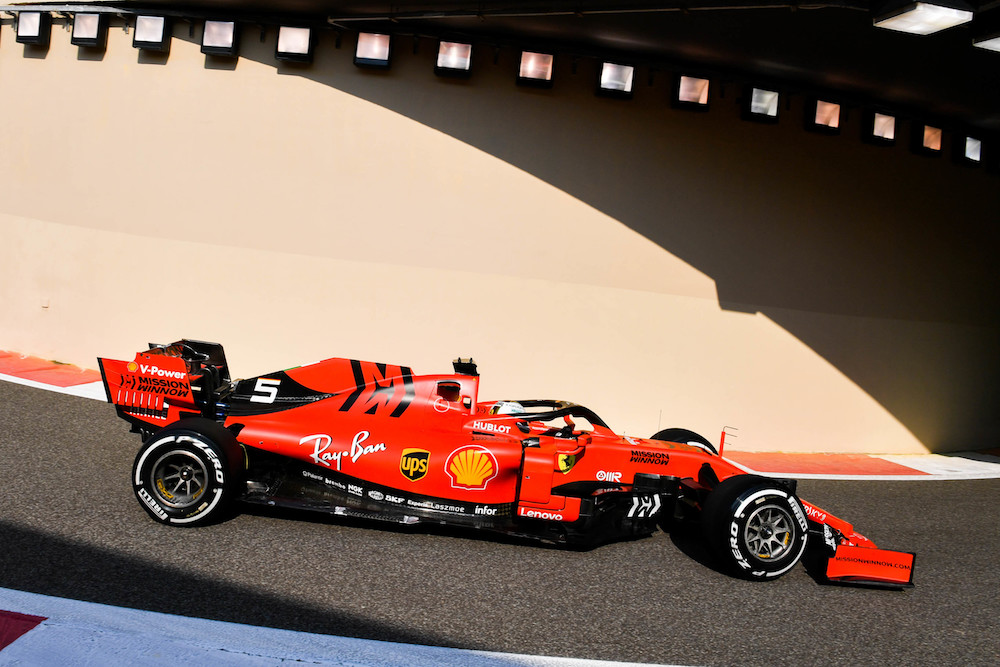
The area around the bargeboard might offer opportunities for Ferrari to make gains in 2020 – provided that it stays in control of the airflow. Image by Mark Sutton/Sutton Images
RED BULL
Red Bull’s 2019 car didn’t start off as hoped, and it required a series of upgrades deployed from the Spanish through to the Austrian Grands Prix to get its car working at the level required, as the team struggled a little to get on top of the front wing regulation changes designed to mitigate outwash. But the progress made suggests its understanding of the change to the airflow regime was thorough. With Honda sure to take another step forward this year, the question is whether Red Bull can become a title challenger.
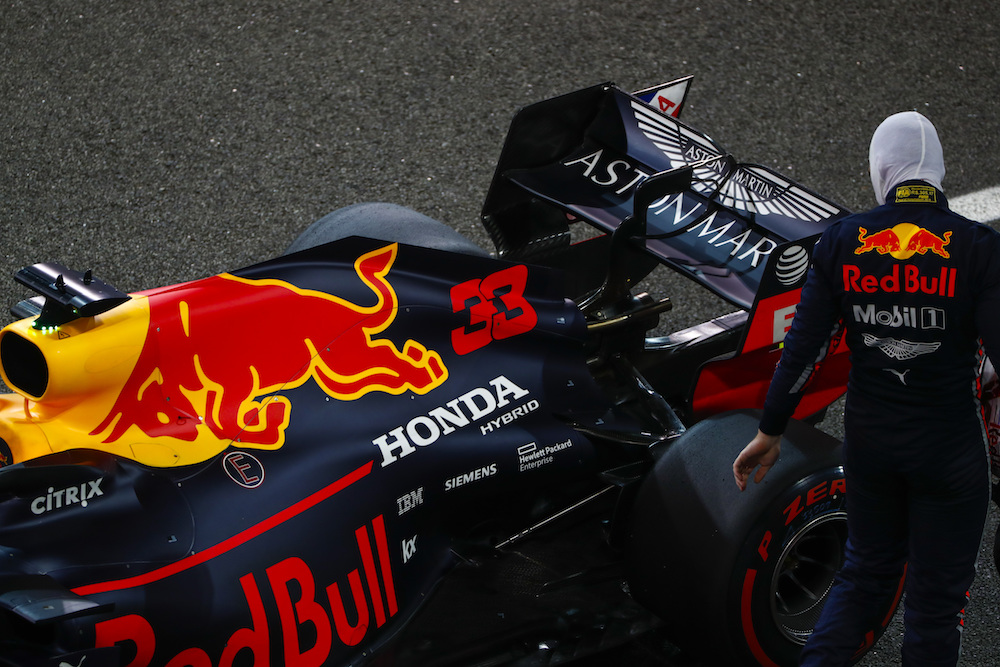
More aggressive packaging might be the order of the day for Red Bull in 2020. Image by Bloxham/LAT
To do that, it must deliver from the start of the season, something that has been a weakness for Red Bull in recent years. There’s sure to be some small innovations on the car – there always are – but it’s likely to build on the same successful aero concept of 2019.
In the second year of Red Bull Racing using Honda, there could also be some more aggressive packaging. While Adrian Newey is famously pushy when it comes to packaging, the way Red Bull and Honda have collaborated so far on this has been very productive. But with the lessons of last year, there’s every chance of some detail changes to optimize the car now that the team has a year’s experience of running the engine.
McLAREN
The expectation at McLaren is that 2019 was just the start of the turnaround, with the front of the midfield only a waypoint in its return to the front. When the wraps come off the MCL35, which will be powered by a Renault engine before McLaren switches to Mercedes, look out for the promises of a change in concept being delivered.
Inevitably, this conjures images of dramatic innovation, but the reality is a little more subtle than that. The areas of the car where the concept will shift are those where step changes are required to unlock the potential to close on the ultra-refined big guns.
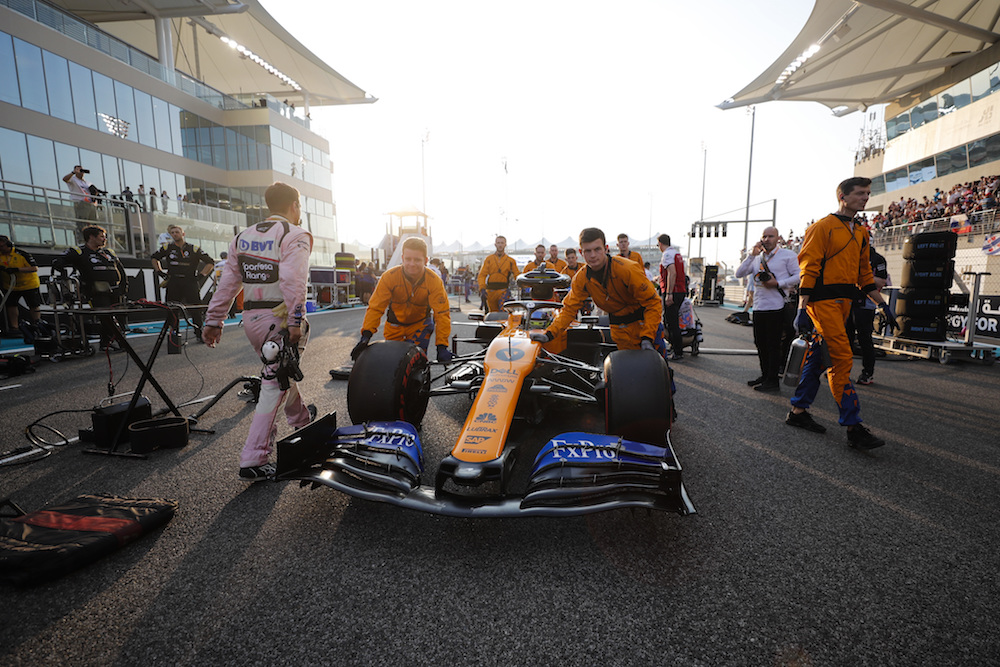
Areas like the front wing might reflect McLaren's quest for aero gains with its 2020 car. Image by Tee/LAT
“You have to make changes to your car concept to maximize some of what you are able to do,” said technical director James Key. “There are definitely aspects of chipping away, but there are step changes in certain areas that we need to make. You’ve got to try and work out what the hell they are doing to be a second and a half quicker, what are they doing that’s different? It’s not easy, but it’s a great challenge to have.”
Most likely, this will manifest itself in detail. So pay close attention to the key aero areas – the front wing and particularly the bargeboards – as well as for potential suspension changes to give aero gains.
RENAULT
Renault’s sustained improvement of 2016-18 came to a juddering halt last year in terms of championship position, although it was at least fractionally closer to the outright pace than the previous season. While there were some reliability problems, the significant step taken with the engine package suggested that the main concern was aerodynamic.
It emerged that Renault was locked into a concept that restricted developmental returns, particularly in the bargeboard region that became critical for delivering performance under the 2019 regulations. But the front-end concept was the root of the problem, Renault pursuing the trickier-to-optimize but potentially superior loaded front wing concept favored by Mercedes and Red Bull.
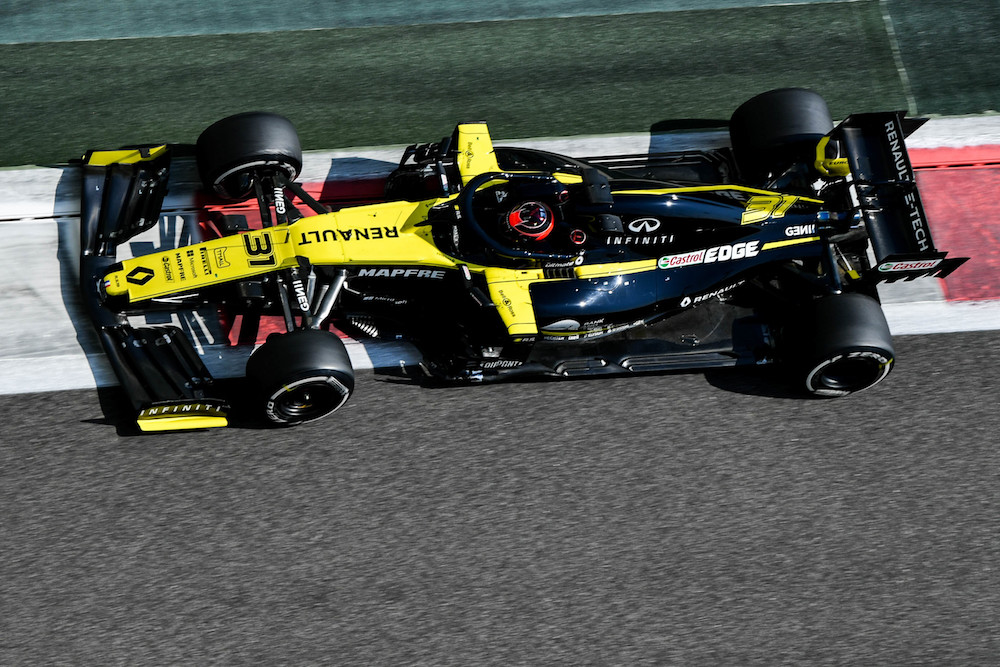
Renault has an aero puzzle to solve. Image by Mark Sutton/Sutton Images
“You have got to develop things in conjunction,” said Renault executive director Marcin Budkowski. “It’s not only a front wing, it’s a front wing, nose, chassis winglets, bargeboards, everything – the whole system needs to work together. There’s a trend towards unloading the outboard, and it’s fair to say we might have missed something there in the early season. The problem when you develop the front of the car around a concept [is], it's more difficult to change; it's not changing the front wing, changing the front wing is going to make you slower. You have got to change the whole front of the car.”
Look to the front wing of the 2020 Renault. That will reveal whether the team has felt obliged to go the unloaded route, or hopes to make a breakthrough with its management of the airflow off the front wing from the loaded design.
RACING POINT
It’s not unreasonable to consider the 2020 Racing Point car to be the first produced by a new team. Last year’s effort was effectively ‘year zero’ for the well-backed operation given that certain key decisions, including continuing with the 2018 gearbox and suspension, had to be locked in before its financial situation became stable following investment from a Lawrence Stroll-led consortium.
Of course, this is not a new team, as the core that made it so successful against the odds as Force India remains. And there’s every chance to expect a big step forward this year with what technical director Andrew Green has called “a blank sheet of paper”. The team switched to using the Mercedes windtunnel in the middle of last April, so can reap the full rewards of a car designed using it and its boosted resources with the unavoidable limitations of last year no longer a factor.
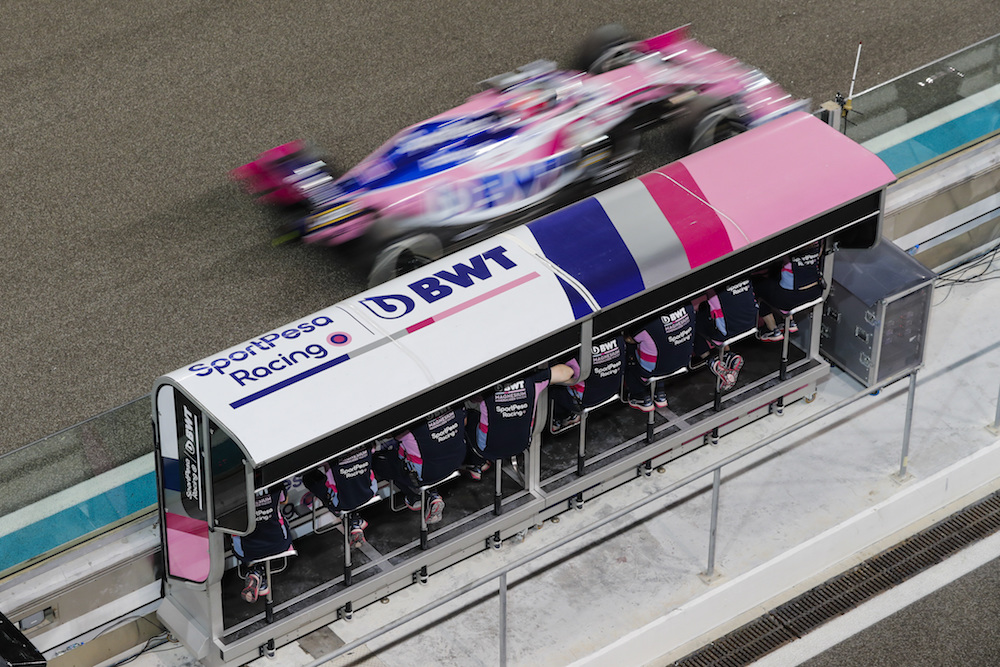
Expectations are high for what will be the first 'real' Racing Point car. Image by Tee/LAT
“We are not planning on carrying anything over, which is a first for us,” said Green. “The whole change of ownership was around July/August 2018, so at that point we made the decision on the architecture of the 2019 car. We didn’t know what our resource was going to be, and made the decision to be safe.”
With plans for an all-new car and the hangover of the Force India days now cleared, the new Racing Point is one of the most eagerly-anticipated new cars.
ALPHATAURI
Last season, Toro Rosso leaned more on big sister team Red Bull’s resources, including running cast-off 2018 rear suspension, and gearbox and front suspension internals. Expect the team, in its new AlphaTauri guise, to continue to maximize the use of non-listed parts after a big change to the way it works – including phasing in upgrades more progressively rather than relying on several big packages – yielded its best season since the heady days when Sebastian Vettel won the 2008 Italian Grand Prix. Jody Egginton, appointed technical director last year, has played a big part in the shift in emphasis.
Toro Rosso was the first to show off the unloaded front wing design last year and had a car it understood well from the off. It has seen the potential of a loaded version in the windtunnel, but whether it inches more in that direction to chase greater load depends on getting full control of the airflow, which is hugely complex in this area given the proximity of the rotating and ever-moving front wheels.
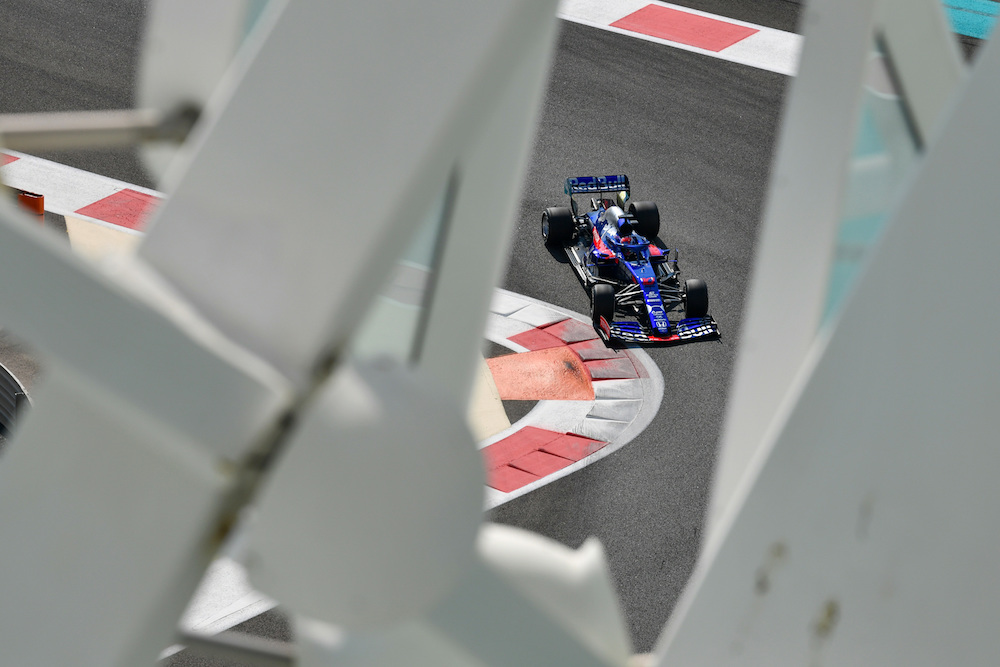
Loaded or unloaded? How AlphaTauri answers that will dictate any significant changes on the 2020 car. Image by Mark Sutton/Sutton Images
Beyond that, expect an evolutionary approach for a team that, on and off track, has made a virtue of focusing its limited resource where it most counts and piggy-backing on Red Bull Racing’s success.
ALFA ROMEO
Team principal Frederic Vasseur describes Alfa Romeo as a “young” team, which seems a stretch for a Sauber operation that has been on the grid since 1993. But he’s correct in that it’s a ‘regrowing’ team, benefiting from the investment the Alfa deal brought and growing its operation.
Alfa Romeo is among the group of teams that probably needs to be relatively conservative with its car concept and ensure it doesn’t send itself down the wrong path. With 2021 on the horizon, it can’t afford to get lost with the car. The back end of last season was concerning in that the team struggled to get on top of the significant upgrade introduced at the Singapore GP in September. It flew at Interlagos in November, but struggled elsewhere. That was the result of a package that was introduced in one hit rather than progressively (by necessity rather than design), so perhaps shouldn’t be taken as a team that doesn’t understand how its car works. But it did cause confusion.
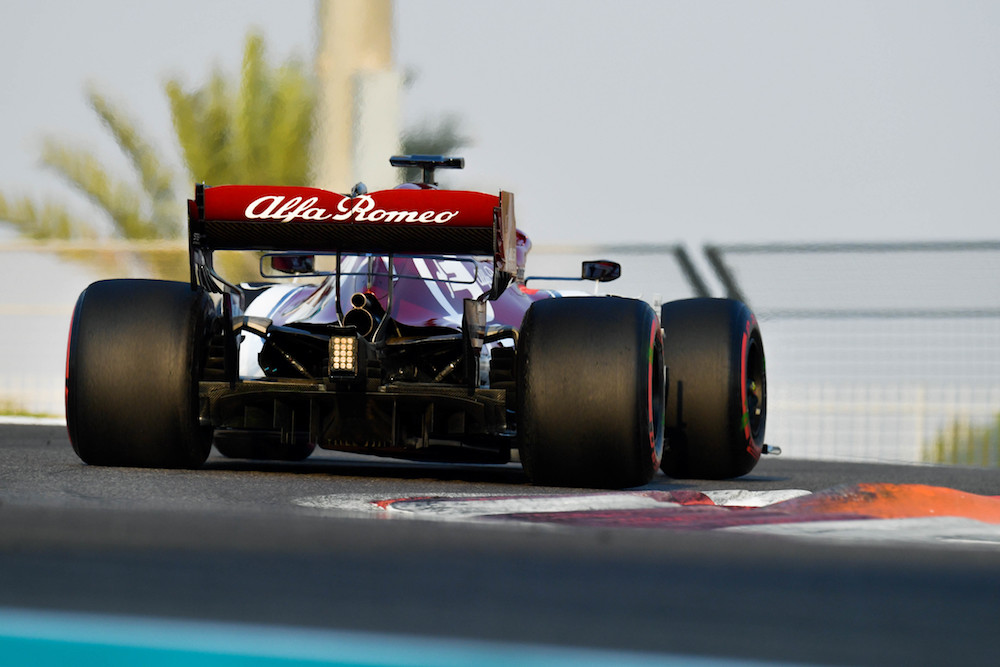
Alfa Romeo will benefit from a relatively conservative approach to 2020. Image by Andre/LAT
Alfa started last year with the most extreme interpretation of the unloaded outboard load concept, which helped it to overachieve in the first half of the season. How far it inches towards gaining greater front load will be a sign of how confident it is in its growing aero department.
One big boost is that F1 has ditched its mooted 2020 tires. Alfa was one of the teams that struggled with the aero characteristics of the new rubber, so stability should prevent that being a problem.
HAAS
Last year was an often-baffling disaster for Haas, sometimes qualifying strongly but racing dreadfully despite having been best of the rest in pre-season testing and the Australia season-opener.
There was lots of griping about tires early in the year, but as is usually the case, this was believed to be primarily an aerodynamic problem. The front end of the car was strong, it was usually very good in fast corners across a range of conditions, but in slower corners and at higher temperatures it struggled, particularly in race trim.
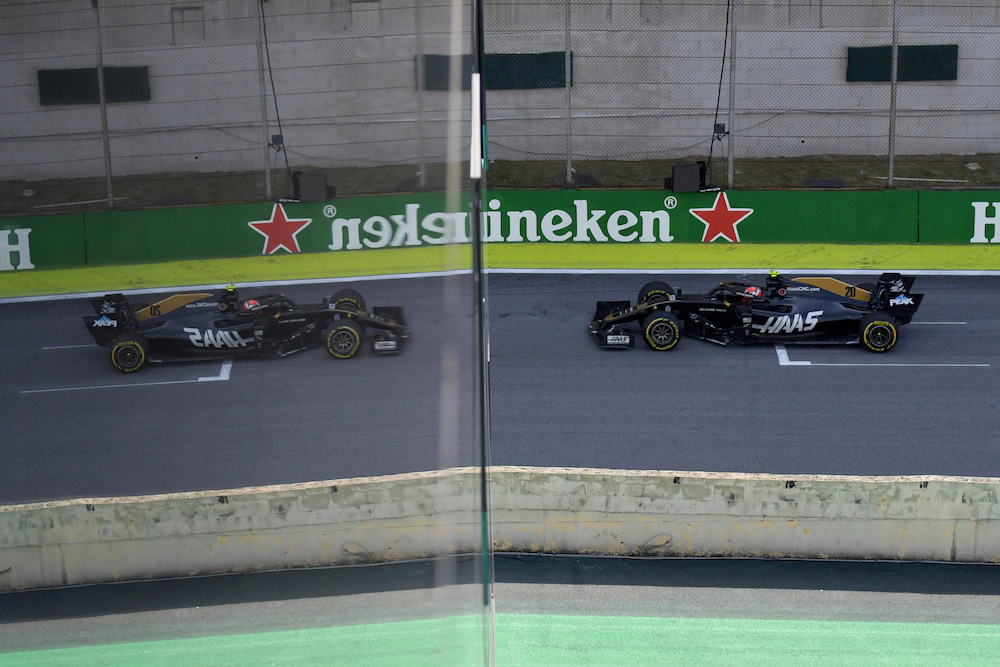
Haas developed itself into a corner last year, and needs to avoid a repeat of that in 2020. Image by Andre/LAT
The good front end, combined with a tendency for the rear downforce not to be delivered in lower-speed corners, points to the likely source of the problem. For the change in front wing regulations, Haas went for the loaded front wing and appeared to lack the ability to manipulate the airflow consistently. It’s no coincidence that the midfield class leaders all went unloaded. While that’s inevitably an oversimplification, it does get somewhere close to the heart of the problem. It meant a car that was unstable into lower-speed corners, and all attempts to eliminate that instability often dialed in understeer.
So when the new Haas appears, as well as its new post-Rich Energy livery, look to the front wing (albeit with the caveat that sometimes launch cars have old-spec wings) for hints of a change in approach.
WILLIAMS
Last year’s Williams didn’t look right from the off – when it finally appeared. The first positive sign for the team will be the car hitting the track at the start of testing on February 19, given the car finally crept out two days late last year. That should be an easy task, especially given the team has overhauled its process management systems to ensure things don’t get away from it.
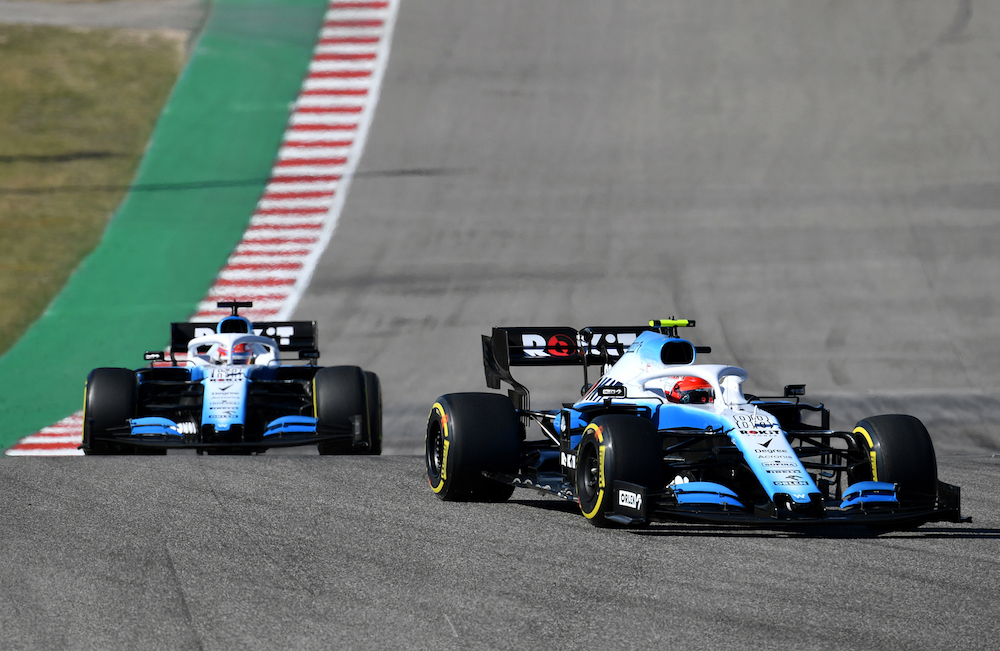
Merely getting its cars out for the first day of testing will be a step forward from 2019 for Williams, but there's some low-hanging fruit that might deliver performance gains, too. Image by Mark Sutton/Sutton Images
Beyond the car existing in time, the other thing to look out for is the packaging. Last year’s car featured a bulbous engine cover, which was a consequence of some muddied thinking over the cooling package. In a torrid pre-season that also led to the departure of chief technical officer Paddy Lowe, Williams also had to modify its rear-view mirrors and front suspension. These errors must be avoided at all costs.
A back-to-basics approach is what Williams needs now. The hope is that the aero direction set last year, which inevitably required a ‘two steps forward to go one step back', was always going to deliver more this year. But the fact the team fell short of its own expectations for improvements as the season progressed is a concern. A conventional, neat and tidy car should be enough to get Williams back in the midfield fight.

Edd Straw
Edd Straw is a Formula 1 journalist and broadcaster, and regular contributor to RACER magazine. He started his career in motorsport journalism at Autosport in 2002, reporting on a wide range of international motorsport before covering grand prix racing from 2008, as well as putting in stints as editor and editor-in-chief before moving on at the end of 2019. A familiar face both in the F1 paddock, and watching the cars trackside, his analytical approach has become his trademark, having had the privilege of watching all of the great grand prix drivers and teams of the 21st century in action - as well has having a keen interest in the history of motorsport. He was also once a keen amateur racing driver whose achievements are better measured in enjoyment than silverware.
Read Edd Straw's articles
Latest News

Comments
Comments are disabled until you accept Social Networking Cookies. Update cookie preferences
If the dialog doesn't appear, ad-blockers are often the cause; try disabling yours or see our Social Features Support.