Robert Cianflone/Getty Images
Ford evaluating IndyCar's next-gen engine
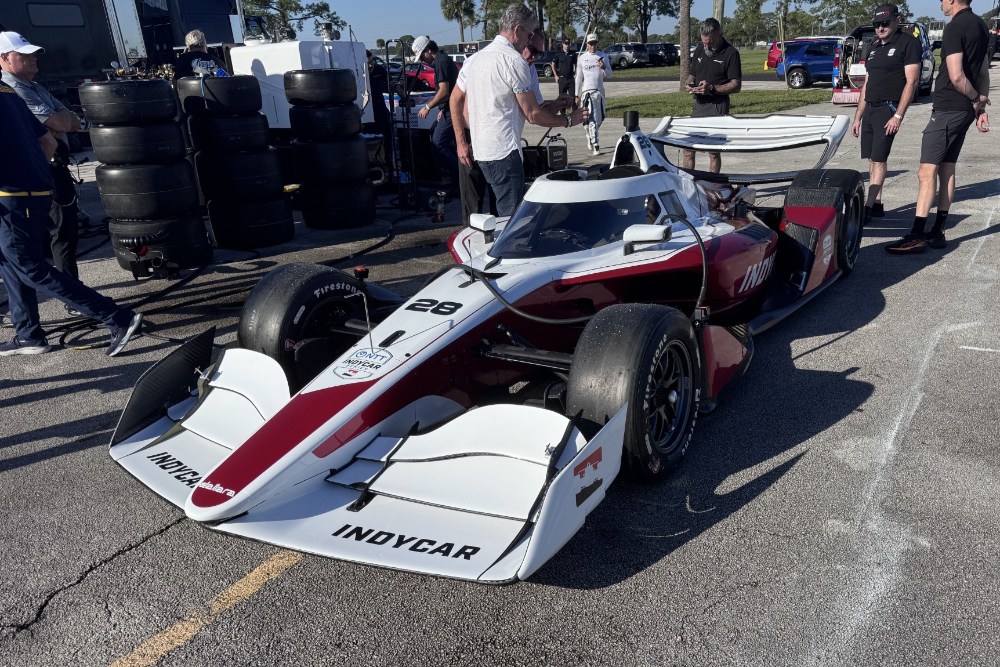
Ford Racing boss Mark Rushbrook says the Blue Oval is evaluating the IndyCar Series’ next-generation engine formula which launches in 2028 with larger 2.4-liter twin-turbo V6 hybrid motors.
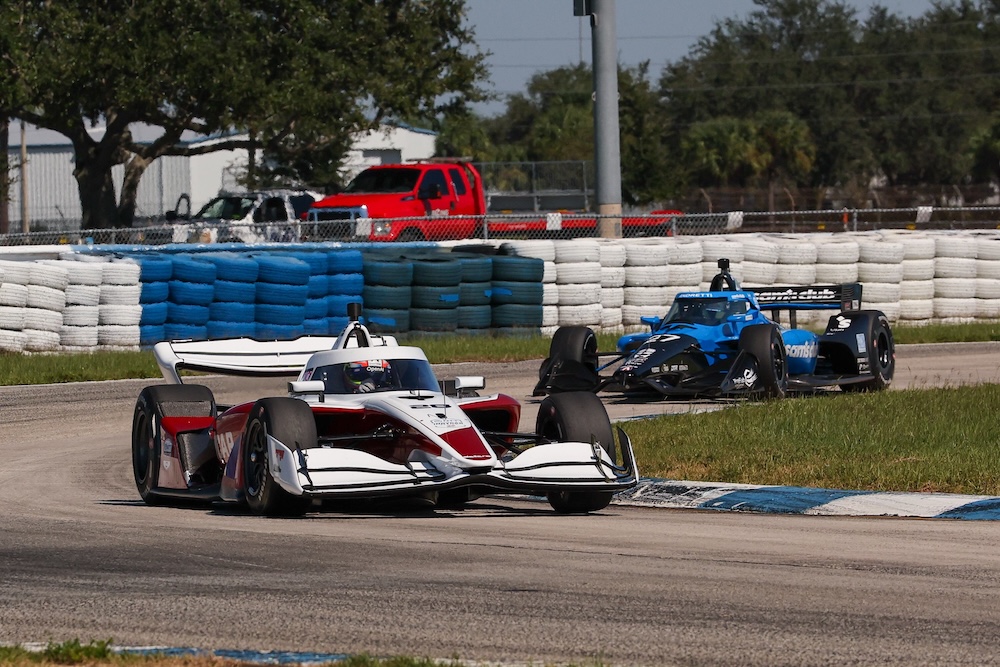
Ford’s in-state rival Chevrolet has been involved with IndyCar engine supply since 2012 when the current 2.2-liter turbo V6s came into play, and like Honda, Chevy has committed to supplying the new 2.4-liter motors in 2028 and beyond.
In an interview first published on grandepremio.com which was supplied to RACER by Ford, Rushbrook was quoted as saying, “We race almost everywhere, but we’re always looking at our five-year plan for future participation and continuously evaluating every series, including IndyCar. The fact that we’re not there right now just shows that, so far, the timing hasn’t been right. But that doesn’t mean it will stay that way.”
At present, Ford has factory motorsports programs spread throughout the world with Red Bull and Racing Bulls in Formula 1, in IMSA with its Ford Mustang GTD Pro effort, in NASCAR, the NHRA, in off-road racing, and in the FIA World Endurance Championship where the brand’s new Hypercar effort debuts in 2027.
RACER understands an evaluation, as noted by Rushbrook, is taking place, but there are no plans in motion at the moment to join IndyCar. If that were to change, Ford would likely be looking at an entry point in 2029 or 2030.
With Chevy and Honda set to start track testing their new 2.4-liter turbo hybrids in the next six months or so, the time required to design, test, and mass produce the custom IndyCar engines would be considerable—especially with the brand already heavily engaged in F1, IMSA, NASCAR, NHRA, and WEC—along with its single-make Mustang Challenge series and its sales and support of Mustang GT4 machinery. A return to the WRC in 2028 is also in the works.
Ford’s last IndyCar engagement against competition took place in the CART era through 2002. In 2003, as CART transitioned into Champ Car, the Cosworth-built Ford-based 2.65-liter turbo V8s became the series’ spec powerplant and held that position through the final Champ Car race in 2008.
As Champ Car and the IndyCar Series merged and made use of IndyCar’s naturally-aspirated V8 engine formula, Ford brought an end to its open-wheel activities and stayed away until recently partnering with Red Bull on its F1 power unit program.
Penske Entertainment, owners of the IndyCar Series, spent years in negotiation with Chevy and Honda to secure their commitments to the 2.4-liter regulations, and as part of the new deals signed in 2026, both brands were awarded manufacturer charters which will keep the current field count of 25 up to 2027 when the new engine formula goes live in 2028.
It’s unclear whether Ford, or any other new IndyCar engine supplier, would be offered a manufacturer charter as Chevy and Honda were rewarded for decades of dedication to the series. Penske is also known to desire a reduced grid size which, with the new single manufacturer entries, is taking the series in the opposite direction of downsizing.

Marshall Pruett
The 2026 season marks Marshall Pruett's 40th year working in the sport. In his role today for RACER, Pruett covers open-wheel and sports car racing as a writer, reporter, photographer, and filmmaker. In his previous career, he served as a mechanic, engineer, and team manager in a variety of series, including IndyCar, IMSA, and World Challenge.
Read Marshall Pruett's articles
Latest News
Comments
Comments are disabled until you accept Social Networking Cookies. Update cookie preferences
If the dialog doesn't appear, ad-blockers are often the cause; try disabling yours or see our Social Features Support.