BUXTON: Opportunity lost
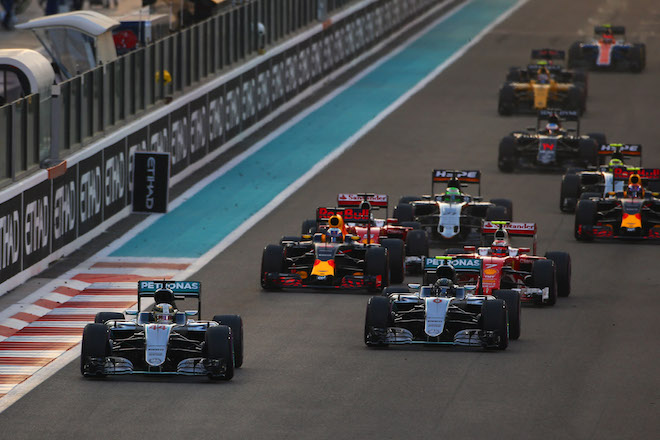
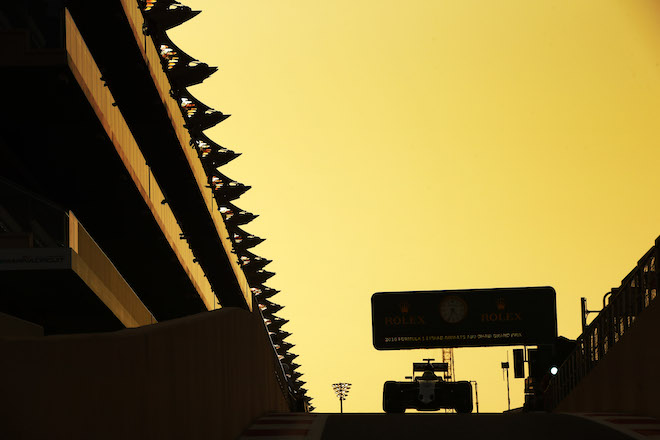
And so, the longest season in Formula 1 history rolls to a close this weekend. But as the culmination of the season-long battle between Nico Rosberg and Lewis Hamilton roars into the sunset, Sunday will mark the end of a distinct period in the sport's history.
F1: Abu Dhabi finale coverage
Many have claimed the last three seasons to have been the dullest in F1's recent past, with races and championships turned into a predictable and uninspiring tour de force for the all-conquering Mercedes team. It seems memories in the sport have grown short, for this supposedly boring triumvirate of championships has followed swiftly on from Red Bull's own four-year period of productivity.
If the last three years have been a competitive failure, it would be utterly wrong to pin the blame at the feet of the boys and girls at Brackley and Brixworth. If competition has been lacking and excitement in short supply, the responsibility lies with the 10 teams in the sport which have abjectly failed to do as good a job. It is their responsibility, allied to the governing body's ludicrous push to enforce restrictive regulation which stifled technology, that lies at the root of any dissatisfaction.
The irony is that it is only now, on the eve of a technical rules upheaval, that we are starting to see the green shoots from which a truly competitive era could have grown. But rather than allow the rules to settle, allow the teams to learn, understand, develop, and for competitiveness to converge, panic begat a forced change predicated on a false target.
The last three years have seen some of the most incredible technological advances in the sport's history. For the engine manufacturers to have designed and built their hybrid units in the 18-month lead time they were afforded was nothing short of incredible. But rather than laud this tech and promote the brilliant job the teams had done to even make it to the grid for the start of the 2014 season, the FIA fell silent. Because the tech was never fully promoted, the fan base at large was left underwhelmed by a lack of speed, reliability and the high-pitched engine note that had defined the past 25 years.
Pinning an engine freeze and a token system to such new and complex technology asphyxiated innovation, delaying meaningful advancements which could have cured basic issues and painting the sport and the bona fide geniuses behind its power units in a far better light.
The teams haven't helped themselves either, of course. There has been an absurd level of secrecy surrounding these units. It wouldn't have taken much to have made available a rudimentary version of the power units at the start of each season for the press, in order for us to explain to our viewers and readers what makes these cars and these engines so special – why this technology is something to be applauded rather than derided.
It is astonishing to comprehend that a current Formula 1 power unit is achieving 1000hp from a 1.6-liter engine. Lap records set in the days of the raw brutality of the V10s and complex aerodynamics are being matched or broken by cars that are powered by a lump smaller than the free bottle of Coke you get with your pizza delivery.
If the last three years are representative of anything, it is the unforgivable wasting of an opportunity to promote one of the greatest facets of this sport and the people who work within it. More than a missed chance, it has been a downright failure of a basic objective. And a reflection of the laziness representative in the ease of deriding over the responsibility of informing.
We have witnessed more than just great innovation within the straightjacket of regulatory restriction in the last three years though. We have seen the maturation of one of the sport's greats in Lewis Hamilton and the emergence of a new generation of hungry and talented racers who will lead this sport into the next decade. We have seen great races, great battles and virtuoso performances at every level. We have seen sub-two-second pit stops. We have seen new circuits and new teams. And now new owners for a sport which apparently is in such dire straits.
The only notion of failure over the past three years to which I subscribe is that the sport failed to maximize the opportunity it was handed. Furthermore, its speed to react to ill-informed negativity and chase a false target of faster lap times via a technical regulation shift that will see downforce levels return to those not seen in a decade, could yet make the product even less competitive. Faster lap times and faster racing cars do not necessarily equate to better racing.
A regulation change is a hard reset button. One team, or one concept, will prove to be the inspired choice. The one which all others will end up imitating. It is more than likely that one team will dominate in 2017, and again in 2018 as the other teams catch up. By 2019, it is likely that we will again start to see competitiveness creeping back in as the big gaps that separated the teams at the start of the era become increasingly marginal. But if the sport reacts next season as it did in 2014, then we'll likely be looking at a new set of regs for 2020, and the competition that three years of ground work had prepared will be dashed into the skip once again as the reset button is hit and we go back to square one.
Personally, I've enjoyed these past three years. I've loved watching the development, seeing the incredible steps made not just season to season but weekend to weekend. I've loved watching the racing, albeit not often for the lead. I've loved watching the gaps closing and the competitiveness converging. But included all the time was a sadness that ultimately it was all going to be scrapped just as it was getting good.
Sunday marked the end of one of this sport's most incredible eras. Mercedes got almost everything right and will walk away with their heads held high with a clean sweep of three team and driver championships. We should applaud their efforts, the genius behind their dominance, the skill of their drivers and the hard work and dedication of every member of the team at the track and back at base that made them, quite simply, untouchable.
In three years tainted by predictable pessimism I'd sooner remember the remarkable, in the hope that the next gilt-edged opportunity this sport is given is nurtured. Not inexplicably neutered.
RACER's Formula 1 coverage is presented by Grand Prix Tours. Feel the power and the glory of Grand Prix racing now via Grand Prix Tours' Pick 8 competition.

Latest News
Comments
Comments are disabled until you accept Social Networking Cookies. Update cookie preferences
If the dialog doesn't appear, ad-blockers are often the cause; try disabling yours or see our Social Features Support.