Alastair Staley/Getty Images
Reliability improvements coming for Honda, but don't expect performance leap in Miami
Honda will introduce further countermeasures to its vibration and reliability issues at the Miami Grand Prix, but has warned against an improvement in performance as a result.
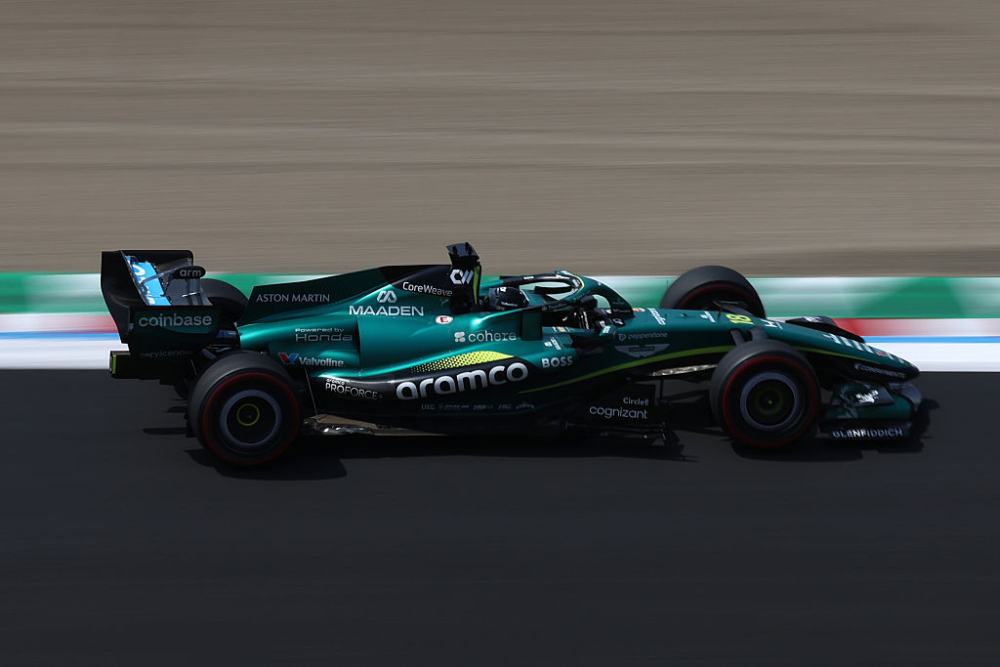
Aston Martin’s season has been beset by reliability issues so far, with the team completing its first race distance at the Japanese Grand Prix before the April break in races. Honda was able to complete static testing with an Aston Martin car in Japan in the gap, but with the chassis uncompetitive and the power unit also down on performance, Honda’s trackside general manager and chief engineer Shintaro Orihara says a more reliable package is the primary target.
“It has been a long but intense period between the races with lots of work happening in collaboration with the Aston Martin Aramco Formula One Team both in Japan and in the UK,” Orihara said. “The Japanese Grand Prix showed that the work is going in the right direction and helped us to find the motivation to keep pushing forward.
“After that race, we took the opportunity to keep one of the AMR26 cars on site for further static testing in Sakura for the first time, focusing our efforts on reducing the vibrations and thus increasing reliability.
“We have made some progress, allowing us to implement further countermeasures in Miami and later in the season. Realistically, this progress will not have a visible impact on the power unit performance on track, so we shouldn’t be expecting big jumps forward here.”
Orihara also highlights the likely high temperatures in Miami as offering a further reliability challenge for power unit manufacturers this weekend.
“Miami is the first circuit on the 2026 calendar with lots of slow speed corners,” he said. “It is a unique track, having two long open-throttle sections, and several slow speed corners. This combination makes it interesting to find the car setting compromise.
“On the power unit side, it’s about improving drivability through the slow speed sector and optimizing energy management in this section is a key factor to maximize performance. Miami is also the first warm race weekend of the season so it’s paramount to keep the power unit temperatures under control under these new regulations.
“The Miami Grand Prix is a Sprint weekend which means we only have one practice session – albeit 90 minutes – to optimize all of the data settings under the new regulations and define the best cooling specifications ahead of Sprint qualifying, which makes FP1 here very important.”

Chris Medland
While studying Sports Journalism at the University of Central Lancashire, Chris managed to talk his way into working at the British Grand Prix in 2008 and was retained for three years before joining ESPN F1 as Assistant Editor. After three further years at ESPN, a spell as F1 Editor at Crash Media Group was followed by the major task of launching F1i.com’s English-language website and running it as Editor. Present at every race since the start of 2014, he has continued building his freelance portfolio, working with international titles. As well as writing for RACER, his broadcast work includes television appearances on F1 TV and as a presenter and reporter on North America's live radio coverage on SiriusXM.
Read Chris Medland's articles
Latest News
Comments
Comments are disabled until you accept Social Networking Cookies. Update cookie preferences
If the dialog doesn't appear, ad-blockers are often the cause; try disabling yours or see our Social Features Support.