Big Daddy’s Epiphany
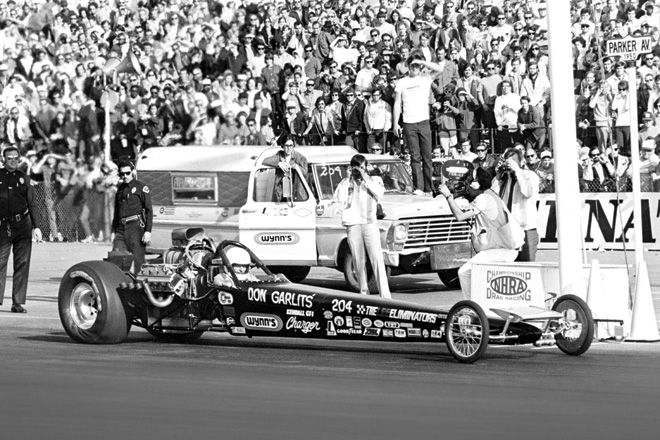
“I want to be ahead of the engine...” It took the loss of half of his foot, but “Big Daddy” Don Garlits’ moment of clarity redefined the dragster and undoubtedly saved many lives.
Laid up in Long Beach, Calif., with half his foot blown off and his once limitless future suddenly uncertain, the greatest drag racer of all time designed the car that would change the sport forever, “Swamp Rat XIV,” from his hospital bed.
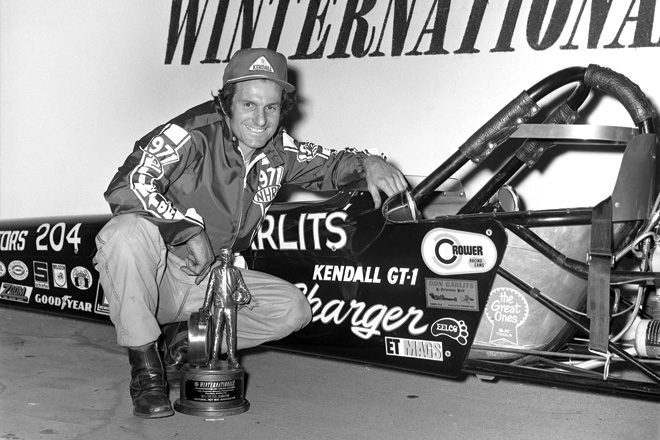
But none got anywhere in NHRA national event competition until Garlits’ ground-breaking machine won the 1971 Winternationals in Pomona, Calif.
The rear-engine configuration that added 20 years to Garlits’ career and saved the lives of countless drivers in the future was a product of drag racing’s most dangerous era, a time when many of the best and most beloved Top Fuel drivers were being killed at an alarming rate. Robinson, Mike Sorokin and John “the Zookeeper” Mulligan, who each ranked right up there with Garlits and Don “the Snake” Prudhomme among the stars of the sport, died in violent accidents.
In September 1970, on the biggest possible stage – the final round of the NHRA Nationals at Indianapolis – “Superman” Jim Nicoll’s car sawed itself in half just ahead of his feet as he crossed the finish line at 225mph. Prudhomme, horrified to see the front half of Nicoll’s car slide past him in the shutdown and sure that his friend was dead, quit racing on the spot. (He later recanted after much deliberation and upon learning that Nicoll had, miraculously, survived with only a minor foot injury.)
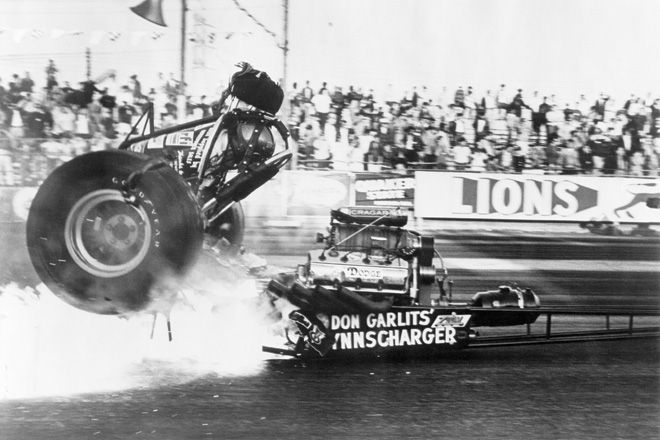
Garlits saw the whole thing – he’d just red-lighted against Nicoll in the semi-final and was watching from the grandstands – and was more convinced than ever that he never wanted to go down the track again without the engine behind him. It had been six months almost to the day since perhaps the most famous drag racing accident of all, Garlits’ explosion and crash on March 8, 1970 at Lions Drag Strip on the outskirts of Long Beach.
Get the full version of this article in The Great Cars IV Issue of RACER magazine, on sale now. Take a video tour of the issue below...
To subscribe now at a special discount rate,
click here
, or to buy The Great Cars IV Issue online, click here. To learn where to buy RACER in your area,click here
.RACER is also available digitally for Apple, Android and Kindle Fire devices. RACER Digital has the complete content of the magazine's print edition formatted for mobile viewing. With RACER Digital, you'll have access to your RACER content all the time, wherever you are.
The RACER app can be found by searching for "RACER Magazine" in the Apple, Android or Amazon App stores. The app is free and includes issue previews and the RACER.com newsfeed. Individual issues can be purchased for $1.99 and an 8-issue annual subscription is $9.99. Back issues are also available.

Latest News

Comments
Comments are disabled until you accept Social Networking Cookies. Update cookie preferences
If the dialog doesn't appear, ad-blockers are often the cause; try disabling yours or see our Social Features Support.