Andy Hone/Getty Images
How are Indy cars and F1 cars different?
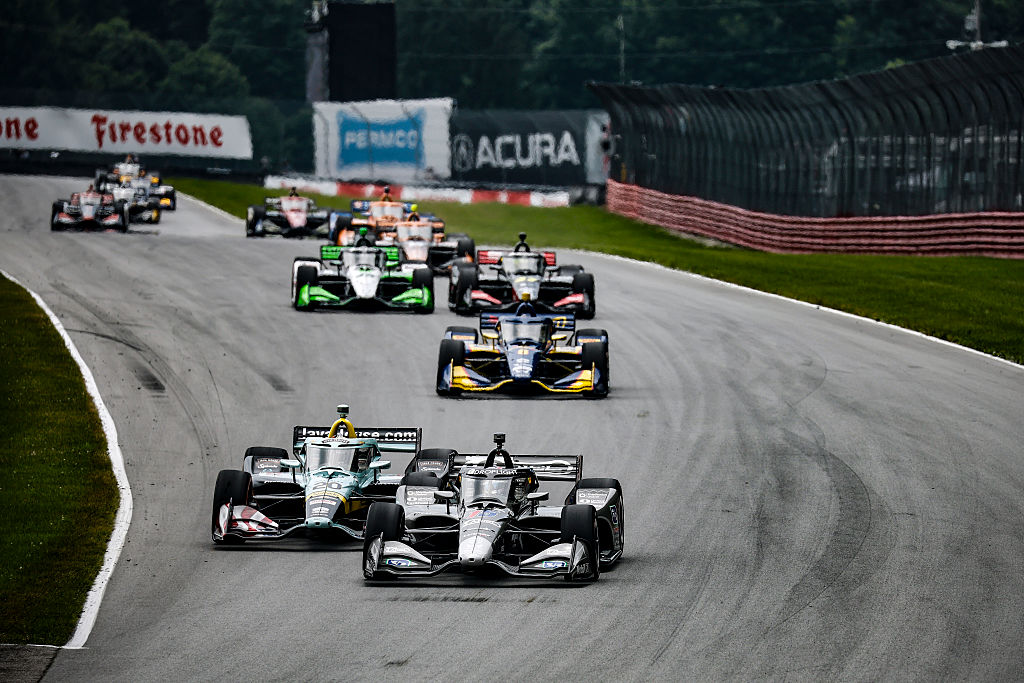
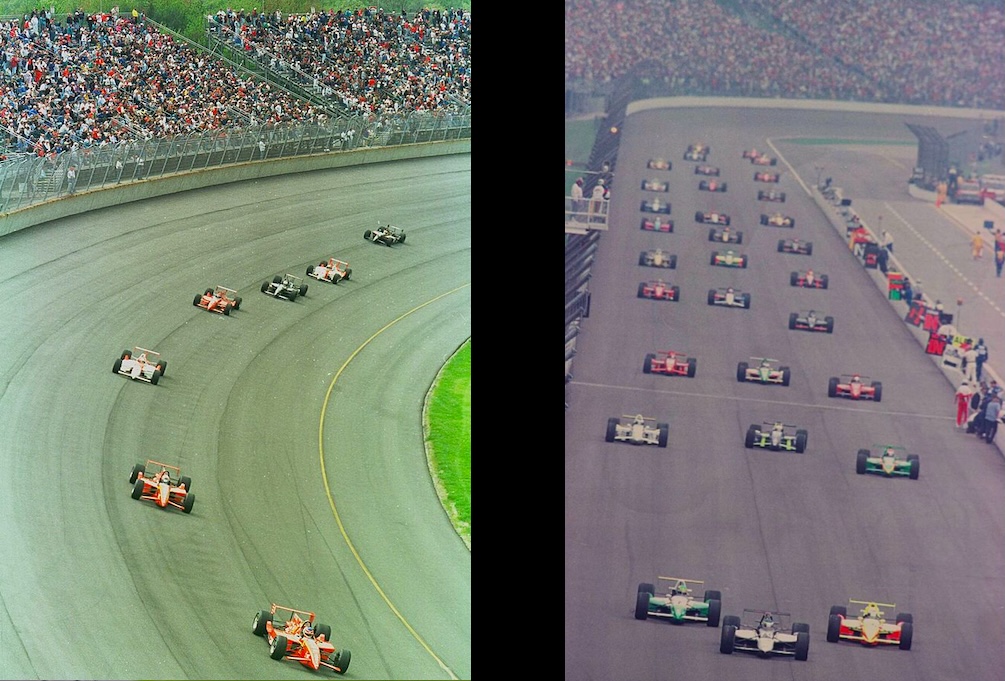
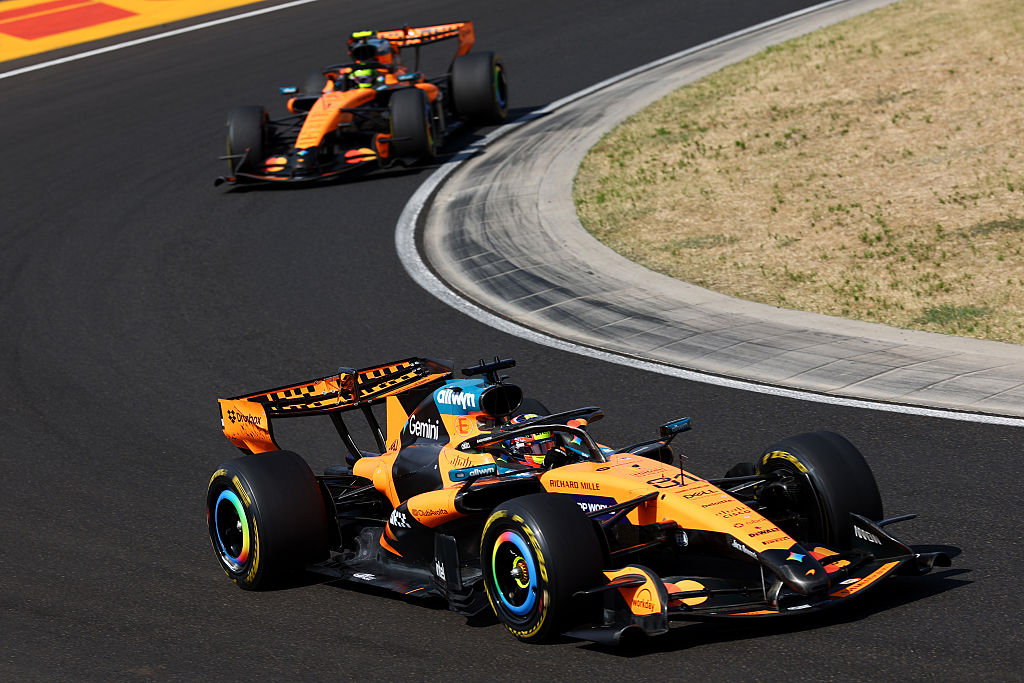
To the casual bystander, Formula 1 cars and Indy cars look basically the same: pointy-shaped with big wings and tires, and a driver in the middle. But once you move beyond the basic silhouette, the differences between the two quickly become apparent.
CHASSIS PHILOSOPHY
F1: Constructor chassis
Each team designs and builds its own carbon-fiber monocoque within FIA regulations. Ferrari, Red Bull, Mercedes, McLaren, etc. all run genuinely different cars – different aero concepts, suspension geometry, sidepod designs, cooling packages. A part from a Ferrari could not be fitted to a McLaren, for example – and might not even fit on a Ferrari from earlier in the same season. This is why F1 sees such big performance swings between teams (a correct or wrong concept can be worth seconds a lap), and why development spending is so central to the sport. The chassis itself is a competitive weapon.
IndyCar: Spec chassis
Every car on the grid uses the same Dallara-built tub – currently the DW12/IR-18, in use since 2012 with updates along the way (universal aero kit in 2018, the aeroscreen in 2020, hybrid unit added in 2024). It's a carbon fiber monocoque with a honeycomb kevlar structure, with double A-arm pushrod suspension front and rear.
Teams can't touch the fundamental structure – they're tuning dampers, springs, and setup within a fixed design, not engineering a different car. This is deliberate. It caps costs and keeps the field mechanically close, so races are decided more by driver skill, strategy, and pit work than by who has the best-funded engineering department.
That's really the philosophical crux: F1 lets chassis design be a major axis of competition, IndyCar deliberately removes it as one.
No power steering
The current-model IndyCar is famed for its lack of power steering, making it much more physically demanding and a handful to drive, especially on street courses where there's constant, heavy steering input at low speed (unlike F1 or a road car, there's no assist helping turn those front wheels).
As a result, IndyCar drivers need serious upper-body and neck strength (compounded by the g-forces on ovals). Fatigue is a real limiting factor in a way F1 drivers don't experience to the same degree, since F1 cars do have power steering.
Without power assist, drivers get more direct, unfiltered feedback through the wheel. Some drivers/purists see this as a feature, not a bug, since it rewards precision and strength. The absence of power steering has also been cited as one reason the car can be tough for lighter/smaller-framed drivers to adapt to.
IndyCar's upcoming IR-28 chassis (debuting 2028) will not have power steering at launch either, but IndyCar VP Mike O'Gara has floated adding a sportscar-style electric power assist after initial testing, so this could change in a few years. For now, though, it remains one of the most talked-about physical differences between the two series.
Latest News

Comments
Comments are disabled until you accept Social Networking Cookies. Update cookie preferences
If the dialog doesn't appear, ad-blockers are often the cause; try disabling yours or see our Social Features Support.