Alex Caparros/Formula Motorsport Limited via Getty Images
Racing dictionary
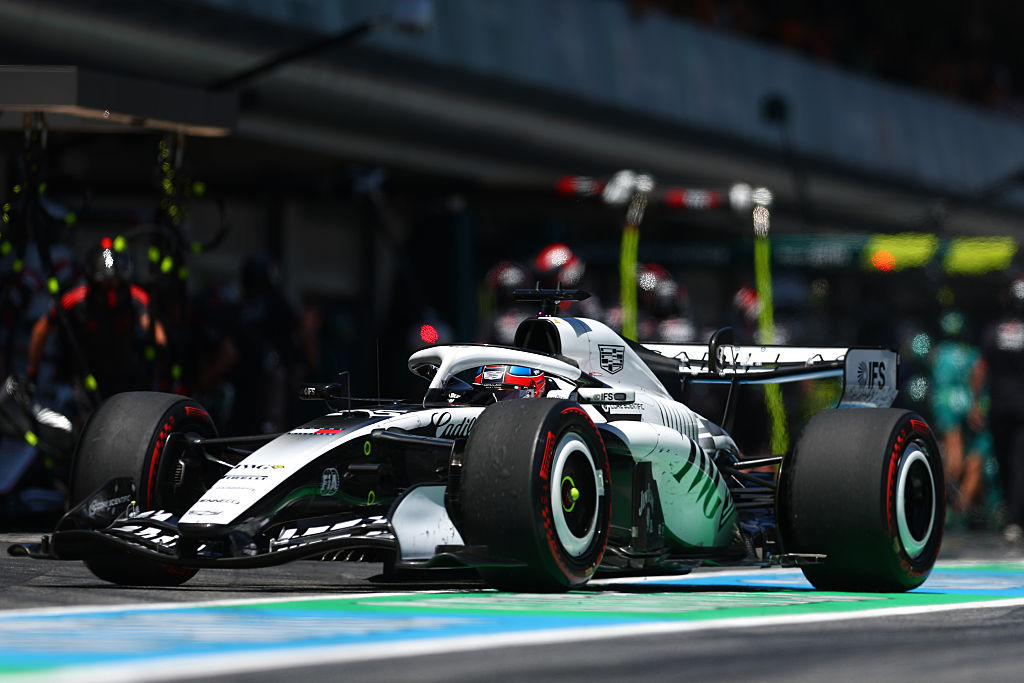
Active aero
Active aero refers to F1’s 2026-onward system of movable front and rear wings that switch between a low-drag “straightline mode” (for higher top speed) and a high-downforce “cornering mode” (for grip through corners), controlled automatically or by driver input depending on track position. It replaces the previous DRS system, extending the same drag-reduction concept across nearly the whole lap rather than just designated overtaking zones.
Aquaplaning
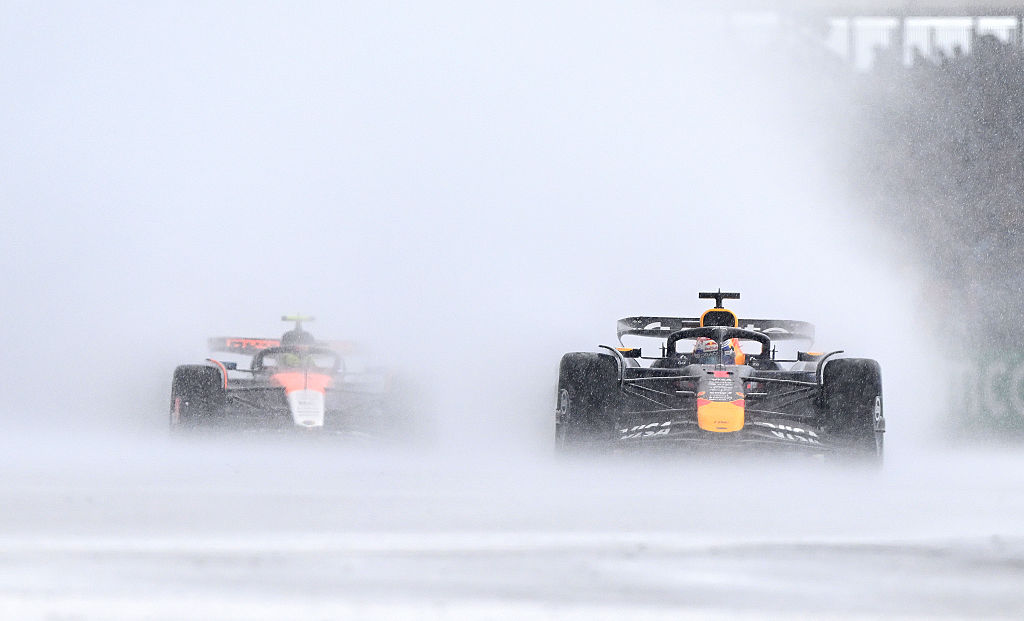
Aquaplaning is when a car’s tires lose contact with the track surface because a layer of water builds up faster than the tire’s tread can disperse it. The car effectively rides on top of the water rather than gripping the surface, causing a sudden and often severe loss of control, steering response, and braking ability, typically at higher speeds or through standing water on the racing line.
Attack Mode
Attack Mode gives Formula E drivers a temporary power boost and all-wheel drive by forcing them to drive off the optimal racing line
How Attack Mode works:
- Power Boost: Increases power by 50 kW—raising it from the standard 300 kW race mode to 350 kW.
- All-Wheel Drive (AWD): Unlocks front-axle drive out of corners for faster acceleration.
- Activation Zone: Drivers must press a steering wheel button to arm the system, then steer through an off-line activation zone usually placed on the outside of a corner.
- Time Penalty: Taking the slower, wider line costs position and time upfront, creating immediate strategic risk.
AUDO
ADUO stands for Additional Development and Upgrade Opportunities, a new mechanism baked into F1’s 2026 power unit regulations that’s designed to stop one manufacturer from running away with a huge performance advantage the way Mercedes did after the last major engine overhaul in 2014, when the power unit determined the competitive order more than anything else.
Caution
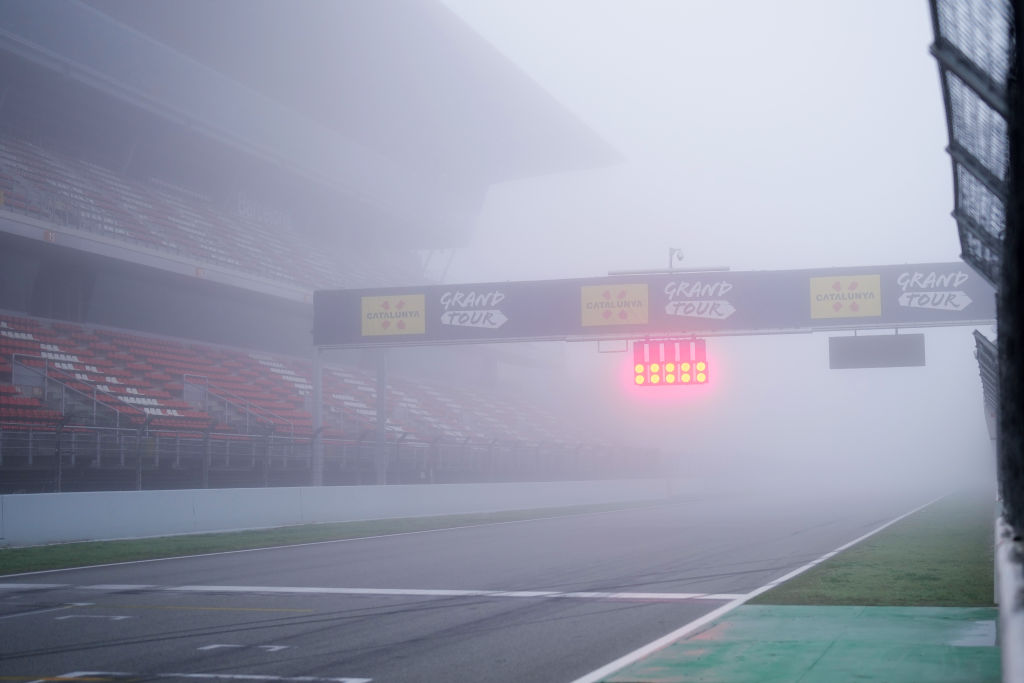
A caution period is a phase of a race where speeds are restricted and racing (overtaking) is suspended, displayed by yellow flags. It’s typically triggered by a crash, debris, stalled car, or bad weather, and allows safety crews to clear the hazard safely. Cars usually bunch up behind a pace/safety car until the track is clear, at which point racing resumes with a restart.
Clipping
Clipping is when an F1 car’s electric energy store runs dry mid-straight, causing a sudden drop in power even with the throttle fully pressed, since the car is left relying on combustion power alone. “Super clipping” is the deliberate version – a driver triggers the MGU-K into harvest mode at full throttle to recharge the battery early, trading a bit of top speed now to guarantee power later in the lap.
Downforce
Downforce is the downward aerodynamic force generated by a car's wings, diffusers, and body shape as it moves through the air, pressing the car harder into the track. This increases tire grip, allowing higher cornering speeds and better braking, but at the cost of added drag, which reduces top speed.
Drafting
Drafting is when a car tucks in closely behind another car to take advantage of the reduced air resistance in its wake – the lead car punches a hole through the air, and the trailing car benefits from that disturbed, lower-pressure air, letting it use less power to maintain the same speed (or gain extra speed) than it could running alone.
In NASCAR, it's most pronounced at superspeedways like Daytona and Talladega, where cars run in tight, high-speed packs – two or more cars nose-to-tail (a “draft” or “line”) can go significantly faster together than any one car could alone, which is why pack racing and last-lap slingshot passes are such a signature feature of those tracks. It's also a major factor in IndyCar oval racing, and used strategically in F1 and other open-wheel racing on straights, though less dramatically since those cars run singly rather than in dense packs most of the time.
DRS
DRS (Drag Reduction System) is a movable rear wing flap that an F1 driver could open to reduce drag and gain extra top speed, primarily to aid overtaking. It was only usable in designated track zones, and only when a chasing car was within one second of the car ahead at a defined detection point. It was disabled in wet conditions and during the race’s early laps for safety. DRS was removed from the cars at the end of 2025 to make way for the new regulations that came into force for 2026.
Fuel-flow limit
A fuel-flow limit is a rule capping the maximum rate at which fuel can be fed into an engine (measured in kg/hour), regardless of how much fuel remains in the tank. It prevents teams from simply burning more fuel to make more power, forcing efficiency gains through better combustion, turbocharging, and hybrid energy use instead of raw fuel volume.
Full course yellow
A full course yellow (FCY) is a race control period where all cars on track must slow to a set delta time rather than bunching up behind a safety car while a hazard is cleared. It's a lighter-weight alternative to a full safety car period – quicker to deploy and remove – used for minor incidents that don't need the field physically neutralized.
Heat cycle
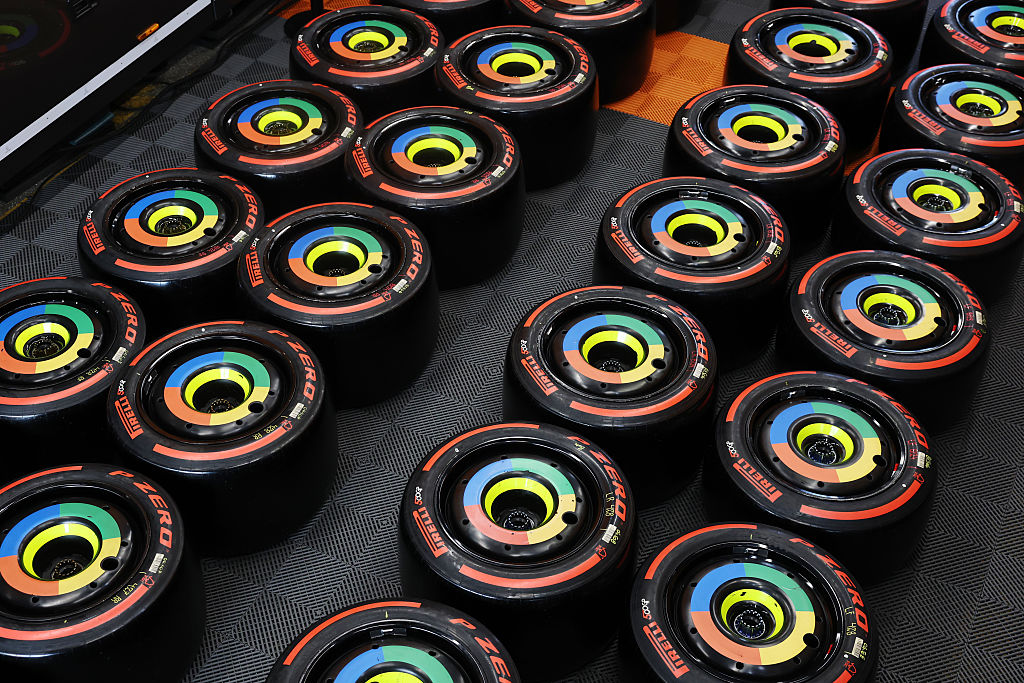
A heat cycle is one full sequence of a tire being heated up (from use or in a tire warmer) and then cooled back down to ambient temperature. Each cycle subtly and permanently changes the rubber’s chemical structure, gradually reducing the tire’s peak grip over successive cycles. This is why teams track how many heat cycles a set of tires has been through when deciding which to use.
Homologation
Homologation is the official approval process by which a racing series’ governing body (FIA, IMSA, etc.) certifies that a car or component meets the technical regulations required to compete. Once homologated, a car’s specification is typically locked for a set period, preventing teams from making further design changes until the next homologation cycle or rules reset.
MGU-H
MGU-H (Motor Generator Unit-Heat) was a component in F1’s pre-2026 hybrid power units that captured energy from the turbocharger’s exhaust gas flow (heat and spinning motion) and converted it into electricity, which could either recharge the battery or spin the turbo to eliminate lag. It was removed from F1's regulations starting in 2026 to simplify the power unit and cut costs, since it was notoriously complex and expensive to develop.
MGU-K
MGU-K (Motor Generator Unit-Kinetic) is a component in F1’s during acceleration. Under F1's 2026 regulations, its output was roughly tripled (to 350kW) to make electric power a much bigger share of the car's total performance.
Oval
An oval is a closed racing circuit shaped roughly like an elongated circle, with two long straights connected by banked or flat turns (all in the same direction, usually left). Ovals allow sustained high speeds and close, drafting-heavy racing, and are the defining track type in NASCAR and IndyCar (like Indianapolis and Daytona). F1 and sports cars never race on them, other than in sections that are incorporated into infield road circuits, nicknamed “rovals."
Overtake mode
Overtake Mode is a driver-activated boost in F1’s 2026 rules that combines active aero's low-drag straightline setting with extra electrical energy deployment, giving a burst of extra speed for overtaking. It's only available to the attacking driver when within a set gap of the car ahead, similar in spirit to the old DRS but now tied into the car's power unit as well as its wings.
Pack racing
Pack racing is when a large group of cars runs tightly bunched together at similar speeds, usually because power or aerodynamics are equalized (like restrictor plate/tapered-spacer racing at Daytona and Talladega). It creates intense drafting and frequent side-by-side battles, but also raises the risk of large multicar wrecks since so many cars are running close together at high speed.
Pit Boost
Pit Boost is a mandatory mid-race pit stop in Formula E where cars receive an ultra-fast energy increase. This is done through a 30-second 600kW boost in the pit lane, which in return offers the driver a 10% energy increase (3.85kWh). All drivers must stop for this extra energy and it can only be when the State of Charge (SoC) window is between the maximum and minimum percentages, agreed by the FIA ahead of time – usually below 60% and above 40%.
Push to Pass
Push to Pass is IndyCar's on-demand power boost, activated by a steering wheel button, that temporarily increases turbo boost for extra horsepower. Drivers get a limited total allocation (usually measured in seconds) to use across a race, making it a strategic resource for overtaking or defending rather than an unlimited aid.
Road course
A road course is a purpose-built racing circuit with a mix of left and right turns, varying corner types and often elevation changes, closer in layout to a public road than to an oval. It tests braking, cornering, and car balance in all directions.
Rubbering in
Rubbering in is when a track surface builds up a layer of rubber from cars’ tires over the course of a race weekend, especially along the racing line. This extra rubber increases grip, so lap times typically get faster as a session or event progresses – until the rubber gets too marbled or a change in conditions (like rain) washes it away.
Safety Car
A safety car is a car sent onto track to lead the field at a controlled, reduced speed while a serious hazard (a bad crash, heavy debris, poor conditions) is dealt with. Racing cars bunch up in formation behind it, closing any gaps, and can often pit under these conditions, until the hazard is cleared and the safety car peels in to allow racing to resume.
Shakedown
A shakedown is a short, low-key test run of a race car, often on a private track, done before its first official event to check that everything works properly (systems, reliability, basic setup) before committing it to real practice or qualifying sessions.
Spec chassis
A spec chassis is a standardized car design used by every team in a series, built by a single approved manufacturer, so no team can gain an advantage through chassis engineering. IndyCar (Dallara) and IMSA's LMP2 class (ORECA) are examples. It shifts competition toward driving, strategy, and setup rather than car design, and keeps costs much lower than open-design series like F1.
Stagger
Stagger is the difference in circumference (or diameter) between a car's left- and right-side tires, most commonly used in oval racing. A larger right-side tire relative to the left helps the car turn left more naturally through corners, since the outer (right) wheels have to travel a longer distance than the inner (left) wheels around a turn.
Strake
A strake is a small fin or ridge attached to a car's bodywork (often on the floor, diffuser, or wheel arches) that manages airflow, directing it to reduce turbulence, generate downforce, or prevent air from escaping out the sides of the car. They're common on prototype and GT cars’ underbodies and diffusers to help seal in aerodynamic effect.
Street circuit
A street circuit is a temporary racetrack laid out on public roads (closed for the event), typically featuring tight, low-speed corners, barriers close to the track edge, and bumpy surfaces compared to purpose-built circuits. Examples include Monaco (F1) and Long Beach (IndyCar). They punish mistakes heavily since there's little runoff room.
Superspeedway
A superspeedway is a large, high-banked oval, typically two miles or more in length, that allows sustained speeds well over 200 mph. Daytona and Talladega (NASCAR) and Indianapolis (IndyCar) are classic examples.
Tear-offs
Tear-offs are thin, disposable plastic film layers stacked on top of a driver’s helmet visor or a car’s windscreen. When one layer gets dirty or obscured (from mud, rubber, bugs), the driver rips it off mid-race to reveal a clean layer underneath, restoring clear visibility without stopping.
Track evolution
Track evolution is the gradual improvement in grip a circuit undergoes over a race weekend, as rubber builds up on the racing line, dust and debris get cleaned off, and the surface temperature stabilizes. It means lap times generally get faster from early practice through to qualifying and the race, all else being equal.
UAK (Universal aero kit)
The Universal Aero Kit refers to IndyCar's 2018 introduction of a single, series-supplied bodywork/aero package used by every car, regardless of engine manufacturer (Honda or Chevrolet). It replaced the previous system where each manufacturer built its own competing aero kit, cutting costs and reducing the aerodynamic performance gap between the two engine brands.
Virtual Safety Car
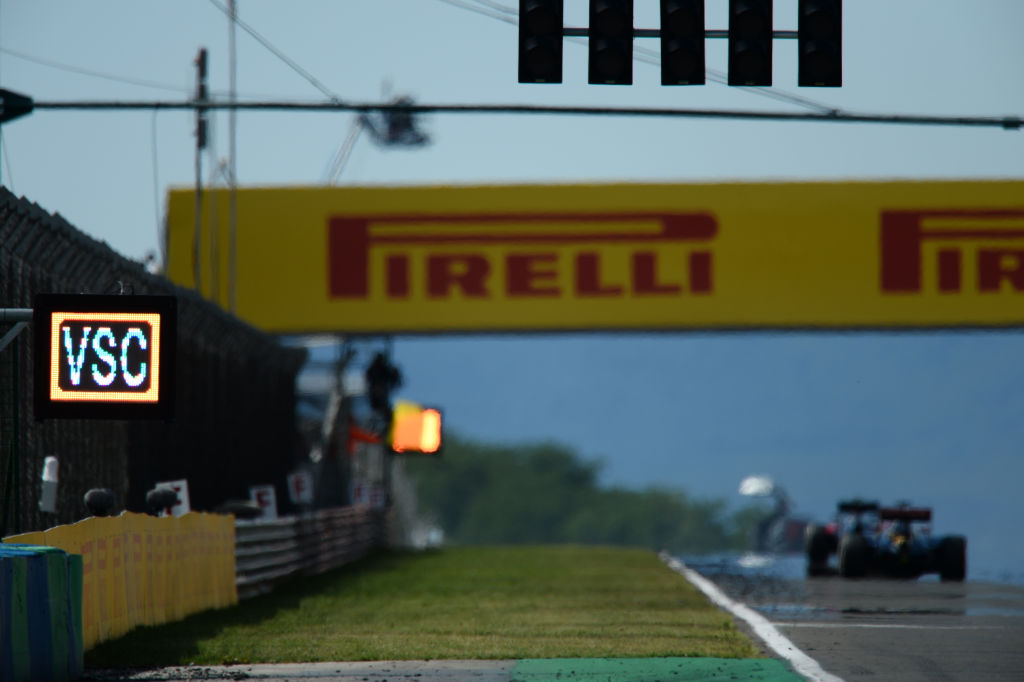
A virtual safety car (VSC) is an F1 procedure where all cars must slow to a set delta lap time (rather than bunching up behind a physical safety car) while a hazard is cleared. It’s faster to deploy and remove than a full safety car, used for minor incidents like stranded cars or light debris that don't require the field to be physically neutralized.
Latest News
Comments
Comments are disabled until you accept Social Networking Cookies. Update cookie preferences
If the dialog doesn't appear, ad-blockers are often the cause; try disabling yours or see our Social Features Support.