The Maeving RM2 solved my biggest problem with living in New York City
I've piloted a great many things through the tangle of patchwork hard black lines binding together New York City's five boroughs. It's a strange place to get to know a vehicle. Machines that are endlessly useful out in the country, where roads are wide, and parking is plentiful, often become not only tough to drive, but outright liabilities. The reverse is equally true. Some vehicles that feel almost pointless anywhere else suddenly take on an entirely new purpose once they're dropped into an urban environment.
That's why when Maeving dropped off an RM2 for a month, I instinctively did what every reviewer does: I tried comparing it to other motorcycles.
That turned out to be the wrong way to think about it.
Maeving RM2's most obvious quality: It is a beautiful thing
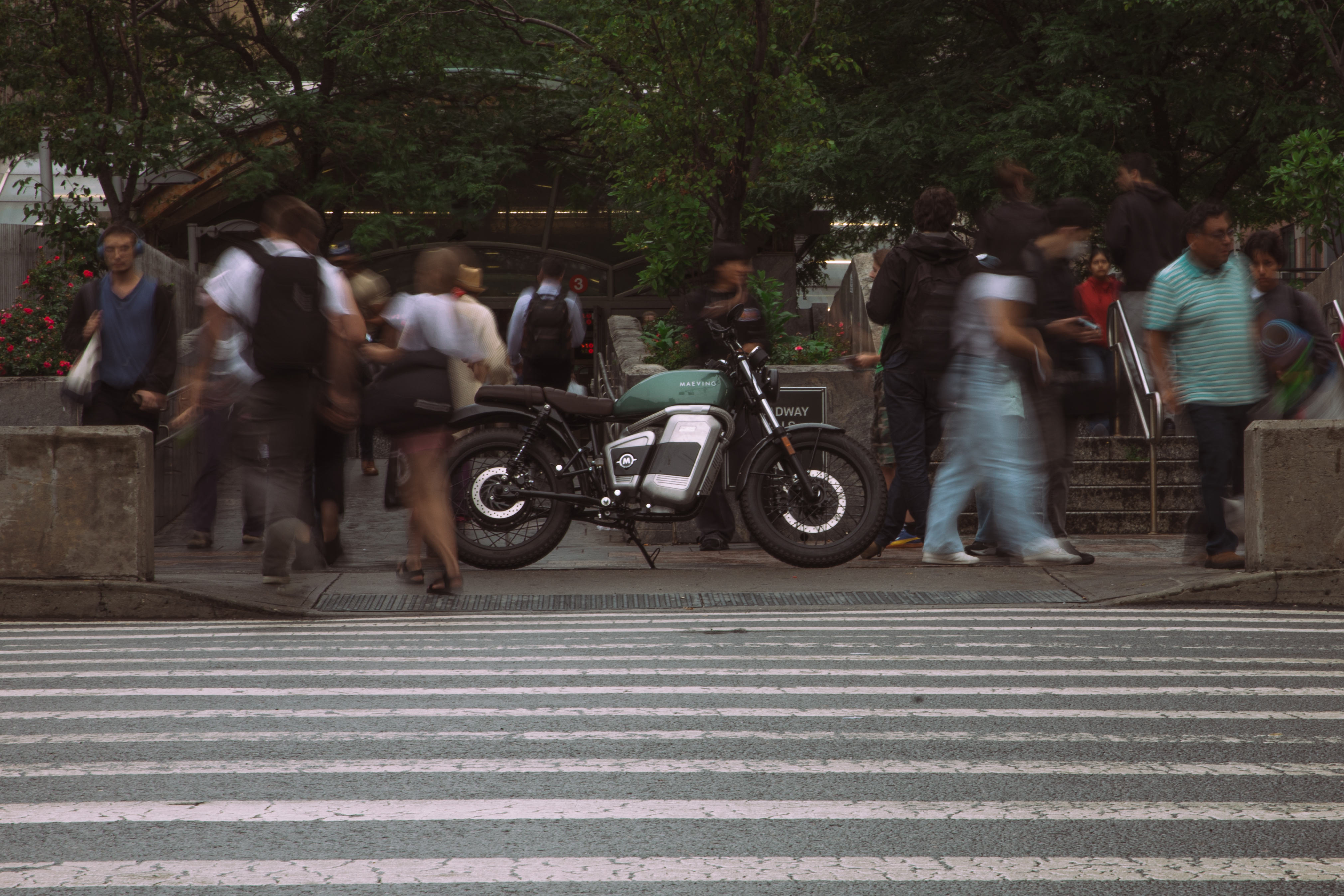
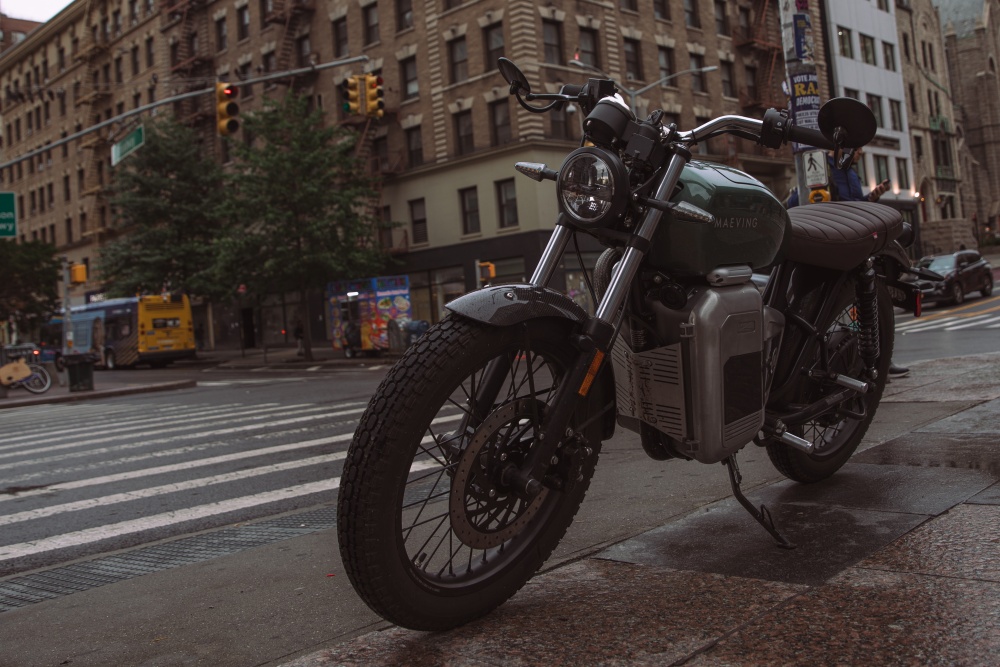
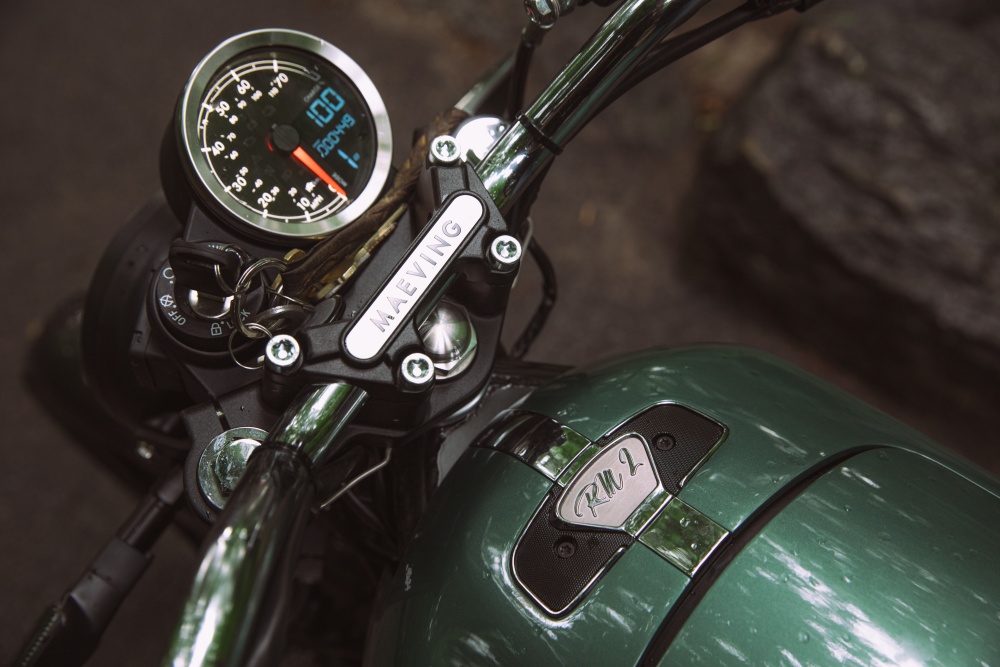
Immediately, the bike struck me as a deeply intentional thing of impeccable design. It carries all the lines and creases of classic British motorcycles from the '50s and '60s. You could be forgiven for seeing a Maeving RM2 whisper past and thinking you caught a moss-green blur of a Norton Commando or Triumph Trophy. It doesn't specifically imitate either motorcycle. Instead, I got the sense that Maeving speaks classic British design language so well that the RM2 emerged from that richness.
Samantha Nandez
Calling the Maeving RM2 the best-looking electric motorcycle I've ever ridden isn't exactly objective reporting. Still, that thought crowded my brain every single day as I left my apartment and found it waiting outside, statuesque and crouched like some techno-futuristic jungle cat.
It seemed to have the same effect on everyone else, too.
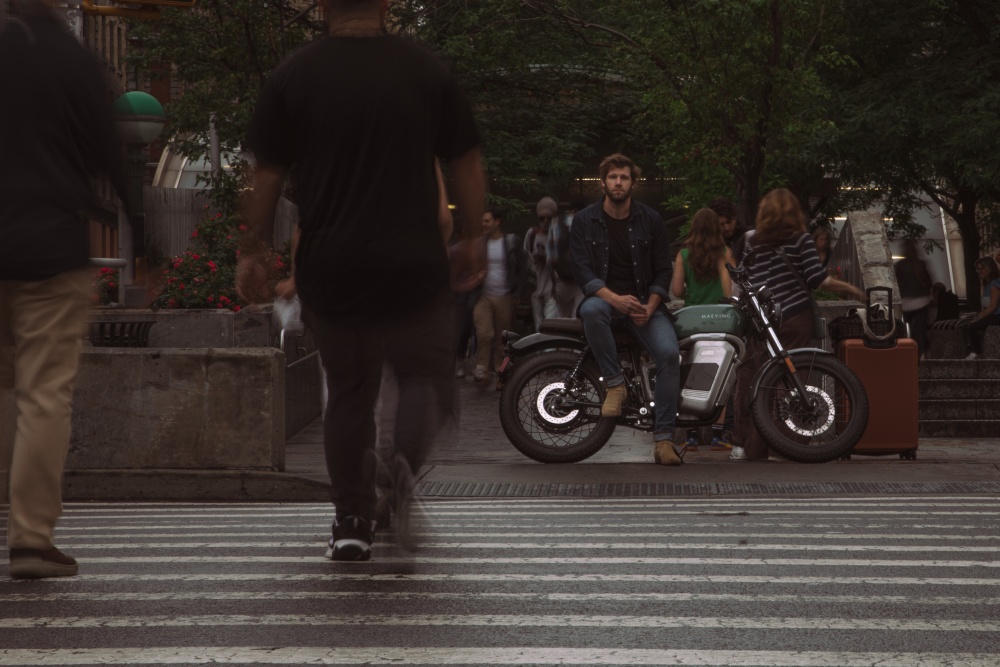
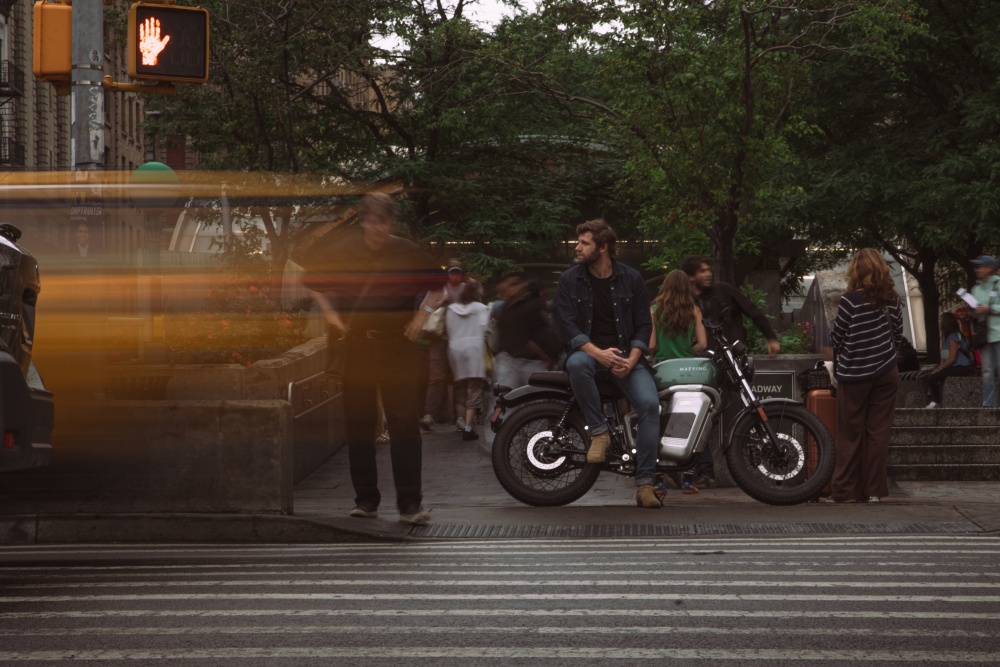
New York's endless crosswalks and perpetual traffic jams gave pedestrians plenty of opportunities to stare, ask, "Is that electric?" and then spend another few seconds trying to figure out exactly what they were looking at. Judging by those conversations, many of the people drawn to the Maeving weren't, at least by my snap judgment, motorcycle riders at all. They simply appreciated that it was a beautiful object and felt compelled to tell me about it.
Which naturally raises the question.
Is the Maeving RM2 a good motorcycle?
Admittedly, my experience with electric motorcycles is limited, but even I could tell the Maeving RM2 occupies a very different corner of the segment.
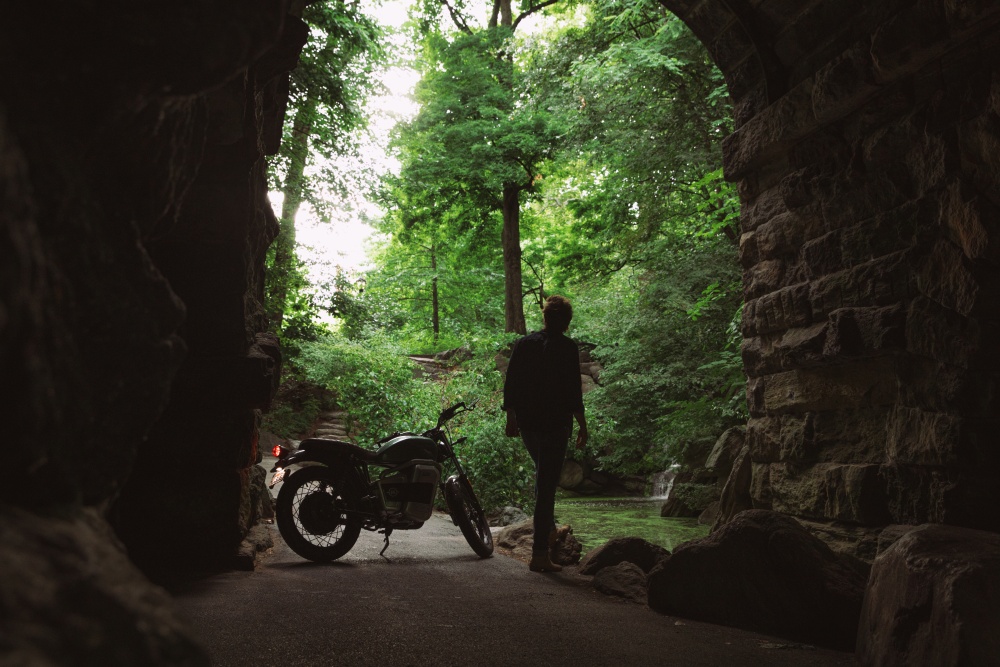
The RM2 is Maeving's larger, two-seat model. Its stretched wheelbase over the RM1 proved to be a blessing for someone my size. At 6’5, 225 pounds, I appreciated every extra inch of motorcycle Maeving gave me. It even managed to haul my wife and I around the city without complaint. Here, I found its 15HP rear-wheel-mounted electric motor to be a touch soft when I gave the beans. Although with two up, the soft acceleration was pretty noticeable but easily overlooked due to asking it to carry two adults. Aside from the oft launch, the bike carried us two around for miles and quickly, and I mean, within a few blocks, performance judgments melted and in their place was us, smiling.
Samantha Nandez
The first time I twisted the throttle to the stop, I felt something that, at first, registered as disappointment. I sat with this and chewed. I kept riding, letting the bike show me more.
Electric vehicles have conditioned us to expect an immediate shove of torque. Second to the lack of gasoline, this is kind of the signature feature of electric vehicles. The Maeving RM2 didn’t really have that.
It was soft. A hard twist of the throttle brought speed, but not in the on/off switch we’ve grown accustomed to from battery-powered cars and bikes. More miles. More right-hand twists. More time. Maybe disappointment was in the mix, but it was more of a misunderstanding. When I was a youngster, my pals and I would hit this spot called Chimney Rock, a series of cliffs lining the perimeter of a tiny island in Lake Martin, Alabama. The tallest jumping spot offered a 60-foot drop to the water. The first time you jump from such a lofty height, a sliver of a second before you hit the water, your brain tells your body in confused panic, “Hey, something is wrong. We should’ve stopped by now.” Your brain isn’t disappointed that it hasn’t stopped falling. It just doesn’t know anything other than short falls. It has pre-wired expectations that are in the middle of being blown up.
Samantha Nandez
The lack of torque pull from the Maeving RM2 felt closer to that sharp bodily realization that what you expected isn’t happening. And nearly instantaneously, you realize that it’s ok. Fine, really. In fact, the water (the bike) that has caught you off guard isn’t the problem; it's a relief. It’s friendly.
Splash
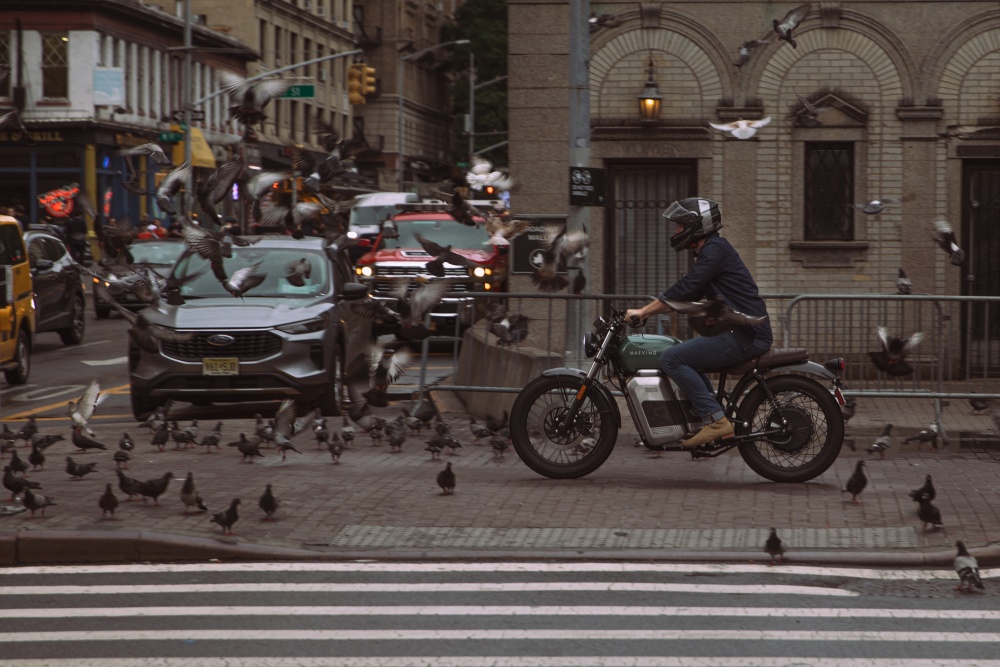
The 70mph top speed wasn't much of an issue during my month riding around New York City. Still, I did pull that throttle many times, wishing for a little extra urgency when escaping taxis, delivery vans, distracted pedestrians, beer trucks, and the wonderfully unpredictable choreography that passes for traffic in Manhattan.
Samantha Nandez
Then I started noticing other things.
The suspension felt unusually stiff for a bike of this size.
The bike felt almost comically light.
The brakes worked well but had an oddly bicycle-like feel due mostly to the lack of engine (motor) braking, which I tend to rely on when riding motorcycles.
Every observation landed in the same mental column.
"This isn't as good as..."
Not as quick.
Not as sporty.
Not as composed.
Samantha Nandez
For two weeks, that's how I evaluated the Maeving motorcycle. Then I realized something uncomfortable. The problem wasn't the bike.
It was me.
Every criticism I had made sense only if I insisted on judging the Maeving RM2 like a conventional motorcycle. Yet every time I actually rode it, I enjoyed it. The build quality felt excellent. I loved walking outside and seeing it every morning. Every errand became an excuse to ride.
Something wasn't adding up.
The longer I lived with it, the more I realized I'd been asking the wrong question.
The Maeving RM2 is more tool than motorcycle
The Swiss Army Knife is one of the greatest products ever made. Full stop. But it isn't one of the greatest knives; it’s hardly even a good knife.
Nobody would choose it over a chef's knife for preparing dinner or a hunting knife for dressing game. But mewing on about the SAK not being a great knife would be entirely missing what the hell a Swiss Army Knife is. A Swiss Army Knife succeeds because it's endlessly useful. It solves problems you didn't know you'd have until the moment they appear.
Samantha Nandez
The Maeving RM2 reminded me of that.
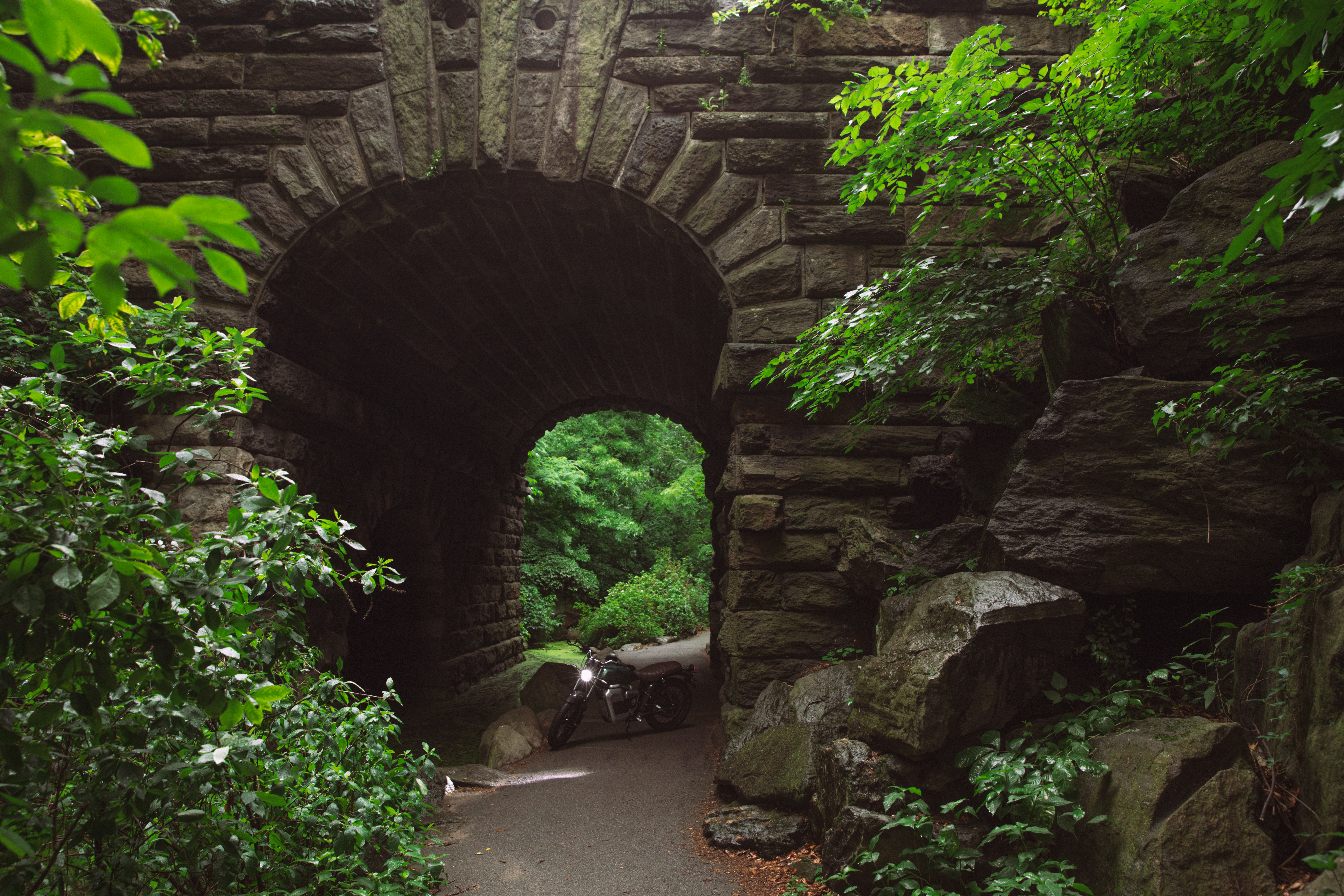
Like the Swiss Army Knife, the Maeving platform is astonishingly easy to live with. It's easy to ride. Easy to park. Easy to charge. Easy to thread through traffic, people, sidewalks, parks, whatever. "Easy" isn't usually the first word enthusiasts use to describe great motorcycles, but after a month with the RM2, I couldn't think of a better one.
That's when it finally clicked. The Maeving RM2 isn't trying to be the best motorcycle. I won’t speculate on what Maeving wants from its products, but what it is is one of the greatest commuter tools I’ve ever seen.
Samantha Nandez
Those aren't the same thing.
Sure, you can carve through winding roads, hop on the highway, and throw on your favorite leather jacket. It is a motorcycle. The Maeving motorcycle is capable of all of it. But none of those experiences feel as natural as using it exactly the way city life demands: grabbing groceries, meeting friends across town, commuting to work, or making one more trip because suddenly it isn't a hassle anymore.
That's a very different kind of greatness. Niche, maybe, but endlessly useful for those who need it.
New York was where it finally made sense
In a place like New York City, London, Paris, Chicago, or Los Angeles, the Maeving RM2 is an absolute weapon.
It didn't take long before I noticed my social life opening up.
Like a lot of tired parents living in New York, I often find myself weighing whether a night out is worth the ordeal of navigating trains, transfers, and late nights on hot summer platforms. More often than I'd like to admit, the answer is no.
The Maeving changed that calculation.
Samantha Nandez
Knowing my commute would happen on my schedule instead of the MTA's made me far more willing to head across town for dinner, meet friends for a drink, or simply wander into neighborhoods I normally wouldn't bother visiting. And even if the ride was long, or it was hot, or any other inconvenience popped into my mind, I was still riding a motorcycle. The commute stopped being the price of admission. It became part of the fun.
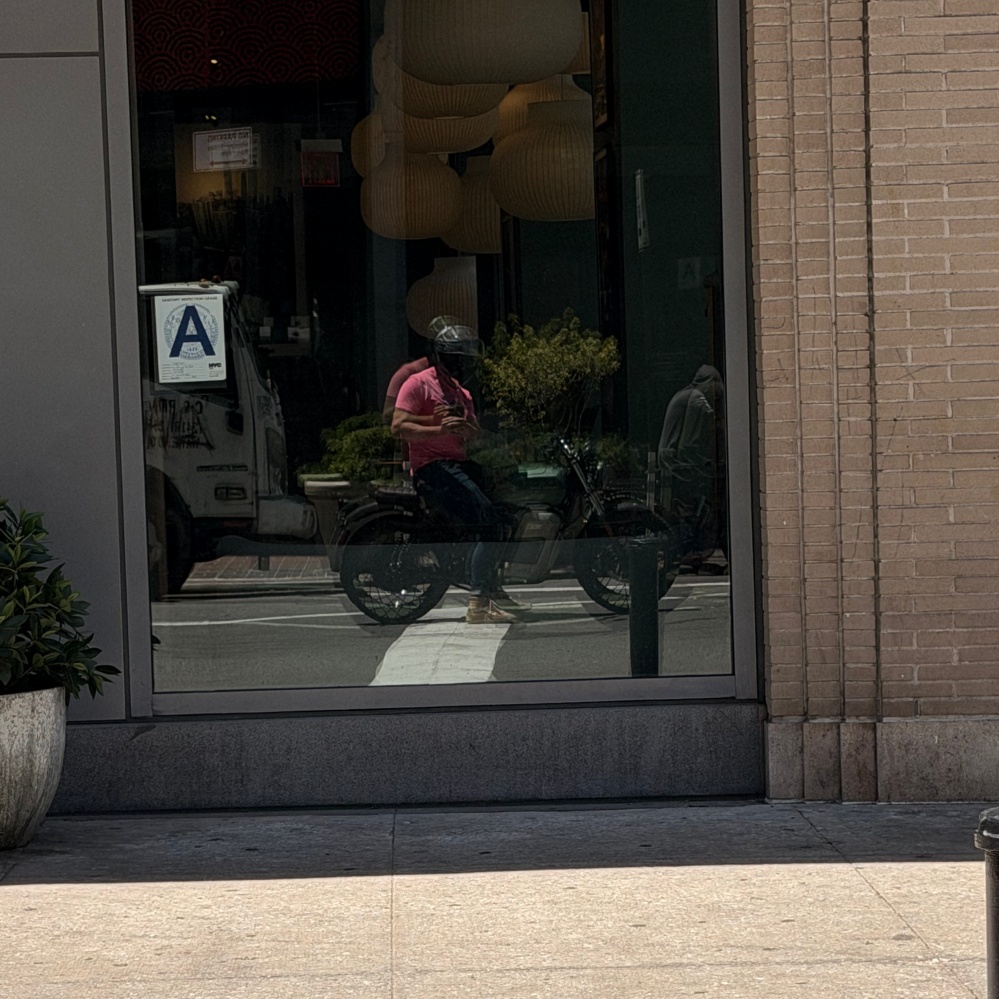
Traffic, meanwhile, became something closer to a puzzle than a punishment.
Peter Corn | RACER
Traffic is a guillotine with a joy-shaped hole for New Yorkers who choose to travel above ground. The Maeving slipped right past the executioner. It didn’t take long for that feeling of a sinking heart to pass me by when I saw a road-shaped parking lot.
Its narrow profile made skipping through traffic feel like I'd discovered a cheat code. I often had the image in my head of water passing through homemade charcoal filters; slower, maybe, but never stopping. Flowing. Long queues of frustrated taxis and delivery vans became little more than potholes or road debris that simply needed to be gone around rather than sit behind. At just 320 pounds dry, the Maeving RM2 changed direction almost as quickly as I could think about it.
Then there was the silence.
I won’t lie to you. I hate the quiet of electric motorcycles. To say it another way: the sounds of cars and motorcycles might very well be my favorite part of the machines. I stand by this very real downside of the electric movement. But even this complaint needed a rethink.
Without the mechanical drama that usually announces a motorcycle's arrival, the RM2 often felt almost anonymous. It drew attention when people looked at it, but very little when it simply slipped through the city. As any New Yorker knows, being able to slip through the crowds without being bothered is something of a treasure to be jealously guarded. The Maeving somehow knew this and gave it.
Then I did something I'd never do with any other motorcycle
The Knicks were in the middle of their playoff run, and New York had reached that familiar state where championship optimism begins to look suspiciously like it had the potential to morph into something uglier, more consuming.
I started worrying about the Maeving. Not because I thought someone would steal it.
Because I thought someone might accidentally set it on fire, kick it over in a fit of elation, or spray paint it black and silver and beat it with sticks.
So I solved the problem the only way the Maeving RM2 allowed me to in a place like NYC.
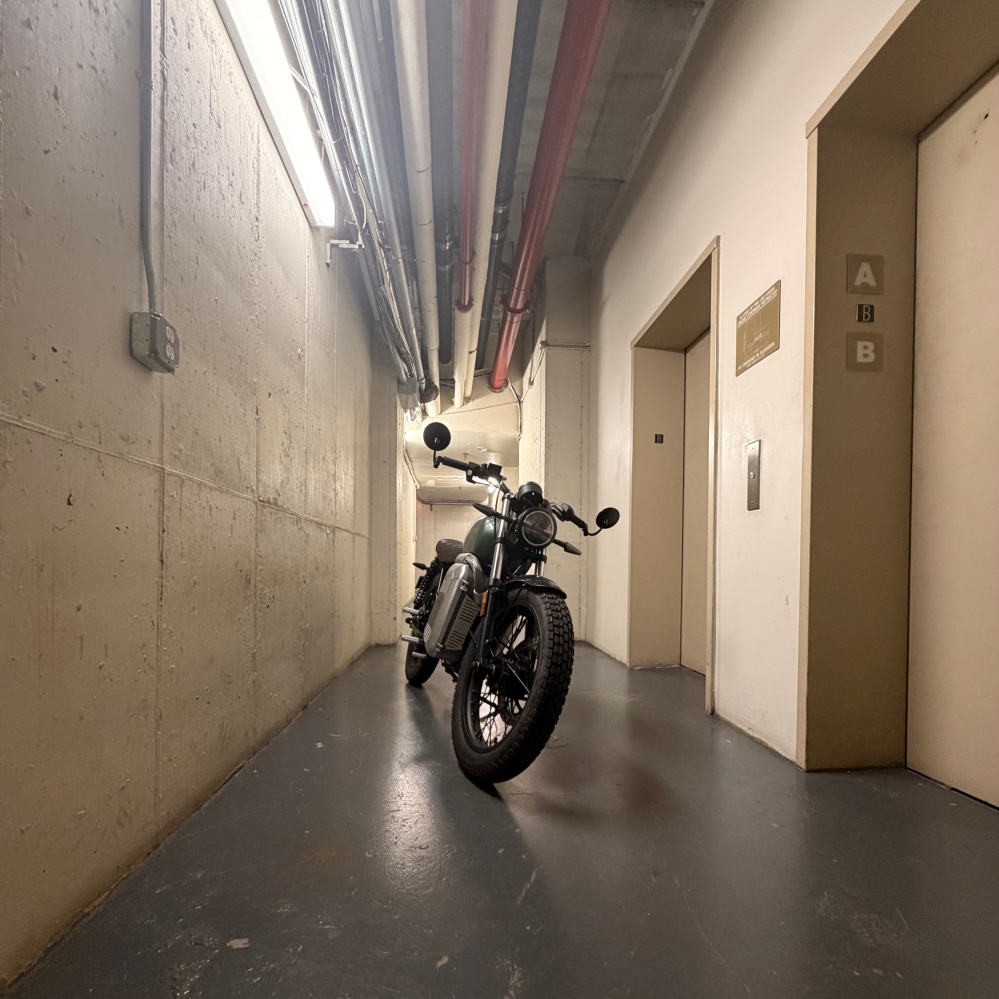
I rode it into my apartment building.
Peter Corn | Racer
Then onto the elevator.
Then into my basement storage room.
Try doing that with your Ducati.
Or your Harley.
Or just about any motorcycle that runs on gasoline.
Samantha Nandez
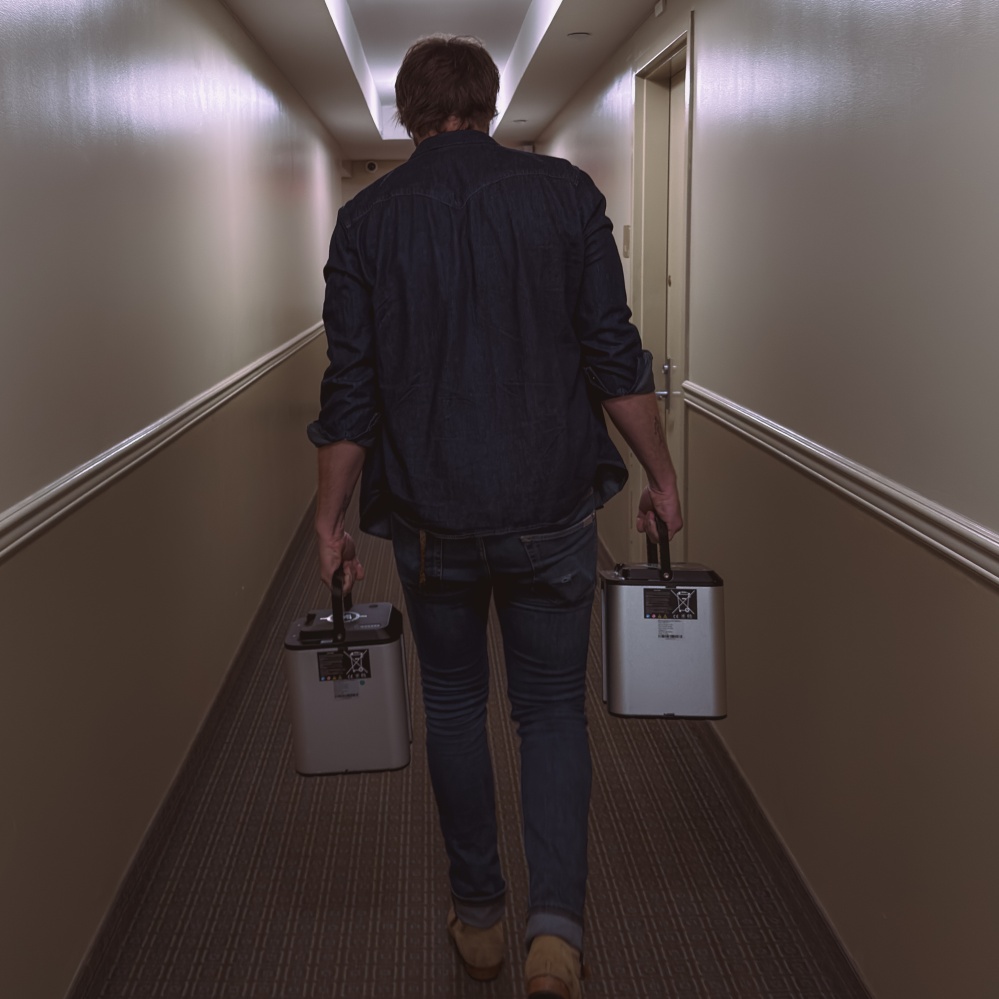
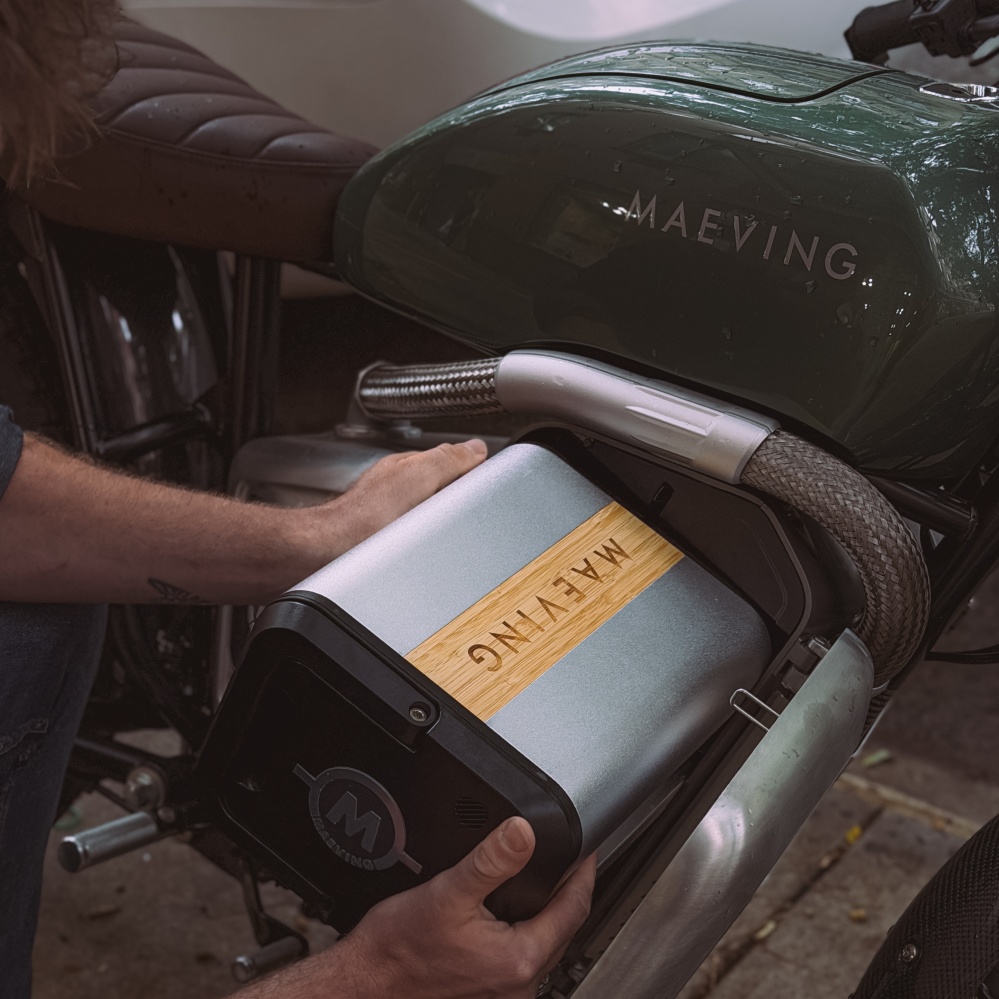
The Maeving's relatively light weight, compact dimensions, and removable batteries made the whole thing strangely uneventful. Not only did its slimness help with this rescue mission, but the fact that it wasn’t full of flammable liquids and smelly lubricants made me feel justified in this storage option. Everything about it was inoffensive and friendly, so I barely even felt like I was breaking a rule, which I undoubtedly was.
That moment crystallized everything I'd been trying to understand about the bike.
It wasn't behaving like a motorcycle anymore.
It was behaving like infrastructure supporting specific needs that life in NYC requires.
Great products eventually escape their category
The Swiss Army Knife isn't one of history's greatest knives.
The Toyota Prius isn't one of history's greatest driver's cars.
The Jeep Wrangler is a mediocre commuter, a mediocre tow vehicle, and a mediocre highway cruiser.
Yet I'd happily call all three great products.
Why?
Because greatness isn't measured by winning someone else's competition.

Samantha Nandez
It's measured by solving your own problem better than anyone else, and that's what the Maeving RM2 did for me.
Viewed through the traditional lens of motorcycle performance, it's difficult to argue that the Maeving excels. It isn't built for canyon carving. The suspension is firm. Eighty miles of range sounds restrictive compared to most motorcycles.
Viewed as an electric commuter motorcycle, however, the conversation changes completely.
The dual removable batteries eliminate one of the biggest headaches facing anyone who lives in a city without dedicated charging. Instead of hunting for an outlet, you simply pull the batteries from their beautifully machined aluminum housing, carry them upstairs, and plug them into the wall. Four hours later, they're full again.
For most city riders, that roughly 80-mile range isn't a limitation at all. Manhattan is 11 miles, toe-to-tip. It's nearly a week's worth of commuting.
Every traditional weakness of the Maeving RM2 begins looking less like a flaw and more like a deliberate compromise in pursuit of different goals than most motorcycles.
Not every great motorcycle has to be a great motorcycle
We've become accustomed to vehicles that promise to do everything. Pickup trucks wrapped in leather with 1,000 horsepower. Luxury SUVs that outrun sports cars. Adventure bikes capable of crossing continents before breakfast.
Don't get me wrong, they're impressive. They're also beginning to feel strangely predictable. Almost boring.
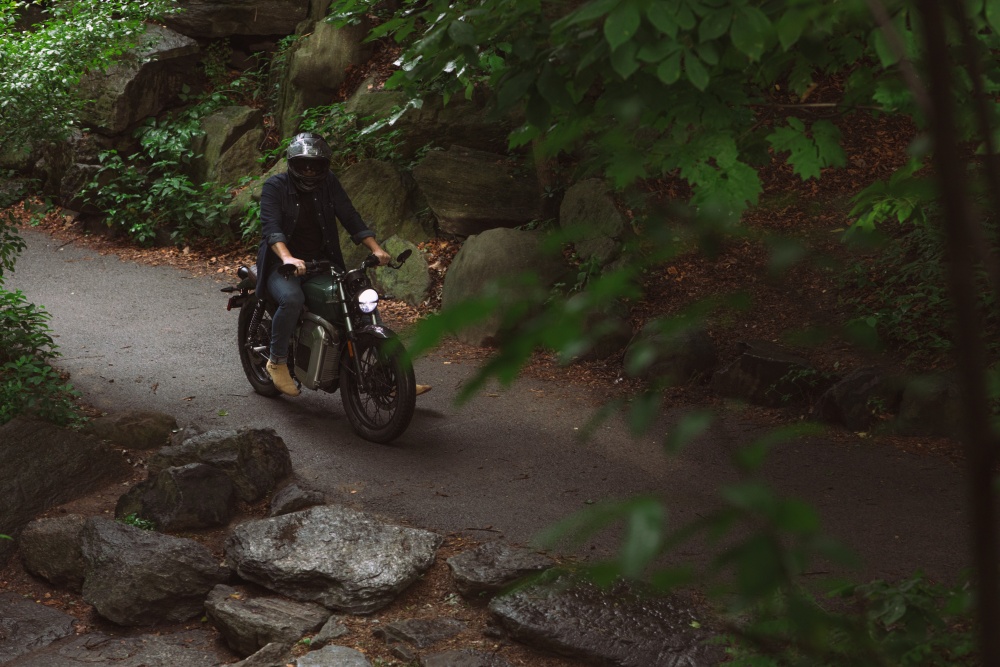
The Maeving RM2 goes in the opposite direction. It chooses one job. Then it becomes exceptionally good at it.
Samantha Nandez
After a month together, I still don't think the Maeving RM2 is a particularly great motorcycle. That's because I don't think "motorcycle" is the only or even the most appropriate box to put it in.
It's something closer to an electric bicycle that happens to require a license. A subway replacement that leaves when you do. A piece of personal infrastructure. Even still, comparing it to a bicycle feels unfair. It’s better than that, but it still occupies a similar space somehow.
Judge it by the standards of traditional motorcycles, and you'll find plenty to criticize.
Judge it by how effortlessly it moves you through a city, and it starts looking like one of the smartest electric motorcycles on the road. I’ll take it a step further: if you can move away from judging it against the wide backdrop of motorcycling, it might just be the most fun, best-looking, coolest, friendliest, most stylish, most elegant, and downright best way to get around New York City that I’ve come across.

Peter Corn
Peter Corn is an automotive writer and storyteller. Peter has spent nearly a decade writing about cars, trucks, and motorcycles for some of the best publications in the business. He believes the best automotive stories aren't really about the machines at all, but instead, the people who love them.
Read Peter Corn's articles
Latest News

Comments
Comments are disabled until you accept Social Networking Cookies. Update cookie preferences
If the dialog doesn't appear, ad-blockers are often the cause; try disabling yours or see our Social Features Support.