The UFO at an adult bookstore in Juárez: How Ed Roth's lost Orbitron was found
Some things get lost, and then there are lost things. A misplaced set of keys is something that has been lost. A custom show car built by one of the most iconic figures in American automotive art, believed to be scrapped, missing for decades, and eventually discovered parked in front of an adult bookstore in Ciudad Juárez, Mexico — that is an entirely different category of lost thing. That is the story of the Orbitron, and it is one of the stranger and more wonderful tales in the history of car culture.
To understand why the Orbitron's rediscovery in the summer of 2008 sent the collector car world into a chummed-water frenzy, you first need to understand Ed Roth and what he did.
Who was Ed "Big Daddy" Roth?
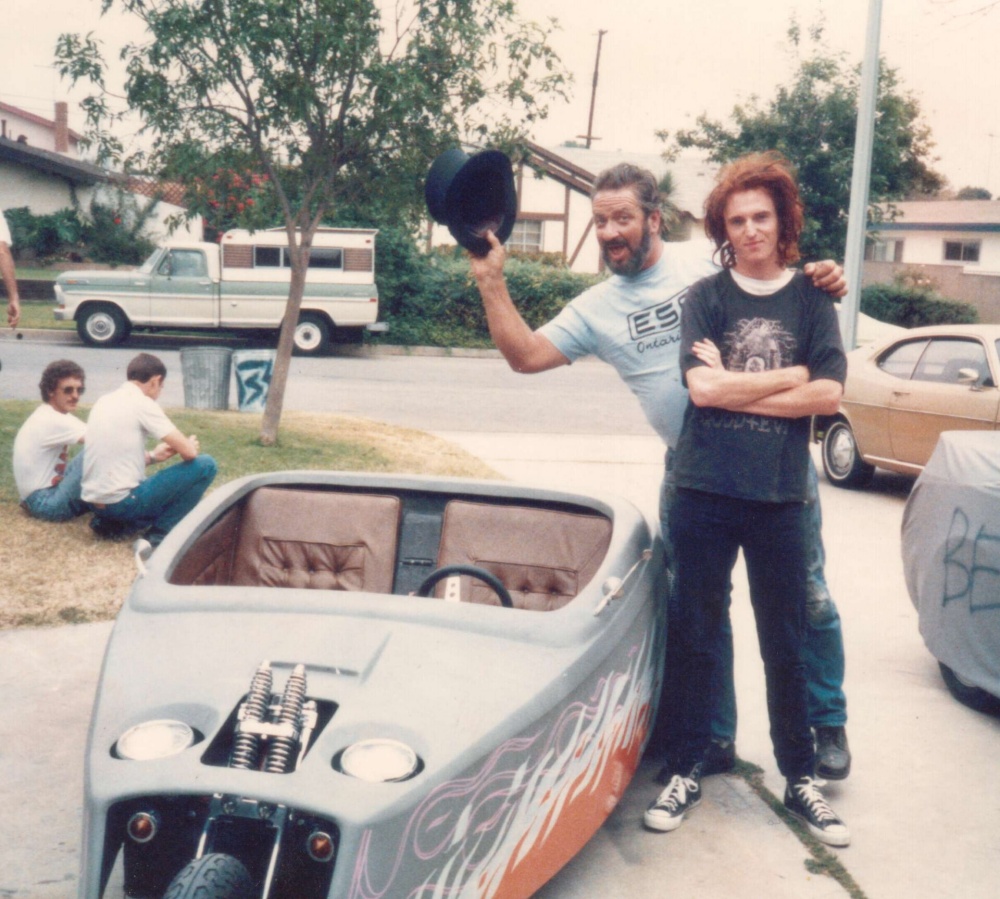
Ed "Big Daddy" Roth wasn't just a custom car builder. He was one of the architects of Southern California hot rod culture. A Titan of taste and conviction. An artist who worked in paint and chrome. A great big ol' badass. Born in 1932, Roth grew up within the budding postwar hot-rodding scene. He began making his mark in earnest by showcasing his talents with an airbrush, a pinstriping brush, and a welder. In fact, his earliest earned wages as an artist came during his time in Morocco as an Airman, where he would make a little pocket money painting fellow warmen’s names on their bags and giving the occasional haircut.
After serving in the U.S. Air Force, he made a living pinstriping cars, bicycles, wagons, literally anything with wheels, and creating hand-painted T-shirts for car clubs before turning his attention to building custom cars. Over the course of the 1960s, Roth built more than 40 one-of-a-kind creations, including icons like the Beatnik Bandit, Outlaw, Mysterion, Road Agent, and the lost treasure in question, the Orbitron. His futuristic show cars rarely resembled anything coming out of Detroit or even Earth, for that matter. His creations were built with equal parts child-like imagination and bold irreverence.
Wikimedia Commons
If the cars made Roth famous, his artwork made him immortal. His grotesque cartoon creation, Rat Fink, became the bulging and grimy antithesis to Mickey Mouse's squeaky-clean image and helped define the emerging Kustom Kulture movement. Roth's airbrushed monsters, "Weird-O" T-shirts, and Revell model kits spread his influence far beyond car shows, making him one of the first customizers to build a recognizable personal brand. Though his popularity faded during the 1970s, a revival of lowbrow art and nostalgia in the 1980s cemented his legacy. Today, more than two decades after he died in 2001, Roth remains, like it or not, one of the most influential figures in American automotive culture, period.
It’s hard to overstate how penetrating Roth’s ghoulish cartoon characters were at the time. Rat Fink became one of the most recognizable characters in American pop culture, appearing on T-shirts, model kits, keychains, and record albums, and influencing everyone from punk bands to Shock Rock legends, and generations of tattoo artists, so removed from car culture that many inking the horrid creatures might’ve not even known where the prismatic hobgoblins originally came from.
Ed Roth’s lost treasure
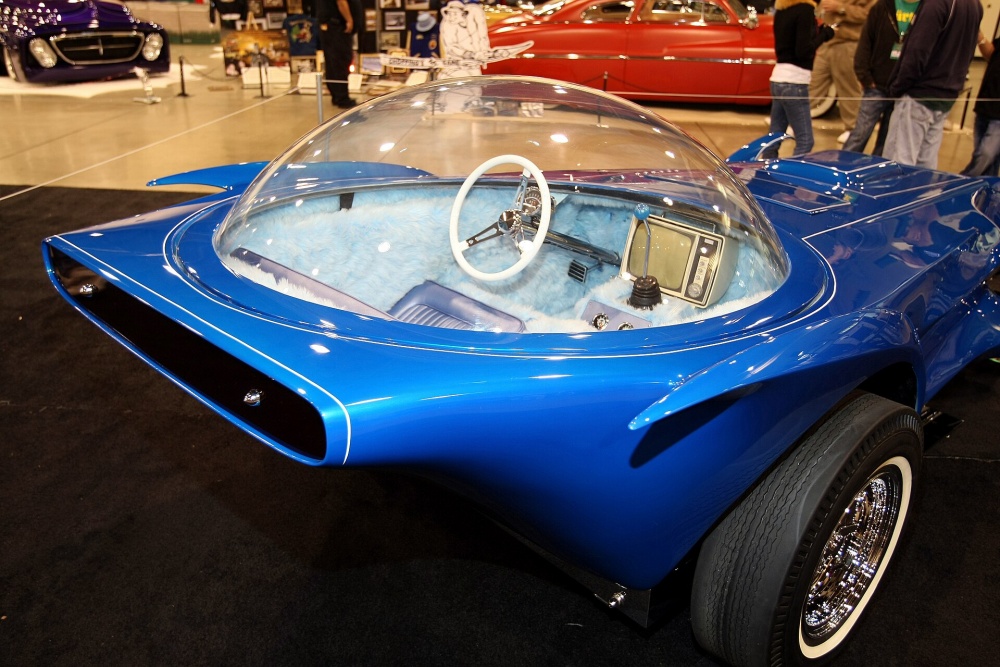
The Orbitron was built in 1964 and was exactly the kind of car you would expect from Big Daddy at the peak of his powers. It was a dragster-influenced coupe with a plexiglass dome instead of a roof — think cartoon alien spacecraft crossed with a hot rod as dreamt by a child ravaged by fever — finished in a caramel paint job and fitted with a fur carpet for the riders' feet. The headlights were asymmetrical and operated on a color television metaphor: three separate colored headlights on the passenger side — red, blue, and green — were designed to combine into a single white beam when illuminated simultaneously, exactly as a color television picture tube blended its primary colors. Roth installed an actual color television inside the car to complete the gag. Eat your heart out, Xzibit.
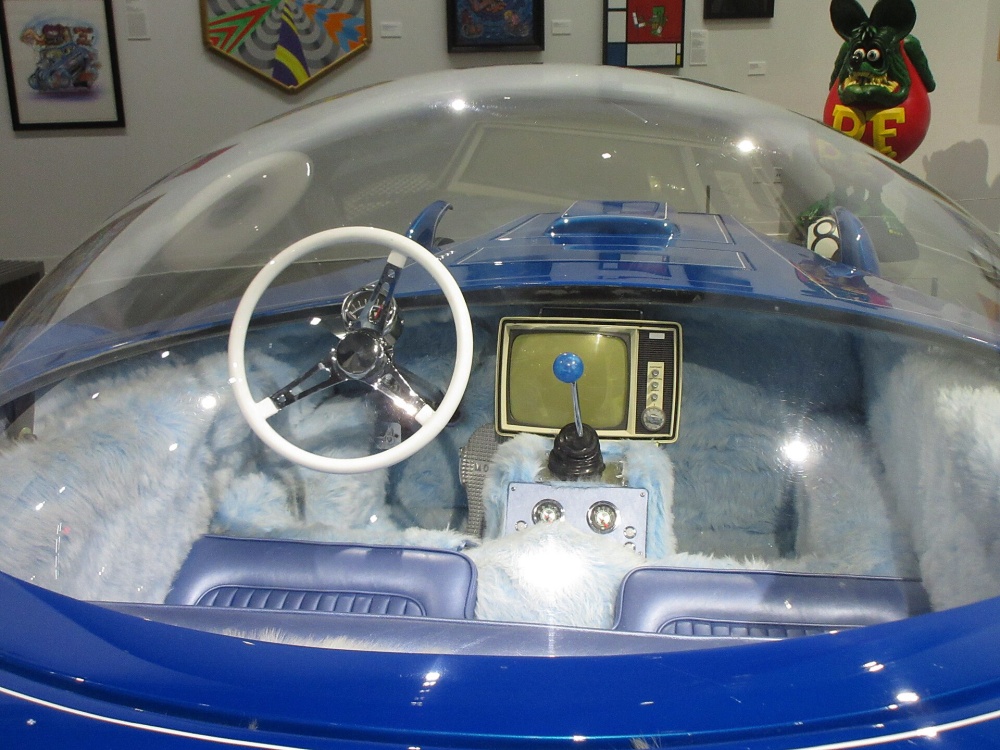
Wikimedia Commons
The mechanical package was straightforward by comparison. Roth was far more interested in exploring a whimsical, Gaudian-esque approach to aesthetic design than mechanical performance. To that end, the Orbitron, for all its garishness, drew power from a regular-degular Chevrolet V8 plopped behind the front axle, a three-carburetor fuel system, a two-speed Powerglide automatic transmission, a Ford rear axle, and slicks on the drive axle as a nod to the dragster tradition the body was built around.
The Orbitron toured the show car circuit and then, within a few years of its creation, essentially vanished. For decades, the assumption in the collector car world was that it had been scrapped — melted down or broken up like so many other artifacts of the era that nobody thought to preserve at the time. Roth himself once joked about the car's limited exhibition life, blaming the Beatles: "When the Liverpool Four appeared on the Ed Sullivan show, all the guys rushed to buy guitars instead of cars."
He was not entirely wrong. The British Invasion redirected a generation's obsessive energy away from hot rods, quaffed hair, and rockabilly and toward the jingle-jangle electric guitars from across the pond practically overnight, and the show car circuit never quite recovered its cultural centrality. The Orbitron slipped through the cracks, a victim of bad timing, and disappeared.
And some things that should not have been forgotten were lost. History became legend. Legend became myth. And for two and a half thousand years, the ring passed out of all knowledge. Until, when chance came, it ensnared another bearer.
The Orbitron emerges in Mexico
By the early 2000s, Orbitron had become one of hot rodding's great white whales. Only two major Ed Roth customs remained missing: Orbitron and Mysterion, the latter already believed to be destroyed, lost and gone forever.
So when veteran car hunter Michael Lightbourn got a call from one of his scouts in Mexico about an "ugly fiberglass car," his ears perked. He already knew the 1964 bubble-top custom's trail had gone cold in El Paso decades earlier. His friends Tony and Sergio Aguilar remembered seeing it parked outside Abraham Engineering on Montana Street sometime between 1972 and 1975 with a 'For Sale' sign in the windshield. Attorney Sid Abraham and bail bondsman Victor Apodaca owned it then, but despite its celebrity pedigree, Orbitron and its maker had yet to become the legends they are today, and its triple-carb setup made it a nightmare to drive and maintain.
Sid's nephew, John Attel, couldn't wait to drive a genuine Roth custom. However, the flames of excitement were quenched sharply and bitterly. He recalled the car barely making it a block and a half before quitting, forcing him to disconnect fuel to two of its three Stromberg carburetors just to keep it running. After spending a horrifying hour trapped beneath the sealed bubble canopy one day, he was finished with it. By then, the muscle car era had arrived, and big-block Camaros and Corvettes had far out-cooled fiberglass space capsules in the zeitgeist of the day. Interested buyers were quite few and very far between.
To illustrate just how undesirable it was at this time, one prospective buyer even measured the cockpit to see if it could be converted into a salad bar for his restaurant. When no American buyer emerged, Orbitron was sold to two men from Mexico for a meager $1,500. And so it disappeared for more than 30 years. So when Lightbourn finally uncovered it, abandoned outside a seedy-looking purveyor of adult entertainment in Juárez called El Vaquero, the internet exploded and hailed the discovery as one of the greatest treasure hunting stories in automotive history.
The owners of the shop were also the owners of the car. The plexiglass dome roof was gone. The front axle was missing. Everything else was largely intact. Collector car magazines subsequently called it the greatest find of all time, which is exactly the kind of hyperbole car nerds love to throw around every decade or so. Still, that doesn’t make this discovery any less astonishing.
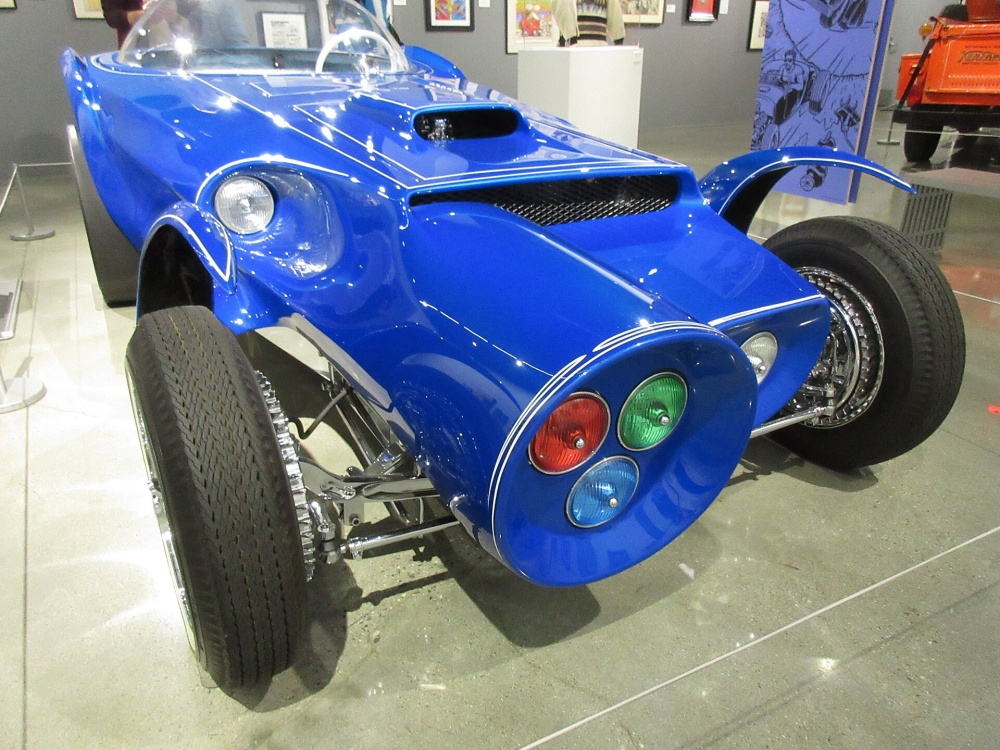
Orbitron’s remains got sent swiftly to Galpin Auto Sports for a full restoration — Galpin being a Los Angeles institution with both the expertise and the commitment to do the job correctly. The Orbitron, believed to be more likely to have been reincarnated as a recycled pool liner or bottles of water, was coming back to life.
What the Orbitron's story really illustrates is something Ed Roth understood intuitively and spent his entire career proving: that the things built by real people working outside the corporate structure, without institutional backing, purely from passion and a specific vision of what something could be, are the real things of value. These are the objects that tell the story of humanity at its core.
The Beatnik Bandit and the Mysterion had museums and collectors looking after them, which is good. Still, I think probably less in the spirit of the Big Daddy than a slowly rotting Orbitron planted in concrete in front of a Juarez pleasure palace. It’s hard to neatly put to the page, but something about the Orbitron’s journey, demise, and resurrection feels more true to the tales of Ed Roth’s ethos than anything he could have orchestrated on his own. This story feels like a neatly wrapped gift given from the twisting to-and-fro of the cosmos and its sparkling innards.
Let's try it a different way: If Rat Fink were to jump from the threads of a stained and befouled shirt and steal a car, I’m pretty sure it would be this one, and he’d end up reeking of tequila, buried in smut at the El Vaquero.

Peter Corn
Peter Corn is an automotive writer and storyteller. Peter has spent nearly a decade writing about cars, trucks, and motorcycles for some of the best publications in the business. He believes the best automotive stories aren't really about the machines at all, but instead, the people who love them.
Read Peter Corn's articles
Latest News
Comments
Comments are disabled until you accept Social Networking Cookies. Update cookie preferences
If the dialog doesn't appear, ad-blockers are often the cause; try disabling yours or see our Social Features Support.