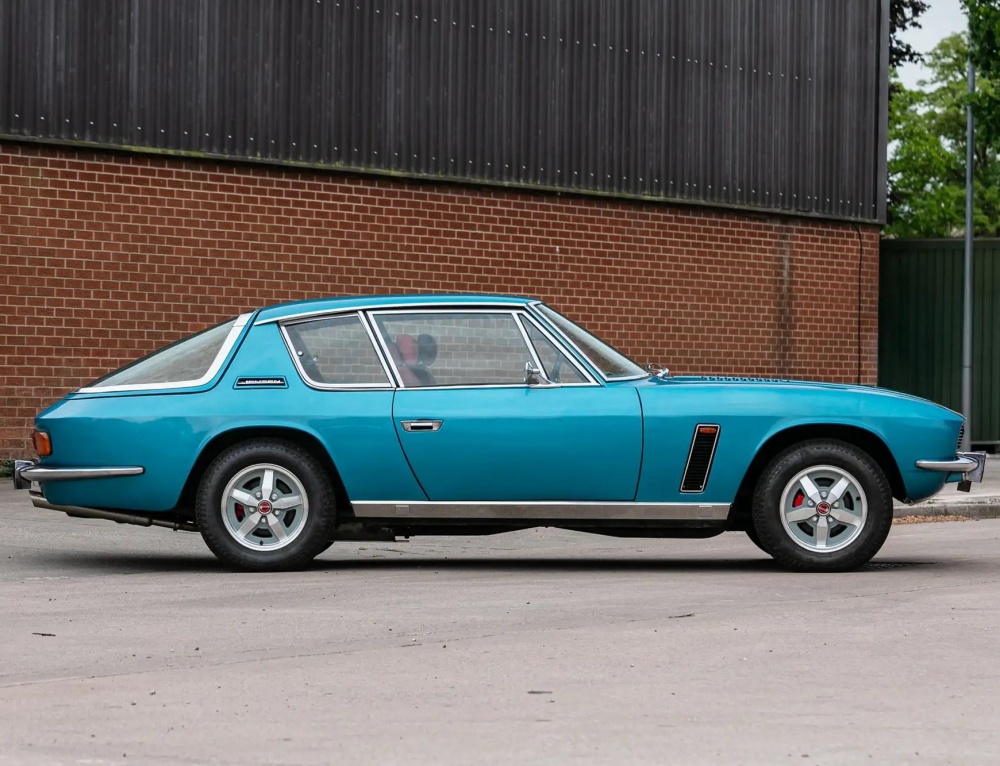
Images courtesy of Iconic Auctioneers
Drumming on the wheel of John Bonham’s Jensen Interceptor III
Some celebrity cars tell you everything you need to know about their owners, or at least everything they want us to know about them. Elvis had Cadillacs. Steve McQueen had Porsches. Jay Leno has...well, everything. Others are more revealing, more subtle because they aren’t based on what the celebrity should have, just what they actually chose to drive. John Bonham's 1972 Jensen Interceptor falls squarely into that second category.
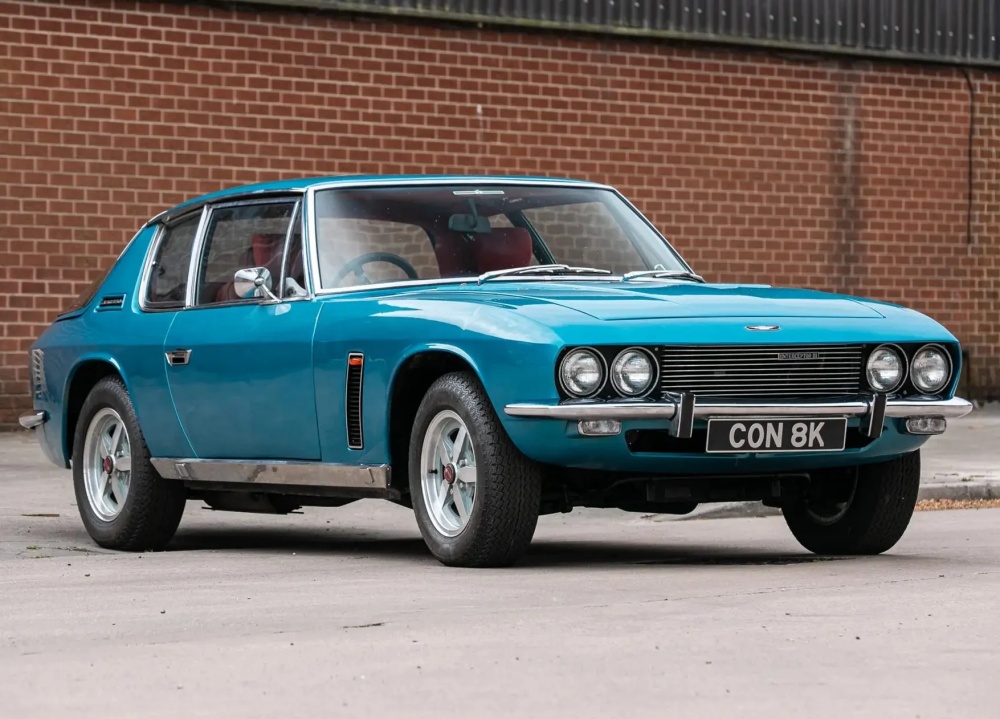
The Led Zeppelin drummer certainly could have bought a Ferrari or a Lamborghini. If you know anything about the beast with 2x4s for arms, the man behind some of the most iconic drum parts of all time, you might be tempted to expect only the most extreme. By the early 1970s, Zeppelin was selling out stadiums around the world, and Bonham had the means to indulge in just about any automotive fantasy he wanted. In all his freedom and deep pockets, he picked up a Reef Blue Jensen Interceptor III in March 1972. More than 50 years later, that very car is heading to auction after an extensive restoration, offering a glimpse into both one of Britain's most underrated GT cars and one of the most influential musicians this side of Saturn.
The Jensen Interceptor was a small island’s big grand tourer
By the mid-1960s, Jensen was looking to replace the C-V8. The company already had a replacement brewing in-house called the P66, penned by chief engineer Eric Neale as a smaller, more affordable grand tourer. It was even envisioned as a possible successor to the Austin-Healey 3000, whose bodies Jensen was building under contract.
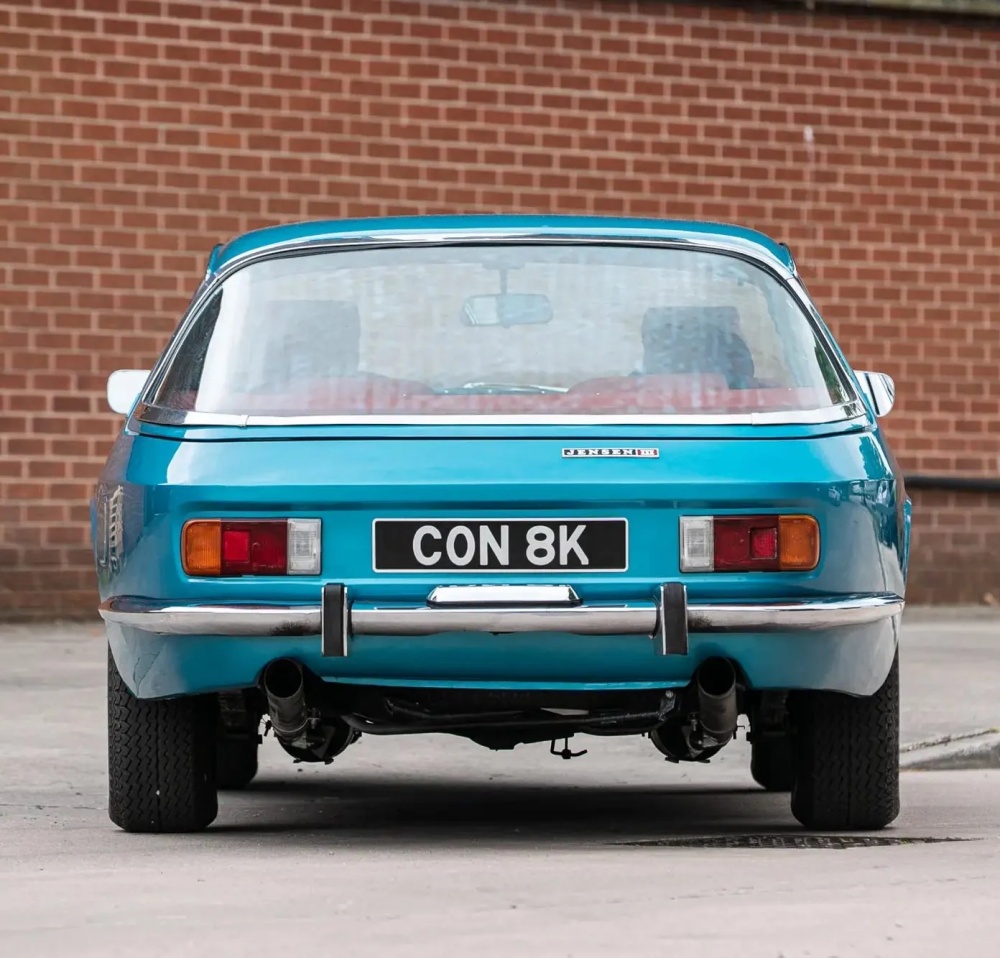
Images courtesy of Iconic Auctioneers
But inside the bowels of Jensen, there was a civil war brewing. According to Silodrome, Richard and Alan Jensen, along with Neale, believed the P66 had what it took to become the brand's next flagship. Managing director Brian Owen and deputy chief engineer Kevin Beattie were adamantly opposed. They wanted something bolder, something that looked every bit as exotic as the European GTs it would compete against. An Italian-designed replacement, they argued, was the only way forward. When Norcros chairman John Boex sided with Owen and Beattie, the P66 was effectively dead.
Beattie took the search to Italy, knocking on the doors of three of the country's most respected design houses. Ghia barely gave the project a second glance, seeing as how they were tied up with Chrysler work. Vignale submitted a proposal that looked suspiciously close to its Maserati Mexico. Touring, however, delivered exactly what Jensen was after.
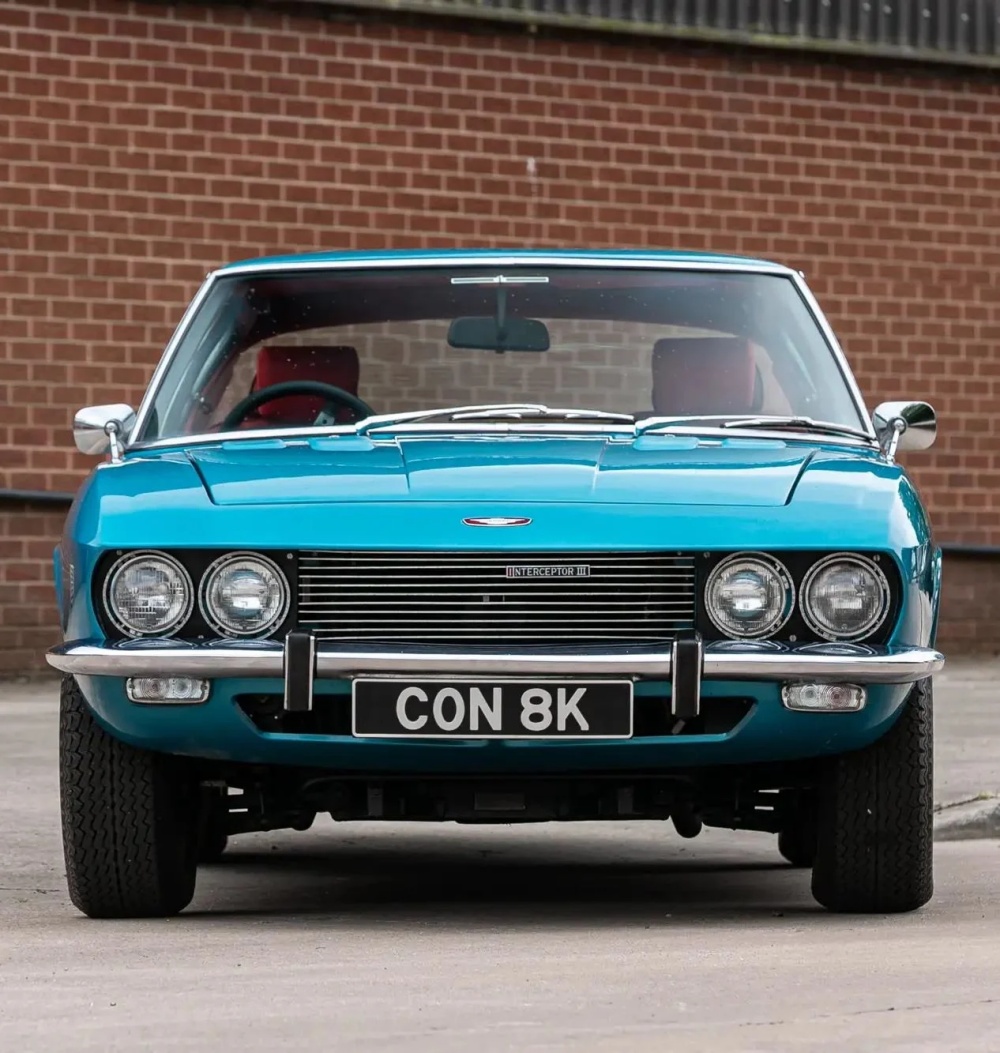
There was just one problem: Touring was sputtering. The legendary coachbuilder had the talent to design the car but not the financial flexibility to build it. Jensen solved the problem in wonderfully pragmatic fashion. It bought Touring's design outright, erased the firm's name from the drawings, and handed them to Vignale. Vignale immediately recognized where the design had come from, wisely chose not to mention it, and agreed to build the bodies anyway.
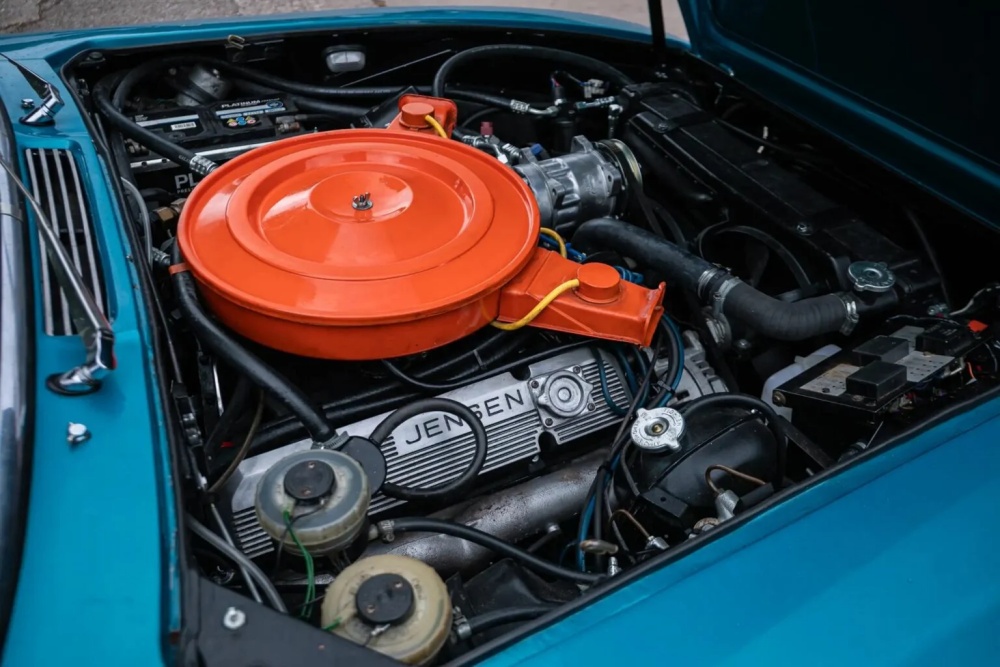
Images courtesy of Iconic Auctioneers
Instead of chasing high-revving European sophistication, Jensen borrowed its muscle from America. Chrysler supplied the Interceptor with its 383-cubic-inch big-block V8, producing 325 horsepower and a hefty 425 lb-ft of torque. Most buyers paired it with Chrysler's famously durable TorqueFlite automatic transmission. There was a manual version of the Mark I cars, but only 22 beautiful souls ever ordered one. Contemporary road tests recorded 0-60 mph in just over seven seconds and a top speed of around 133mph, remarkable numbers for a luxurious four-seat GT in the late 1960s.
That international recipe became the Interceptor's defining characteristic. Italian styling, British craftsmanship, and American V8 power sounds almost too obvious today, but in the late 1960s it created something genuinely unique. It wasn't as delicate as an Aston Martin or as driving glove-y as a Jaguar E-Type. It was broader shouldered than either, with enough torque to make overtaking almost comically effortless and enough leather, walnut, and Wilton carpet to make car travel feel more like riding a train. Even today, enthusiasts often describe it as getting the best qualities of all three automotive cultures in one machine.
Perhaps no styling element captured the Interceptor's personality better than its enormous wraparound rear hatch. It remains one of the most recognizable pieces of automotive glass ever fitted to a production car, giving the big GT a silhouette unlike anything else before or since. It was elegant without trying too hard, muscular without becoming too American, and unmistakable from a hundred yards away.
A car that suited Bonham better than a supercar
Whether John Bonham chose the Interceptor because he admired its engineering or simply liked the way it looked is impossible to know. What is easier to understand is how it suited him.
Images courtesy of Iconic Auctioneers
Bonham's reputation has often been reduced to excess, but that overlooks the precision that made him one of the greatest drum whackers to ever do it. His playing was thunderous but clinical, technical without becoming sterile. He was an innovator who took from many musical traditions to form his own brand of boom. The Interceptor shared in much the same character. Its Chrysler V8 delivered enormous power with almost lazy confidence, while the rest of the car wrapped that performance in understated British luxury rather than flamboyant Italian theatrics.
It was also a thoroughly British success story. Jensen may never have achieved the international recognition of Aston Martin or Jaguar, but the company built cars with genuine personality and flavor, and the Interceptor remains the peak of its power. Choosing one said something different than choosing the predictable exotic parked outside every rock star's mansion.
Bonham's Interceptor returns
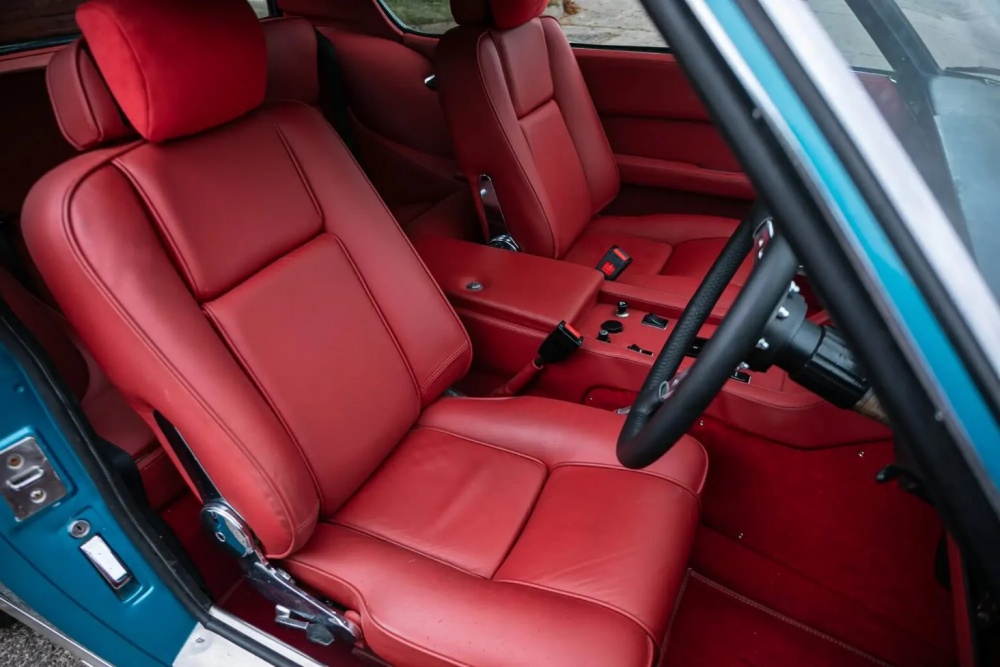
Registered on March 18, 1972, to John Bonham Enterprises Ltd., it is an H-series Interceptor III finished in its original Reef Blue over crimson leather. It retains its original 6.3-liter Chrysler 383 V8 and TorqueFlite automatic transmission, making it one of the final right-hand-drive Interceptors built before Jensen switched to the larger 440 V8 later that year.
While the car heading to auction looks similar to the day Bonham first stopped the right pedal, it was discovered by its current owner in the exciting but neglected state of “barn-find.” It has since enjoyed a comprehensive three-year restoration between 2020 and 2023. More than £83,000 was spent returning the car to its original specification, with work carried out by hot-shot Jensen specialists Martin Robey, Prestige Panels, and Riverbourne Classics. The result is a faithfully restored example accompanied by extensive documentation covering the bodywork, paint, trim, and mechanical rebuild.
Images courtesy of Iconic Auctioneers
Despite that provenance and restoration, the Interceptor carries an auction estimate of £40,000 to £50,000. In today's collector market, that's almost sadly cheap. Not only is the Jensen Interceptor III a looker, but it was Bonham’s.
John Bonham's Jensen is set to roll across the auction block with Iconic Auctioneers in late July. If you’d like to read more or register to bid, you can visit the listing here.
John Bonham's name will always attract attention, as it well should. But perhaps the more interesting story is that this auction shines a spotlight on the Jensen Interceptor itself. Long overshadowed by Jaguars, Aston Martins and contemporary Italian GT cars, it remains a great British grand tourer. And no matter what anyone thinks of the Jensen, the price, whatever it may be, is worth it just so you can sit in it and ponder endlessly, as you hand-drum on the wheel, what songs might Bonham have been spinning around in his mind, also whacking the wheel with the joints of his fingers, before going to the studio and changing rock and roll forever?

Peter Corn
Peter Corn is an automotive writer and storyteller. Peter has spent nearly a decade writing about cars, trucks, and motorcycles for some of the best publications in the business. He believes the best automotive stories aren't really about the machines at all, but instead, the people who love them.
Read Peter Corn's articles
Latest News
Comments
Comments are disabled until you accept Social Networking Cookies. Update cookie preferences
If the dialog doesn't appear, ad-blockers are often the cause; try disabling yours or see our Social Features Support.

_.jpg?environment=live)