RM Sotheby's
Homologation specials: Born to race, forced to commute
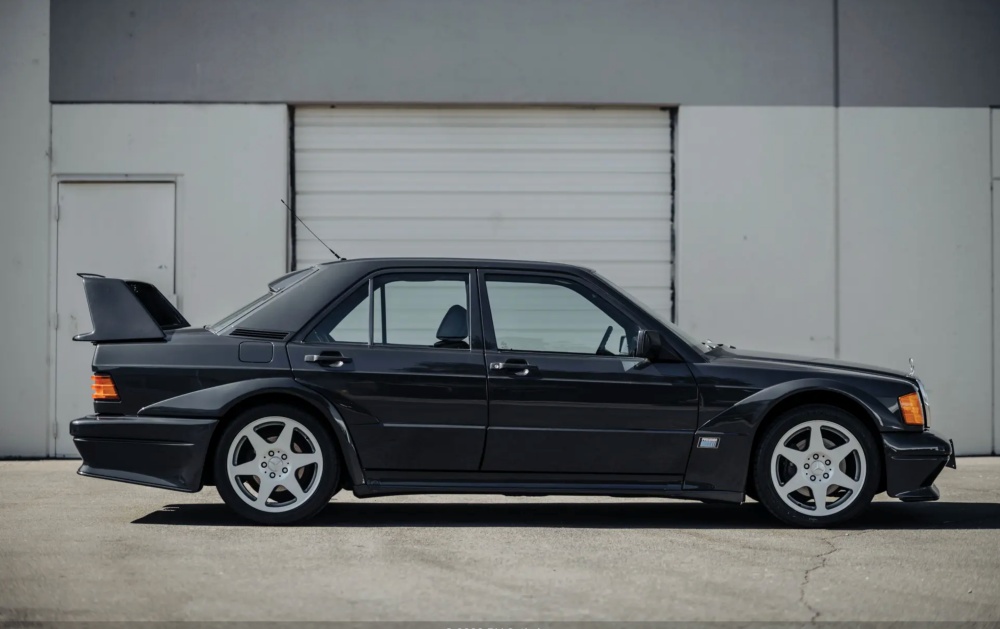
Some of the greatest, most beautiful, fastest, and scariest cars in history were never supposed to be in grocery store parking lots. They weren’t demanded by a corporate sales team or divined from the esoteric tea leaves of a mushy pile of consumer focus groups. These cars weren’t shooting to establish new trends or capitalize on whichever existing flavor of the day. Nope. These cars, firmly planted in the automotive pantheon, were loud, light, crude, hard, horrifying, and faster’n greased lighting running downhill. They were born from the twisted, elegant minds of racing's finest engineers to do only the Lord’s work and do it well.
RM Sotheby's
The Lancia Stratos. The BMW M3. The Ford RS200. The Audi Sport Quattro. The Ferrari 288 GTO. The Alfa Romeo 33 Stradale. Even modern machines like the Toyota GR Yaris all owe at least part of their existence to something decidedly unromantic: bureaucracy.
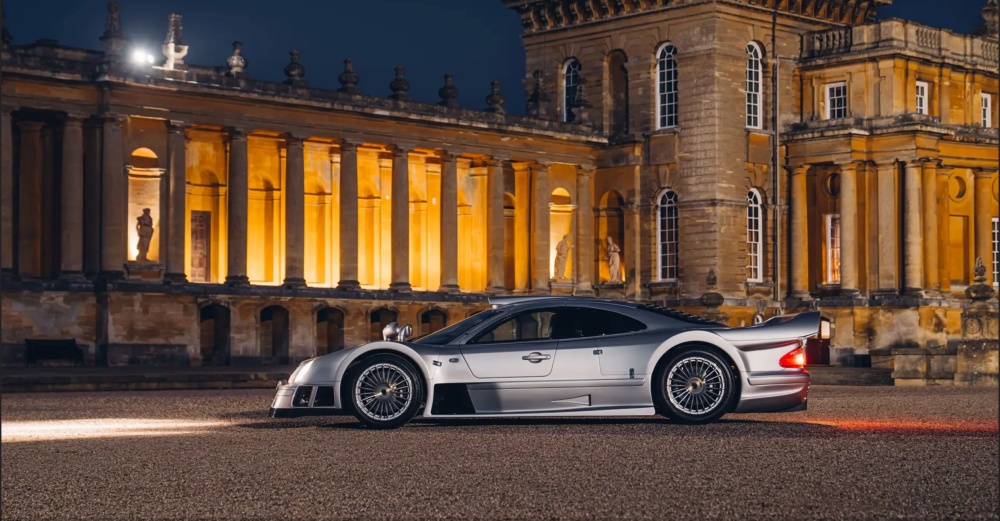
Not horsepower. Not brilliant engineering. Not some executive waking up one morning with an irresistible urge to build a street-legal rally car. Paperwork. I know. It’s a bit of cold water on an otherwise bone-dry inferno. It’s not all bad, though. Think about it; when was the last time paperwork and bureaucracy directly resulted in something as undeniably and earth-shakingly badass as a CLK GTR?
In a hole in the “ground” of the rulebooks governing international motorsport, lived a simple idea. If manufacturers wanted to race production cars, they first had to prove that those production cars actually existed. The concept was called homologation, and while the word sounds like something your accountant might mutter over coffee, it accidentally reshaped the course of automotive production forever. The rule that bore the many, now-iconic homologation cars, is one of motorsport's greatest ironies. Regulators wanted to keep racing honest. Manufacturers then moved heaven and Earth to twist the rules, building some of the wildest road cars anyone had ever seen.
What is a homologation special?
Before getting in too deep, let's untangle what homologation actually means because it's as misunderstood as it is mispronounced. Most simply, homologation means official approval. Today, organizations like the FIA homologate race cars by ensuring they comply with technical regulations for their respective class. Engineers inspect everything from safety equipment and dimensions to aerodynamic components and chassis construction before a car is allowed to compete.

Mecum
To the initiated (nerds), however, “homologation cars” or “homologation specials” meant something far more interesting. Many racing championships required competition cars to be derived from genuine production vehicles. If the rules stated that 500 examples had to be sold to the public before a manufacturer could race, then 500 examples had to exist for the public to purchase, should their self-preservation instincts be sufficiently lacking and their wallets be sufficiently heavy.
The philosophy made perfect sense. Some racing series were supposed to showcase cars people could actually buy, not purpose-built prototypes disguised as family sedans. The FIA and other sanctioning bodies wanted to keep manufacturers honest while preventing an unlimited engineering arms race that only the wealthiest companies could afford. This, of course, spawned all manner of loopholes and silly workarounds, but, by and large, it was a sensible solution that hilariously managed to produce the most wonderfully unreasonable automobiles the world would ever know.
The FIA rulebook became a main character
Manufacturers are remarkably good at following rules as literally as possible, and in such a way that gives them an advantage over the next carmaker that isn’t able (or willing) to read the rulebook as creatively. If the regulations demanded 200 production cars, they built exactly 200 production cars. If they needed wider fenders to fit competition tires, the road car got wider fenders. If the rally car required a turbocharger, the showroom model received one too. If racing demanded exotic suspension geometry or lightweight body panels, suddenly those features found their way onto a handful of road-going examples.
Bonhams
The goal wasn't to build the ultimate sports car for commuters. The goal was to build whatever they had to go racing and still wear a license plate. What was a perfectly sensible racing rule ushered in a truly bonkers era for car manufacturing.
Homologation cars often feel unlike anything else on the road because they are unlike anything else on the road. They are race cars in every reasonable meaning of the term. Their suspensions can be punishing. Their engines seem happiest at RPMs that are simply unfit for public roads. Gear ratios feel (are) chosen for mountain passes rather than interstate highways. Every hood vent, swollen wheel arch, and oversized rear wing usually existed because someone was solving a racing problem. Unlike many modern performance cars, very little on a homologation special is decorative. Every strange shape usually traces back to a specific part in a rulebook. Now that same car is sitting at a traffic light or in the school’s carpool line. These cars are often objectively cartoonish against the backdrop of commercial commuter cars. It’s kind of like if you could go to McDonald's and get a Happy Meal or the Chef’s tasting menu from a Michelin-starred joint. It's absurd but splendid.
Racing needed road cars
At risk of turning the dead horse into paste with continued beating, homologation cars are, by definition, completely bonkers on public roads. However, a few of them were so good, so undeniable, and as a result, so popular that they became road-going staples so fully adopted by commuters that their prize-fighter past is easily overlooked.
BMW M
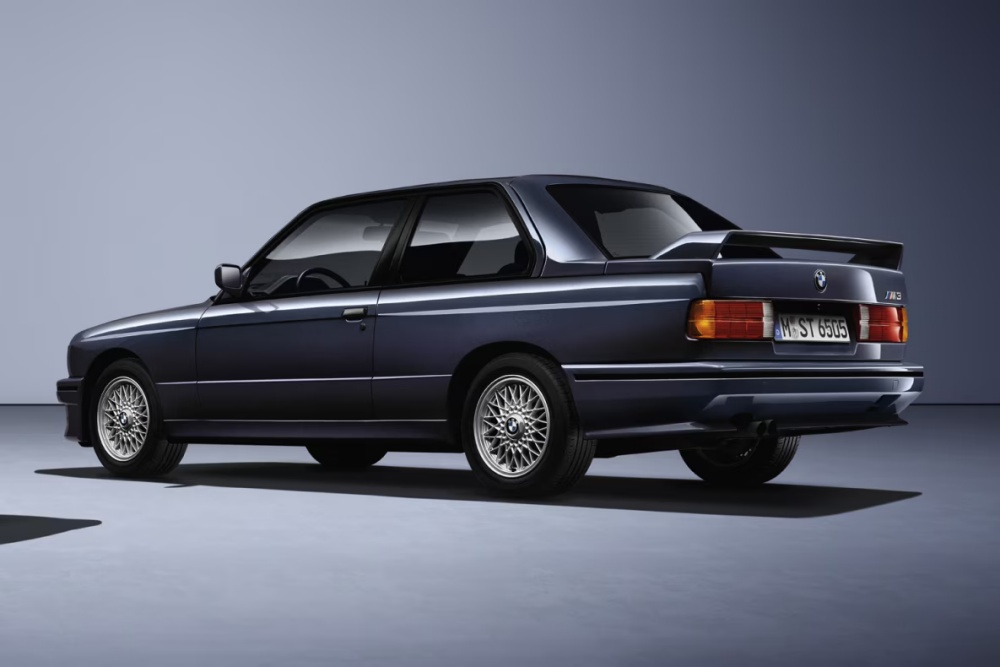
The original BMW M3 is perhaps the cleanest example of homologation's strange logic. Today, the M3 is synonymous with fast luxury sedans, but the first generation wasn't conceived as a halo car for wealthy executives and boy racers drifting on Instagram.
The original BMW M3 (E30) only existed because BMW needed a homologation special for touring car racing, specifically the German Touring Car Championship (DTM). The rulebook required 5,000 road-going examples, but enthusiasts had other ideas. Buyers flocked to the box-fendered coupe, drawn like moths to a porch light by its high-revving naturally aspirated four-cylinder, whose cylinder head borrowed heavily from the exotic BMW M1. By the time production on the first generation ended, BMW had built 16,949 E30 M3s, proving that what began as a racing requirement had become one of the most coveted performance cars of its era. Among them, the BMW M3 (E30) Convertible remains especially scarce, with fewer than 800 examples ever produced.
The streetcar wasn't an afterthought. It was the ticket onto the starting grid. Roughly four decades after its introduction to mere mortals, the M3 is one of BMW’s most iconic and sought-after models.
Leave it to Lancia to take the idea even further.
RM Sotheby's
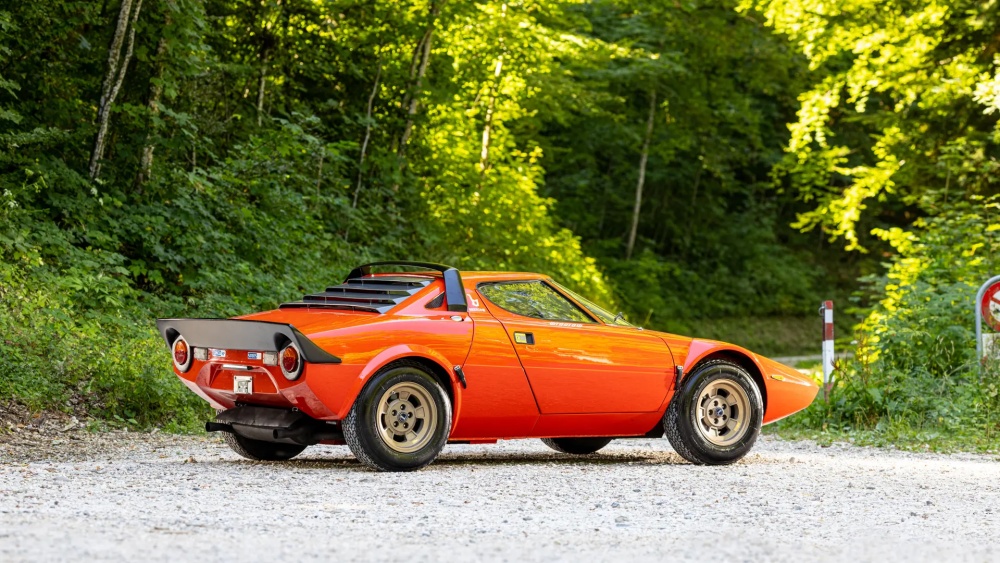
The BMW M3 was a race car that looked passable as a street car. The Lancia Stratos was a race car that people were allowed to drive on public roads, full stop. The angry little 190-hp wedge wasn't adapted for rallying. It was designed around rallying from the beginning. Its impossibly short wheelbase, wedge-shaped body, and Ferrari-derived V6 made almost no sense as a practical road car. But no one at Lancia cared about that at all because the Stratos made perfect sense as a car to win the World Rally Championship, which it did three years in a row from 1974 to 1976. The production version existed because it had to, not because the market was begging for a bloodthirsty, madeningly unreliable, pure-bred Italian racing car that looked like it had escaped the pages of a sci-fi comic book.
That single-minded focus is exactly why the Stratos remains one of the most celebrated homologation cars ever built and comes with the collector price tag to prove it.
When homologation got completely out of hand
If homologation began as a sensible compromise, the infamous Group B rally regulations proved just how spectacularly manufacturers could stretch the concept.
Introduced in the early 1980s, Group B required manufacturers to build only a relatively small number of production cars before competing. Engineers responded by treating the minimum production requirement as little more than an administrative hurdle.
RM Sotheby's
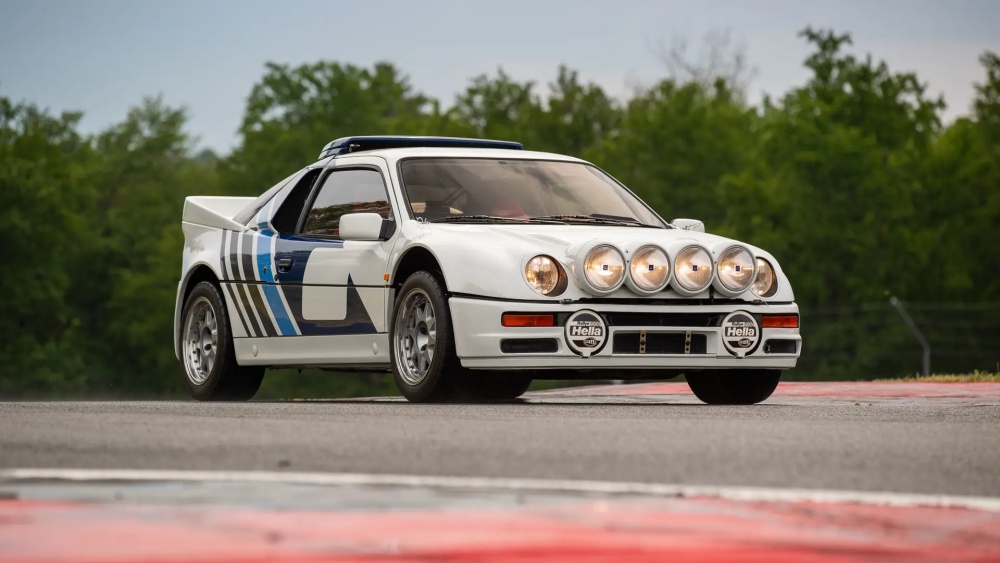
The Ford RS200 is one of the most notable of the group and looked more like an exotic supercar than anything wearing a blue oval badge. Frankly, it’s hard to see Ford’s fingerprints on that car, at least as far as Americans know the marque. Mid-engine layout, composite bodywork, four-wheel drive, turbocharged power, and styling that appeared imported from another planet all combined into one of the most outrageous road cars of the decade. To this day, the RS200 is one of the best examples of how screwy the homologation cars were allowed to get.
RM Sotheby's
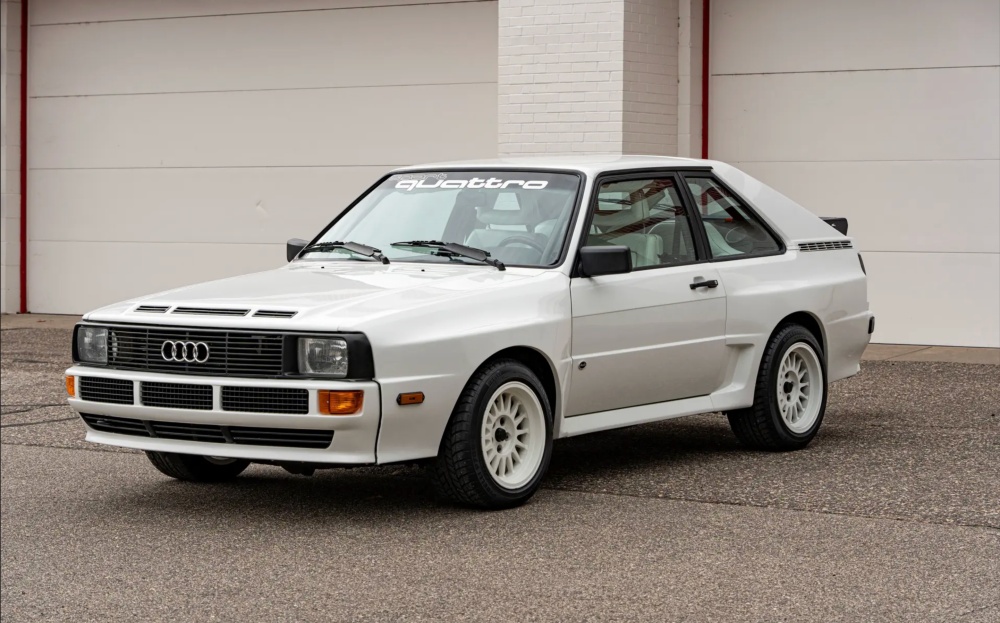
Another giant of the rally homologation cars is Audi's Sport Quattro S1. The Germans shortened the already revolutionary and dominant Quattro platform to create an even more focused machine for rally competition. Peugeot answered with the astonishing 205 Turbo 16. Lancia produced the absolute destroyer of worlds, the Delta S4, by combining turbocharging and supercharging in a bid to eliminate lag (and many human drivers). None of these cars would have existed in anything like their final form without homologation requirements.
Why homologation cars still fascinate us
Performance figures inevitably become outdated. Many of these cars were relegated to 0-60 mph times that loitered around the six-second mark thanks to the technological limitations of their time. The more modern homologation cars got faster, but they still only exist within the context of their time. Technology moves on. Today's family crossover can often out-accelerate yesterday's supercar without breaking a sweat. If horsepower alone determined greatness, many homologation specials would have been forgotten years ago.
Bonhams
Instead, their appeal has only grown stronger. Part of that fascination comes from honesty. Homologation cars aren't pretending to be race-inspired with special decals or phony exhaust tips. These aren’t marketing projects; those performance numbers hold little value to car lovers. It doesn’t matter how fast it can go from stop light to stop light; what matters with these cars is what they did, in real life, in the hands of your favorite driver on a certain track or on a certain rally stage. These aren’t hypotheticals delivered by a disembodied voiceover in a commercial, or some line sold by a car salesman. These cars have proper pedigrees. They backed up their claims of speed and brilliance in front of God and everybody.
.jpg)
Mecum
We, the car-obsessed, spend countless hours modifying ordinary cars to make them feel more special. Homologation specials arrived from the factory already set aside from the daily rabble crowding the roads and parking lots of our daily lives. They were never trying to imitate performance because they had been built specifically to satisfy it. They represent one of the few moments where accountants, regulators, bureaucracy, and engineering accidentally aligned in favor of enthusiasts, even if only the most well-heeled among us.
To prove my point, this list guarantees to pull the corners of your lips into a grin simply by reading the names of some of the finest things ever attached to four wheels:
Audi Sport Quattro S1
Ford RS200
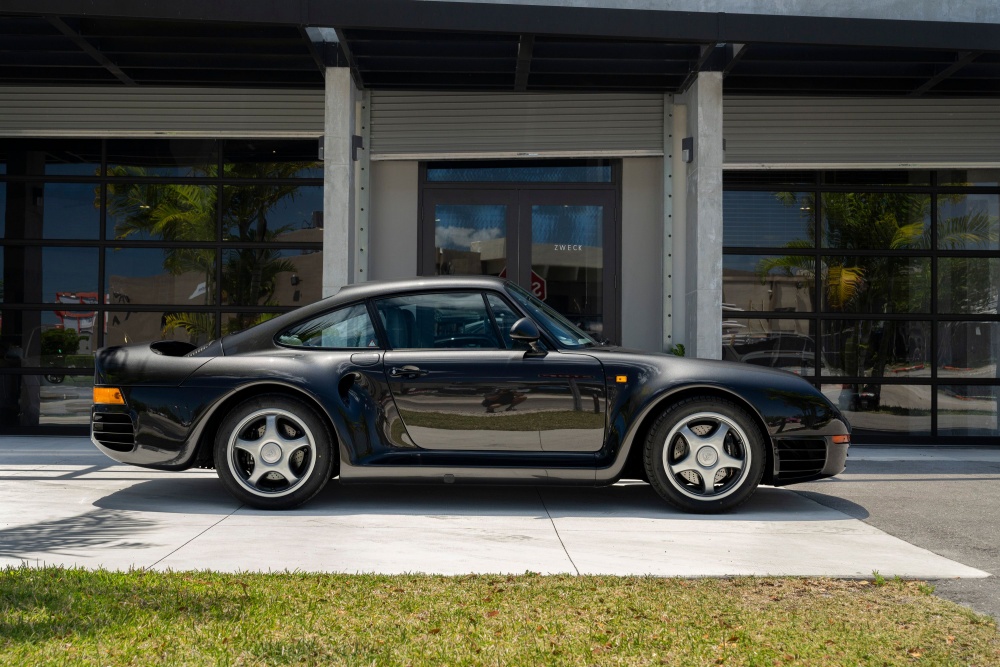
Porsche 959
Lancia Stratos
Ford Escort RS Cosworth
BMW M3 (E30)
Subaru WRX STI
Mitsubishi Pajero Evolution
Mercedes CLK GTR
Opel Manta 400
Celica GT-Four
Lancia 037 Stradale
Chevrolet Camaro ZL-1
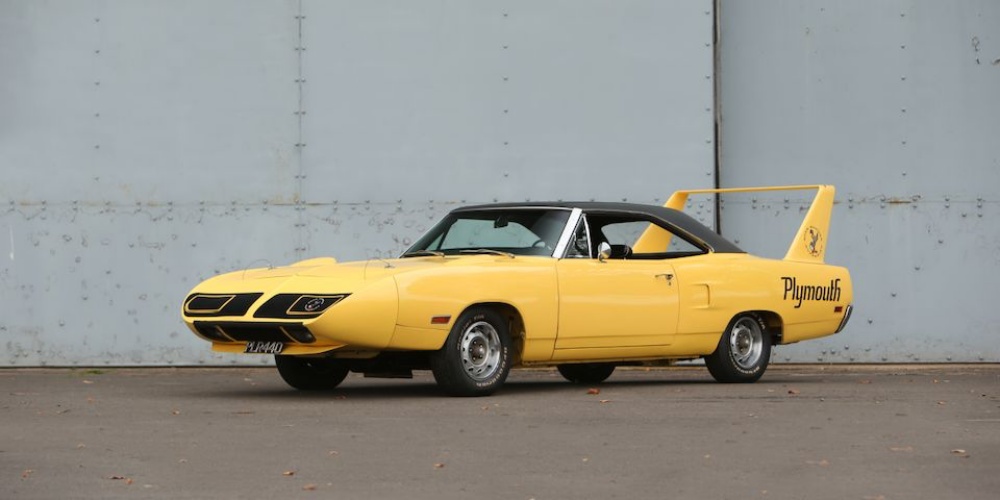
Plymouth Road Runner Superbird/1969 Dodge Charger Daytona
Renault R5 Turbo
Alfa Romeo 33 Stradale – to name a few
The spirit lives on
Traditional homologation specials have become less common as racing regulations evolved, but the philosophy refuses to disappear entirely.
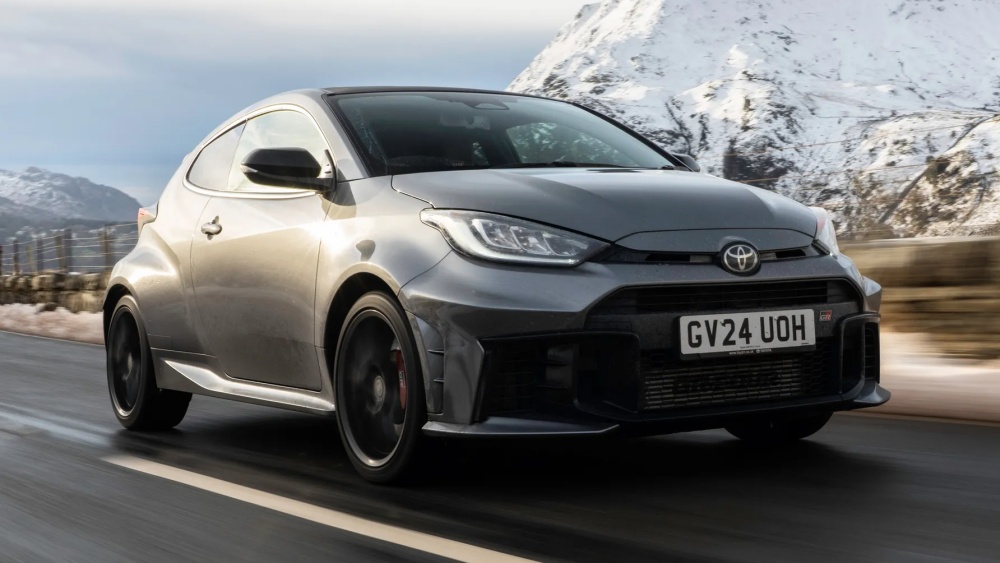
Toyota's GR Yaris exists because the company wanted the strongest possible foundation for its World Rally Championship effort. Despite sharing a name with the painfully boring Yaris, the GR received bespoke bodywork, an all-wheel-drive system, a unique platform combination, and a turbocharged three-cylinder engine unlike anything else in Toyota's mainstream lineup.
Toyota
Toyota touched on something that feels like flash from another era, which is why the homologation GR Yaris has received so much praise and excitement from buyers and fans. The hot Yaris offers itself as proof that the old conversation between rulemakers and engineers hasn't completely ended.
The greatest loophole in automotive history
It’s worth remembering, even after all these years and the absurdity history often offers, that homologation entered motorsport rulebooks in an effort to protect motorsport. It was designed to prevent runaway spending, discourage one-off prototypes, and keep racing connected to the machines sitting in dealership showrooms. You are welcome to be the judge of whether or not it did that or if those were even honest intentions. On paper, it's one of the least glamorous concepts in all of automotive engineering. And yet, few ideas have left a greater legacy in connecting racing fans and their real life to their heroes, hurling themselves wildly through unseen corners at speeds only reached by the most fearless among the denizens of Earth.
Car and Classic
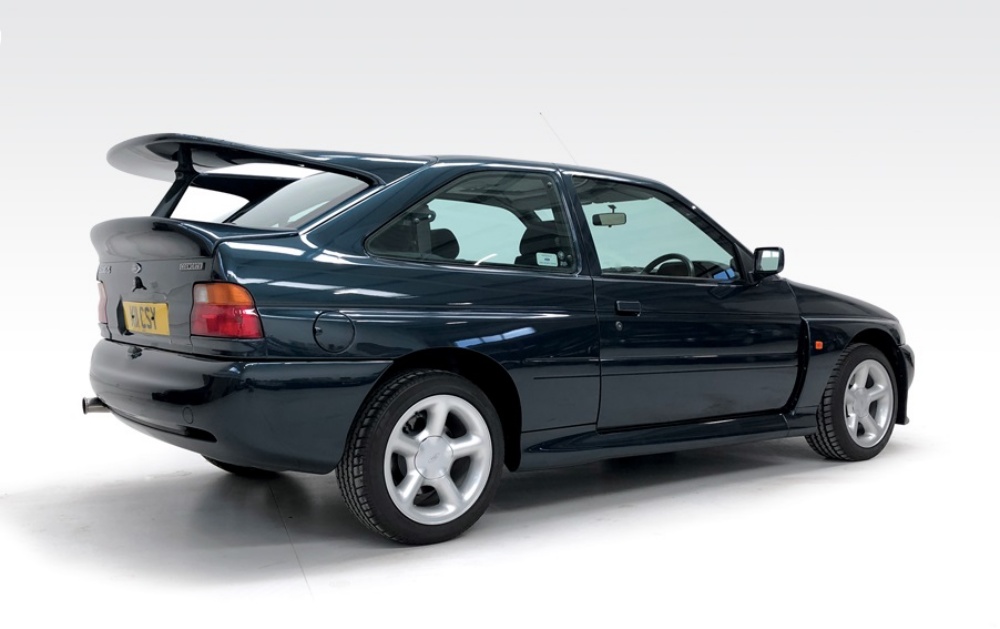
Without homologation, there is no original M3 as we know it. No Stratos. No WRX STI. No RS200. No Escort RS Cosworth. No Sport Quattro. Entire branches of automotive history disappear because nobody could justify building such gloriously irrational machines for ordinary customers.
What they accidentally created was a category of cars that enthusiasts still obsess over decades later. Machines that are just a bit too raw, too loud, too focused, too stiff, for everyday life. Cars that, in a parking lot of Camrys and CR-Vs, stick out like an NFL linebacker at a neighborhood flag football game, clearly out of place, overkill, and downright disruptive, but no one on the field would ever question his place on their team because this guy was made for this, no matter how overpowered and rough his flag pulling might be.
Every homologation special tells the same story. Somewhere, an engineer wanted to build a better race car. Somewhere else, an official insisted it first had to become a road car. I guess history is full of unintended consequences, and sometimes those consequences are cooler than anything we could’ve done on purpose.

Peter Corn
Peter Corn is an automotive writer and storyteller. Peter has spent nearly a decade writing about cars, trucks, and motorcycles for some of the best publications in the business. He believes the best automotive stories aren't really about the machines at all, but instead, the people who love them.
Read Peter Corn's articles
Latest News
Comments
Comments are disabled until you accept Social Networking Cookies. Update cookie preferences
If the dialog doesn't appear, ad-blockers are often the cause; try disabling yours or see our Social Features Support.
_.jpg?environment=live)