Michael Potts/Getty Images
Why Hamilton's Barcelona win was exactly what he and Ferrari – and maybe Leclerc – needed
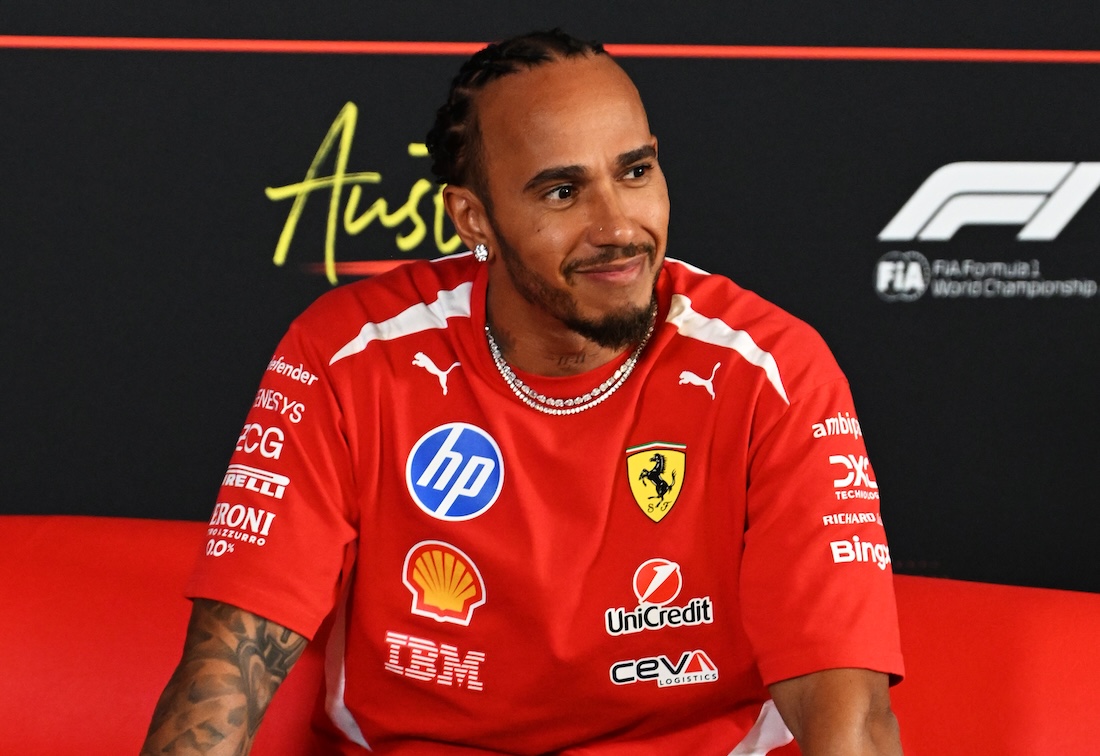
Lewis Hamilton’s Ferrari turnaround is made all the more remarkable by the fact that it might never have happened.
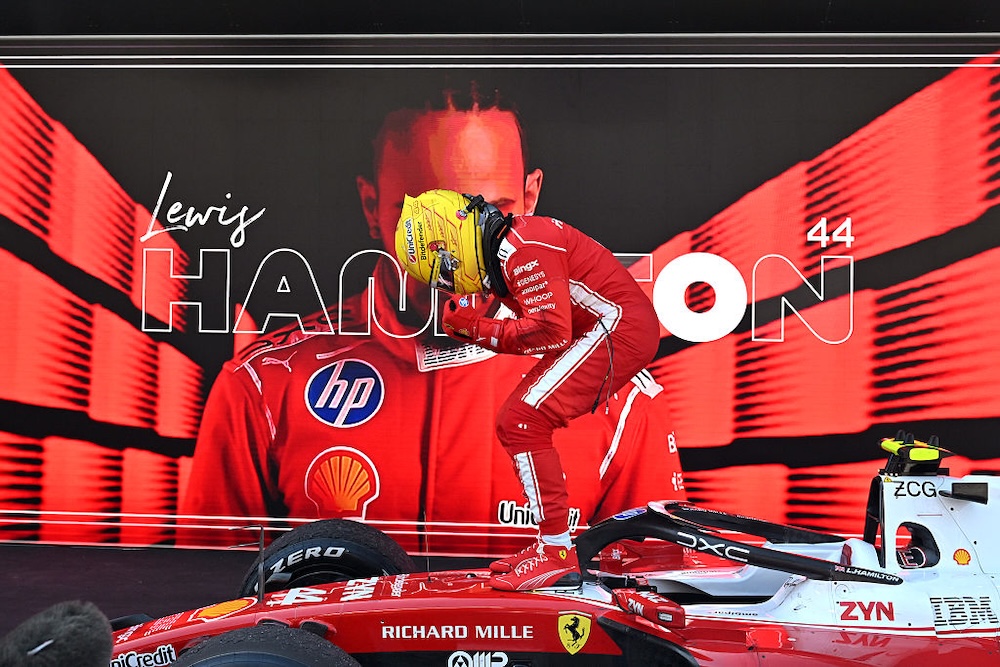
At 41, he could have chosen to ‘quiet quit’, phoning it in, enjoying the Maranello experience and then bowed out, telling himself it was always doomed. His legacy as a grand prix driver would not be significantly harmed, save for the recognition that the move to Ferrari came too late ever to have worked. His emotional reaction to winning in Barcelona reveals why that was never going to happen, proving he could take something that was not working and make it a success.
It remains to be seen how the Hamilton-at-Ferrari story plays out. One victory off the back of a good run of performances doesn’t significantly enhance what is statistically the greatest F1 career in history, but the trend is positive and there’s no reason why he can’t continue to thrive.
And even if he doesn’t, the very fact that Hamilton’s put in the heavy lifting to win a race with an outstanding drive, rather than as the result of a fluke, counts for something. Nobody could have imagined the Hamilton of most of last year – who at one stage branded himself as “absolutely useless”, suggesting of his struggles to adapt that “I might be just so stuck in it that’s never going to change” – could produce a performance like that. And it’s not a one-off, coming on the back of consecutive second places in Monaco and Canada.
Hamilton was not only willing to put in the hard work, but also demonstrated that he had the right mindset and technical understanding to identify what he needed and the communication skills needed to get it. The brake feel had to change, achieved with the backing of team principal Fred Vasseur, who allowed the use of Carbon Industrie brake discs that gave Hamilton the immediate stopping power that he wanted.
There also needed to be a move away from heavy reliance on engine braking to help rotate the car on corner entry. Hamilton craves rear stability, something he credited as playing a part in his performance level in Barcelona after narrowly missing out on pole position, and heavy engine braking did not mix well with the aggressive turn-in style Hamilton seeks. The 2026 rule changes abandoning ground-effect machinery, which favored a more conservative braking approach and was often limited in terms of front-end response, played its part, but that change alone wasn’t enough. He had to steer the team away from the one he “inherited”, and toward one that gave him what he felt he needed.
It’s also to Ferrari’s credit that it was malleable enough to make these accommodations. Yes, it’s the driver’s job to adapt, although it’s important to note that he did win a couple of races in troubled Mercedes equipment during the ground-effect era, but it’s not a one-way street. There is also a need to have the skills to guide the team into giving you what you need. It remains to be seen how significant Hamilton’s impact is on Ferrari, but there’s tangible evidence that he has been successful on that score. That shouldn’t be a surprise, except for those who peddled the narrative that his successes at McLaren and Mercedes were due simply to being in the right place at the right time.
Perhaps the most impressive aspect of this reversal of fortune is that it has made Hamilton the first driver to win races across a spread of 20 seasons. His 106 victories have occurred in 17 different campaigns (with his three winless years all in the recent ground-effect era), and racking up such remarkable numbers has required remarkable dedication. Longevity is part of the calculus of greatness, because to be able to remain at or near your peak reveals so much about a competitor’s characteristics.
Yes, there’s a physical element, and luck plays a part when it comes to avoiding injuries, but the willingness to lay yourself on the line so often, to push yourself so hard in training, to deny yourself the indulgences that your fame and fortune could allow in order to do something that is so difficult is worthy of enormous respect. According to The Times of London’s Rich List, published in January, Hamilton’s net worth is £435 million ($577m), so there’s no mercenary financial motivation compelling him to battle on with Ferrari. It’s about his competitive desire.
Longevity in isolation is worthy of praise, but doesn’t confer greatness. To earn a place at the top level in any sport over two decades, even if you are ‘making up the numbers’ is something, but legends are built on those who can deliver at elite levels over those years. That’s what places Hamilton among the unquestioned superstars, athletes who transcend their sports, along with the likes of Novak Djokovic, Serena Williams, Tom Brady, Lionel Messi and more: the ability not just to be great in a narrow window, but to have all the qualities required to stay on top. It takes unreasonable determination and ruthlessness, a refusal to accept defeat, to hold back the sands of time for that long no matter how good you are.
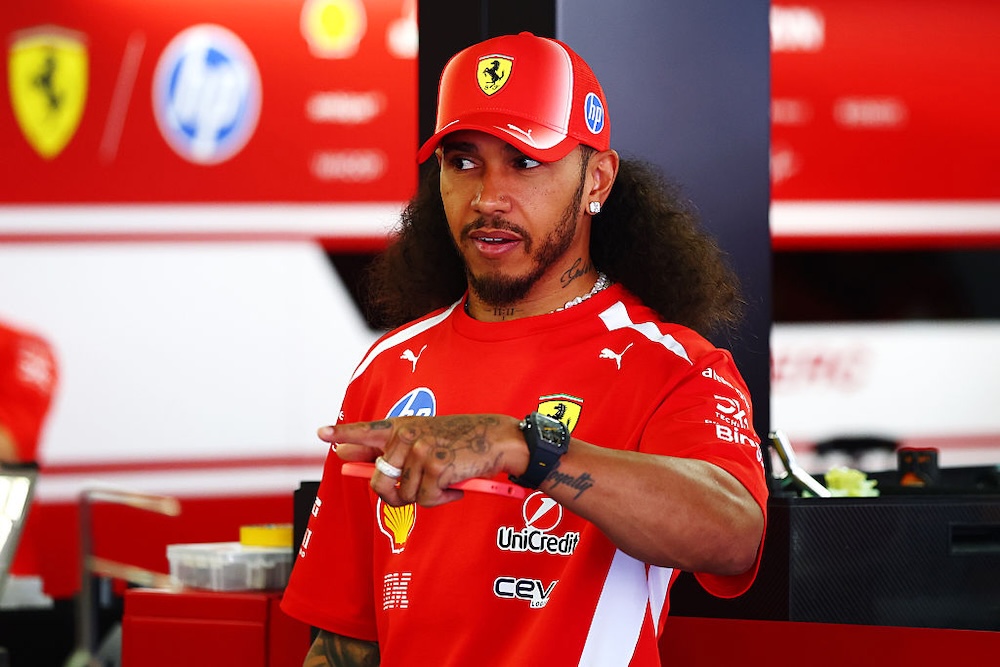
Hamilton is closer to the end of his career than the beginning, but his work ethic and competitive fire remain undiminished. Bryn Lennon/Getty Images
It’s important not to overstate what Hamilton has so far achieved with Ferrari, impressive as it is. Winning a grand prix for Ferrari is in itself a monumental achievement, the realization of a dream. But as he has said himself, he needs it to be the first of many. He can be credibly talked of as a possible world championship threat, although there’s still a long way to go before we can be certain car and driver are up to that. What is beyond doubt is that we are seeing something that is telling us more about Hamilton.
Despite the clamor to declare his triumph over teammate Charles Leclerc, that battle is far from won. However, the internal dynamic at the team has unequivocally shifted. Leclerc’s underlying pace in Barcelona, and even in Monaco where he was all at sea on the brakes, was decent – in particular over a single lap. Leclerc is down, but he’s far from out and will hit back, potentially as early as this weekend’s Austrian Grand Prix.
Hamilton may be F1’s greatest qualifier in terms of number of pole positions, but Leclerc is widely regarded as the fastest driver over a single lap in F1, with a CV full of remarkable qualifying performances. Even last year, when Hamilton was struggling, to be an adjusted average less than 0.150s off Leclerc in qualifying was respectable. If he can be closer, or even ahead, over the balance of this year while still producing strong race performances like Barcelona, then this would absolutely enhance his reputation.
However, Leclerc must not be counted out. His crash in Barcelona qualifying was a textbook case of overreaching to do something his teammate could do, but that he couldn’t. In this case, it was braking later at Turn 4 and carrying in more speed. There’s nothing wrong with working on areas where your teammate is better, but had Leclerc maximized on his best across a completed qualifying lap, it’s possible he would have been quicker anyway. That’s the challenge Leclerc now faces, insisting he’s comfortable with the CI brake discs he switched to for Barcelona (having tried them at Suzuka earlier in the year but reverted to Brembo) and now having to show he can live with Hamilton.
Leclerc has had these shaky short spells before, notably during the middle stages of 2024 when he struggled with understeer and was a step behind teammate Carlos Sainz. He’s also made mistakes, as he did in qualifying in both Barcelona and Monaco, but recovered. That’s what you would expect to see across the upcoming run of races, despite the shrieks of those who want to write him off.
If Hamilton is somewhere near his best, it’s possible that the challenge he poses is just what Leclerc needs, an exemplar of how to turn prodigious ability into relentless winning. Leclerc has not yet had the chance to do that in F1 but, even if the 2026 Ferrari isn’t strong enough across the season to make it a title threat, the challenge of reasserting himself should allow him to sharpen his skills.
Leclerc is with Ferrari for the long haul, recently signing a new deal to keep him at the team for an indeterminate period, so his future is there even after Hamilton presumably retires. But in the meantime, this is a tantalizing battle where an old master takes on a rising star who should be in his prime, but faces not only the long-term problem of Ferrari never giving him a car good enough to test himself in a title fight, but also a resurgent Hamilton.
These are the circumstances in which legends are either made or enhanced, something that could apply equally to Hamilton or Leclerc.
Edd Straw
Edd Straw is a Formula 1 journalist and broadcaster, and regular contributor to RACER magazine. He started his career in motorsport journalism at Autosport in 2002, reporting on a wide range of international motorsport before covering grand prix racing from 2008, as well as putting in stints as editor and editor-in-chief before moving on at the end of 2019. A familiar face both in the F1 paddock, and watching the cars trackside, his analytical approach has become his trademark, having had the privilege of watching all of the great grand prix drivers and teams of the 21st century in action - as well has having a keen interest in the history of motorsport. He was also once a keen amateur racing driver whose achievements are better measured in enjoyment than silverware.
Read Edd Straw's articles
Latest News
Comments
Comments are disabled until you accept Social Networking Cookies. Update cookie preferences
If the dialog doesn't appear, ad-blockers are often the cause; try disabling yours or see our Social Features Support.