Before the Race to the Clouds, there was Tavá
Lt. Zebulon Pike first saw Pikes Peak from the eastern portion of what we now call Colorado in 1806. Commissioned by Lieutenant James Wilkinson, under the authority of Thomas Jefferson, to explore the great western plains, Pike, in his ignorance, believed he had discovered something of his own and is often misquoted as saying that no one could ever climb the mountain. He never said this. He and his compatriots tried to climb the sacred mountain and failed due to a number of factors, chief among them being an underestimation of what it would take to summit the fourteener. What Pike actually said was that no one could climb it under the conditions that he and his team attempted. Of course, this too would prove to be a comically incorrect statement, but Pike and his boys could never have dreamed of how wrong they were in their estimation.
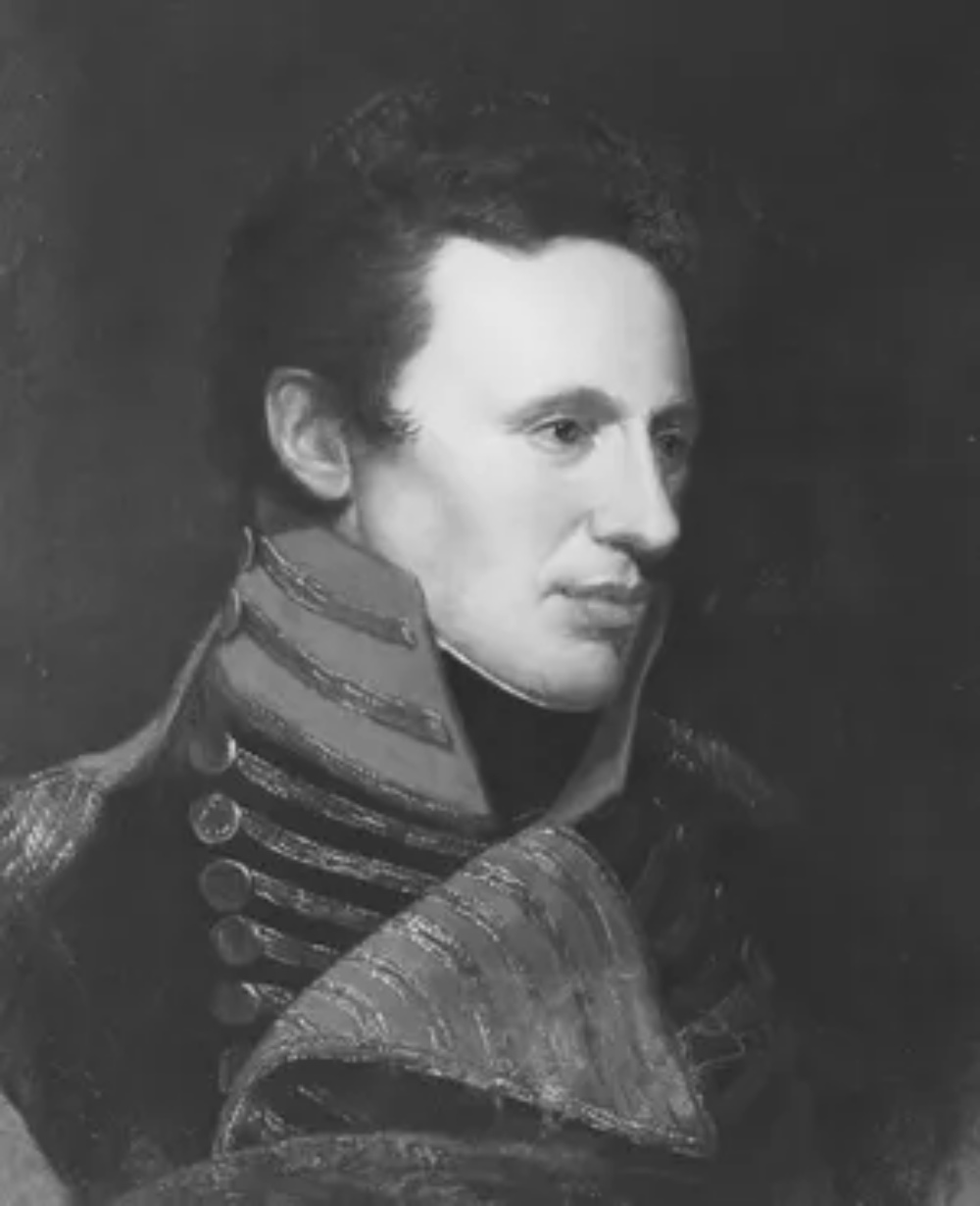
Portrait of Zebulon Pike, oil on canvas by Charles Willson Peale, 1808
Fast-forward about 100 years, and the same mountain, every June, would be lousy with tourists and scores of people who not only can summit the peak at will, but would make a competition of who could do it the fastest.
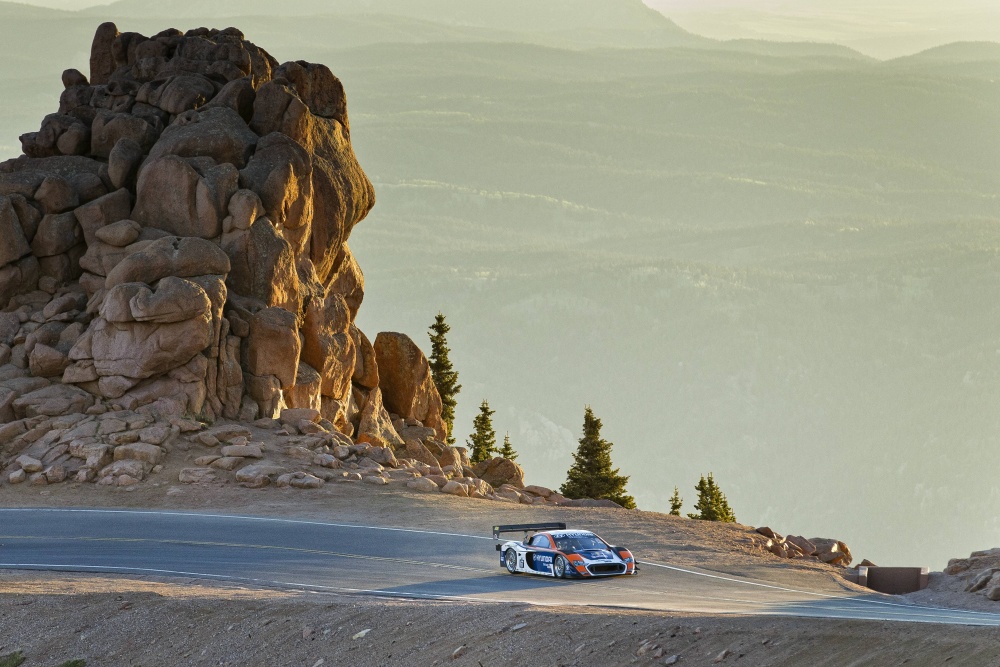
Drivers from around the world arrive with purpose-built race cars, motorcycles, and enough guts to fill the seas. They point their machines uphill and battle against gravity, altitude, weather, and roughly 12.5 miles of twisties in pursuit of a place in motorsport history. Since 1916, the Pikes Peak International Hill Climb has wrung the nerves of thousands of the greatest drivers in the world. It is one of the oldest races in America and arguably one of the most unique. Few events ask competitors to begin in one climate zone and finish in another.
The Race to the Clouds
But long before it became a proving ground for automotive engineering and courage, or Lt. Pike's White Whale, the mountain had another name. The Ute people knew it as Tavá, the Sun Mountain.
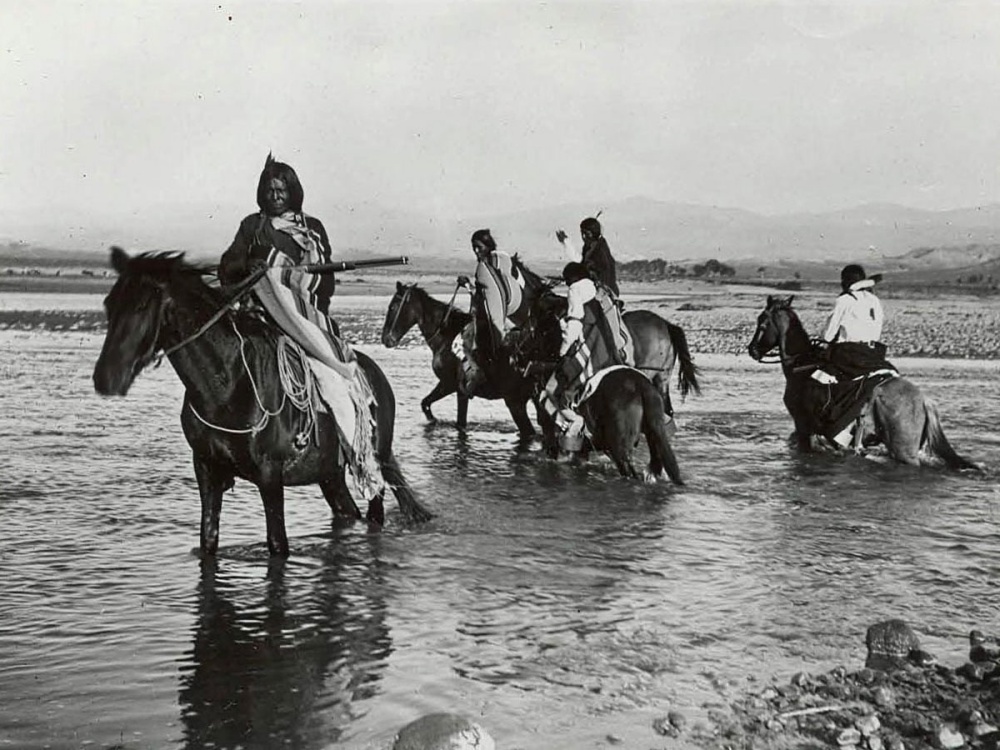
Southern Ute Archives
For the Tabeguache Band of the Ute, Tavá was more than a landmark rising above the Front Range. It was at the center of a cosmology that shaped identity, culture, ceremony, and survival. Long before tourists rode cog railways to the summit or race cars clawed their way up gravel switchbacks, generations of Ute people moved through this landscape following seasonal game, gathering resources, and maintaining a relationship with the mountain that stretched across centuries.
That relationship helps explain why the story of Pikes Peak did not begin with Zebulon Pike, despite the mountain carrying his name.
In 1806, Pike famously failed his attempt at the summit. History, as it often does, viewed his failure to summit and his statement about it as a challenge. They built roads. Railways followed. Settlers arrived. Gold seekers flooded the region. Punctuating its cosmological and cross-cultural significance, even Katherine Lee Bates was so inspired by the view from the mountain that she penned "America the Beautiful." Eventually, a guy named Spencer Penrose carved a road aimed at the summit and laid the foundations for what would become one of motorsport's most enduring competitions.
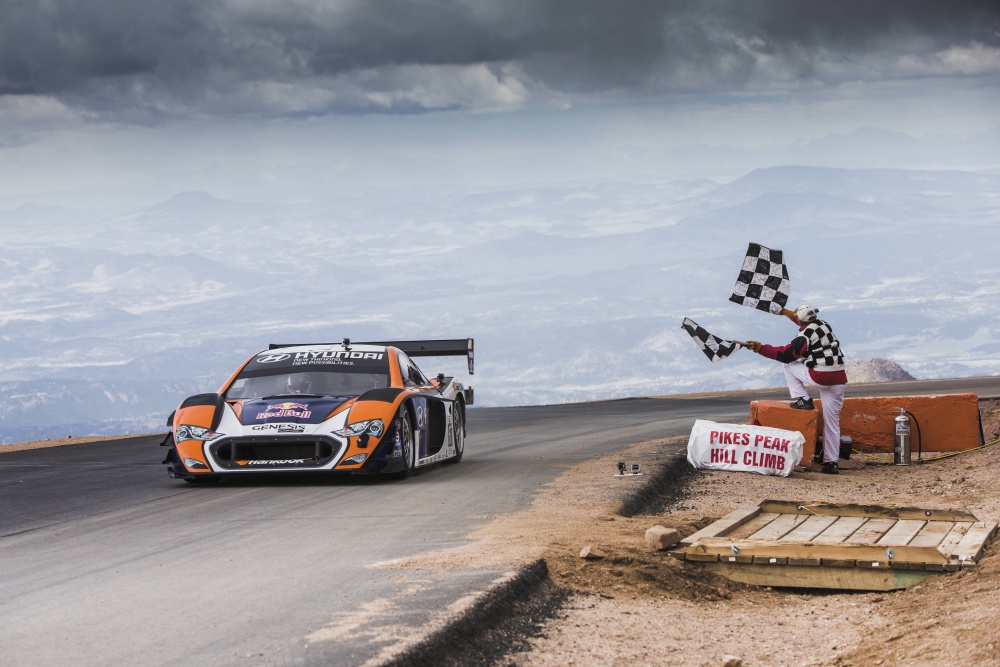
Red Bull Content Pool
The modern story of Pikes Peak is one of discovery, development, and conquest. While that may be the case from a certain perspective, the history of the mountain and how people have related to it over the years is quite a different story.
According to the Pikes Peak Historical Society, explorer and ethnographer John Wesley Powell spent time among the Northern Ute in the late nineteenth century. They recorded an observation that’s still striking today. Rather than asking what tribe a person belonged to, he noted that Ute people asked, "What land do you belong and how are you land named?" Powell understood something many outsiders missed. For the Ute, homeland was not simply property or territory. It was identity. That perspective gives Tavá a different kind of significance than your average raceway.
The mountain was not an obstacle to overcome or a summit to claim or a chance at glory for the first people. It was a womb. A living part of a landscape woven into daily life and spiritual practice. The Tabeguache moved throughout the region in seasonal cycles, establishing camps and constructing medicine wheels that connected each community to the land beneath it. It’s worth mentioning that the Tabeguache people weren’t the only Utes, nor the only tribe that put Tava at the center of their cosmology. The mountain stood at the center of many people’s world views. Evidence of that relationship remains scattered across the forests surrounding Pikes Peak.
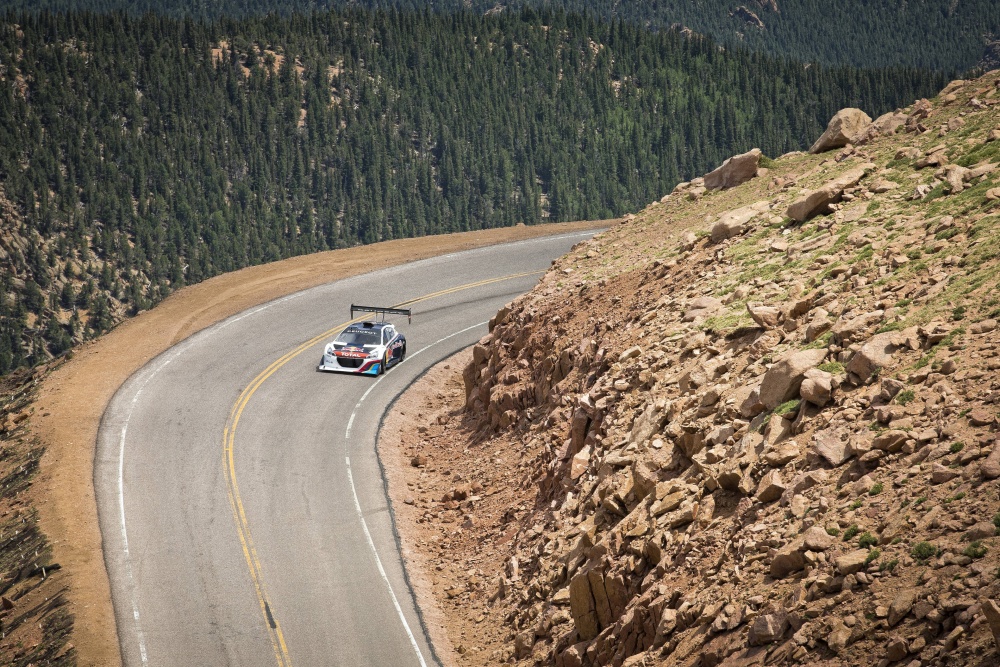
Red Bull Content Pool
Throughout traditional Ute lands, culturally significant and even scarred trees still speckle the mountainside, many of them centuries-old Ponderosa pines. These hallowed trees served as prayer trees, message markers, or burial markers. They are often referred to as living artifacts because, unlike pottery shards or stone tools locked behind museum glass, these cultural markers are still there and living. Some of these living totems were already ancient when Pike first saw the mountain. Some were standing when the first hill climb was run in 1916. Some are still standing today.
Taken together, they create something remarkable: a living historical record stretching across generations. They remind visitors that the landscape surrounding the race course contains stories far older than motorsport, adding a layer of meaning and importance that is tough to find repeated in many other races.
History is messy and complex
In 1880, the Tabeguache and other Ute bands were forcibly removed from their Colorado homelands and relocated to what is now the Uintah and Ouray Reservation in Utah. The removal severed access to places that had anchored Ute cultural and spiritual life for generations. Yet it did not sever the connection itself.
In 2001, the Pikes Peak Historical Society established an endowment that helps members of the Ute Nation return annually with special access to their ancestral homeland around Tavá. This pilgrimage allows the people to conduct ceremonies at sacred sites, including traditional Sundance and Bear Dance grounds and the medicine trees throughout the region. This continuity is powerful medicine.
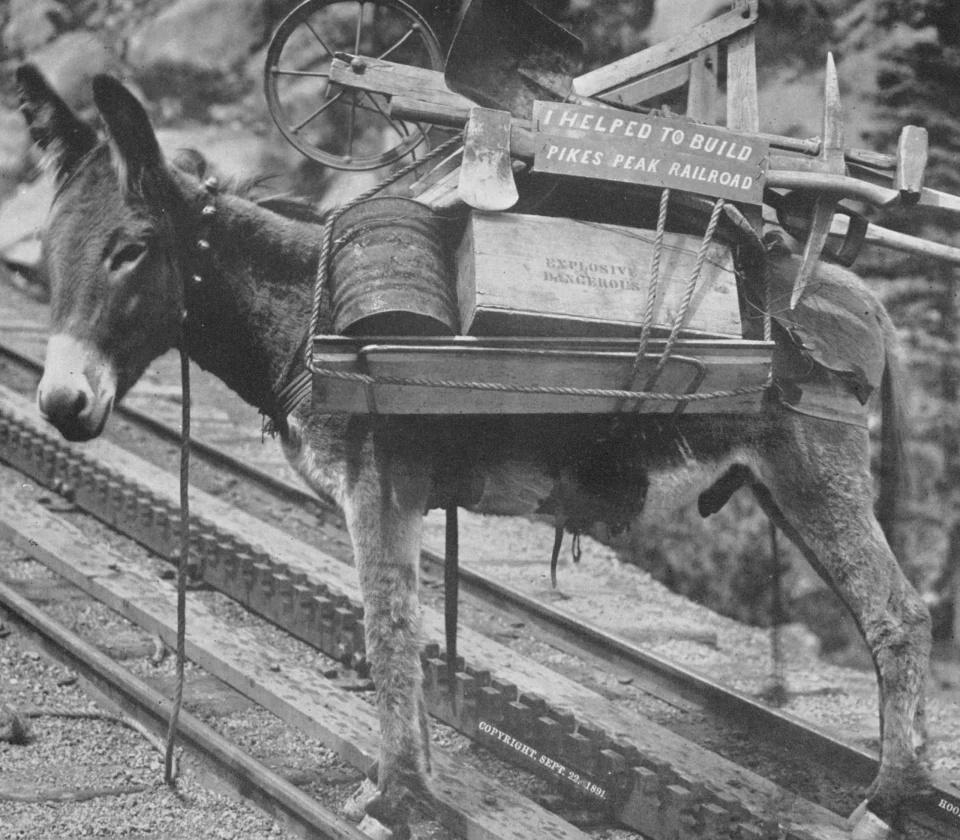
Cog Railway
The mountain has changed dramatically over the last century, which is putting it very lightly. Game trails gave way to dirt, dirt gave way to gravel, which gave way to pavement. Primitive versions of doom on wheels evolved into carbon-fiber prototypes still offering doom and destruction at the slightest miscalculation. Automotive manufacturers of all flavors arrived with engineering budgets that would have seemed unimaginable to the racers of 1916, much less to the people 100 years before that. Where Pike once thought to summit the peak was near impossible, as of 2018, the journey can take as little as 7m57.148s.
Yet Tavá remains
Maybe that is why so many people struggle to describe the mountain in purely physical terms. If you listen to drivers talk about it, they give to it this agency as if it possesses a mind and a will. Photographer, filmmaker, and hill climb legend Jeff Zwart once described Pikes Peak as a living organism, noting that no two years on the mountain are ever quite the same. Through the lens of racing, it’s easy to see that he was talking about weather, surface conditions, and competition. Still, whether Zwart knew it or not, his observation tapped into a deeper, cosmological belief that formed and still sustains an entire ancient culture and its people.
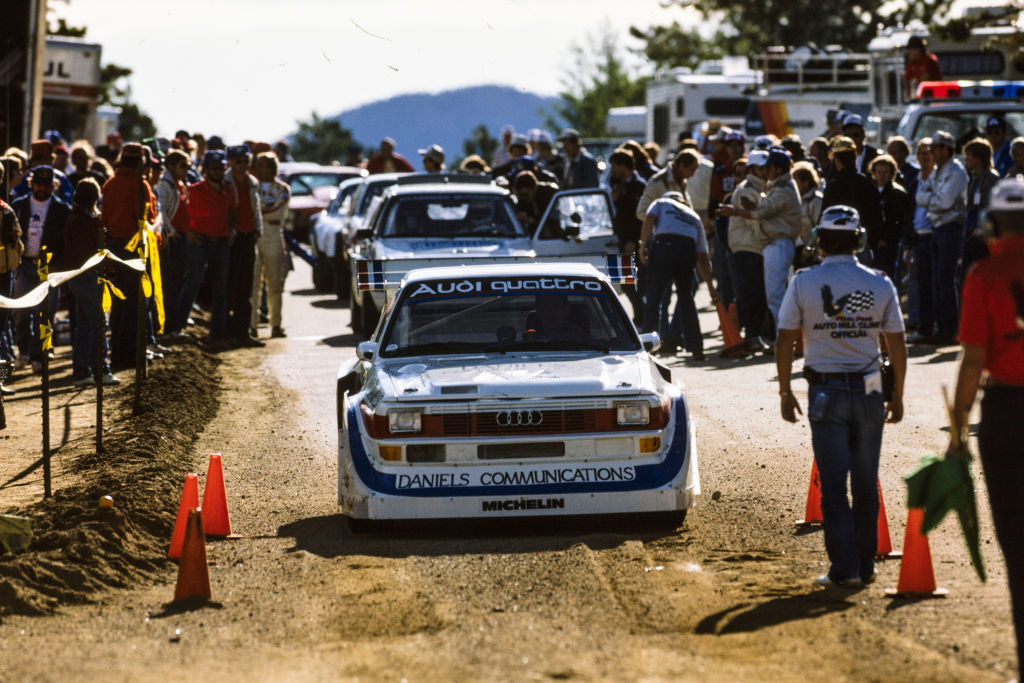
Getty Images
The history of this mountain has never belonged to only a single group of people. Instead, many people throughout recorded history and before have belonged to it. It’s a sacred place, a homeland, a destination, a source of inspiration, a tourist attraction, and one of the most demanding motorsport venues on earth. Regardless of how any single person or entire culture interacts with Tara or Pikes Peak or any other name it’s worn since the dawn of the first age, it is clearly special. Set aside. Holy.
This year's competitors will come to Colorado hoping to break records, collect trophies, and wash themselves in glory. They will focus on apexes, braking zones, treacherous shoulders, and the ever-thinning air as the summit approaches. But whether they realize it or not, they are participating in something larger, older than a race. Something older than sporting itself.
Long before it inspired songs, attracted settlers, or hosted the Race to the Clouds, it was Tavá. The Sun Mountain. And before that, it was probably something else, to someone else. And while a run to the summit will be an adrenaline blur for the racers. A blinding blast to the top – a short collection of moments that coalesce into someone’s greatest achievement. These ritualistic speed climbs to the top chase thousands of years of ritual that came before. So enjoy taking part in not only a beloved American racing tradition, but a tradition much older, pointing to what racing fans, Utes, and future people surely know: that Pikes Peak is special.

Peter Corn
Peter Corn is an automotive writer and storyteller. Peter has spent nearly a decade writing about cars, trucks, and motorcycles for some of the best publications in the business. He believes the best automotive stories aren't really about the machines at all, but instead, the people who love them.
Read Peter Corn's articles
Latest News

Comments
Comments are disabled until you accept Social Networking Cookies. Update cookie preferences
If the dialog doesn't appear, ad-blockers are often the cause; try disabling yours or see our Social Features Support.