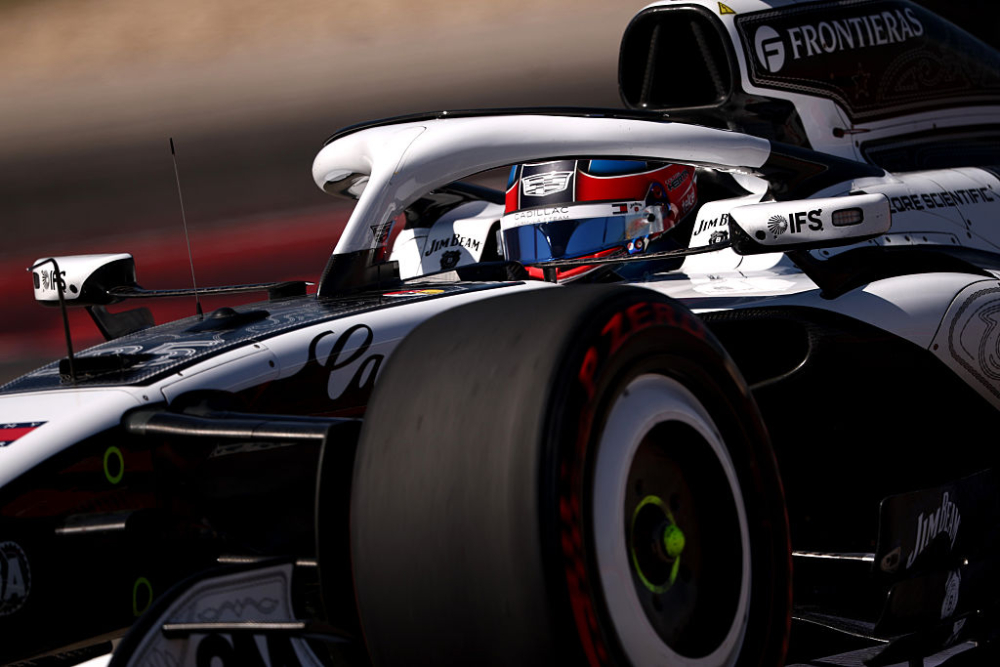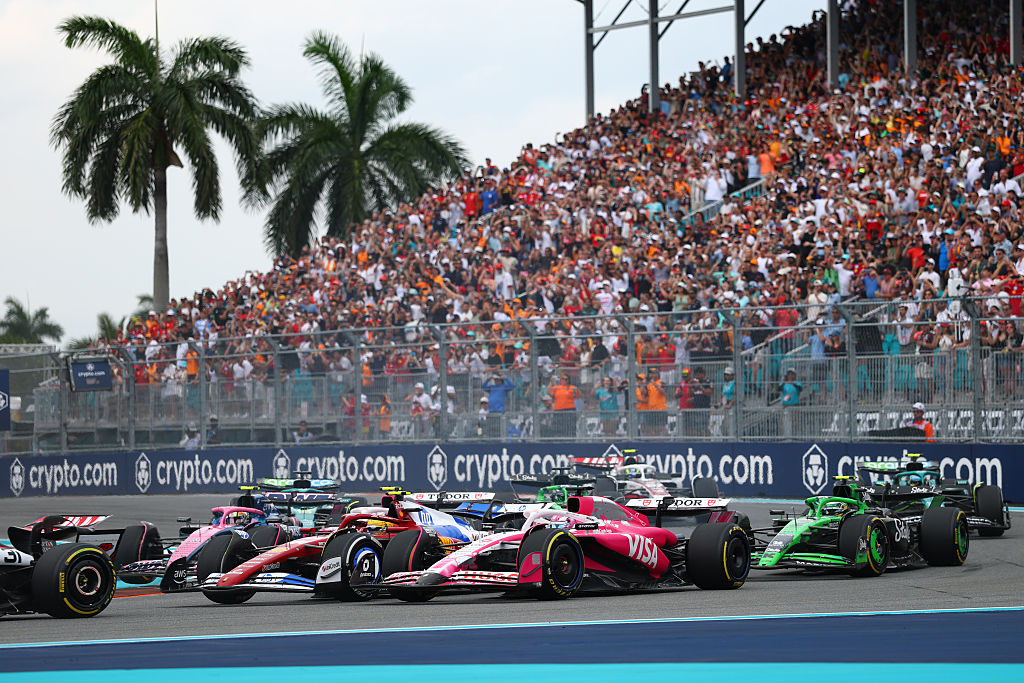
Bryn Lennon/Formula 1 via Getty Images
What the revised Formula 1 regulations are predicted to achieve in Miami
Early disclaimer: I will let you off if you are already tired of talking or reading about the new regulations in Formula 1. But if you’re up for it, there have been some enlightening explanations on offer this week.
The sport announced changes to the technical rules at the start of this week that are designed to address a number of the complaints from drivers after the opening rounds of the season.
Car performance can be impacted by a number of different factors, with this year seeing harvesting and deployment demands increasing, on top of the more traditional limitations that come from a change in downforce levels, tire size and car weight.
In qualifying, the maximum recharge limit has been reduced from 8MJ to 7MJ, and peak super clip power has been increased from 250kW to 350kW. But among all of these numbers, you might be asking what it all really means?
Helpfully, McLaren technical director - performance, Mark Temple, provided some speed trace simulations at the McLaren Technology Center on Wednesday evening to help illustrate what F1 is trying to achieve is a sport with its latest changes.
“The biggest impact is from a driving point of view, that's really the intent,” Temple said. “The idea is to get rid of some of these things that the drivers don't like doing in qualifying. The sort of idea of the car coasting for a long period of time into the high-speed chicane rather than a more natural feeling of staying on full throttle and then braking hard.
“And there's two parts to it. One of them is what we call lift and coast – which should no longer be a thing in qualifying – which is where the driver actually lifted off the throttle and then coasted into the braking zone and then hit the brakes. We've now got a situation where it's more efficient and that's controlled by the power unit.
“So the driver can stay at full throttle and the power unit will recover the energy. Straight mode will stay active so the car slows down less. And then they also have the more natural feeling of going from full throttle directly onto the brakes rather than having this intermediate phase.
“In addition, the total amount of time and the duration of any single super clip or coasting phase is significantly reduced. So when you do have that, it's quite small and actually much closer to some of the examples we've seen in previous years around time management or low levels of fuel management. So that will make qualifying feel much more natural to the drivers.
“There's also some other more complicated rules that are just around the energy deployment and some of the intricacies of the way the energy is controlled that just simplify certain things for the driver. For example, at the end of the out-lap where the MGU-K kicks in as you accelerate onto the start-finish straight, that's now going to be easier for the driver and they won't have to sit at part throttle waiting and then go to full throttle. It will be a little bit more natural for them.”
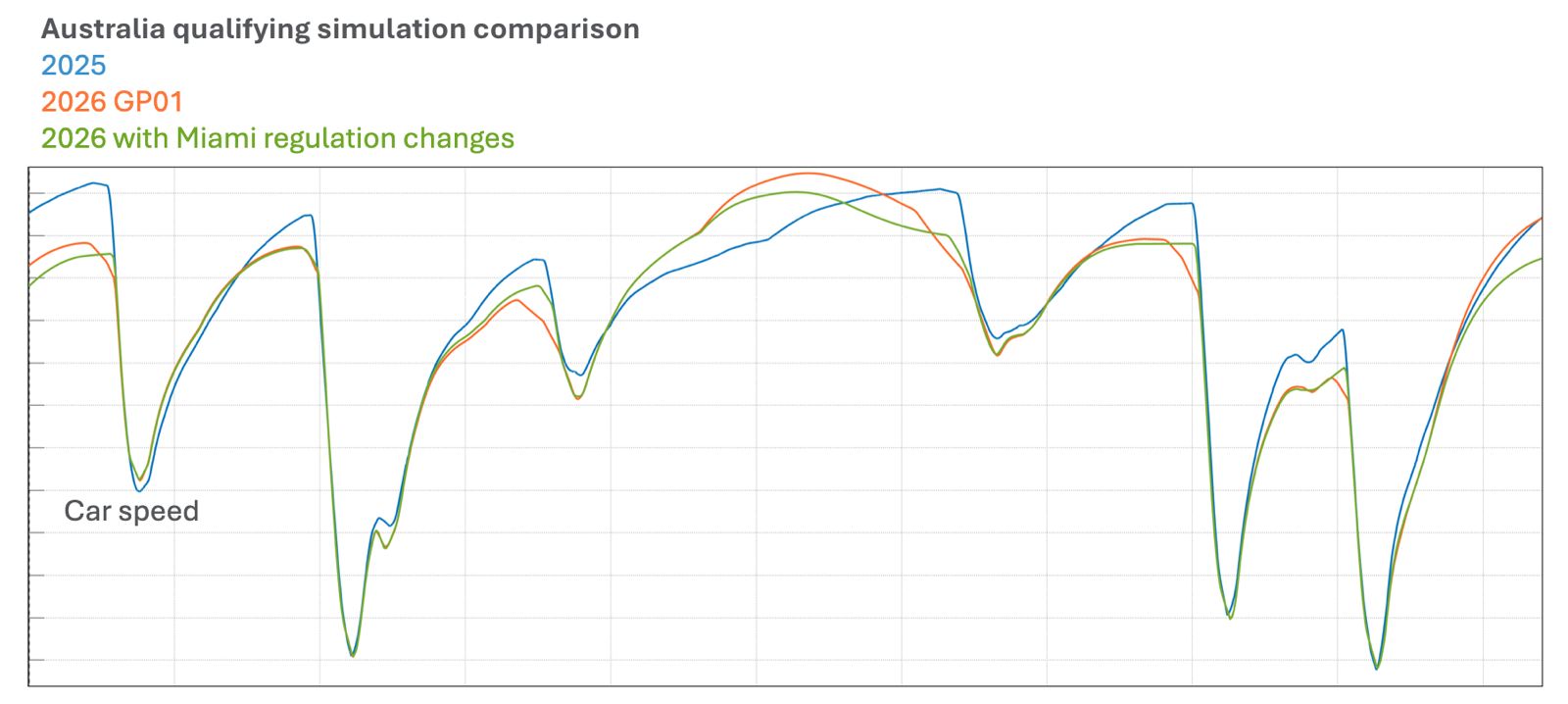
The Australia graphic above shows how the 2026 cars generate their lap time in such a different way compared to 2025, but also where this year’s data gives a guide as to how the recent changes would have had an impact. It clearly highlights the tweaks avoiding significant super clipping events on as many occasions, and drivers maintaining speed until hitting the brakes more often.
But that’s on a track that has already gone, so below is how Miami is expected to play out against what is deemed a baseline 2026 speed trace. Against that, a usage of the updated boost regulations in different sections of the track are displayed.
.jpeg)
“If we now consider the main area where the regulations have changed, which is the non-straight mode zones, which in Miami is basically the area from Turn 1 to Turn 4," Temple explains.
“If you use the boost in that region, then with the previous regulations, you would gain a very high end of straight speed as we see in orange. And then with the reduction in power from 350 to 250 kilowatts, you get the green one. So there's a reduced speed advantage on the baseline car. So in those areas, then it will be harder to overtake. And that's really the intent because the judgment is that if there's not a straight mode there, then it's a less appropriate place for overtaking.
“The other change is applicable everywhere, which is that now if you do a late boost, so as the power peaks at the start of the straight and then starts to ramp down, previously, if you press the boost button, you would get the full 350 kilowatts. Whereas now that's reduced so that you either maintain the power level that you have dropped to, or if you're below 150 kilowatts, it will come back up to 150 kilowatts.
“So what that means is in the blue example, at this point on the straight, the power is ramping down. The driver then presses the boost button. You still get a speed increase, but it's less rapid. So you can't build as much of a speed advantage.
“You still build a good overtaking opportunity, but it's built more progressively because you have less power. So I think we will see less chance of maybe opportunistic overtakes in some of the more unusual places but I think that's the right compromise for safety … But I think on the main straight, it will be largely unaffected.
“I think there is still that possibility [for yo-yo passing] if we think about two long straights, one after the other. So this long straight into Turn 17 and then down to Turn 1 [in Miami], you could still have a car that is essentially doing a bad job of overtaking and using too much energy and then being re-passed on the next straight, which personally I actually think is quite a good thing because it forces a little bit more of a strategic element to overtaking.
“The driver has to think more and it will reward the drivers who are thinking about and learning from and optimizing what they're doing.”
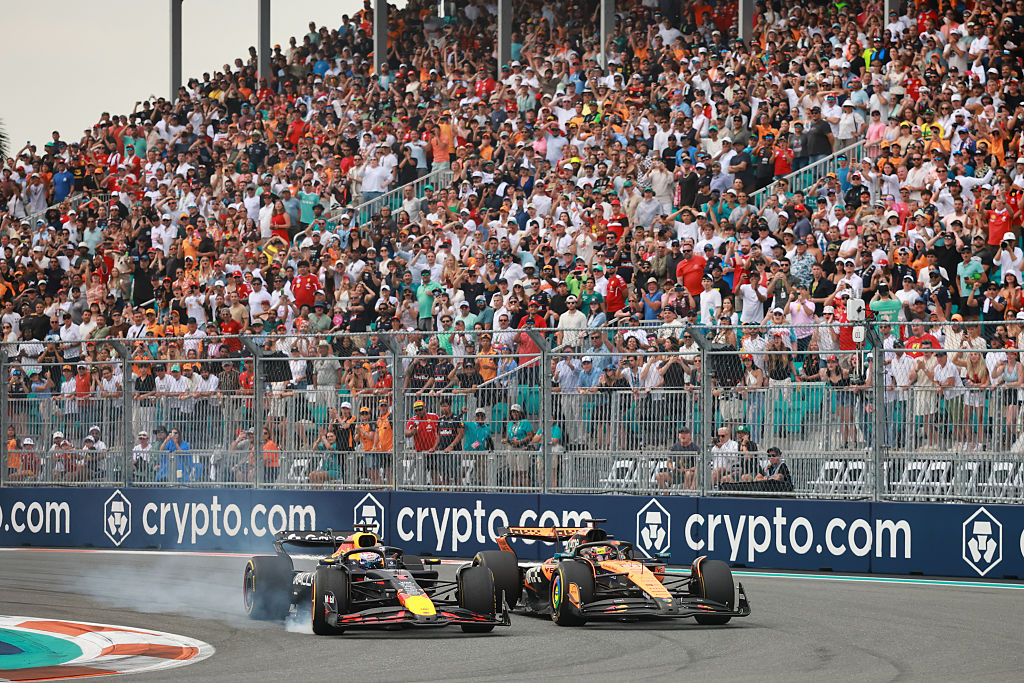
Will the new regs deliver make passes more meaningful again? Hector Vivas/Getty Images
Temple believes that predictions of a significant increase in lap time – perhaps to the tune of two seconds – are wide of the mark, and estimates Miami will see laps around 0.2-0.3s slower than if the regulations had not evolved. That said, it is expected to be a track-specific figure, and there will be tougher circuits for these cars than Miami.
An engineer’s point of view is perhaps the most informed now that there is data from three race weekends to work with and analyze, but the drivers will always be the ones to deliver the proof of the pudding. After all, it is they who have been frustrated by unnatural developments, such as carrying more speed through corners on a qualifying lap only to find the battery depleted more as a result and handing them a lower level of straight-line power.
Ahead of running the changes for the first time in the simulator on Thursday, Oscar Piastri believes the challenge of getting a lap time out of the car should become more attuned to what racing drivers have been used to throughout their careers.
“There should be less super clipping, with reducing the harvest limit, there definitely should be less in qualifying, and with the power of the super clip being increased, the time period will be less,” Piastri said. “I still need to go through all the details of all the rules, because I need someone smarter than me to explain what's actually changed. But I think it's a step in the right direction for sure.
“The changes to the boost button, I think there will still be some quirks and situations that are a bit unexpected, but it's generally in the right direction. The harvest limit becoming a bit lower and having more flexibility is in the right direction.
“I think we'll have to wait and see across a few different tracks. This is part of the regulation. We went to China and we didn't really have that many of these problems. We had some different problems, which I think will be fixed by these tweaks.
“But then you go to something like Australia or Japan, and we have a completely different set of problems. It will still chop and change a bit from circuit to circuit, but I think on the whole it is in the right direction. How far it goes in addressing the problems, we'll have to wait and see until we get to a track.”
The intent of the changes is clear, at the very least. But much like the drivers were warning from the very start of the season, until the cars are pushed in that state in a competitive environment, the true impact – and whether further amendments are needed – remains to be seen

Chris Medland
While studying Sports Journalism at the University of Central Lancashire, Chris managed to talk his way into working at the British Grand Prix in 2008 and was retained for three years before joining ESPN F1 as Assistant Editor. After three further years at ESPN, a spell as F1 Editor at Crash Media Group was followed by the major task of launching F1i.com’s English-language website and running it as Editor. Present at every race since the start of 2014, he has continued building his freelance portfolio, working with international titles. As well as writing for RACER, his broadcast work includes television appearances on F1 TV and as a presenter and reporter on North America's live radio coverage on SiriusXM.
Read Chris Medland's articles
Latest News

Comments
Comments are disabled until you accept Social Networking Cookies. Update cookie preferences
If the dialog doesn't appear, ad-blockers are often the cause; try disabling yours or see our Social Features Support.