Alex Bierens de Haan/Getty Images
Why F1 is still a game of haves vs have nots in a cost cap era
There’s still a gulf between the ‘haves’ and the ‘have nots’ in Formula 1, even after the sweeping 2026 rule changes. The difference was once shaped primarily by dollars and cents, as while having the big bucks was no guarantee of success, it was a prerequisite for it. Yet today, even with the cost cap in place since 2021, rules conceived to tighten the field spread, F1’s economic boom and the more equitable distribution of the commercial monies shared between the teams, the big beasts still lead the way.
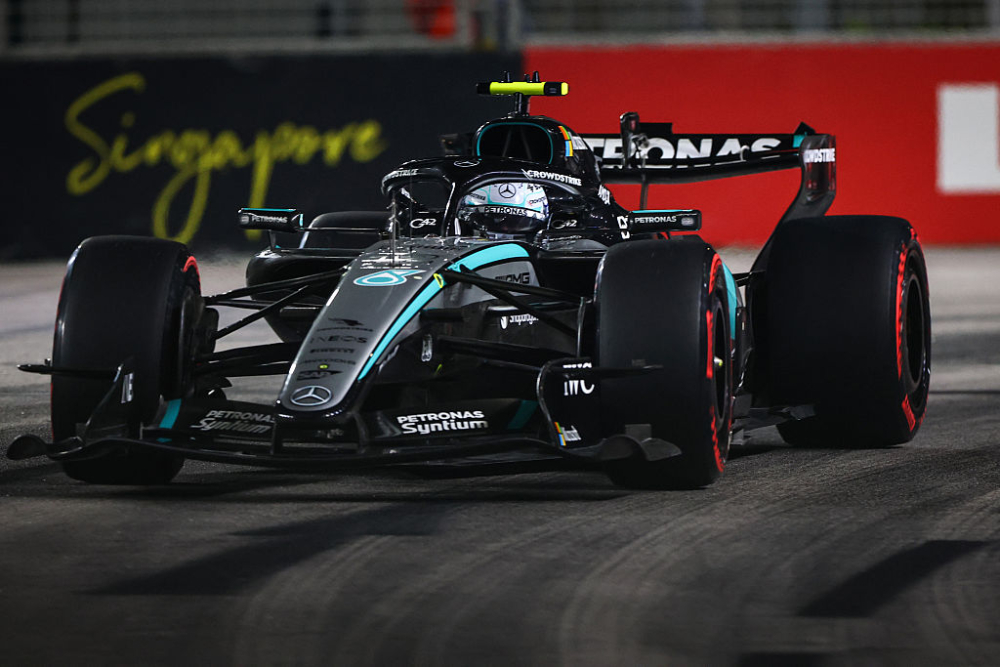
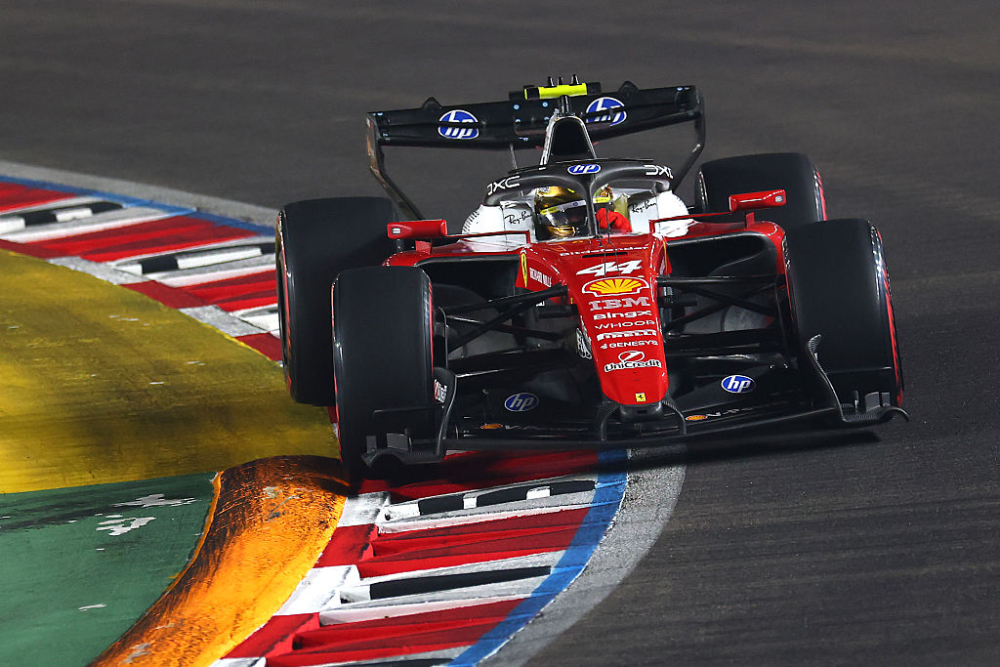
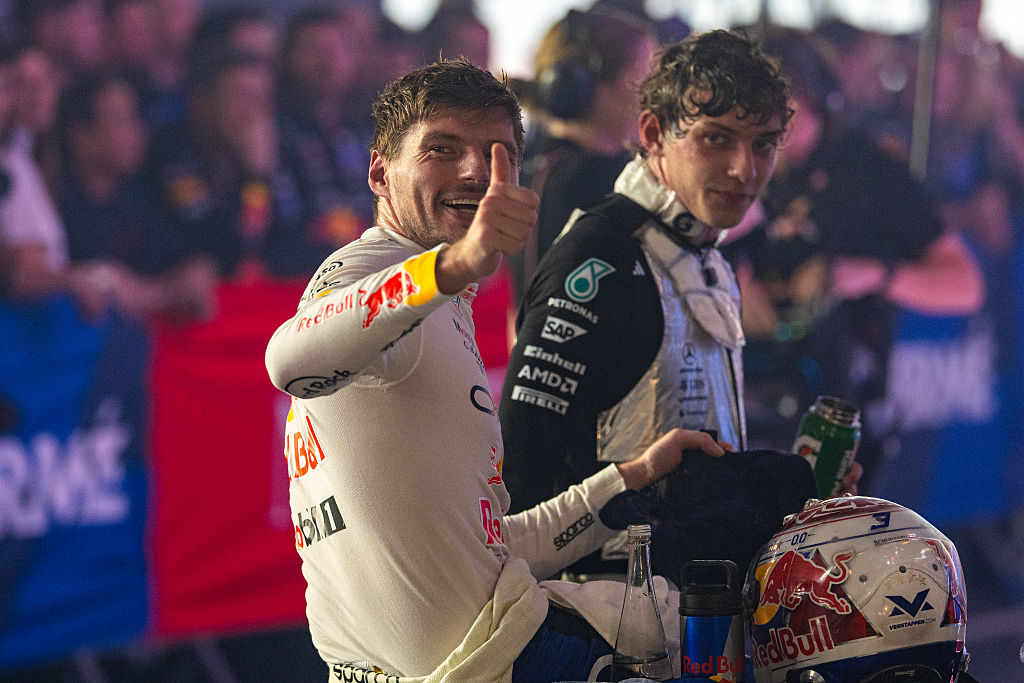
Mercedes has been all-conquering in 2026, with Ferrari initially its biggest threat and McLaren rapidly closing in. Red Bull is the odd-one-out, but its midfield status in China in Japan should represent only a temporary downward blip. This quartet can reasonably be expected to win the overwhelming majority of races, and all of the titles, in the current rules cycle. Even with Red Bull floundering, the big four has bagged 287 out of the 339 available points – 85% of the total available. So why haven’t the smaller F1 teams capitalized on the more favorable prevailing conditions to get to the front?
Modern F1 operations are more industrial complex than racing team, with even a perceived minnow employing many hundreds and the big operations well in excess of 1000 all told. The smaller teams are growing, but recruiting swathes of new personnel with the skills and experience is not the work of a moment. Competition for recruits is fierce, especially with Cadillac, which now has pushing 600 people on its books, thrown into the mix. This process takes years, and requires major internal changes to accommodate them.
It’s a similar story when it comes to facilities. When brute-force spending was the order of the day, as it was effectively for more than a century of grand prix racing, those fortunate enough to have the deepest pockets simply acquired what they needed, when they needed it. The sheer scale of the technology required by an F1 team leads to a dizzying array of machinery on the shop floor, as well as departments specializing in everything from additive manufacturing to non-destructive testing, each demanding state-of-the-art equipment. Sometimes, even high-end off-the-shelf machinery must be modified for F1’s use. When it comes to big-ticket items such as driver-in-loop simulators or windtunnels, these are extremely long-lead time as not only do you have to build them and populate them with equipment but also go through a lengthy commissioning and optimization process.
The cost cap helps with the likes of Williams no longer limping along on a hand-to-mouth basis and now able to justify investment given big-team outlays have been contained. However, catching up requires a higher rate of spending, something not initially accounted for. This year, the cost cap baseline has risen to $215 million per team, having been as low as $135 at one stage, reflecting financial regulations reorganization, the cost of the new regulations and F1’s good economic health. However, the smaller teams are playing a game of catch-up for the advantage the big spenders built up in terms of facilities over a decade or more with spending advantages measured in the hundreds of millions or more. For 2021 to 2024, all teams were granted extra CapEx spending ($6 million for Red Bull, Mercedes and Ferrari, $13 million for McLaren, Alpine and Aston Martin and $20 million for Williams, Racing Bulls, Audi, Haas and Williams), but still doesn’t compensate for the years of outspending. Those who lobbied for this most aggressively, led by Williams team principal James Vowles, felt significantly more was needed to solve the problem.
That’s just one example of what might be called a ‘baked-in’ advantage that can only be whittled away as part of a slow-burn process rather than solved with the signing of a check. There’s also a knowledge deficit, the consequence of the accumulated years of research done by the big teams when it comes to every aspect of car design and operation. Smaller teams are solving problems those at the front of the grid worked through years ago. Money is just one part of the equation, one that unlocks doors that can take time to walk through. And while this is happening, the big teams are learning more themselves, so the ‘catch-up’ effect is slowed.
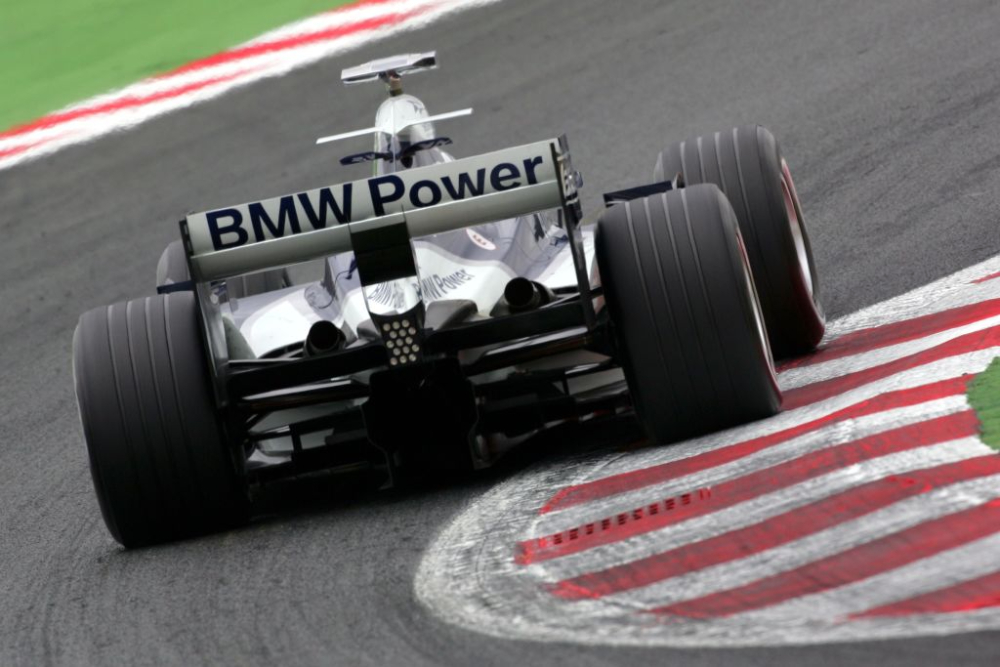
BMW's – and subsequently HP's – departure from Williams led to years of under-investment. Gareth Bumstead/Getty Images
One big positive is the ‘Aerodynamic Testing Restrictions’. This mechanism limits the windtunnel time and CFD resources for each team on a reverse sliding scale based on constructors’ championship position. These are reset twice a year - at the end of the year and mid-season, with those lower down the field granted significantly more aerodynamic testing. This is allocated based on the six aerodynamic research periods the year is divided into, meaning a difference of 368 versus 224 windtunnel runs and 3200 v 1400 CFD items per period between the team at the top (currently McLaren) and at the bottom (currently Alpine and Cadillac). Again, historic knowledge pays into that and the teams with greater depth of underlying knowledge and well-proven methodologies will extract more from those runs.
Even power units play a part. The days when a customer team would, at best, have an engine one step behind the latest, and in many cases well behind that with potential enormous power and driveability deficits, are long gone. Today, F1’s regulations demand that customer engines must be identical to those used by the factory operation. Crucially, they also stipulate they must be able to be “operated in the same way”, which means no trick modes or settings held back.
However, there’s still a value in being a manufacturer team, as three of the big four are, given you have full control over integration and, as has been demonstrated by the early stages of this season, deeper knowledge of how to optimize the power unit performance. The majority are playing catch up on this score – the exceptions being Aston Martin and Audi – as they are customers and therefore start off on the back foot. This also extends to car design in terms of timelines for having specifications for components supplied such as the gearbox, for those taking a customer supply, and even what specification of power unit is available for testing.
The advantage of being a works team will wax and wane, and early in ‘26 it’s at the peak just as at the end of last year, with well-proven, long-frozen power unit designs deeply understood by all, but it will never be eliminated entirely even though customer team McLaren has won three of the last four championship titles over the past two years.
Each of the smaller teams has its own story and limitations. In the case of Williams, it endured nearly two decades of under-investment that started with parting company with BMW as its engine partner ahead of the 2006 season. This decision also cost it big-money HP sponsorship and led to a period of what was called ‘financial retrenchment’ when its future was far from secure. The commercial agreements that bound the sport together for 2013-2020 (not technically a Concorde Agreement as it was a series of bilateral deals) skewed the payments dramatically in favor of the big teams and made life increasingly difficult for Williams. When it was sold by the Williams family to Dorilton Capital in 2020, the COVID-19 crisis had pushed it over the edge and meant it had run out of credit. Now, it has the money but just needs time, perhaps more than it seemed six months ago after its troubled start of the season following last year’s renaissance.
It was a similar story at Sauber, which is now Audi. However, it is now ramping up under the ownership of a manufacturer. Its headcount is still low, as it was significantly slower at expanding than, say, Williams was but its future is bright and, if well-managed, can eventually join the big guns. Cadillac, majority owned by TWG Motorsports with General Motors holding a significant minority stake, is much earlier on the same journey as a start-up.
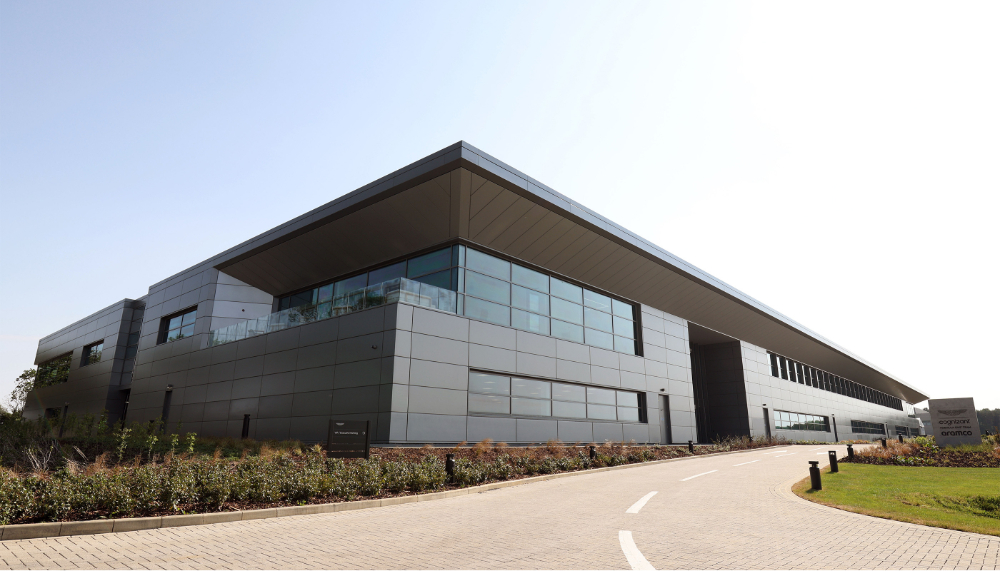
Aston Martin has enjoyed signnificant investment since Lawrence Stoll took over the team, but it hasn't propelled it to the front. Aston Martin F1 team photo
Aston Martin is, on paper, a works team, but unlike Ferrari, Mercedes, Red Bull and Audi, it’s reliant on an external supplier in Honda. Despite spending big ever since Lawrence Stroll took over Force India in 2018, its trajectory has shallowed thanks to this year’s bad start. It’s a reminder that simply throwing money around doesn’t guarantee success, even though sound decisions have been made in terms of investing in facilities with a new Silverstone campus (pictured above) and state-of-the-art windtunnel.
Alpine is unique in that Renault, which owns 76% of the team, decided to shut down its works operation to become a customer. Flavio Briatore, de facto team principal, described this as a pre-condition of him agreeing to rejoin the team he led to titles as both Benetton and Renault for a third stint. It was an extraordinary move given teams crave manufacturer status, but reflects Renault’s dismal failure to come to terms with the hybrid era. That was proved time and again by the struggles since Renault re-acquired the team in December 2015.
As performance this year proves, Alpine is vastly more competitive with a Mercedes engine, but still has a long way to go. However, despite its high-speed understeer problem, this is a team that is now targeting the front group. Pierre Gasly recently pointed out that it isn’t far off McLaren, saying “hopefully we can close that gap in the coming months”. While there are always questions about Renault’s long-term commitment, it doesn’t right now appear impatient to cash in on the rising valuation of the team. But minority stakeholder Otro Capital is in the process of selling at a significant profit that could easily triple its original $200 million outlay based on paddock chatter about the potential worth of the sale.
Two teams have fundamental limitations. Racing Bulls is owned by Red Bull and will therefore always be its junior team, despite attempts recently to recast it as something grander than that. Haas, F1’s smallest squad, is dependent on Ferrari not just for its power units but also the majority of its car outside the aerodynamic components it must by regulation design itself, although its alliance with Toyota is allowing it to grow.
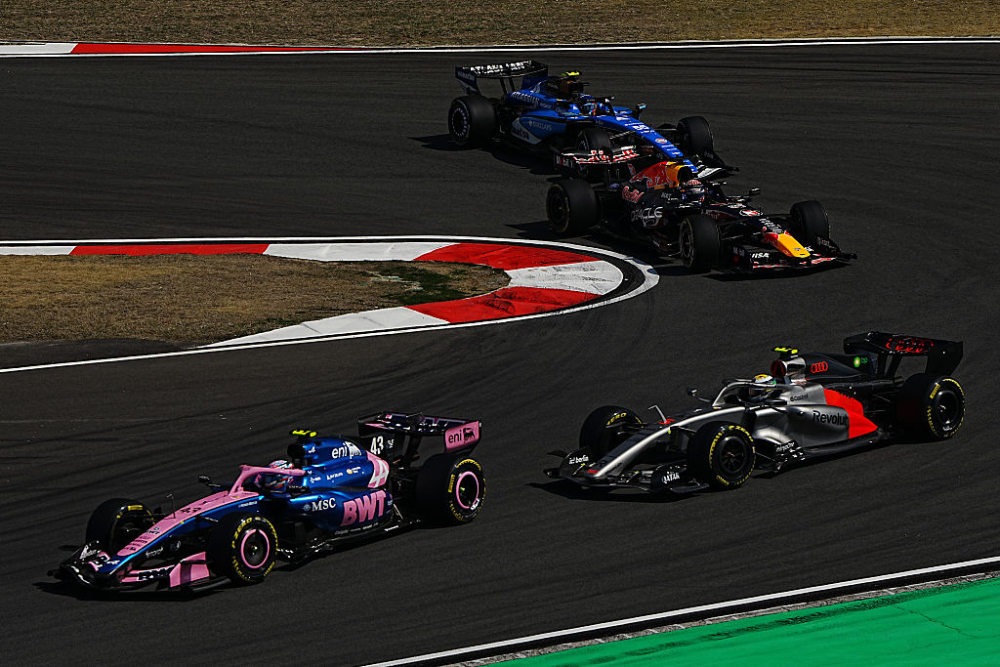
This year, there’s a distinct midfield group comprising Racing Bulls, Audi, Alpine and Haas all on average between 1.8% and 2.0% off the outright pace judged by single-lap performance. Historically, that’s nothing – around a hypothetical lap 1.6s even for the upper limit of the range. However, that’s the aggregate of many small, historic deficits that still exist.
Over time, the performance potential of teams will gradually become more level, but it’s a process demanding enormous patience. The cost cap is now in its sixth year, but it’s going to take more than a decade to see its full effect thanks to the enormous complexity of F1 teams. As Carlos Sainz says of Williams’s unexpected 2026 troubles, it “just shows that if you want to do the jump from the midfield to being a top team, the jump is much bigger than anyone could expect”.
Presented by:


Edd Straw
Edd Straw is a Formula 1 journalist and broadcaster, and regular contributor to RACER magazine. He started his career in motorsport journalism at Autosport in 2002, reporting on a wide range of international motorsport before covering grand prix racing from 2008, as well as putting in stints as editor and editor-in-chief before moving on at the end of 2019. A familiar face both in the F1 paddock, and watching the cars trackside, his analytical approach has become his trademark, having had the privilege of watching all of the great grand prix drivers and teams of the 21st century in action - as well has having a keen interest in the history of motorsport. He was also once a keen amateur racing driver whose achievements are better measured in enjoyment than silverware.
Read Edd Straw's articles
For Ford Racing NHRA Funny Car ace Austin Prock, it’s a family affair
Latest News
Comments
Comments are disabled until you accept Social Networking Cookies. Update cookie preferences
If the dialog doesn't appear, ad-blockers are often the cause; try disabling yours or see our Social Features Support.