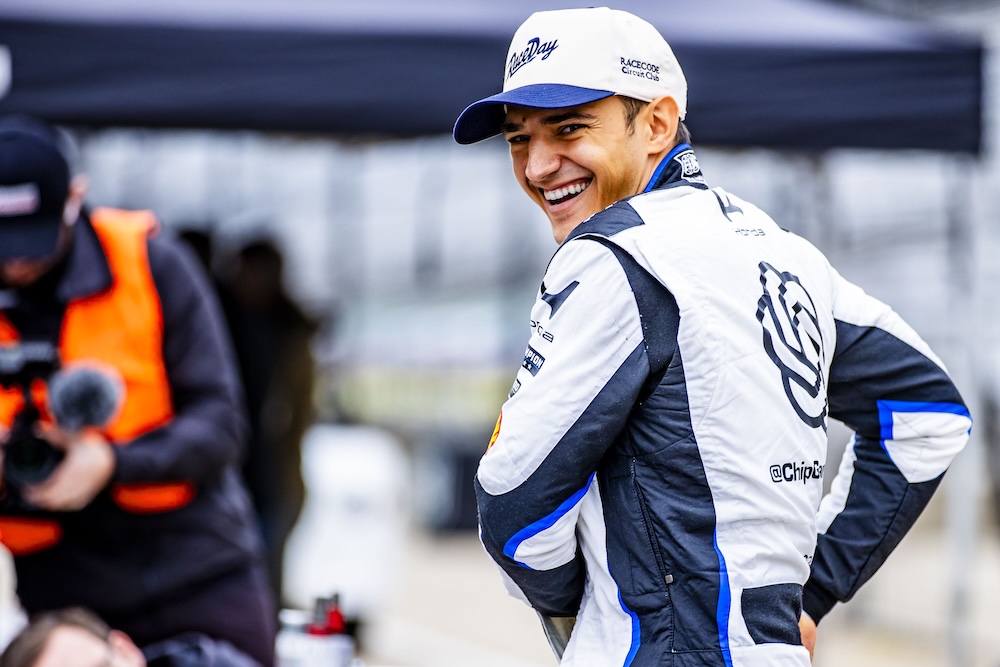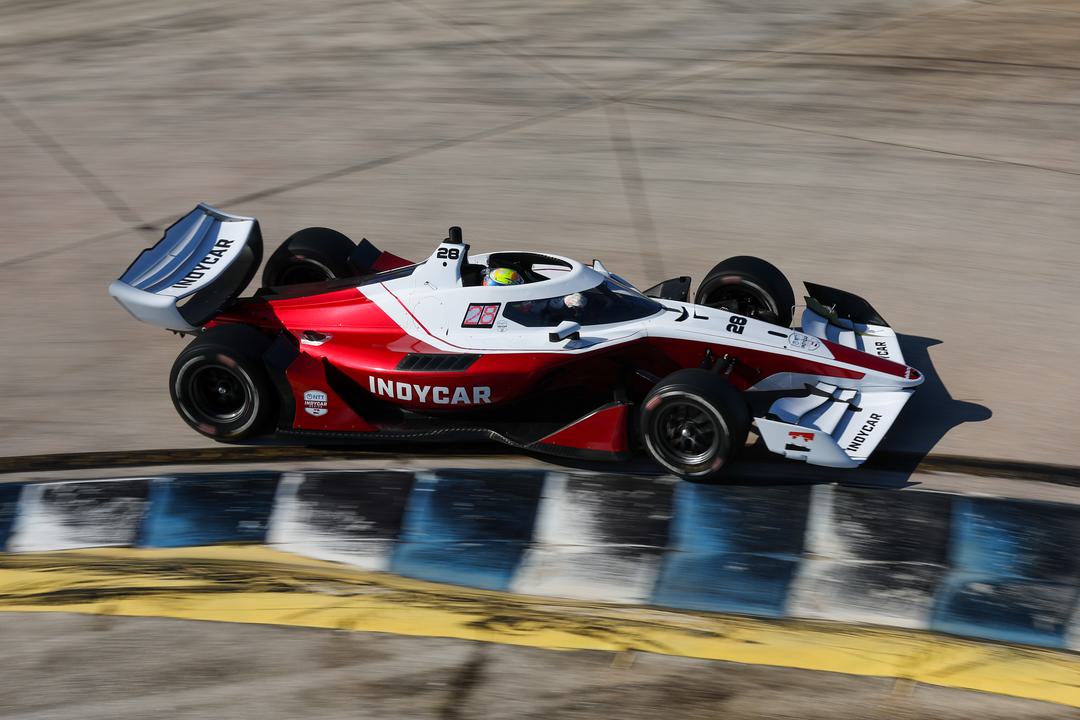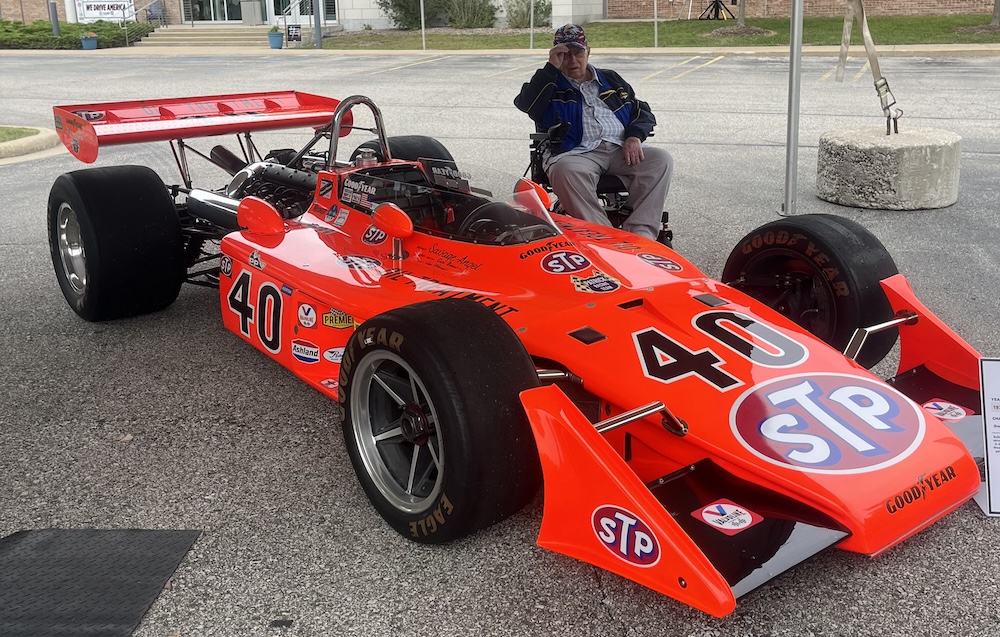
Chris Jones/IMS
Lapping Nashville Superspeedway with Craig Hampson
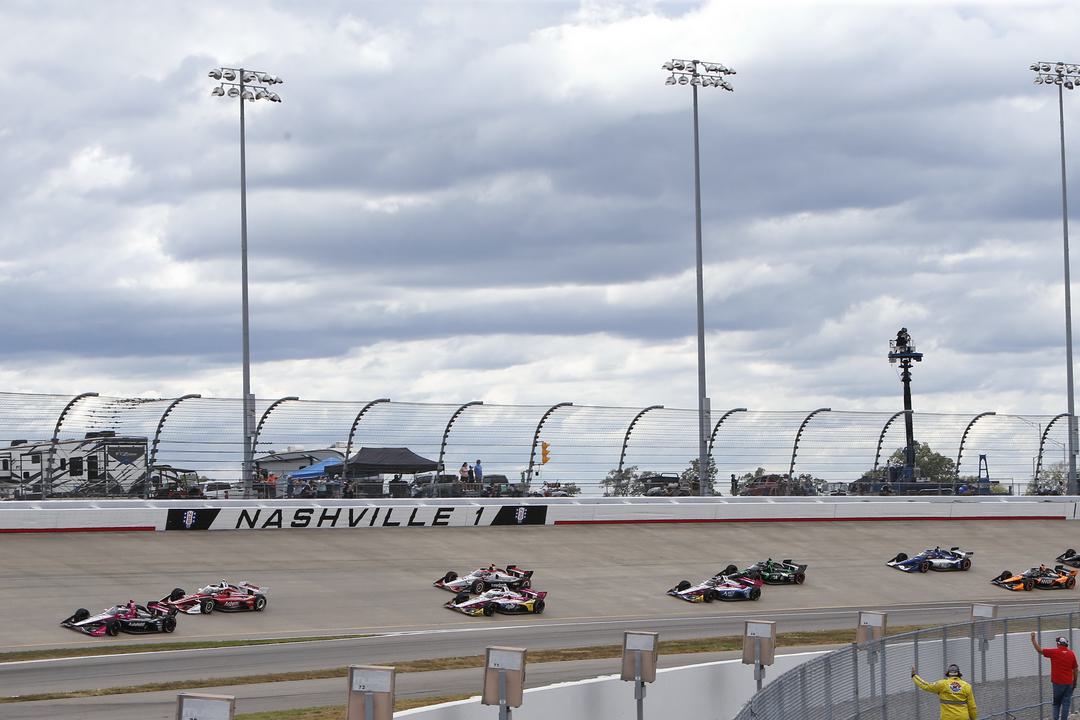
The 1.33-mile Nashville Superspeedway returned to the NTT IndyCar Series schedule last season after a 15-year hiatus. Andretti Global shone in qualifying and the race, but as the team’s chief engineer Craig Hampson explains, that’s no guarantee of excellence this weekend, because the goalposts have shifted…
“I was very proud of what we as a team achieved at Nashville last year, with both pole for Kyle Kirkwood and the win for Colton Herta. We clearly had prepared well for what was effectively a brand-new event for the series, and it was nice to end the season on a high. Normally, you get to enjoy a win for four days and then you’re preparing for the next event, so winning the finale carries on a little bit longer – although it’s also true that our 2026 season starts next Tuesday!
“However, things have changed this year: the aero rules are different and the tires are different. So, as we’ve all discovered at many tracks of all types this year, putting last year’s setup on the cars and expecting similar performance is probably not going to work. You start evolving from where you were last year, but it’s just that – a starting point.
“In terms of aero, what IndyCar has tried to do is establish some commonality between Nashville and Iowa, presumably to save money on parts. For my part, and I suppose I’m biased, I felt Nashville last year was a really entertaining race, so why would we want to change anything? But I guess they intended to reduce development costs for Honda and Chevrolet in terms of understanding the aero package, something like that, so just like with Iowa, the Z20 packers – convex domed blisters on the bottom of the underwing which for a long time had been mandatory on all the ovals – have been removed.
“Those domed packers were originally put there as part of the sideways anti-blowover rules, but based on an October tire test at Iowa last year, they decided to take them off. And to achieve that commonality I mentioned, they’ve applied that to this Nashville event. Removing those packers from the underwing means there is less downforce on the car, because they had allowed us to get the sides of the underwing closer to the ground. And you can’t compensate for that by lowering the car, because you need a certain ride height to deal with the bumps – or in particular, the big bump through Turns 3 and 4.
“We don’t really want less downforce for the good of the racing, and so in compensation they’ve allowed us to run more rear wing angle. As I recall, last year we were limited to hole 3 on the wing flap and this year we can run up to hole 5 and we’re allowed to run the wicker on the rear wing, which we weren’t permitted at Nashville last year nor Iowa this year.
“The net result of these aero changes is that the ratio of downforce to drag has changed, and the calculus of how you want to set up the car for qualifying and the race is more different. Nashville is a track where if you get it right, the driver is flat on the throttle all the way around for qualifying, but it’s not easy flat. You don’t just roll out in first practice and it’s a no-brainer flat, you’ve got to work at it. And you’re not flat in the race. But in qualifying, certainly everyone will try and trim out.
“Now, it was possible last year to go too far in terms of trimming out, so there’s an element of considering how good is your mechanical grip and the grip that the track’s offering on this particular day before picking your downforce level. That’s not what defined the difference between Kyle [pole] and Colton [11th] on the grid – I’m not allowed to tell you what caused that disparity! – but we are talking tenths of a second over two qualifying laps [0.3362s] so little details matter. And while those details didn’t come together for Colton in qualifying, the car handled well enough, we did a good enough job and he obviously drove the heck out of it in the race, and he was able to make his way to the front. It is possible to pass at Nashville. It’s not easy but it is possible, so qualifying there is not the be-all and end-all.
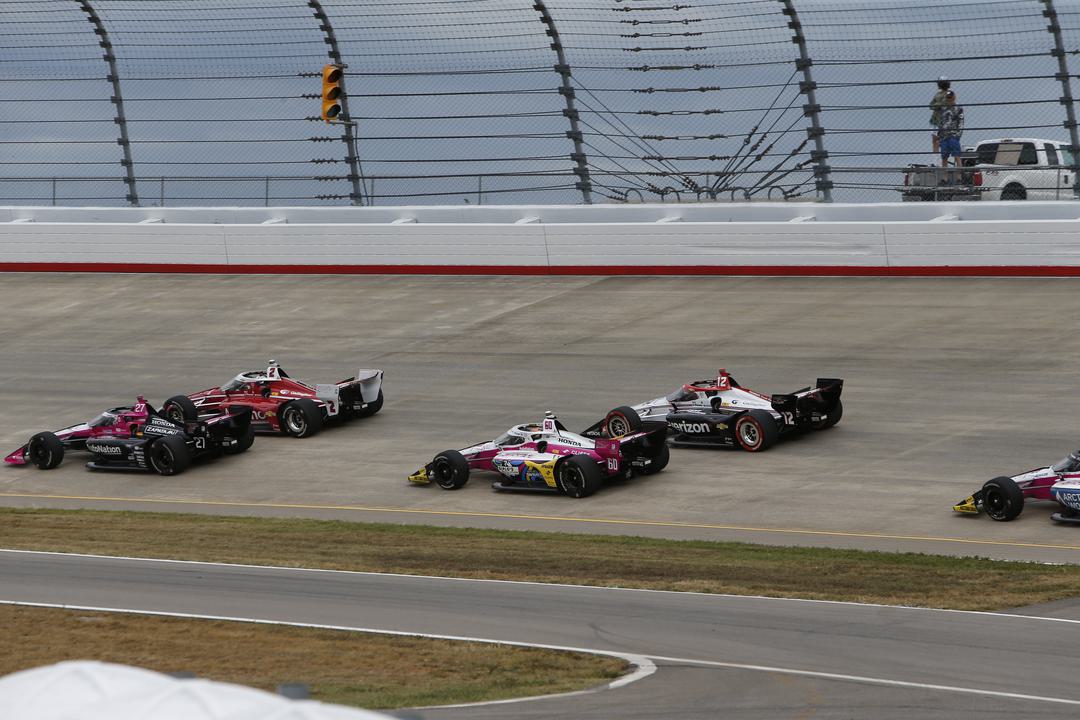
The combination of seamed concrete surface and bumps make setup compromises especially tricky at Nashville. Chris Jones/IMS
“Nashville is a concrete surface which is unique for us on ovals, and it’s bumpy over the seams in the blocks, and that really puts a premium on your spring/shock absorber package, and by shock absorber I mean the thing that is dealing with the damping and inertance level. And as I’ve already mentioned, there’s a real significant bump over the tunnel between Turns 3 and 4, so getting your car to go comfortably across that bump is a big part of being able to be fast there. So with a better spring/damper package, you have more mechanical grip and can therefore trim your aero that bit more, particularly in qualifying but also a little for the race.
“The other crucial aspect to consider is the tire compound – or compounds, because like last year, we’ll be running two different compounds, and again we have to run two sets of the softer alternates. The interaction between the tires and the concrete of both compounds is going to be crucial to understand, and guess what – neither the alternate nor the primary are the same as their equivalents from last year! So not only do we have to sort out what works best with our new aero configuration, we also need to understand what aero package works best for both types of tire and how much adjustment we have to make between the two, according to grip and balance.
“I understand why we’re running two different compounds on ovals. It is an interesting variable, this is Firestone’s home race, and as any company that is a sole supplier, this is a way to get the commentators talking about your product on the broadcast. But of course, that means there are a lot of unknowns going into the weekend, which creates more complexity and work for engineers and drivers at the track: we have just two practice sessions, split by qualifying, in which we have to figure out not only the new aero package but also the differences in the tires. With 27 cars and really limited practice time, it means the track is going to be very, very busy, which is great for the fans but it can also distort the results.
“But as we often say, it is the same for everybody. Well actually, it’s not quite the same, because Ganassi tested at Nashville last week, and I believe that’s the only team who’ve tested here this year. Obviously IndyCar grants us very few test days, and with the knowledge that we were very quick at Nashville last year, we elected to use our test days elsewhere. As an older-school guy, I definitely miss the days of regular testing, because you can do all the simulations you want but there’s no substitute for running the actual car on the actual tires around the actual track with the actual human being steering it. And I really miss the two-day tests, when you’d try a selection of variables on the first day, moving only one parameter on each run in order to give you an accurate picture of what was making a positive or negative difference. Then that evening, you’d plow through the data, assessing what you learned, drawing conclusions or at least deciding what direction that pointed you in, and then applying those lessons learned the next day and really refining your package. But again, same for all.
“Another point I want to make about setting up a car for Nashville is that we – and I suppose by that I mean IndyCar as a whole, as well as specific teams – don’t overload the car. In final practice at Nashville last year, Kyle’s pole-winning car had a right-front suspension failure associated with the big bump over the tunnel. The cars are now heavy enough, with the addition of the hybrid system and all the safety systems that have been added to the DW12 over the years, that we are really overstressing the suspension components and the tires. The reason why we run the lower level of boost [1.3-bar/130kPa] here and Iowa is because of the loads. If you hit a bump and get, say, a 2g vertical acceleration, that’s twice the weight of the car and so the forces acting on the suspension are significantly higher.
“So we put in a lot of work over the last off-season to ensure that within the spec parts of the car, everything is as good as possible, particularly on the right side of the car, because on the ovals those components are carrying a lot of load, and have to deal with spikes of extreme loads when going over bumps. IndyCar and Firestone have us watching like hawks over the data during practice and the race, because to be honest, if we set these cars up to go absolutely as fast as they will go here, we are really knocking on the edges of having something break.
“Thankfully, IndyCar is well aware that the car just isn’t nimble anymore, it’s too heavy, and the loads have become a problem for the size of the tires we currently run. For the new car in 2028, IndyCar has a stated goal of taking a significant amount of weight out of the car, and I fully support that, because we’re at sports car-level masses now and that’s really not what the DNA of an IndyCar is supposed to be. And I feel really sorry for Firestone because the wheel widths are the same as they’ve been since the mid-1970s, and yet the weight of the car itself and the aero loads are hugely different now, so they are faced with a hugely difficult engineering task.
“Anyway, for this weekend, the work we all have to do in an extremely limited time beforehand should help Nashville to give us a very interesting race, and the tire offset – the fact that teams aren’t likely to do the same things at the same time in terms of tire strategy – will help that. Look at last year: Pato [O’Ward] and McLaren had that race won unless we did something different and unique with Colton. So the decision to bring him into the pits and put him into clean air on new tires and allow him to go blazing fast worked out. He was able to make the passes he needed and run down Pato.
“For now, before we hit the track, we simply don’t know the difference in lap time between the softer and harder tires and the difference in degradation between them, but understanding that is going to be crucial, so Saturday will be a huge day of learning. Thankfully, Colton, Kyle and Marcus [Ericsson] make for a really great 'driver room' in terms of pooling their feedback, 100 percent open with each other, and the same is true of their race engineers, Nathan O’Rourke, Jeremy Milless and Dave Seyffert. And in terms of their preferences of car behavior, our drivers are closer on ovals than anywhere else, which means that if one driver finds an improvement, it is generally going to work for the other two. There are always individual nuances, but they seek very similar things on ovals. As you’d imagine, that’s a real asset on a weekend with so little practice.
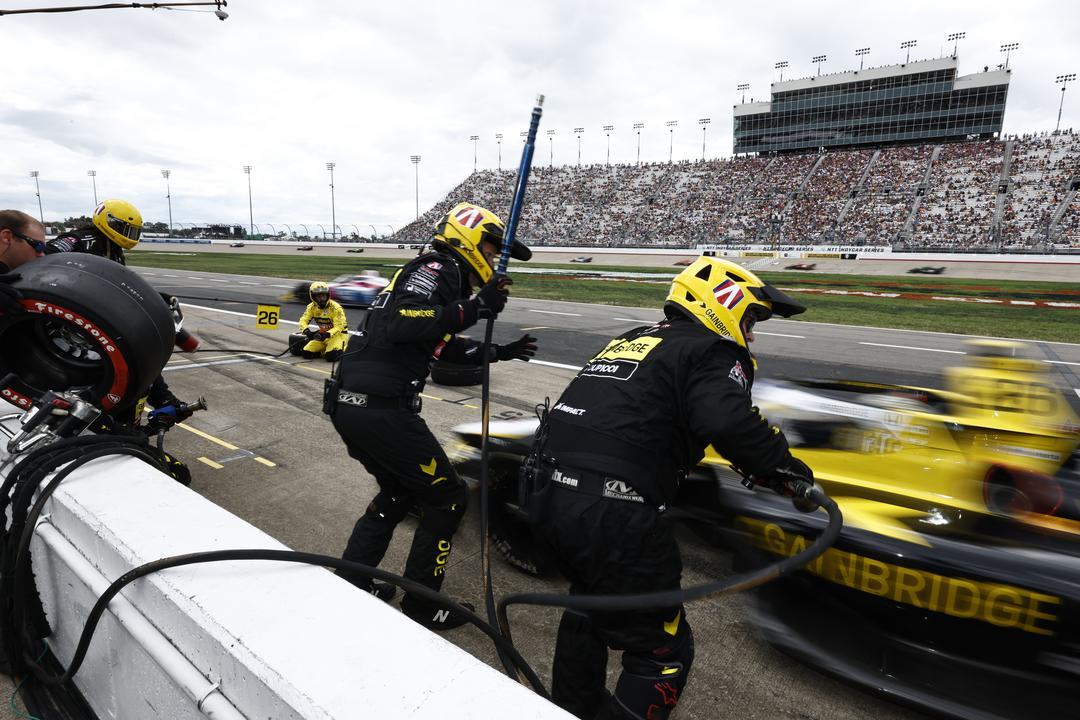
Even when the right strategy seems obvious, Hampson says there can be reasons for individual teams to go their own way. Chris Jones/IMS
“A final point – and you could apply this to all IndyCar races, I guess – we have to consider if we should try to cover more than one base strategy-wise across our three cars. If we have two or three fast race cars, you don’t want all three of them doing the same thing, because the wrong caution period at the wrong time or the wrong strategic path relative to your rivals can sink your weekend. My job, as I see it, is to ensure one of the Andretti Global-Honda drivers finishes at the top of the podium, while the three race engineers and three strategists on their individual pitstands will make their individual decisions. But myself and my colleagues back in the truck can take a more 100-ft view of proceedings, so when there’s a really difficult strategic decision to make and you need to consider the possibility of subsequent caution flags – which obviously you can’t predict in terms of timing or duration – I like to encourage the three strands of our team to consider splitting what they do. We’re looking for the best thing for Mr. Towriss, for Andretti Global and for the TWG Group, so to have a foot in each camp strategy-wise is the smart way to tackle the race.
“I want to make it clear that pitstand personnel can make their independent decision for their car, but when there’s a 50/50 dilemma, we have the ability to have dialogue about how to do the best job for the team. And that’s what we’re going to try and do this weekend.”
AT A GLANCE
Race distance: 225 laps/299.25 miles
2024 pole time: Kyle Kirkwood (Andretti Global Honda), 47.5178s, 201.520mph (two laps)
2024 winner: Colton Herta (Andretti Global Honda)
Hybrid energy deployment parameters: Unlimited activation with a maximum deployment of 155 kilojoules (kJ) per lap.
Firestone tire allotment: Six sets primary, four sets alternate to be used during the event weekend. Teams must use one set of primary and two sets of alternate tires during the race. One additional set is available for use during the group session Saturday.
NTT INDYCAR SERIES WEEKEND SCHEDULE (all times Central):
Saturday, August 30
9:20am – Installation Laps
9:30am-10:30am – Practice, FS1
1:05pm – Qualifying (single car, two laps), FS2
3:45pm-4:15pm – Group Session (two groups, 15 minutes each), FS2
4:30pm-5:30pm – Final practice, FS2
Sunday, August 31
1:40pm – “Drivers, start your engines”
1:45 p.m. – Borchetta Bourbon Music City Grand Prix presented by WillScot, FOX

David Malsher-Lopez
David Malsher-Lopez is editor-at-large for RACER magazine and RACER.com. He has worked for a variety of titles in his 30 years of motorsport coverage, including for Racer Media & Marketing from 2008 through 2015, to which he returned in May 2023. David wrote Will Power’s biography, The Sheer Force of Will Power, in 2015. He doesn’t do Facebook and is incompetent on Instagram, but he does do Twitter – @DavidMalsher – and occasionally regrets it.
Read David Malsher-Lopez's articles
Latest News
Comments
Comments are disabled until you accept Social Networking Cookies. Update cookie preferences
If the dialog doesn't appear, ad-blockers are often the cause; try disabling yours or see our Social Features Support.