Philip Platzer/Red Bull Content Pool
Verstappen's Nürburgring outings show just how important he is to Formula 1
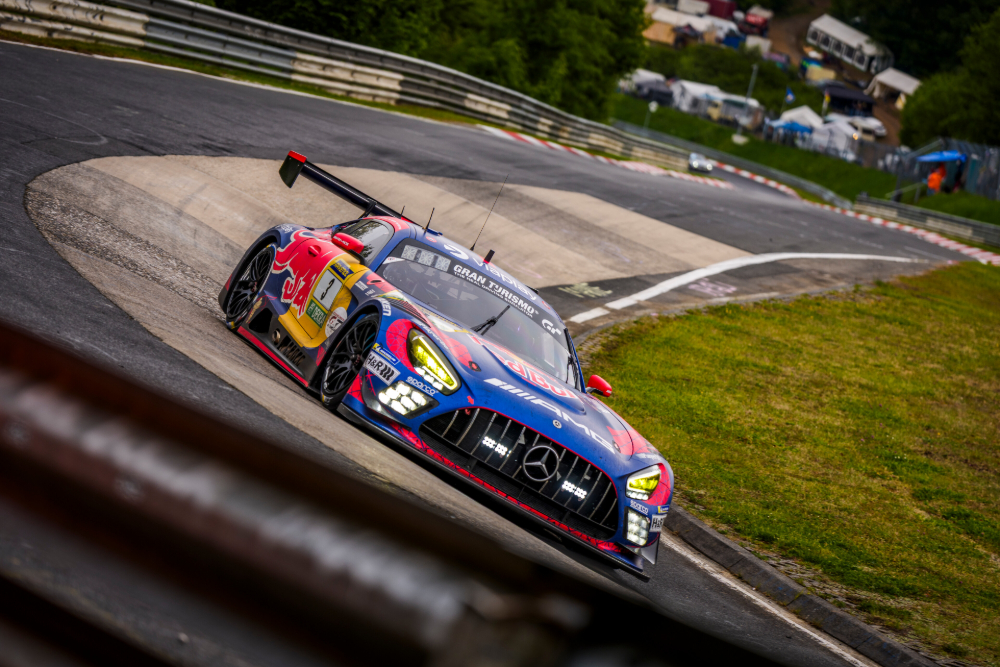
Why Max Verstappen has become more than just a great racing driver has been central to two massive motorsport stories in recent months. Ostensibly, there’s little connecting his Nürburgring 24 Hours assault and his vocal criticism of Formula 1’s regulations, but his impact in these disparate areas reveals his unique status as what might be called ‘the spirit of driving’.
Verstappen has long since established himself as an all-time great. If you polled the F1 paddock, the majority would hail him as the best driver on the grid despite the presence of Lewis Hamilton and Fernando Alonso, both of whom are in their 40s and no longer at their fearsomely high peaks. But there’s something else about Verstappen that marks him out in the wider culture of motorsport today.
He lives and breathes competition driving, often spending time away from F1 either sim racing or behind the wheel of other cars, showing a willingness to take on old-school challenges while railing against the overly-engineered racing created by the energy-management demands of today’s grand prix machines. Both his Nordschleife activities and his complaints about the blunting of F1 in 2026 reflect his symbolic status as the upholder of this purity of driving. He is motivated by the visceral need to be at the heart of a car. While there are plenty who criticize his aggressive approach to wheel-to-wheel combat, even his sternest critics must admit that he encapsulates the joy of driving like no other.
The work of a racing driver, as for professional sportspeople generally, has become ever-more specialized over the years. The days when Mario Andretti built his legend as one of the most versatile racers ever with victories on paved and dirt ovals, road courses and street tracks, winning some of the most celebrated events including the Indy and Daytona 500s, the F1 world championship and the Pikes Peak Hillclimb, have long gone. It’s not for lack of desire that this is not possible today, although it’s important to note that in the past it was as often the need to earn money as the will to win that motivated competitors.
Just as Fernando Alonso did when he was permitted to skip the Monaco Grand Prix to take on the Indianapolis 500 in 2017 under the McLaren Honda Andretti Autosport banner, Verstappen leveraged his position in a team desperate to keep him to undertake such extracurricular activities. Most, if not all, of his rivals would get short shrift from their employers were they to attempt to do the same given that contracts should always contain clauses preventing this. No matter how capable a driver, ‘The Green Hell’ is a dangerous place and the risk of your prize asset being injured or worse would rightly be perceived as unacceptable. Nobody wants a repeat of what happened with Robert Kubica in 2011 at Renault when he had a contract that permitted him to compete in rallying.
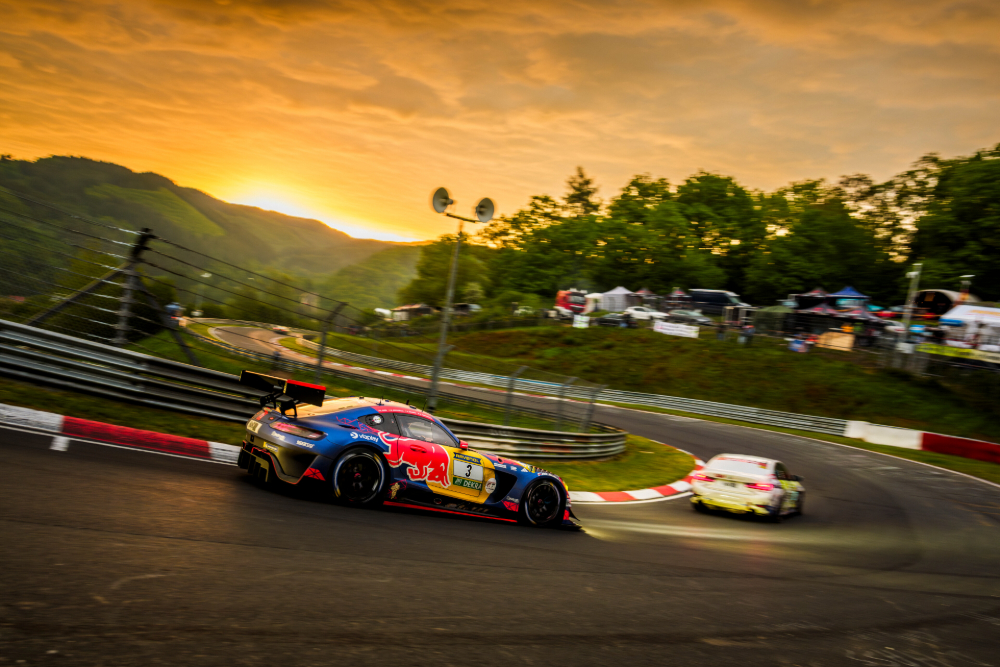
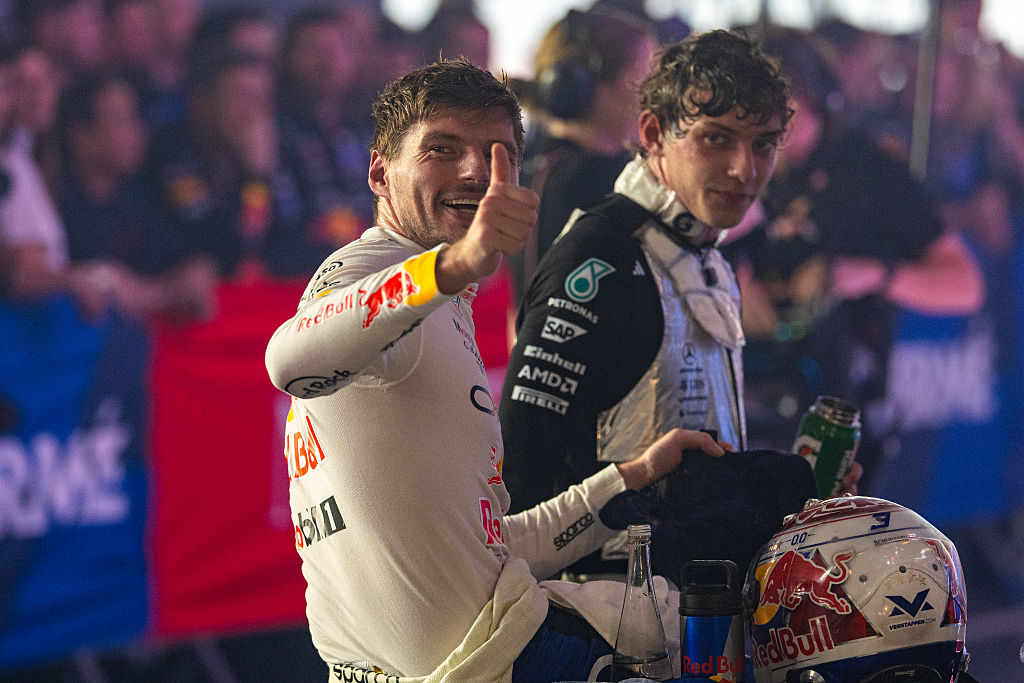
Verstappen's extra-curricular activities may make his F1 counterparts envious. Philip Platzer/Red Bull Content Pool
Therefore, it’s no surprise that some of Verstappen’s rivals are envious of the freedom he has. Speaking last year when Verstappen started racing at the Nürburgring, George Russell framed it as earning the right to compete elsewhere.
“It’s incredible,” said Russell. “We’re all pretty jealous of it, because having this freedom, of firstly doing what you love in Formula 1, but then also being able to go out and race other things and just enjoy it at your leisure – I don’t think it’s quite that straightforward for other people doing it – but you have that right when you win four world championships and we're all here fighting to win our first. Maybe after four championships under our belts, we'll be able to choose to do the same. But respect it a lot, and definitely I would love to do it one day.”
Fans love to see this, those with a more Eurocentric perspective in particular are often denied the chance. It’s a little more common in the U.S., particularly when it comes to extracurricular outings in sprint racing, although even then it’s rare that drivers like Kyle Larson contest the double at Indianapolis and Charlotte, as he did in ‘25. In these days of ever-growing star power, with sportspeople so conscious of developing their own brands and their value to F1 teams, perhaps there might be a trend towards those in the superstar bracket pushing for the chance to do this. After all, racing at the Nurburgring has only enhanced Verstappen’s reputation, just as the threat he might walk away from grand prix racing because of the regulations threatened to strike a blow at F1.
Verstappen long regarded F1 as something he was in for a good time rather than a long time, so there’s always been the possibility he might quit when he still has plenty of years left in him. Losing a great driver is always a blow, but if it’s because he’d had enough, wanted to do other things, had achieved everything he’d set out to or whatever other retirement cliche he reached for, it would be easy to absorb. No top sportsperson competes forever and F1 is robust enough to survive that. However, were he to do it because the challenge of driving the car had lost its appeal as a result of the rules that would be a completely different story. To have someone who embodies that driving spirit forced to walk away for that reason would be a disaster.
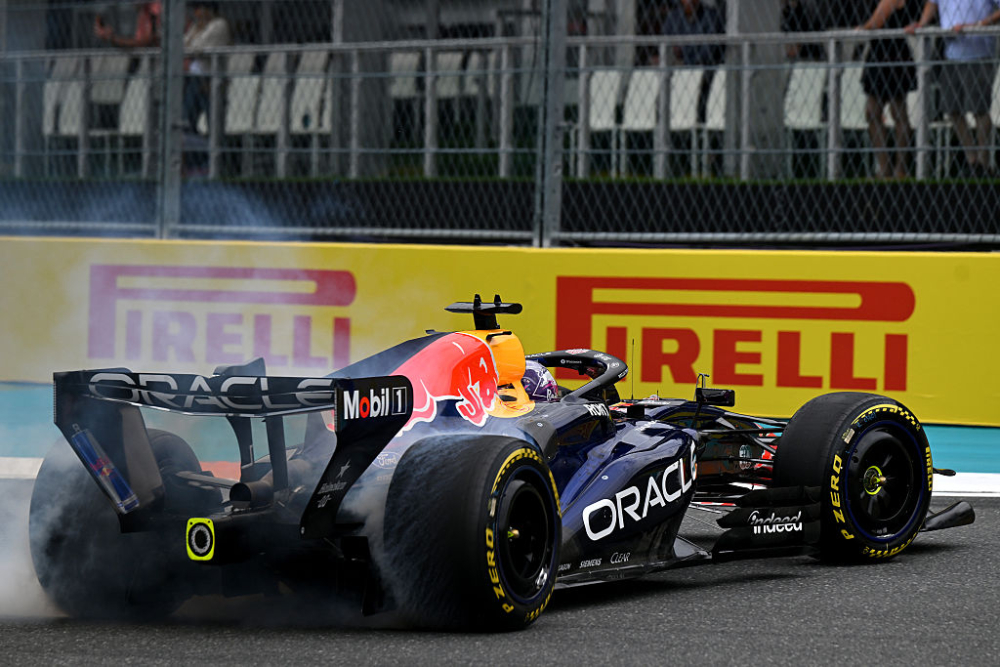
Verstappen has been one of F1's most vocal critics in 2026. Sam Bagnall/Getty Images
The question is, how big a part did his criticism play in the changes F1 has agreed in principle for 2027? In the Miami Grand Prix paddock, the idea of hardware changes for next year was scoffed at by insiders, yet just a few days later the FIA announced potential big alterations. The planned boost in power of the V6 engine by 50kW by increasing fuel flow and the deployment power dropping from 350kW to 300kW represents an unexpected, but welcome, shift away from the notional 50/50 split of electrical to internal combustion engine power. There are still problems to be solved, with rising weight, the possible reduction of race distances and perhaps the increase in battery capacity all on the table, but this is a major climbdown. If Verstappen had stayed on message, would it have happened on this timeline as he played his part as an accelerant even if measuring what part he played is impossible.
While you can legitimately argue that Verstappen is also being vocal to help steer the regulations in a way that might help Red Bull Racing and its powertrains operation – just as any driver would – there’s no doubt that he believes what he’s saying. Most likely, he is reveling in a position where his personal views and professional agenda align perfectly. His regular soundbites of criticism – “not very Formula 1-like”, “Formula E on steroids”, “driving-wise, it’s not so fun”, “anti-racing”, “it’s playing Mario Kart”, “nothing to do with racing” – have certainly landed. And that’s not just because he’s an all-time great, but because of what he symbolizes. A decade ago, Fernando Alonso’s voice would have been loudest for similar reasons (and he has also criticized what he calls the “battery world championship”) but Verstappen is the one who wields the power today. His critiques have also emboldened some of his rivals to wade in, building the pressure for change.
There might also be a downstream effect in that the voices of the drivers as a whole have also played their part. While F1 should never be framed solely for the pleasure of those in the cockpit, and ultimately as long as it’s the arena where the big bucks can be earned they will continue to do it, they are vital brand ambassadors. F1 CEO Stefano Domenicali has referred to them as being “like gladiators”, again a spirit Verstappen embodies. Consulting the drivers and allowing them to flag up what should be fundamental tenets of F1 – notably you don’t want to create a rules set that requires them to drive well under the grip limit in fast corners because of the need to harvest – should be part of the framing of future regulations. F1 has a history of being dangerously focused on making one facet or objective work when making rule changes, with the key lesson of what’s happened in 2026 to take a more holistic approach. Verstappen, right now, is the ultimate barometer of the appeal to drivers.
F1 is a phenomenally successful sports entertainment enterprise, a global phenomenon that’s looked upon by rivals as a template for growth. Verstappen has a central role in terms of ensuring the various stakeholders that set its direction don’t lose sight of the fundamentals that are key to its success, and the brand equity that helps drive that success. At the heart of that is that the driver must be in control of everything, whether it’s executing the perfect qualifying lap or pulling off an overtaking maneuver, rather than superseded by automated factors or limited by serving of the power unit.
That Verstappen is now the hallmark of uncompromising competitive authenticity is as much a measure of his greatness as his on-track results.
Presented by:

Edd Straw
Edd Straw is a Formula 1 journalist and broadcaster, and regular contributor to RACER magazine. He started his career in motorsport journalism at Autosport in 2002, reporting on a wide range of international motorsport before covering grand prix racing from 2008, as well as putting in stints as editor and editor-in-chief before moving on at the end of 2019. A familiar face both in the F1 paddock, and watching the cars trackside, his analytical approach has become his trademark, having had the privilege of watching all of the great grand prix drivers and teams of the 21st century in action - as well has having a keen interest in the history of motorsport. He was also once a keen amateur racing driver whose achievements are better measured in enjoyment than silverware.
Read Edd Straw's articles
Latest News
Comments
Comments are disabled until you accept Social Networking Cookies. Update cookie preferences
If the dialog doesn't appear, ad-blockers are often the cause; try disabling yours or see our Social Features Support.