Crunch time for Genesis Magma Racing's Hypercar program
Genesis Magma Racing team principal Cyril Abiteboul is a busy man at the moment.
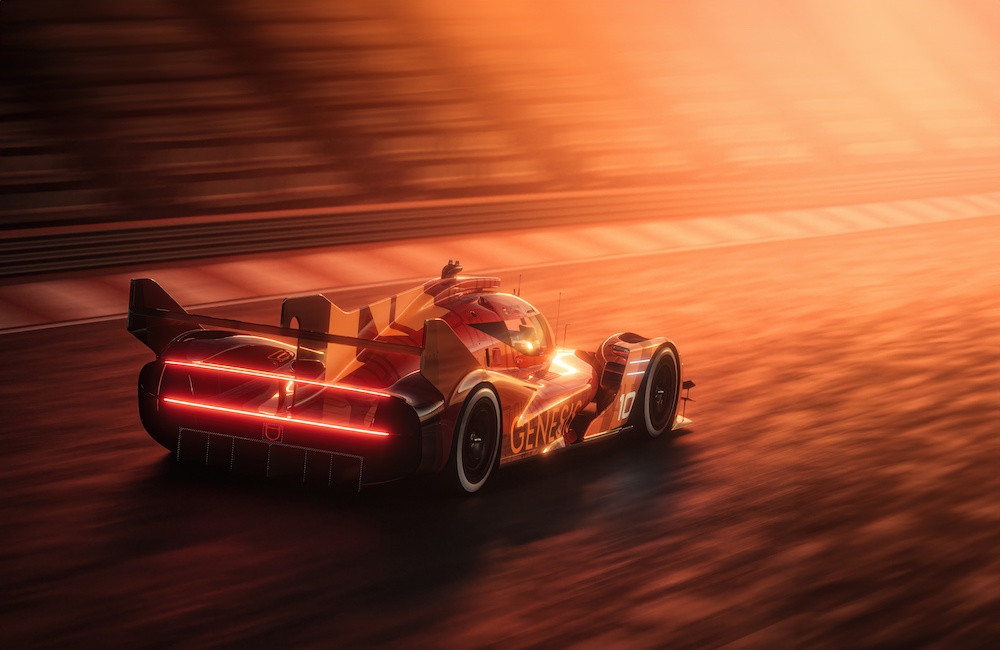
The Korean brand’s ‘Trajectory’ program is off to a flying start, winning two races out of two in the European Le Mans Series to start the season. The WRC-derived V8 engine for the GMR-001 LMDh has successfully fired up for the first time. And multiple key decisions that will have a major impact on its first foray into sportscar racing are set to be made in the coming weeks.
"Yeah, I think it's generally OK-ish!” Abiteboul laughs when asked by reporters if he’s happy with the current status of the developmental program, which is now moving fast ahead of Genesis’ FIA WEC Hypercar debut next year.
"It's probably going to be tight for engine sign-off. We've got very limited time, and we know that this thing has so much impact, because we've got six circuits that are booked for us for testing, but if your engine is not reliable, you are not going to be happy. We need to make sure we get it right the first time.
"Of course, we know that motorsport is often not right the first time, unfortunately, so we have to cross our fingers! That is why we've taken the shortcut that we've taken, which is to use a WRC engine as a starting point for the WEC engine. The upper part of the engine is already developed, which is the most complex part to get right, but you still have the block and other things to sort out.
"So far, so good. But that one is marginal, and if there is a problem, that problem will very quickly have big implications.”
Once the engine is finalized, track testing is the next major step for the GMR-001. That is set to take place between August and the homologation deadline in December, now that the design and concept behind the brand’s LMDh prototype (which is utilizing the ORECA spine as its foundation) have been finalized.
”The milestones will accelerate going forward, and that's where it's going to get a little more complicated,” Abiteboul adds. “As for the car, we had a concept, a design with the IMSA governing body, which challenged us.
“As we're nearing the end, whatever we did, we looked a bit like an Acura or an Alpine, but we needed something different. We found solutions. ORECA is now able to start producing the parts.
"The first car will be assembled at their facility this summer, and we'll take delivery. During the six planned test sessions, we'll sometimes have one car, sometimes two, sometimes during the day, sometimes at night, to maximize the opportunity.”
Beyond prepping the car for its first assault on the WEC, there are plenty of additional pressing tasks on the to-do list. One of those is driver selection, which is seemingly becoming increasingly tricky due to the early output from its IDEC-supported LMP2 program in the ELMS.
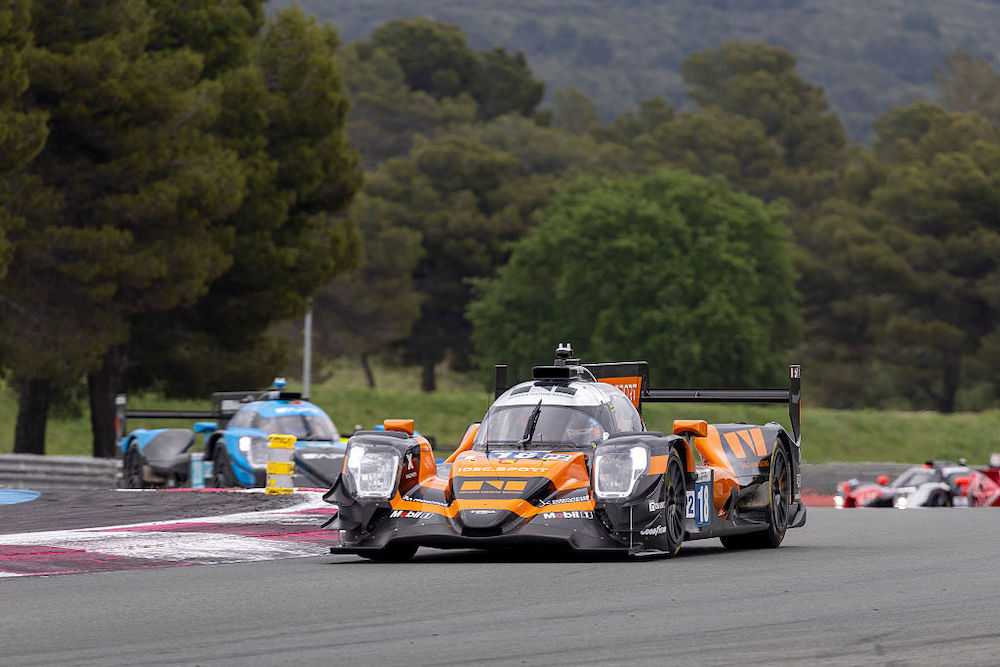
Genesis currently has two factory Hypercar drivers on its books, Andre Lotterer and Pipo Derani, and they will have company soon. However, the performances from Daniel Juncadella and young Mathys Jaubert in particular, during the ELMS races at Barcelona and Paul Ricard, will surely make the powers that be think twice about filling the remaining spaces on the WEC roster quickly.
"We should have two more drivers to announce fairly soon,” Abiteboul teases. “Obviously, the intention is to have six, or even seven, with one in reserve by the end of the year.
"We have options on our three drivers currently in the ELMS (Dani Juncadella, Jamie Chadwick, Mathys Jaubert), but these options could be either this year or the following year.
Juncadella, Chadwick and Jaubert are having a season-long audition for a future Hypercar ride in IDEC's LMP2 in the ELMS. Laurent Cartalade/Getty Images
"We'll continue to recruit at a pace without rushing it, because we don't want to have six drivers right away; that's pointless. There are many good and very competitive drivers, but we still need experience.
"We have that with André; he and Pipo form a duo that works extremely well; it's a joy to watch them develop. They're having a blast, and I feel that this impatience to be able to race together is growing. I'm enjoying this, building this team on a human and driver level."
Just how likely is it, for instance, that we will see 20-year-old Jaubert, a newcomer to prototype racing, in a GMR-001 next year? He has the look of a true diamond in the rough, after immediately showing off his ability to deliver quick laps in qualifying and withstand pressure late in races.
Would another head-turning performance at Le Mans next month - when he will race in LMP2 with IDEC Sport alongside Chadwick and Lotterer - be enough to tempt Genesis to slide a factory contract over the desk?
"Let's give him time,” Abiteboul stresses. “Let’s not let ourselves be put in his head by telling him he should do this or that. Endurance isn't a sprint. The same goes for a driver's career and development. They need to take a long-term approach.
"Right now, our thoughts for Mathys are that it's good that he's racing in LMP2 and ELMS this year.
"He probably won't do it again next year. Maybe he'll gain some experience in LMDh, and then in 2027, we'll see what happens. There's no rush!”
There’s no immediate rush with the IMSA side of the program, either.
Genesis' North American effort is set to come on song in 2027, which gives everyone involved a bit of breathing room. That’s not to say it’s all on the back burner, though, as we are likely to hear a lot more in the not-so-distant future when the partner team for the endeavor is signed up.
The overarching question is whether or not the 2027 Rolex 24 Hours is a realistic target for the debut of the GTP effort. When asked about the plans forming, Abiteboul hints that making the season-opener is not a given.
“The IMSA program will be with the support of another team that will help us, probably with some local people as well," he says. "I want to give us that flexibility because, first, I want to see the car's competitiveness, that everything is under control, that the system is verified, with the right drivers.
"The next thing is to make sure I make the right choice in terms of partner selection. These things take time. And when I see the level of excellence in execution between Penske and Porsche, especially in the United States, I know the level is very high. We don't want to be like the others, we want to be like Penske and Porsche.
"That's why I want to make sure that when we go to IMSA, we'll be able to do what they accomplish. So if it takes a few months to get into the championship, I'll do it.
"I think that our partner selection will be in the summer of this year to give them an opportunity to ramp up the investment, the recruitment and so on. I think we're talking about a six-month window that will extend from the end of '26 to sort of the second quarter of 2027.
"We want to give ourselves a bit of flexibility where we can, and IMSA entry timing is one of these."

Stephen Kilbey
UK-based Stephen Kilbey is RACER.com's FIA World Endurance Championship correspondent, and is also Deputy Editor of Dailysportscar.com He has a first-class honours degree in Sports Journalism and is a previous winner of the UK Guild of Motoring Writers Sir William Lyons Award.
Read Stephen Kilbey's articles
Latest News
Comments
Comments are disabled until you accept Social Networking Cookies. Update cookie preferences
If the dialog doesn't appear, ad-blockers are often the cause; try disabling yours or see our Social Features Support.