Images courtesy of McLaren
McLaren's Hypercar project gains momentum
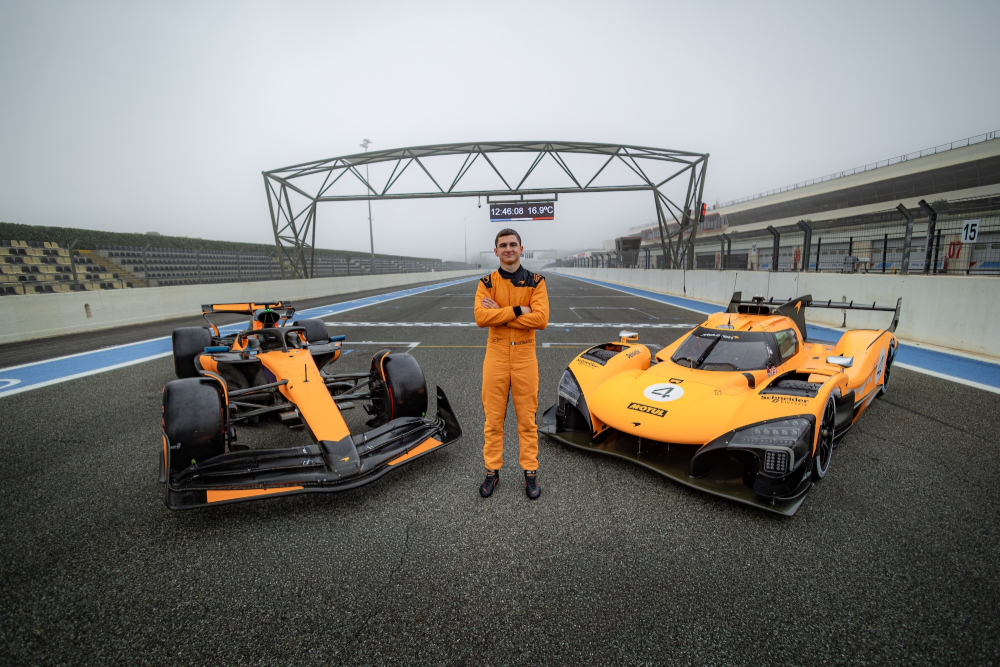
McLaren Racing’s FIA WEC Hypercar program is moving ahead rapidly, following news that its MCL-HY LMDh completed a successful shakedown at the Autodromo Riccardo Paletti in Italy and that Laurens Vanthoor has joined the driver lineup.
The next few months will be critical as the manufacturer and its race operations partner, United Autosports, dive deeper into the testing program and ramp up preparations ahead of the car’s global race debut next season.
The two-day test in Italy marked a major milestone for the project, and according to program boss James Barclay, it will live long in the memory. “You can see me smiling because it’s a really big milestone,” he told reporters earlier this month at Spa.
Factory driver Mikkel Jensen and McLaren driver development program member Gregoire Saucy shared driving duties, overseen by a large group of team personnel and key supply chain partners who were on-site to witness the historic first run.
“When projects like this start, you lay your plans out, and you have a timeline, and you don’t know what curveballs you’re going to get in that process, right?” Barclay reflected. “And, of course, there’s always a curveball in the supply chain. All sorts of things can happen.
“So to complete the rollout on the week we planned, the start of the week we planned, the fourth of May, was a really fantastic achievement from the team. I’m really pleased because it’s not easy to do. It takes a lot of discipline, a lot of management. And as planned, just after nine o’clock, we rolled out on track.
“The car rolled out on EV, the internal combustion engine fired up, and we did our first lap. It was very special. I’ve got it on my phone, and it’ll be a memory I keep with the rest of our team for a long time. It’s nice to see a McLaren top-category sports car back on the track.”
When fully staffed, the program will include just under 100 employees, with only a handful of positions left to fill in the next few weeks.
“There are a few final roles to fill in, but in terms of the core structure of the technical side and the operation side, they operated on site like a team that had been working together for some time now. That’s actually one of this week’s successes (during the rollout),” Barclay commented.
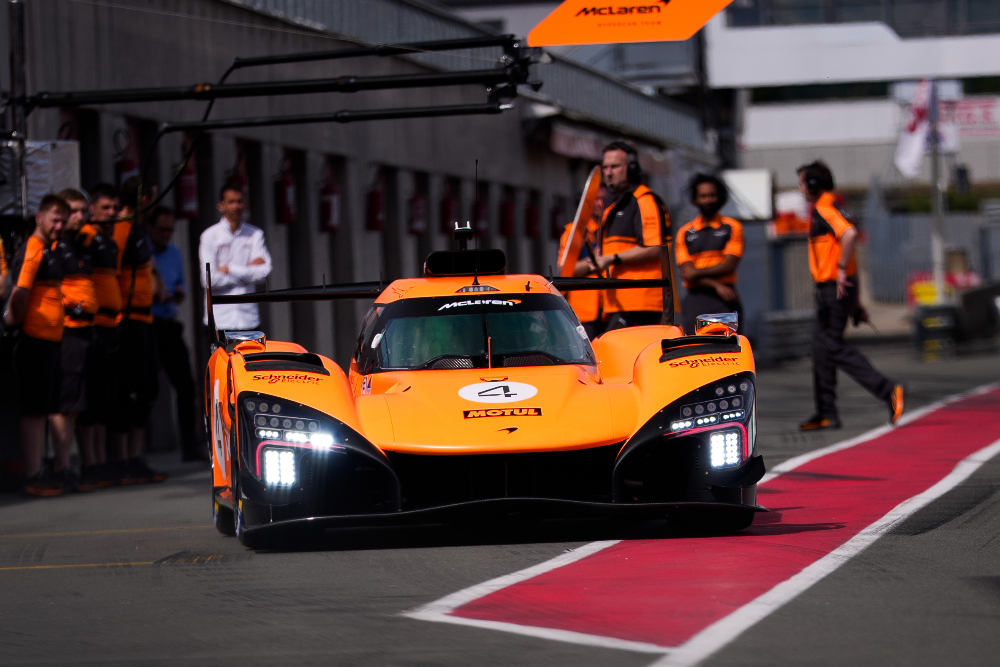
The roll out of the MCL-HY comes as McLaren finalizes its full Hypercar team.
Despite weather interruptions during the two-day shakedown, Barclay said the team still managed to gather valuable early data.
“These cars are really complicated,” Barclay added. “We heard about some of our competitors having very difficult rollouts at the start of their programs. So we had a long to-do list to get through, which we did. We had a bit of rain on day two, but that was the only tricky thing. We got to full power laps on both days, and that was the big goal.
“Nothing was leaking, there were no show-stoppers, no major hardware failures, we didn’t have any of that, so it’s really positive.”
With the initial shakedown complete, testing mileage is expected to increase rapidly over the coming months.
The testing schedule — in which the Dallara-based MCL-HY will be put through extensive running across Europe and the Middle East ahead of homologation — has already been mapped out, with all circuits booked.
The calendar includes a mix of WEC venues and non-championship circuits that still provide valuable testing opportunities, such as Portimão. The team also has contingency plans in place if the Middle East remains a risky prospect through the end of the year.
“This month, we do our straight line testing, then we do our first full track test in the last week of May,” Barclay revealed.
“It’s a good test calendar, and our plan now is to get through that long road ahead. We had normal tests, two, three, four days, then we will have an endurance test as well this year. We have a lot of miles to do.”
A second test chassis will eventually be added to accelerate development, though only after the car reaches homologation specification to avoid investing resources in parts that could later become obsolete.
Additional drivers will also join the effort later this year, including Ben Hanley, Richard Verschoor, newly signed star Laurens Vanthoor, and other full-time drivers who have been signed but not yet announced as part of the lineup.
Why involve driver development program talent during such a crucial phase?
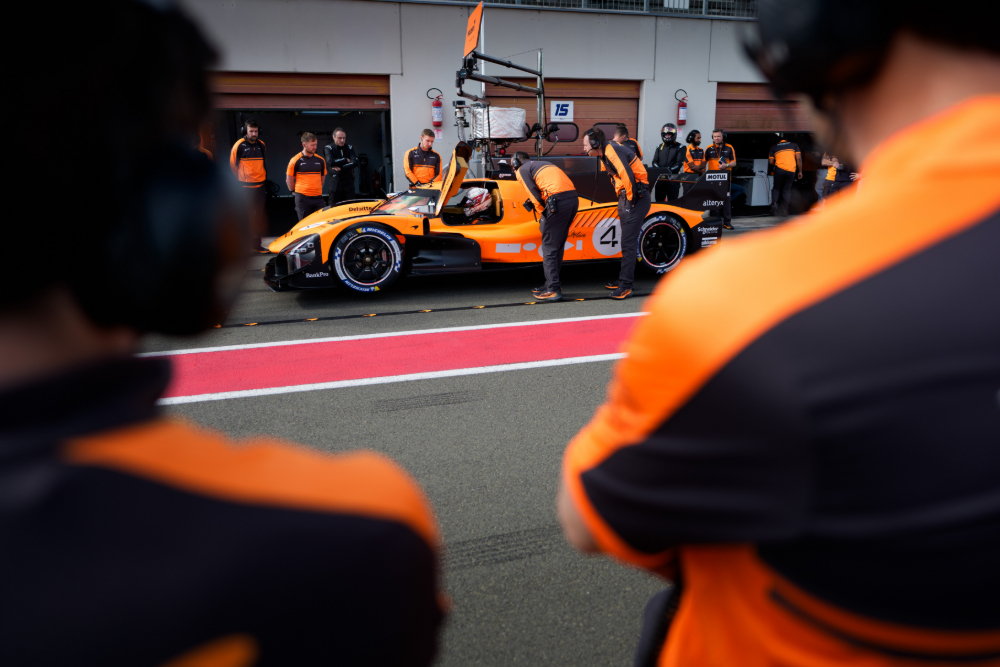
Mikkel Jensen, as well as the team's young drivers, have been getting a taste of the car.
“We’re not here for one year or two years; it’s a longer-term view from our perspective. So having drivers around us at a younger point in their career is a positive long-term,” Barclay noted.
“If you want a full lineup of experienced Hypercar drivers, you can’t have them for the test program because they have other contracts. So it’s a combination of ones who can join us, like Mikkel, but also young drivers who have an opportunity to be with us in the future.”
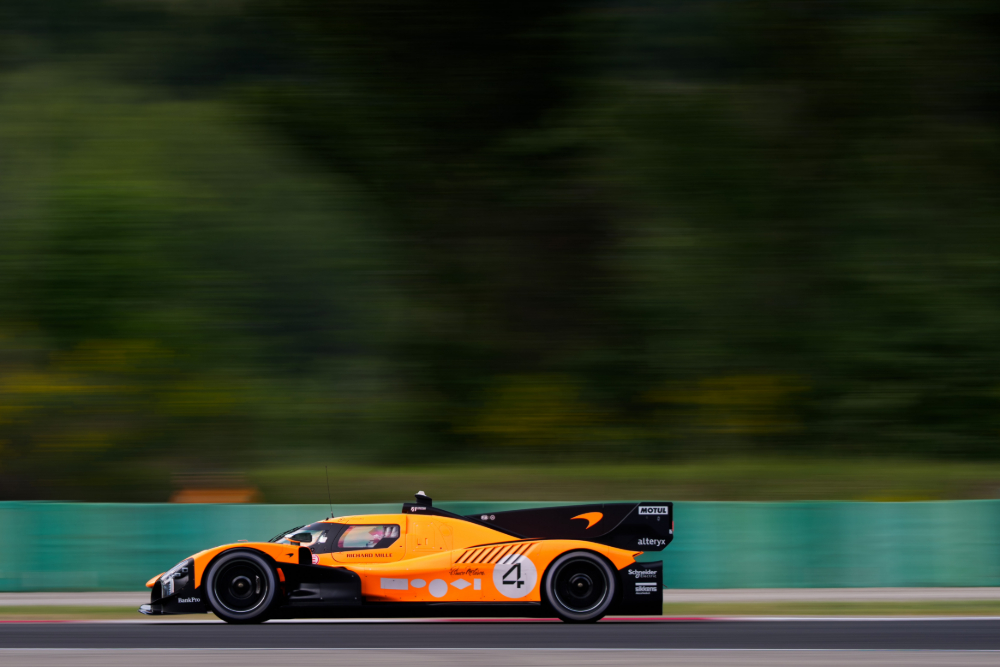
One of the biggest talking points from the rollout photos and video footage was the MCL-HY’s aerodynamic design, which had clearly evolved significantly from the original show car unveiled at Le Mans last year.
The car now carries a much more recognizable McLaren identity, especially at the front end. But the styling revisions are expected to improve and raise the car’s performance potential, too.
“It was a fantastic job in a very short timeframe to create the concept, which we unveiled,” Barclay said. “The concept had DNA elements, then it was about performance as a priority, and working with our McLaren Automotive partners in the design team. One of the nice things is you have to show the DNA in your car, you can’t just make a car that looks nothing like your brand DNA.
“There’s always a complete alignment on performance being the priority, then bringing the styling side along. I think we’ve achieved both. The styling side is clearly McLaren; the ACO were very happy. Some things might evolve, but what you see is clearly a McLaren, with a DNA to it, and performance-wise, we think we have a great starting point.”
Much of the car’s ultimate performance, though, is produced beneath the bodywork. McLaren has partnered with Autotecnica Motori to develop its twin-turbocharged V6 powertrain.
For many observers, the Italian engine builder was an unexpected choice, but Barclay believes the partnership is already showing strong potential.
“We had lots of options when it came to the engine,” he concluded. “We looked at the overall, global picture of the car. How do we think we’re going to get to the best overall package for the car? We wanted an engine which would have the attributes you wanted, packaging, positioning in the car, weight, all those factors, efficiency.
“So we started with an architecture engine, which, which ATM had. And to be honest, together we’ve developed it. So it’s an all-new engine. This is not an engine they had. We were jointly developing it. We’re still developing it. That’s been a really enjoyable process. They’re super open-minded in how they’re doing this with us.
“We’ll homologate a really bespoke McLaren solution, but with the background expertise of ATM, with a core 2.9 liter twin-turbo V6. That’s where we should end up unless we want a drastic change (to capacity).”

Stephen Kilbey
UK-based Stephen Kilbey is RACER.com's FIA World Endurance Championship correspondent, and is also Deputy Editor of Dailysportscar.com He has a first-class honours degree in Sports Journalism and is a previous winner of the UK Guild of Motoring Writers Sir William Lyons Award.
Read Stephen Kilbey's articles
Latest News
Comments
Comments are disabled until you accept Social Networking Cookies. Update cookie preferences
If the dialog doesn't appear, ad-blockers are often the cause; try disabling yours or see our Social Features Support.