Motorsport Images
Herta McLaren F1 testing could lead to practice outings
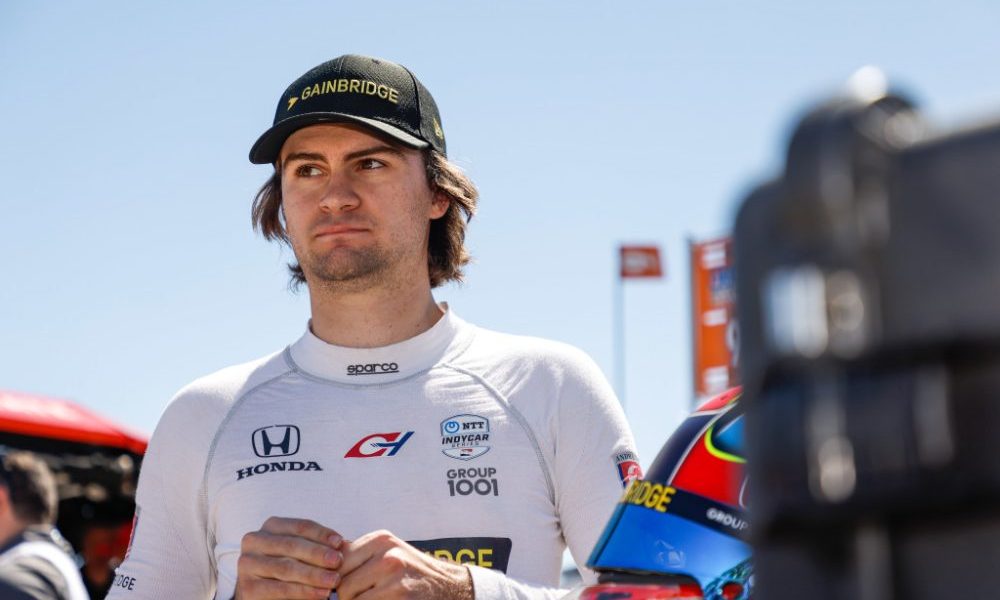
Colton Herta’s testing schedule with McLaren makes him part of a selection process to see if he is the right fit for an FP1 outing later this season.
All teams must run a rookie driver – one that hasn’t started more than two grands prix – in free practice on two occasions this year as part of a new regulation. Williams was the first to confirm one of those with Nyck de Vries driving at the Spanish Grand Prix.
Herta is going to undergo a testing program with McLaren in a 2021 car after some simulator work in the factory, and team principal Andreas Seidl says the team is working out who should fulfill its quota.
“As you know, on the F1 side this year we’re obliged by the regulations to test young drivers two times in free practice,” Seidl said. “That’s why we have kind of a selection process in place about who we actually want to give the chance to be in the car for these two free practice sessions.
“In order to make this selection we have now for the first time this year the possibility to use the TPC (Testing of Previous Cars) car to give young guys a chance to show what they can do in our Formula 1 car. We invest some time as well in order to prepare them as well as possible for this testing and then we will make up our minds who in the end gets the free practice sessions.”
However, Seidl insists the likes of Herta or Pato O’Ward are not being lined up for a future race seat, with Daniel Ricciardo’s place with the team secure in his view.
“In parallel it’s also clearly independent of the nationalities – in terms of driver line-up, we have a driver line-up in place, we have contracts in place, we are very happy with the driver line-up we have and that is pretty much more just to fulfill the regulations this year.”
And Herta himself agrees that he will need to gain an understanding of how an F1 car works before he can even be considered for an outing during a race weekend, with his next step being some simulator work and a seat fit at McLaren following similar experience at Alfa Romeo last year.
“I need to understand the difference in driving style and what the tires need, not only just in getting one lap out of it but for the races it’s very different,” Herta told RACER. “Especially with the energy recovery system and how you deploy that and save that, how that affects engine braking and overall just feeling of the race car. It’ll be cool to see.
“The good thing is for the longest time F1 cars were so different to IndyCars as far as weight and so the feeling of the car would be very different, whereas now they’re very close. Even some of the IndyCars are lighter than some of the F1 cars once you get fuel and a driver in them.”
Chris Medland
While studying Sports Journalism at the University of Central Lancashire, Chris managed to talk his way into working at the British Grand Prix in 2008 and was retained for three years before joining ESPN F1 as Assistant Editor. After three further years at ESPN, a spell as F1 Editor at Crash Media Group was followed by the major task of launching F1i.com’s English-language website and running it as Editor. Present at every race since the start of 2014, he has continued building his freelance portfolio, working with international titles. As well as writing for RACER, his broadcast work includes television appearances on F1 TV and as a presenter and reporter on North America's live radio coverage on SiriusXM.
Read Chris Medland's articles
Latest News
Comments
Comments are disabled until you accept Social Networking Cookies. Update cookie preferences
If the dialog doesn't appear, ad-blockers are often the cause; try disabling yours or see our Social Features Support.