Robin Miller’s Mailbag for April 7, presented by Honda Racing / HPD
hpd.honda.com
and on social media at@HondaRacing_HPD
and https://www.facebook.com/HondaRacingHPD.Questions for Robin can be sent to millersmailbag@racer.com. Due to the high volume of questions received, we can’t always guarantee that your letter will be printed, but Robin will get to as many as he can. Published questions have been edited for clarity. Views expressed do not necessarily reflect those of RACER or Honda/HPD.
Q: I just talked to IMS and was told that fans will be allowed in the Turn 2 mounds for next week's open test. Great news! No info on times yet, though. My questions: Do you have any idea as to how many teams and/or drivers might be participating in this? Any idea about how many have typically shown up in the past? I plan to be there both days. Thank you for any information you can provide.
Ken E., Bloomington, IN
RM: Actually that’s not true: it’s been decided there will be no spectators allowed at the test because IMS doesn’t want to do anything to jeopardize May. Peacock will show all 32 drivers practicing on Thursday and Friday, and it’s $4.99 a month.
Q: So NASCAR has had seven races so far, IMSA has had a couple, Trans Am at least one, heck even the Aussies in Supercars have had four races at two venues. Why is it IndyCar can't at least have one race that allows it to get some market visibility early in the year? Seems silly that it starts so late. This could also have something to do with lack of interest when it does start racing. All we hear about is IndyCar testing here and there, while other series’ seasons are well under way. Then the IndyCar season ends so early compared to other series. Maybe this is something it needs to address sometime in the future?
Mike from Springboro, OH
RM: There is no doubt that IndyCar’s six-month hiatus hurts any kind of momentum and makes it hard to follow the series, but starting earlier presents its challenges. Phoenix was always a good March opener but we saw the lack of response IndyCar generated from 2016-18, and St. Pete usually opens in March but has had to adjust this year for the pandemic. Finding a warm climate with a willing promoter isn’t easy and there aren’t a lot of options. CART opened the season in Australia for years in March, but because of the time difference for television it was a pretty well-kept secret, and Miami (street race) was a big hit before being moved to Homestead, which eventually died on the vine except for stock cars. IndyCar isn’t going to run Phoenix, Las Vegas or Homestead, and with Fontana’s reconfiguration that would be a long shot too. NASCAR took IndyCar’s place at COTA (another March date), and right now all of IndyCar’s best draws have established dates (Long Beach in April, Road America in June, Mid-Ohio in July, Gateway in August) that are working and are not about to change. Finding someone to take a flyer on an IndyCar race in January or February is a tough ask.
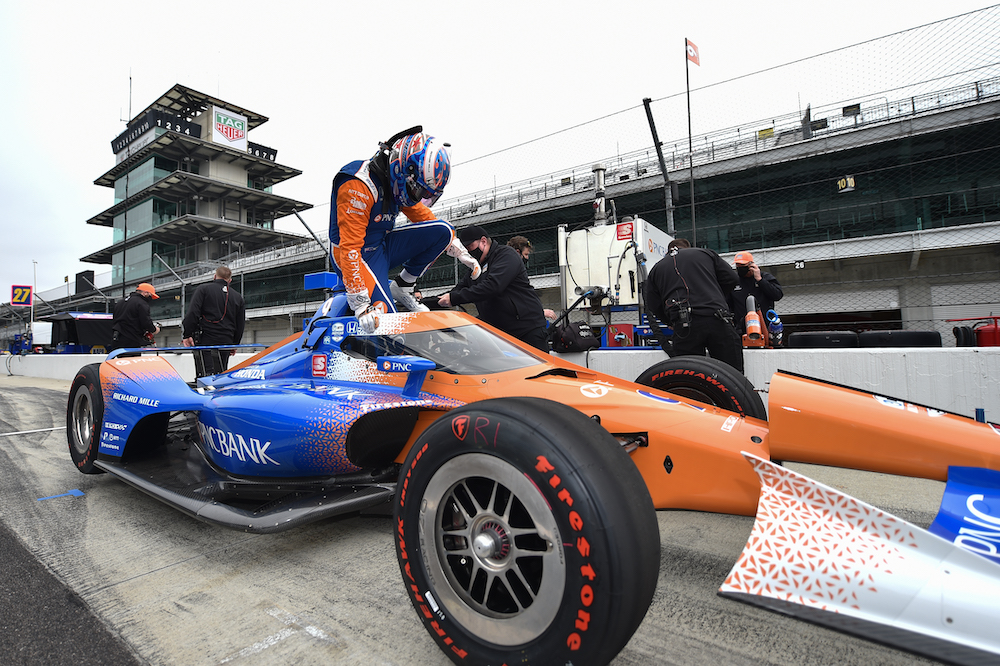
The only seats with butts in them at this week's Open Test will be the ones in the cars. Chris Owens/IndyCar
Q: Before you get all defensive about IndyCar, just remember I am one of the few (fans) still left. But I have been humored by your defending the status quo of this series when it is obviously dying on the vine! A racing season that starts too late and ends too early. Poor sponsorships and broadcasting partners. Antiquated rules and procedures like ending races under yellow. Strung-out single-file restarts kill any track competition drama, and leave it to horrible broadcasters to try making it up!
I thought Roger Penske would bring about positive change, but because one of necessities for fixing the patient that is on life support is speed, and because I haven't seen much of that yet (except talk of jumping on NASCAR's coattails) I am not as optimistic as you. Matter of fact, another year without butts in all the seats and the pending disastrous TV deal, I see the same fate for this series that has befallen so many of the local dirt track series across this country.
Don C.
RM: I think the fact 23-26 cars will be at every race, sponsors didn’t abandon ship after the pandemic (there are actually a few new ones) and the competition remains as good if not better than ever before are three major positives for IndyCar. And NBC having nine races on network is above and beyond anything imaginable with IndyCar’s ratings, so I don’t know how you can say "poor broadcasting partner." NBC has promoted IndyCar better than anyone ever has, and just pray they stick around. No doubt IndyCar could use a couple more solid venues and a title sponsor that puts cash into the Indy 500, but all things considered the series is a helluva lot better off than people envisioned a few years ago.
Q: I've read your piece about Push to Pass in the Indy 500, and as much as I agree with Scott Dixon that Indy should be the toughest race on earth, I don't understand why P2P would be a bad thing. It would add a layer of strategy while keeping the challenge of the 500. They raced with Push to Pass in the 2010 and 2011 500, and the races were still as good as others.
Michael, France
RM: Like Dixon said, you use your experience, adjustments and the draft to move up or pass cars at Indianapolis, and the last thing it needs is an artificial boost to make it easier.
Q: Surely someone had to ask: should IndyCar take a hard look at dirt after the NASCAR success? And don't give me the crap about how the current car couldn't do it. If there is money to be made, people will always find a way. Our current audience is so small that a special race could be run with old IRL cars and the average person would not have a clue. Look what Tony Stewart was able to do with the truck race at Eldora. Or, go back to his Prelude to the Dream race. Those events had more people watching than majority of IndyCar races.
That exposure is valuable, and if done in the Midwest, could be run any night of the week. Yes, it’s a gimmick, but it’s popular with old and new fans. It was the talk at work this week. Some liked it, some did not, but guess what, they all watched! It might not come across the Nielsen numbers because there are so many different ways to watch, but that race was talked about more than the NCAA games that played that evening. There was so much talk I had to go and find a replay of the race.
Turn 3
RM: You’re right, it worked, because I watched every lap and so did three million other people, which was a damn good number for a Monday afternoon race. But you can’t be serious about old IRL cars on the dirt? Somebody has to buy them and try and make them raceable for dirt (no chance), and then you need a promoter. But first you need the IndyCar owners to sign off, and that’s not going to happen. I think Power, Rossi, Newgarden, Dixon and several drivers would be game to try a midget at a real dirt track, but why? IndyCar has a format with four disciplines that rewards versatility, and while it may not be very popular, it’s authentic. A dirt race is just a gimmick. Maybe have one in the wintertime indoors, or rent a fleet of cars to go to Tulsa, but nobody has the time, interest or money to concoct an IndyCar dirt race. That horse left the barn in 1970.
Q: What is with this idea of racing on dirt with cars that are not designed to race on dirt? Oh, that's right... gimmicks to increase attendance and viewership for TV ratings. Didn't see any of it but read about the disaster that followed, and how NASCAR screwed Tony's Eldora track, a natural dirt track, not one built upon a concrete surface. All these Johnny-come-latelys to NASCAR thought it was a great show. Hey, they missed a generation of great shows when they really ran on dirt tracks, smaller tracks and not those cookie- cutter mile-and-half tracks built to sell more tickets. I gave up on NASCAR a long time ago. Haven't seen a race in years... boring! The heyday of dirt racing in NASCAR was killed a long time ago by NASCAR, and it can never duplicate what it decided was no longer needed.
Now I see IMSA wants to run its five classes on dirt with jumps and whoop de dos designed by motorcross wizard Ricky Carmichael. Stay on two wheels, bud. IMSA is by far the best competitive racing that you will ever see without dirt. And IMSA wants to use the dirt race as a preview to the 24 hours of Daytona and use the finishing order to determine qualifying for the 24 hours. Are they nuts? Why are these sanctioning bodies changing things that aren't broken? Oh, right... $$$$. If you want to see dirt racing, get off your lazy duff and go and see and support your local racing tracks. I would suggest making the trek to Williams Grove. Now that's real grassroots racing for about $25. Surely IndyCar isn’t thinking about the dirt?
John Tobias
RM: I think a lot of us geezers long for those old days of dirt racing (Hoosier Hundred, DuQuoin, Springfield, Sacramento) when it was part of the Championship Trail, and obviously it was a big part of NASCAR’s early days. But you can’t go back. To hear people rave about the great dirt show at Bristol was laughable; they’ve obviously never seen a real dirt race. I hadn’t heard that IMSA plan. (ED: It might be significant that IMSA made that dirt announcement last Thursday – April 1st…)
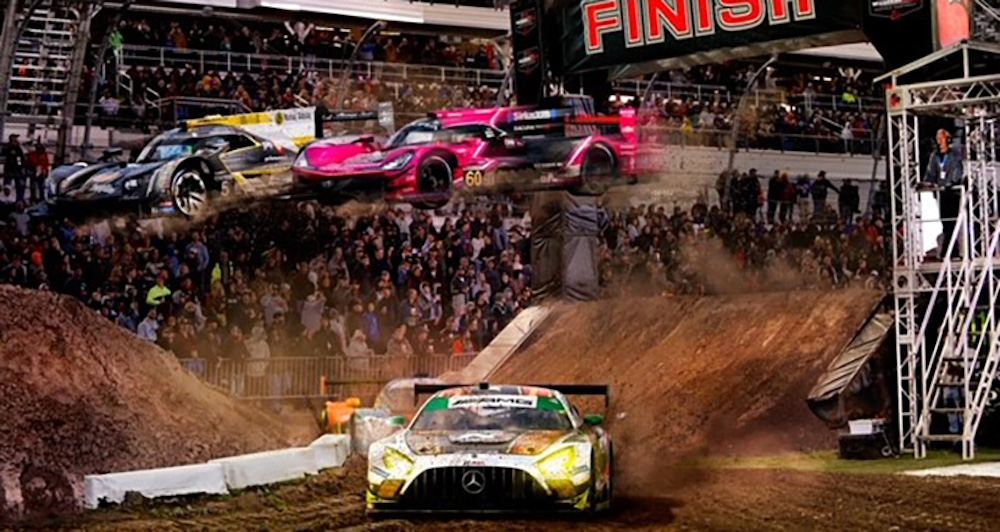
This is going to be amazing. Image via IMSA
Q: I remember seeing The Captain at Terre Haute in 1973 hurrying to look over the first turn wall where his Indy Car driver Gary Bettenhausen had tumbled his sprint car. Fortunately, Gary B was unhurt. It was the one and only time I saw Roger at a dirt track over the decades. Mr. Penske, to the best of my muddled recollection, never drove a race on dirt during his driving career, and in his long and sterling stint as a car owner, first competed on dirt this past weekend at Bristol when Joey Logano put the Pennzoil car in the winners circle. Please enlighten me, Robin, as my browser has not.
David Abbey
RM: R.P. was the grand marshal at the Chili Bowl a few years ago but I don’t believe he ever owned a midget, sprinter, dirt car or dirt modified. Or drove on the dirt. He might have sponsored Gary B. in USAC, but I don’t recall seeing any signage so I think Logano’s victory was his first on the "dirt" and I use that term very loosely.
Q: As an avid NASCAR fan (Go Hamlin!), last week's Bristol dirt race was the first time I've felt rewarded as a NASCAR fan in over a decade. In fact, it's the first time I've felt rewarded as a motorsport fan in general in over a decade. NASCAR specifically did something in line with its history rather than pursuing bad ideas that add to an already-soulless future otherwise described by those involved as "better racing." I've learned in all motorsports that "better racing" is loosely defined as "worse racing."
IndyCar is actively pursuing "better racing" as well by testing overtake options at Indianapolis, when the reality is it is a head-first dive into further degradation of Indy's soul. Historically, you've called upon those involved to answer some of the questions in your Mailbag, or even passed along ideas to those directly involved in IndyCar, so please feel welcome to pass along the thoughts of many IndyCar fans: take the P2P idea and shove it! With NASCAR returning to some of its most elementary roots by racing on dirt in Bristol, what would an IndyCar race look like if it too pulled from some of its purest fundamentals and translated it into a race?
Lucy from Toronto
RM: I think the drivers that tested P2P made it clear they didn’t think it was a good idea for Indy down the road, but as far as a dirt race for Indy cars, it makes no sense. Other than Ed Carpenter, none of the drivers have any USAC roots and I doubt the turnout/ratings could justify the expense. And NASCAR’s show at Bristol could hardly be classified as a dirt race, but it drew a lot of attention so it worked.
Q: I know you get asked all the time about predicting the future, but I have a couple of questions. If you were to guess, how many fans will be allowed at Indy? And which race or races will not take place on the 2021 schedule due to COVID?
Rick, NY
RM: I’d say between 100,000-200,000 at Indy, and Toronto would be the one race of concern since Canada just instituted another lockdown.
Q: If the Texas race on Saturday gets rained out, will it run two races on Sunday? If so, I assume the track will honor the Saturday tickets on Sunday. Will the people with Saturday tickets be allowed to stay for the second race at no extra charge? Or will they clear out the grandstand after the first race and make everyone re-enter the facility with their Sunday ticket for the second race?
Bob Gray, Canoga Park, CA
RM: Not really sure why you would anticipate rain, but here’s a response from the Texas boss Eddie Gossage: “It’s not going to rain. We haven’t discussed a plan. The race would be rescheduled for a date and time acceptable to everyone involved. For fans, our company has the most liberal policy in spectator sports, the Speedway Motorsports Weather Guarantee: Fans with an unused, eligible ticket will have 60 days from the original race date to request a ticket credit on a qualifying future event. The credit must be used toward another Speedway Motorsports event within one calendar year of the original race date or the same event the following year, even if it takes place beyond the one-year mark. Certain restrictions may apply.”
Q: All the recent dirt track talk has got me thinking about IndyCar/open-wheel on the dirt and USAC in general. About 10 years ago there was a lot of talk about a new USAC "Gold Crown" series. I believe it was asphalt ovals only, the car specs looked great, no downforce, 800+hp, and would run on 1.5-mile tracks. There were chassis makers lined up. What happened to it? With the "flat everywhere" IRL cars at the time, these things were going to be the polar opposite and exactly what was needed, and still is now. You know people in high places, Robin -- have a word, would you?
Also on dirt tracks, Like NASCAR, IndyCar stopped on the dirt 50 years ago, I’m told. As much as I’d love to see a return, I guess there is too much of a car change required. But, back in the late ’60s up to the ’70s, were there any rear-engined Lotus-esque Indy cars that ever ran on dirt?
Julian C.
RM: That new Gold Crown era was a brainstorm by Bill France Jr., and he convinced USAC they’d be partners and put on the preliminary show to a NASCAR truck or Xfinity race, and they’d all live happily ever after. Well, the cars were death traps that thankfully didn’t kill anyone, the fields were slim and attendance non-existent. I recall one race started at 3:30 in the afternoon on a Friday in front of the ushers. USAC got flim-flammed. Mario ran his Brawner/Hawk at Pikes Peak and won in a rear-engine car in 1969, while Lloyd Ruby tried to qualify his rear-engine Mongoose at the Hoosier Hundred in 1968 but failed to make the show.
Q: I read the news that NASCAR executives have been in talks with cities like Chicago about a potential street race within a few years, and the possibility that the upcoming NASCAR iRacing Invitational on a Chicago street circuit design could be an indication that talks are possibly moving forward about a real-life street race for NASCAR. If that indeed did come to fruition, what odds might you give Penske that he figure out a way to add IndyCar to that weekend show?
Kevin P.
RM: I have no idea, but obviously NASCAR is pulling out all the stops -- adding road courses, dirt races and a street race would be next. I imagine if there was a way to fit both series in, R.P. would explore it.
Q: I know there is a lack of ovals on the IndyCar schedule. Is there any news or rumors of Kentucky Speedway getting back on the schedule? I think this venue would be a natural fit, and with the talent in IndyCar, it would fill up the stands with Indy 500 fans. What is hindering returning back to that venue?
Joe Stieglitz
RM: None. The hindrance is desire to host an IndyCar race on an oval.
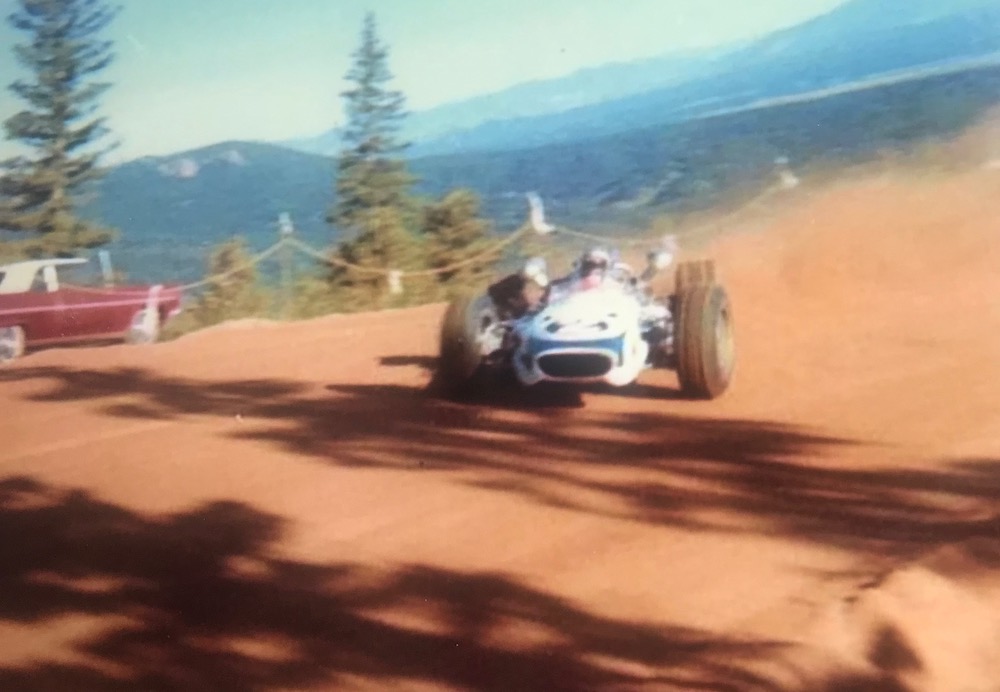
Mario kicks up some dust en route to victory at Pikes Peak in 1969. Apologies for the image quality, but this is awesome. Image via Robin Miller
Q: I’ve been waiting for a good book on the CART-IRL split. (I was hoping you’d write one). Is Indy Split going to be a good one? I was wondering if you knew anything about it.
Bob R.
RM: It was written by John Oreovicz and it’s a damn good read, and it brings back some really sad memories of how crazy, greedy and short-sighted people behaved and why it cut open-wheel racing to the bone. It’s available at Octane Press.com.
Q: Good to see Bill Benner being quoted reliving the upset by Duke over UNLV in the Star. In your media career, what was the biggest upset in the Indy 500 and why? And I don't mean A.J. being upset with you.
Dave O'Brien, Greenwood, IN
RM: I guess Arie winning in 1990 since he’d never won a race before, or Buddy Rice in 2004 because he’d never won either and wasn’t real well-known outside the Formula Atlantic paddock. You could probably include Dan Wheldon in 2011 because it was a one-off effort, and Big Al in 1987 since he threw a show car in the race, started 20th and got lapped twice by Mario.
Q: I was recently watching some old footage of Murray Walker and him being interviewed about the best driver ever, and he said that while it’s almost impossible to choose because of differing circumstances, he thought it was probably Michael Schumacher or Fangio. I was also watching the multi-part YouTube series you did with Bell Helmets and Dan Gurney, where you called him one of the top four drivers ever.
So my question (and I’m sure you’ve been asked this a million times) is, who do you think some of the greatest drivers ever are, and is it even a fair question to ask? As an F1 fan my heart always says Senna, but while he was probably the best F1 driver (at least to me) it’s hard to make a comparison between a specialist like him and someone like A.J. or Mario who raced everything under the sun. How can you compare across the disciplines of open-wheel, stock car, sprint car, sports car, prototype, oval, street, off-road, road, dirt, endurance, modern, roadster, early aero, ground effects, etc.? This debate will rage on until the end of time, but I’d love to get your take on it.
Max Camposano, Bethlehem, PA
RM: Of course it’s fair and it’s one of motorsports’ longest-standing arguments, but you answered your own question. How can anyone think Schumacher or Senna or Hamilton was better than Jim Clark? Or Jackie Stewart? Or Fangio? I picked A.J., Mario, Parnelli and Gurney as my Mount Rushmore because of their diversity and successes, but who’s to say Al Unser doesn’t belong? He won in Indy cars, dirt cars, F5000 cars and USAC stock cars. AJ Watson said Troy Ruttman, Vuky and Parnelli were the three best he ever saw at Indianapolis (not in any order), but not everyone had the opportunity (or took it) to run F1, NASCAR, sports cars and USAC. How much of the success nowadays is driver compared to the ’50s or ’60s or ’70s before all the aerodynamics? There is no right or wrong answer, it’s a subjective debate, but it’s hard to argue against Mt. Rushmore.
Q: In your commentary on RACER.com on March 29, you totally ignored the best Indy 500 on record – the 2013 race won by Tony Kanaan. There were 68 lead changes between 15 drivers, 133 consecutive green flag laps. Only five cautions for 21 laps. Nineteen cars finished on the lead lap. A record number of cars finishing/completing the most miles for the field. The final pass for the lead came two laps from the finish. Twenty-one individual records set in the race. All that while setting an Indy 500 mile record average speed of 187.433 mph, which still stands. Why did they change the rules after that? That was eight years ago, but there might be something worth looking at to get the cars back to where they were then.
Ron Rose, Peoria, AZ
RM: Mike Hull is always kind enough to help me answer questions out of my strike zone, and today he’s given us a history lesson that I intend to copy and paste for further use:
“Talked with the engineering group yesterday about your reader’s question about racing at the Indy 500 now eight years removed; here’s a long version/summation:
“There are basically three things at play – aero configuration, track grip, and tires. The three act together to balance the mechanical and aerodynamic grip at Indy. Weather, car weight, engines, and other things have an effect too. The rules were pretty similar for 2012-2014: the DW12 aerokit with the bumper pods and beam wings in the rear. 2014 was not as good a race as 2013, but still pretty good as far as passes, cars on the lead lap, etc.
“In 2015 the manufacturer aerokits began, and while that was an amazing technical development time, it really did not improve the racing. During this period two other important things were happening, and the aerokits probably masked them. First, the track was getting older. As tracks age they lose mechanical grip as the surface gets more polished. The second thing is that materials for tires were being more regulated, especially exotic materials. We don’t know the details, but OSHA and other regulatory agencies worldwide clamped down on some of the chemicals used to make tires. It took a while for the tire manufacturers to develop compounds that regained the lost grip and durability, and some probably never came back.
“IMS was last repaved in 2004, then it was ground in 2005. Grip was very high those years, but tire wear was extreme. Most probably remember the Formula 1 tire debacle of 2005. Other than some local grinding, little was done to the track until recently. It seems by 2013 the track was in a good balance of grip and tire wear (at least for IndyCar). The diamond grooves were still there, but the sharp corners seem to have been knocked off just enough, leaving a surface that had good grip, but did not destroy tires. Since then, the track grip has gone down a little each year. This probably isn’t evident from the outside, but the engineers can see it in the tire wear and temps as well as in the amount of downforce we have to run to stay flat.
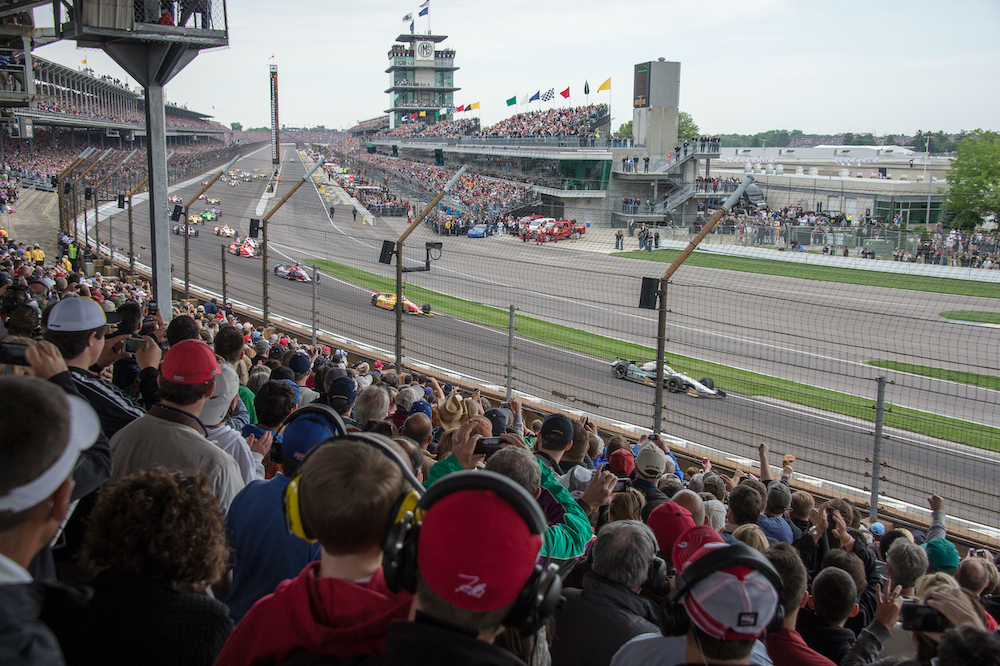
So after years of reading about A.J., Mario and Langhorne in the Mailbag, we now learn that 'the good old days' were actually 2013. Image via IMS
“In 2018 the manufacturer aerokits went away, and we went back to spec aerokits. Unfortunately, the tendency of the cars to flip in certain attitudes had come up during the aerokit era, and criteria had been set to limit the rollover and takeoff possibility in different attitudes. The bumper pods had also fallen out of favor, as they did not really prevent the cars getting airborne in car-to-car accidents. The new aerokit had to pass blow-over and roll-over criteria that did not exist in 2012.
“The cars had also gotten heavier as various parts and reinforcements were added over the years. Speedway car weight in 2013 was 1550 lbs. By 2018 it was up to 1590 lbs, and for 2021 we are now at 1655 lbs (the latest big increase offsetting the inclusion of the aeroscreen). A heavier car further limits how soft the tires can be made and still have them complete a stint; it also requires more downforce to get the car around the turns. When the car requires more downforce to perform, it naturally gets worse in the dirty air. Having cars grouped together gets harder and harder as the cars get heavier and the grip goes down.
"In short, going back to 2012 is not an option, as the track is not the same and the cars have changed, largely for safety. What is needed is to add efficient downforce to increase grip while keeping speeds similar. The downforce also needs to be created so as to minimize the dirty air for following cars and also to perform well in dirty air. This is exactly why IndyCar has chosen to attack the latest aero changes by modifying the underwings. Their large surface area can create lots of downforce without making a lot of dirty air for the car behind, and is typically less affected in traffic than wings, sidepods, and other top-side aero. Without knowing race day weather, exactly how much track grip there will be, and a lot of other variables, it is a difficult bullseye to hit, but IndyCar is working hard with the team to enhance the quality of racing by making the target broader plus easier to hit.”
Q: The Pocono road course was used for professional races from 1973 to 1977: IMSA Camel GT in 1973, 1976, and 1977; Formula 500 in 1973, 1975, and 1976. I was at some of these and the crowd was small. But not as small as the World Series of Racing event you referenced. Pocono seemed to lose interest in road racing as NASCAR Winston Cup events became more popular.
David, Waxhaw, NC
RM: Thanks. Yeah, to be honest, Pocono was built for Indy cars and then NASCAR came along and road racing never figured in their equation for either. Wasn’t much of a road course as I recall, and certainly had limited viewing.
Q: I am wondering if you can provide insight on Dan Gurney. When I look at his career, it seems to me if he focused on F1 he’d have won several world championships. However, from the outside there seems to have been a lack of focus. He was in Indy, F1, and Le Mans. Can you provide some insight into his psychology to his career?
Steve, Rockford, MI
RM: If Dan had a reliable engine he would have been F1 champ in his Eagle, and he won for Porsche and Brabham before scoring his historic win at Spa. He was driven by experimenting and trying to get an edge with his cars and engines, be it F1, IndyCar, Can-Am or IMSA. That was the essence of racing, and why he became such a hero to American fans. He didn’t have a lack of focus, he just loved doing his own thing in all those categories back when racing was all about ideas and taking a chance.
Q: I've noticed more advertisements from companies large and small concerning efforts to improve the environment and reduce their carbon footprint. As an industry player engaged in motorsports, new automotive technologies -- and entertainment -- it may be timely to ask IndyCar what it is doing, or planning to do, in this regard. New types of fuel and tires quickly come to mind. What does Firestone do with all the used racing tires? Can they be recycled in some fashion? Couldn't they develop race tires that would last 250 to 500 miles, saving teams $$$ in tire bills?
Some karting and formula car series have a cap on the number of tires a racer can buy per event, typically a max of six: three fronts and three rear tires. Perhaps this concept could carry over to IndyCar, significantly reducing costs, plus the expense of trucking large volumes of tires to/from the race venues. Will racing speeds suffer from harder, longer-lasting tires? Of course, but consider the positive aspects. Fewer tires for Firestone to manufacture and bring to the tracks, teams' tire bills are drastically reduced, plus less tires to dispose of/recycle. Lastly, Firestone can promote their tires’ performance and durability over a full race distance.
David, Pittsburgh
RM: I’m told that used tires are chopped up and incinerated because it’s environmentally the best way to dispose of them. As for recycling them or making them last 500 miles, I’m no engineer but performance means a lot to Bridgestone/Firestone and the load put on those tires in an IndyCar race (especially an oval) is massive so I can’t see anything changing.
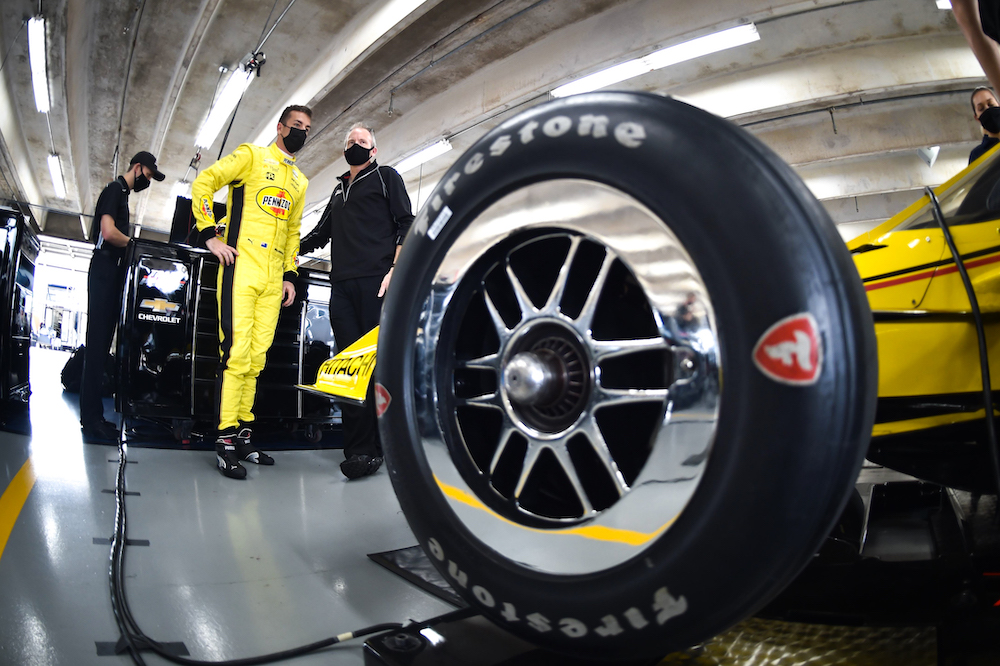
"You'll actually be using some of Helio's old tires that we found out the back." Image via IMS
Q: Thank you for your always-insightful coverage of IndyCar. Much appreciated! In your response to Duncan in Ottawa last week, you noted that "USAC sprints have always been looked at as stepladder to the Indy 500 (1940-80) and then NASCAR in the ’90s.” It seems to me that a large part of the reason why USAC sprint car success does not translate to Indy cars as it once did is that they are front-engine cars.
The shift to a rear-engine IndyCar requires a completely different driving style, whereas shifting to a front-engine "stock" car is less of a leap for a sprint car driver. USAC lacked vision in the late 1960s when it was clear that the rear-engine evolution at Indy was a permanent shift and not just a fad. It should have mandated (or at least allowed) a shift to rear-engine sprint cars, which would have helped the sprint car series continue to be a steppingstone to IndyCar. Instead, it outlawed rear-engine sprint cars, which later contributed to guys like Jeff Gordon and Kyle Larson ending up in NASCAR. Your thoughts?
Steve Summers, Jasper, TN
RM: No doubt the cars changing to rear engines didn’t benefit the USAC driver, but as long as dirt tracks were part of the USAC Championship Trail there was always going to be a place for a midget or sprint driver and most would adapt. Banning rear-engine sprinters after Tom Sneva won some races in 1974 was the final nail in the USAC coffin in terms of advancing. Steve Chassey, Larry Rice and Rich Vogler were the last bastion of USACers to make it to Indianapolis without bringing money.
Q: There was a question in last week’s Mailbag about pit lane speed limits. They came about in 1996 and 1997 after the 1996 Rolex 24 Hours sports car race. Near the end of the race, Max Papis in a Ferrari prototype was in second place and chasing the leader. He needed a late splash-and-dash pit stop. He came flying down the racing down the pit lane at 190 mph. This woke up the track owners and sanctioning bodies about the potential dangers to pit personnel and others if a car went out of control. The IRL and CART probably implemented this along with NASCAR and others in 1997 or thereabouts.
William Ford
RM: My pal Tim Coffeen remembers the pit speed limit being 100 mph at Michigan in 1993 when he was working for Nigel Mansell, and Wally Dallenbach (chief steward at the time) says it was the early ’90s.
Q: With the new Indy Split book coming out soon I wanted to look into the history of the IRL and found that they had raced at Disney World Speedway. I watched a little of the 1996 race there on YouTube and it seems like a very short oval for an IndyCar race. I also saw that it closed before I was even old enough to pay attention. Could you provide a little perspective on what it was like to see a race there, and why everyone gave up on keeping it only a few years after it opened?
Matthew, Columbus, OH
RM: The rumor was that the whole house was papered, and I can’t recall who paid for the track but I assume it was the IRL. It was just another short oval, nothing special.
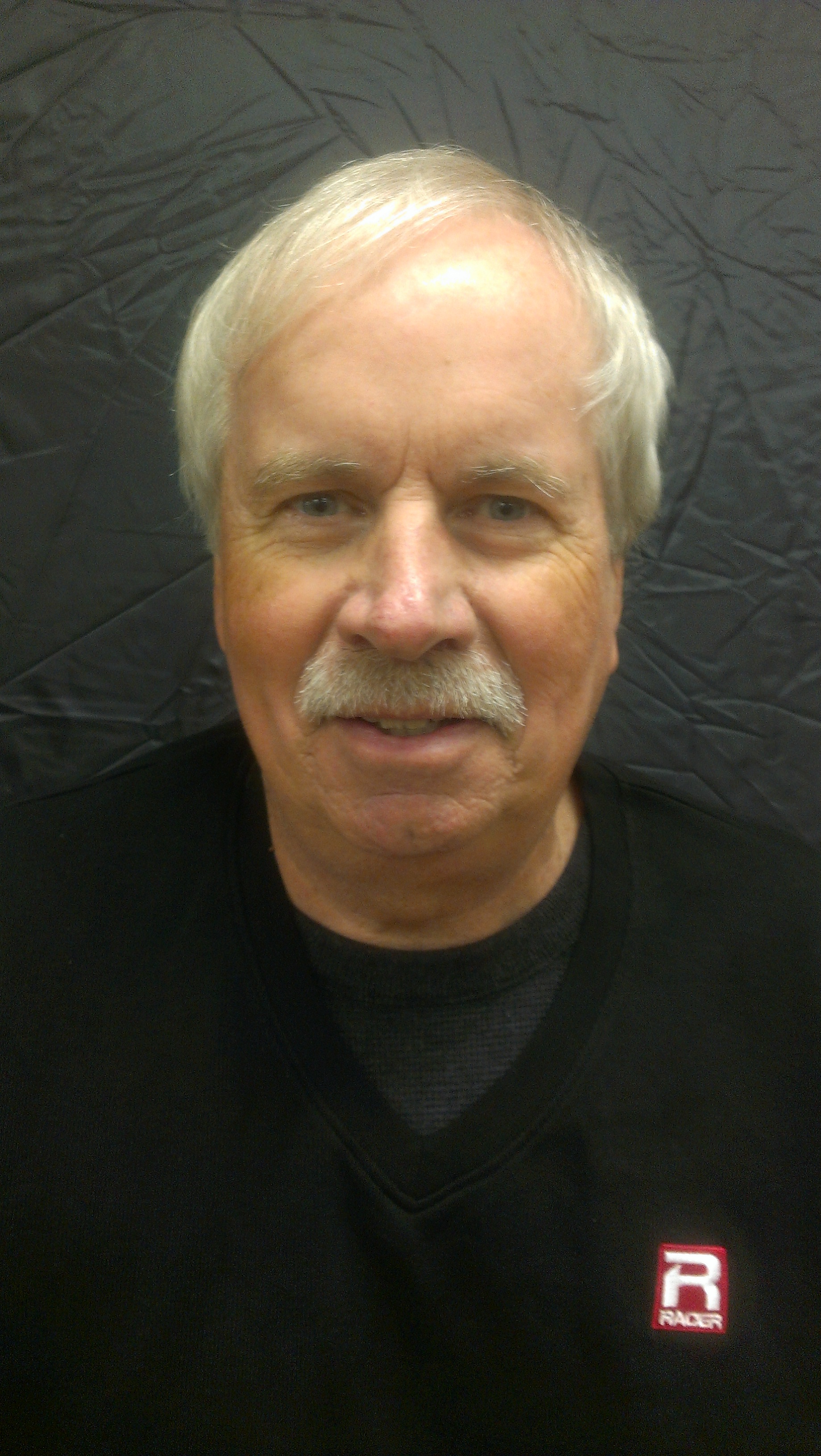
Robin Miller
Robin Miller flunked out of Ball State after two quarters, but got a job stooging for Jim Hurtubise at the 1968 Indianapolis 500 when Herk's was the last roadster to ever make the race. He got hired at The Indianapolis Star a month later and talked his way into the sports department, where he began covering USAC and IndyCar racing. He got fired at The Star for being anti-Tony George, but ESPN hired him to write and do RPM2Nite. Then he went to SPEED and worked on WIND TUNNEL and SPEED REPORT. He started at RACER when SPEED folded, and went on to write for RACER.com and RACER magazine while also working for NBCSN on IndyCar telecasts.
Read Robin Miller's articles
Latest News
Comments
Comments are disabled until you accept Social Networking Cookies. Update cookie preferences
If the dialog doesn't appear, ad-blockers are often the cause; try disabling yours or see our Social Features Support.