Robin Miller’s Mailbag for March 31, presented by Honda Racing / HPD
hpd.honda.com
and on social media at@HondaRacing_HPD
and https://www.facebook.com/HondaRacingHPD.Questions for Robin can be sent to millersmailbag@racer.com. Due to the high volume of questions received, we can’t always guarantee that your letter will be printed, but Robin will get to as many as he can. Published questions have been edited for clarity. Views expressed do not necessarily reflect those of RACER or Honda/HPD.
Q: The recent P2P test at IMS involved four teams: Penske, Ganassi, Andretti and Arrow McLaren SP. I know that other teams occasionally get involved, but wondered how allocations are made to keep a level playing field? Also, do teams pay to be involved?
Oliver Wells
RM: Let’s ask someone who knows the answer. Mike Hull, managing director of Chip Ganassi Racing. “Frankly, the teams don’t push for it, or politic for it, it’s a call that’s made between IndyCar and the two engine suppliers. What’s changed with Jay Frye’s administration, however, is that teams test exclusively for IndyCar, rather dragging their feet testing their own items.
"Using the recent Push to Pass test as an example, the teams are given a very direct test plan by IndyCar that limits the team’s time up front to try their own items. The teams fit in advance the test items, so are ready to get after it once the track is ready. The test is IC-issued pre-fit parts, combined with driver feedback, their access to the data stream, and then onto the next phase of the test. What happens is that you find a baseline for balance and then start the test. IndyCar calls it when they’ve learned from their items. The teams aren’t given the rest of the time for their individual improvements. IndyCar likes a cross-section and requires unselfish access to the data stream that can represent the field. It aids their process to create decision-making direction with fairness of various driver styles.”
Q: Amen to your column "A power play the Indy 500 doesn’t need." The Indy 500 is not about how many passes are made, it’s about holding onto the damn car, hitting your marks every time and being up front at the end. A fan knows this, and is on the edge of their seat pulling not only for their driver, but for the whole field to make it safely to the finish. IndyCar would do well in telling more about how hard it is to travel at 240 mph into Turn 1 at Indy or how much work it takes to set the cars up so that it will turn at speed instead of worrying about push-to-pass. If the powers that be want more craziness and danger, leave the boost up for the race. Agree?
Jack, Ft Myers, FL
RM: Like I wrote, Jay Frye and his staff do a good job of trying to find the right balance of power and downforce on ovals, and I trust they will listen to the drivers about P2P. Do we need more HP? Sure, as long as there’s less downforce.
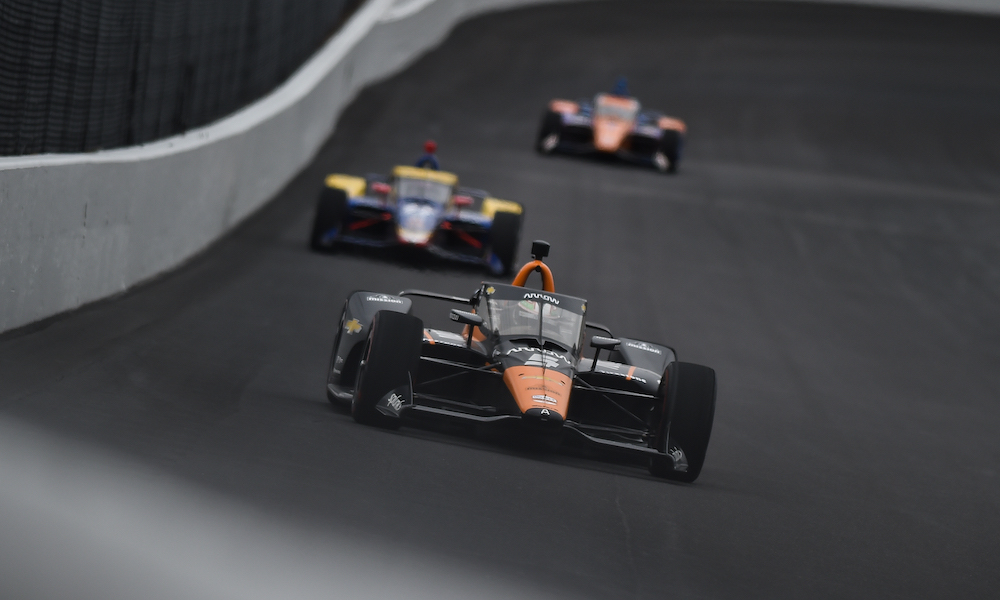
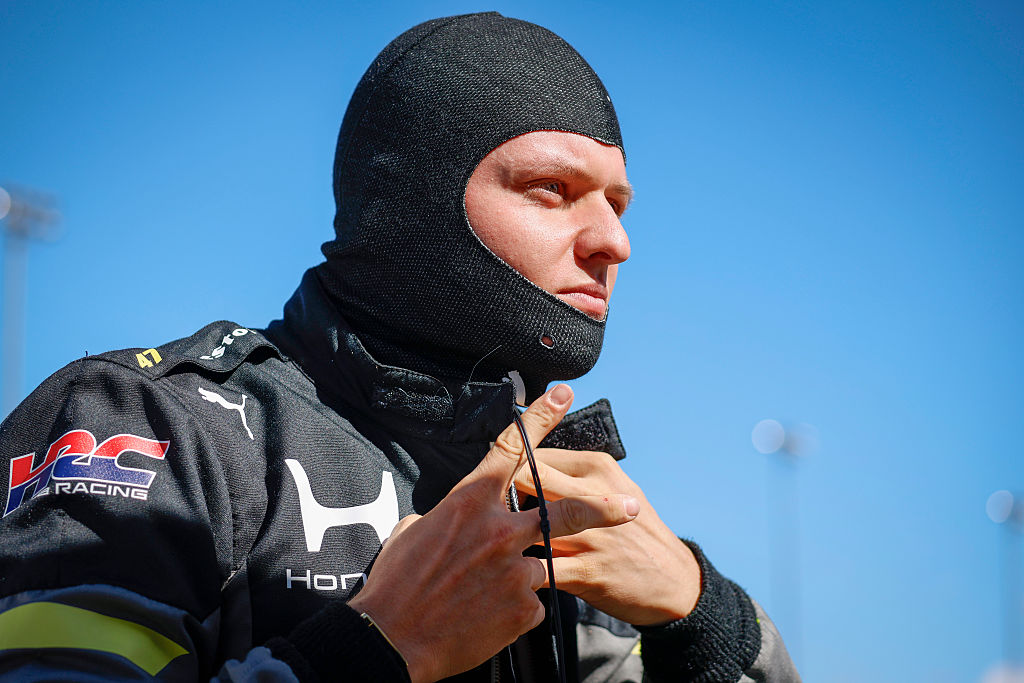
Driver feedback from last week's test at IMS was unanimous: P2P + Speedway = bad. Owens/IndyCar
Q: I read your piece about IndyCar testing overtake assist systems at IMS. I agree that the Indy 500 doesn't need P2P, KERS, DRS, or any other overtake assist system. Instead, the race just needs a good aero package. From 2012-2017 when IndyCar used the base DW12 aero kit (2012-2014) followed by the manufacturer aero kits (2015-2017), the Indy 500 averaged 43.67 lead changes per race. When the series moved to the universal aero kit (UAK18) in 2018, the average number of lead changes fell to 26.67 per race.
In other words, the competitiveness of the Indy 500 decreased by almost 40% with the introduction of the current aero package. I know some purists argue that the previous packages made passing too easy, but if there's one problem IndyCar (and motorsports in general) doesn't have, it's that there's too much passing. Putting on a great show for the fans should be the top priority. And I know it's easier said than done, but if IndyCar can just get back to what made those packages great, we wouldn't see another boring Indy 500 would we?
Garrick Aube
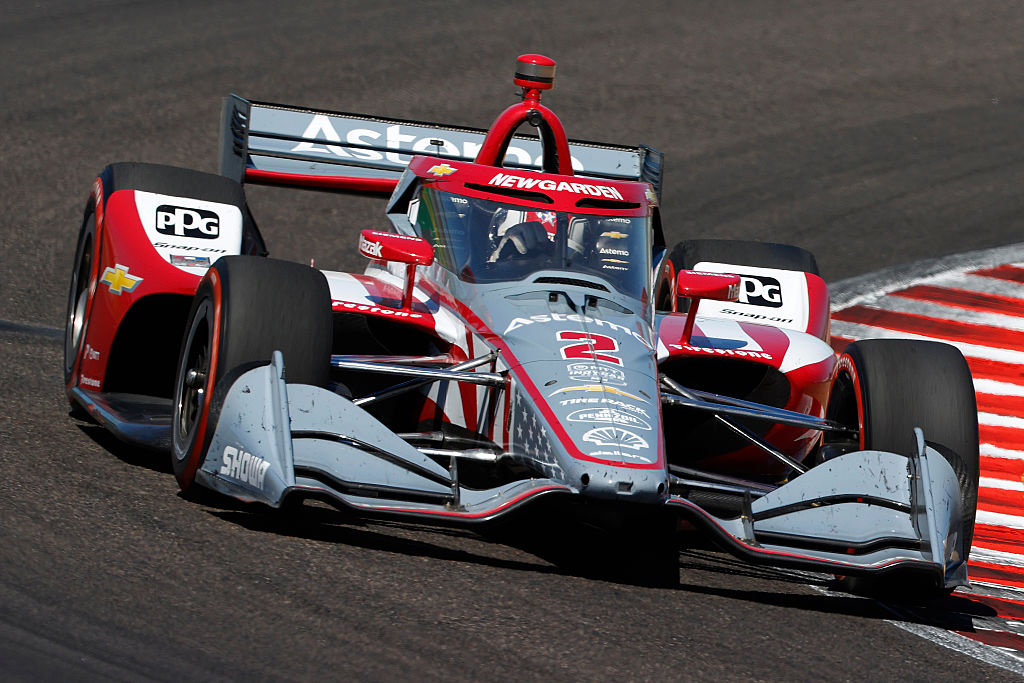
RM: I don’t see Indy as boring, but I guess a lot of people want this non-stop passing parade. The Hanford Device accomplished that in CART: nobody wanted to lead and it was too easy to pass, but it was great for the paying customers and TV audience. I agree with Dixon that Indy should not be easy, and as I noted, these past decades have had some of the best finishes in IMS history. Newgarden told us about some of the changes for May (filling in the hole in the underwing and using strakes) to try and improve overtaking, so maybe that’s going to help.
Q: I couldn't agree more with regard to not having Push to Pass at Indy. But I was a little disappointed when you said that spec racing is here to stay. I guess I'm in the old school category in regards to spec cars. I honestly think that's one of the reasons racing seems kind of stale, with all the gimmicks you mentioned. I guess my question is, why do you think spec racing is here to stay?
John Furnis
RM: Money, budgets and manufacturers interested in building IndyCars are all in short supply. And engine leases are boring, but they make for good racing and lots of finishers. Like I’ve been saying, the fact there is going to be 22-25 cars at every race (especially after this pandemic) might be the most encouraging thing I’ve seen in years.
Q: Any word on if fans will be allowed to attend next week’s Open Test at IMS? My buddy from Michigan and I were talking last night and wondered why don’t they open the lower section of Stand E and charge $10 to pay for cleaning the stands and a couple of bathrooms after? I would gladly pay $10 after driving 300-plus miles since you can see so much more than you can from the viewing mounds. I think there is a lot of pent-up demand and a lot of people would come watch if stands were open. Shouldn’t be too hard to socially-distance.
Don Weidig
RM: The Speedway is trying to determine what kind of options there might be for spectators, and they intend to put out an update at the end of the week.
Q: We are getting close to the start of a great season, and it was good to see Foyt grab a primary sponsor for the No. 14 -- the car looks awesome. Is this same level of sponsorship ABC had with Foyt? Is ABC doing anything with Foyt this year? Will it run a fourth car at Indy, and if so, who is driver?
Bill Cantwell
RM: I talk to A.J. every week, but I’ve never asked him how much ABC or any other sponsor gives him. I do know it’s a cool company and paint job and somebody new to IndyCar, so that’s all good. I’ve heard J.R. Hildebrand in a fourth car, but don’t know anything about a sponsor.
Q: Sebastien Bourdais and his teammates’ win at the 12 Hours of Sebring was nothing short of remarkable. That Caddy was really beat up, but Seb managed by the skin of his teeth to bring it home for the win. I think the race was won on grit and determination more than anything else -- perhaps his best drive ever. Will this win carry over to A.J. Foyt Racing? Will Seb win in IndyCar in the 2021 season?
Jonathan and Cleide Morris, Ventura, CA
RM: Seb is still a badass and will be the best thing to happen to Foyt’s team in a long time. I know from talking to Larry and A.J. that the team has a renewed enthusiasm because Bourdais can make a difference. He’s just like Super Tex: focused with one purpose -- to beat your butt. I keep telling A.J. that Seb is either going to win a street race or road course, or both, in 2021 as long as the pit stops are competitive. He assures me they will be.
Q: Any word on Carlin using Conor Daly at Texas and WWTR?
David Sutton
RM: Nothing official, but Conor has given Trevor his best results so we all think he’ll be in the car again.
Q: I had NBC Gold IndyCar package and it would show the schedule for practice and qualifying a week early, which allowed us to plan for it. I now have Peacock Premium, but will it also do the same?
Jerry, Indy
RM: Absolutely. Not sure if it will simply be on the website or you will receive an email, but they want to continue what was started with NBC Gold.
Q: Longtime IndyCar fan, and Mid-Ohio is my home track. I now live in Nashville area and am thrilled the Music City GP is becoming a reality. I know it’s early, but very little attention is being given to race coming so far, but I’ll be damned that NASCAR is back and will race a month earlier than IndyCar. Well, guess what the talk of the town is? We have a great ambassador that would do wonders for the GP, he’s from here, lives here, and is an IndyCar champion: Mr. Josef Newgarden. Do you know if IndyCar or Nashville Convention is going to take advantage of this golden opportunity for Newgarden to shine his light on the upcoming Music City GP? I hope this opportunity does not go by the wayside.
Timothy Swearingen, Nashville, TN
RM: I talked to Josef last week at the IMS test, and he was encouraged that so many people had been stopping him to ask if he was in that race in the streets. They’ve got a group of heavy hitters investing in the Nashville GP, and I think it’s going to get a lot of publicity and be a success. And Josef will be front and center.
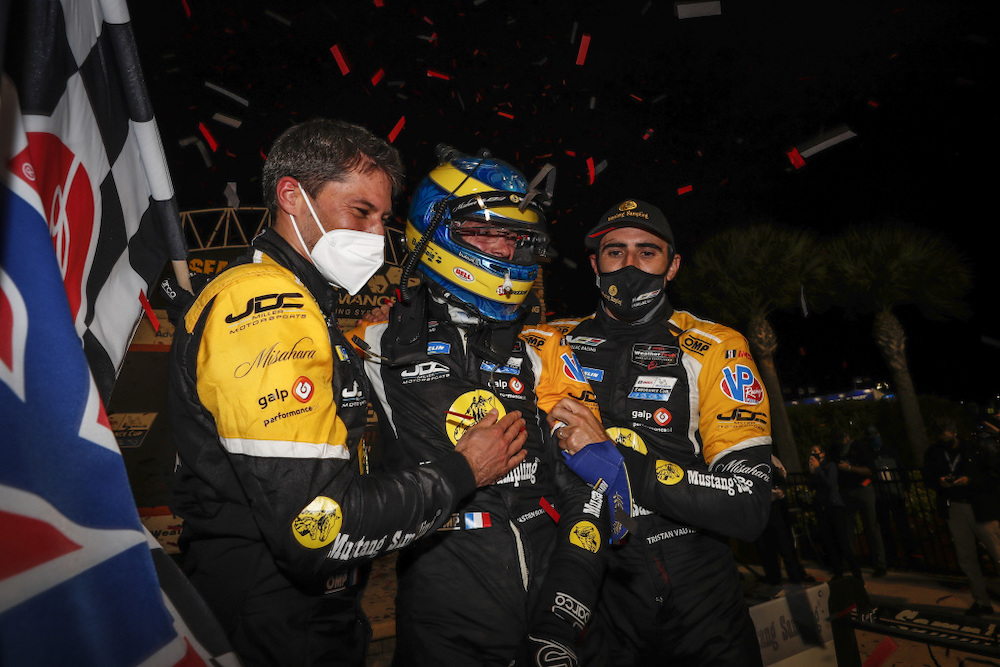
Sebring was another solid addition to an already-stacked Bourdais career highlight reel. Michael Levitt/Motorsport Images
Q: I have been going to Indy since 1991, and about five years ago, I started taking my now 10-year-old son (whom you've met and thanked for being a fan). We typically make sure we go to qualifying weekend and purchase a Bronze Badge and Jr. Badge for him. With COVID restrictions currently in place, staff at Indy said they are selling them, but were limited on availability as well as the amount of access we would have to the drivers. Can you shed any light on this with regard to driver availability while in the garage area, as well as any other access around the track that may be limited or restricted?
Jason, Chicago, IL
RM: Here’s the latest from IMS president Doug Boles: “No decision has been made at this point as we are waiting to understand what protocols might be in place. We will know by the middle of April. I believe, for the first three races at minimum, IndyCar is limiting paddock and pit access similar to what they implemented in 2020, so we will collaborate with IndyCar as well as the local authorities.”
Q: Do you know if there was ever any discussion about IndyCar testing on the road course at Pocono? It's such a huge facility with many different configurations with the road course, it's baffling to me Pocono never seemed to promote road racing for IndyCar or NASCAR. Or I'm I wrong?
Paul G.
RM: I don’t know about promoting the road course, but I don’t ever recall anyone but SCCA racing on it, and IndyCar usually looked to a warmer climate to test in the off-season. Firebird, Sebring and Homestead were preferred, and I don’t think Pocono ever intended to host a major series on the road course. But it did have the World Series of Racing on its shorter oval in 1974.
Q: With Formula 3 and Formula 2 teams starting to become harder to join, therefore making it Formula 1 out of reach for most who don’t have eight-figure budgets to finance the Formula 3 and Formula 2 rides, do you see IndyCar becoming a popular alternative to Formula 1? A whole IndyCar season costs less than what it cost to run one Formula 1 car, much less two.
Matt Marks
RM: I think it already is for some young drivers that have potential but not enough budget for F1 progression, or guys that are out of F1 but still seek open-wheel challenges like Alonso did, or Grosjean. The best reason still comes from our pal, the late, great Justin Wilson, who told me upon his arrival to Champ Car in 2003: “I just want to be on equal footing and have a chance to show my talent and win races.”
Q: After watching the opening F1 race, I can't wait for IndyCar to start and have a race where the winner is not a forgone conclusion. The announcers were bragging about how many winners were on the grid, but some of them have not won a race in years and many of them have only won one race. In IndyCar, 75% have won races, and they usually have six to eight different winners a year. I am sure Roman Grosjean is looking forward for the chance to have a shot at winning again. My question is, what is the percentage of driver-to-car for success in IndyCar? My guess is that in F1 it is 85-90% car and 10-15% driver. What do you think?
Mark B.
RM: I think it’s more car/horsepower at Indianapolis until the closing salvo, when drafting and picking your spot is key, but HP can still be the difference-maker, as we saw in 2019. For a road course or street race I think it can be as much as 70-30 (driver to car) and that’s why there are multiple candidates to hit victory lane.
Q: Will IndyCar return to Richmond? I know with the pandemic the race was canceled for 2020, but I haven't heard any word or seen anything on the internet saying they were going to return in the near future. Have you heard anything about this?
Kurt Franck
RM: I doubt it, because it was a home office decision to pull the plug on the IndyCar race, and as much as I wish IndyCar would go back, just don’t think there’s much enthusiasm for it on the NASCAR side.
Q: Any news on the Indy 500 being pushed back to August so it can have more fans?
Craig Bailey, Palm Bay, FL
RM: No, it’s definitely a go for May.
Q: I am 72 and a life-long racing fan. So, I have a feeling that I will win the lottery soon. When -- not if -- I do, the first thing I will do is pay off the mortgages for all my family and friends. But, the second thing I will do is bring back the Cleveland Grand Prix. I attended every one of them, and can't believe the last one was in 2007. Great racing, unique venue, great event for Cleveland -- the stands were always packed -- and the drivers loved it. And it dropped off the schedule because CART and the IRL merged?
So, in your opinion, how much money am I going to have to put up to get the Cleveland Grand Prix back on the IndyCar schedule? $10 million? $100 million? I know I will have to put together politicians -- the airport is owned by the City of Cleveland -- and sponsors, and I have some experience with that sort of thing. But how much cash do I have to put on the table to get RP's attention? Seriously. I want to get Cleveland back on the schedule before I go meet Vukovich, Sachs, Clark and Wheldon.
Bob Isabella, Mentor, OH
RM: Well, the race didn’t go away because of the merger, it went away because nobody had the funds to promote it. And to answer your question accurately I would have to ask Mike Lanigan what he spent, and I’m not going to do that. You’ve got Burke Lakefront, the city government and who knows how many hoops to jump through, but I would imagine $25 million would be a good starting number.
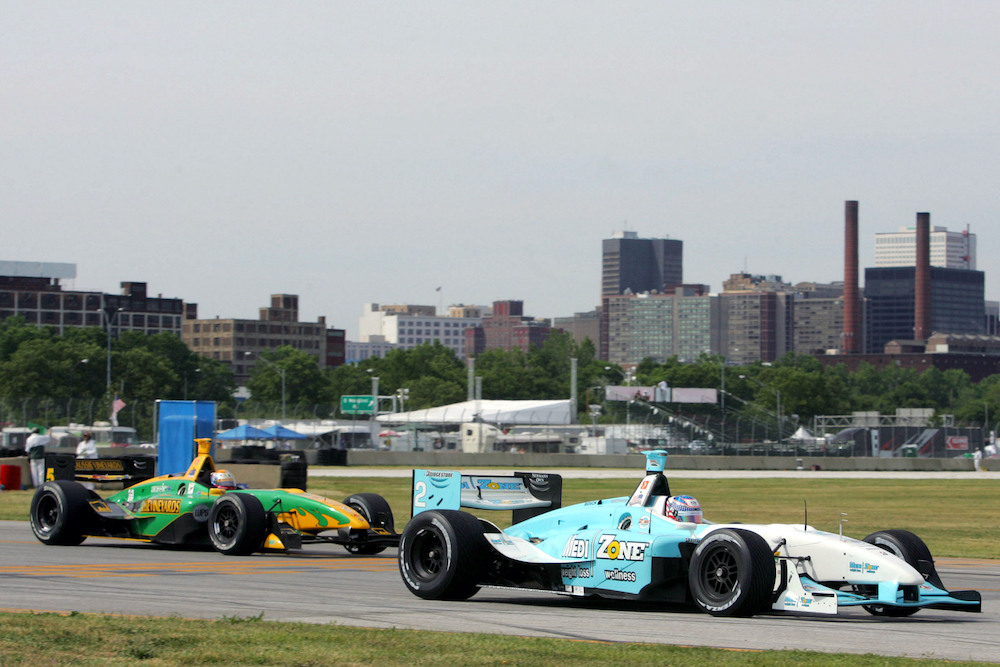
HOW IS IT POSSIBLE THAT NOBODY ELSE HAS SUGGESTED THIS? Motorsport Images
Q: When did they start to monitor pit lane speed? I was amazed at the first round of pit stops in 1985 to watch Mario blaze down the pit lane to get out in first. Were they restricted at all, or was it just get the hell out of there and back to the track? The line on the apron is fun to watch. I don't think there are any drivers left running that ran that configuration -- am I wrong? Do you think there is a chance the apron could come back to open up multiple lines, or is it a permanent memory of the past?
Tony, UT
RM: Wally Dallenbach, one of the pioneers of safety in IndyCar, thinks the pit speed limit was added in the early 1990s, but he adds a great story about the good old days. “When I was driving for (George) Bignotti, he told me to come into the pits at no less than 160 mph, so I did and it was a pretty rough ride.” As for the apron, it would be great to see it come back because it saved a lot more drivers than it ever injured. It was a place to pass or save your ass.
Q: I often hear the story of Janet Guthrie struggling to get up to qualifying speed in 1976, and A.J. Foyt loaned her a backup car to test. Janet got up to a speed that could have got her into the field. Fantastic story -- what was the reason that A.J. helped her out? It seems to go against Foyt's reputation as an old-school racer. If anybody can get the inside story from A.J., it is you. What was Foyt's thinking back then to consciously upset the traditionalists and let Janet get a chance in competitive machinery?
David, Ithaca, NY
RM: Tony Hulman realized what a big story Janet was, so he simply asked A.J. to let her run some laps to show people she was fast enough to make the race in a good car. It was a great PR move, and was instigated by Mr. Hulman.
Q: I still think that someone in IndyCar missed the boat big-time not picking up on Sierra Jackson. Maybe she wouldn't have been as quick on road courses, but I'd have bet money she would have been damn fast on ovals with some seat time in a Indy Lights and then an IndyCar. A marriage and two kids later, she is running a wingless sprint car in the Idaho Racing League. She's still running up front and winning, as is her husband, Johnny Giesler.
I'm glad to see Simona will be back at Indy. IndyCar needs women in the field. We all know what Danica did for the popularity of IndyCar. People bought tickets just to see her and didn't know crap about the racing! I think this is why Dale Jr. is promoting Hailie Deegan in NASCAR. She's cute and reasonably fast, although Washington driver Brittney Zamora qualified on the pole and kicked her butt at the last K&N Pro Series race here at Evergreen Speedway in Monroe.
Don Holmquist
RM: I don’t know how to break this to you, Don, but none of today’s IndyCar owners have ever heard of Sierra and I wouldn’t have known about her without your updates. Her best bet would be NASCAR because IndyCar is a road racing discipline more than anything, and she has zero experience. But it’s great that Simona is back, because I think she’s the best female racer ever in Indy cars.
Q: Thanks for finally putting some realistic numbers together in your Cost of Doing Business article. I am one of the guys annually bugging you about the cost of participation in IndyCar. Interestingly, if you Google "1994 dollars in 2021" the answer is a factor of 1.77. Taking 1994's $3.25 million and factoring it up by 1.77 you get $6.2 million; not far off of today's $6.5 million. While the focus of the spending has changed, the total outlay isn't that much different.
Two items jumped out at me as I compared the costs. The $500,000 Cosworth vs the $1.5 -$2.0 million cost of today's engine leases. Applying the 1.77 factor to the $500,000 gives $885,000. Assuming you needed two or three Cosworths in ’94, today's leases seem almost a bargain. The other item is the cost of tires, going from $12,000 to $500,000. Can I assume that in ’94 most teams essentially got free tires, effectively a sponsorship, as opposed to today's situation? I guess we have to conclude that while the cost side of the equation hasn't really changed a lot in total, the revenue side (i.e., sponsorship dollars) is proving to be a challenge.
Bill Carsey, North Olmsted, OH
RM: I think the tires were free for Indianapolis, and obviously not a big part of the season budget like today. Goodyear was the lone supplier until 1995, but I can’t remember if prices went up or down when Firestone joined. Considering how much technical help is provided by Honda and Chevy, and how reliable the engines are, it does seem like it’s a bargain.
Q: Just wanted to say I loved the article on the running costs of an IndyCar. I think seeing how stuff like that works is fascinating. Something I thought was interesting as well was when I ran the $3.5 million figure from 1994 through the federal government's official inflation calculator. Basically, $3.5 million in January ’94 is worth just under $6.3 million today. So the costs of running an IndyCar hasn't changed much. It's the lack of revenue that has changed.
Kirk Riley
RM: Good point, Kirk. A $7-10 million sponsor was the norm back then, and today a lot of teams need to piecemeal different companies to reach $5-6 million. The Miller, Budweiser, Texaco, Kmart, Target, KOOL and Player’s millions just don’t exist anymore.
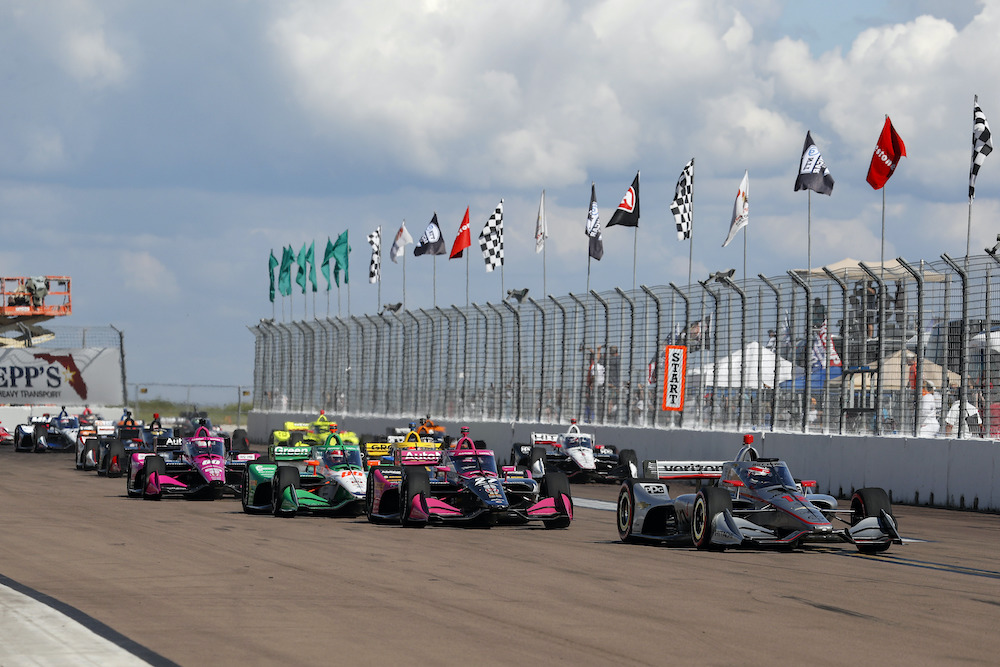
Whether it's 1990s or 2021 dollars, you need a lot of them to go racing properly. Michael Levitt/Motorsport Images
Q: I enjoyed reading the "Cost of Doing Business." It brought a real smile to my face when you mentioned my dad's old crew: Finley, Barnes and the boys from NY. They were a civil servant, bartender, and bulldozer operator. But they were friends and die-hard race fans. They may have worked for nothing, but they were a well-oiled, if underfunded, team. Long after my dad (Tassi Vatis) folded the team in 1978 due to rising costs, all the guys would still get together in White Plains, NY to knock back a few, and attend Indy from the first-turn seats I still have today. Anyway, keep doing what you're doing and thanks for all the years of service to us race fans.
Chris Vatis
RM: Thanks for writing Chris, your dad was such a laid back and delightful man, and represented the sportsmen that owned Indy cars in the ’60s and ’70s. I remember the first time I met him and he was helping sweep the floor and I asked who he was: “That’s the owner,” said Bill Finley. “But we let him help around the shop.” The Greek, as we knew him, also flew me to New York City once after I wrote a sponsorship proposal for the team, and we presented it to First National Traveler’s Checks at lunch on the 50th floor of some swanky place. I didn’t have a coat or a tie so your dad bought me one and then we got the sponsor. I treasure those days and the New Yorkers.
Q: I just finished your article on the cost of doing business. I was wondering if the 1994 numbers were inflation-adjusted? A driver making $5 or $6 million in 1994 was probably making the equivalent of $10-15 million adjusted.
Brian Henris, Fort Mill, SC
RM: Well, let’s just say that not many drivers were paid like Mario, Michael and Little Al, but between great sponsors and engine manufacturers there was a lot of money to be had, and the ’90s was a good time to be an Indy driver. I suppose if $3.5 million in 1994 translated to $6.5 today, then those salaries were over $10 million.
Q: Just saw an interview with Randy Bernard where he said the IndyCar series was losing $30 million a year, every year, for years before he got there. How close was Indy going the way of CART and being bankrupt? I can see why they both merged to survive and why it’s as popular as bowling on TV if that is true.
Tony G.
RM: I don’t know about bankruptcy, but Tony’s sisters were concerned about all the money he had spent keeping the Indy Racing League afloat and that’s why they took the checkbook away. In a normal year, the Indy 500 makes big money (as does the Brickyard 400 with its TV contract) but I think IndyCar’s losses aren’t as much as they use to be. Wait, is this Tony George asking the question?
Q: The negativity due to a lack of IndyCar seems to be overwhelming, so I thought a little more positivity should be in order. We can’t control the future, or the big business of racing, but as long as two cars show up, we’ll always have a race somewhere. I grew up on the road racing side of open-wheel, but have been fascinated by, and a huge fan of, wingless sprint cars ever since I first saw them. The raw physicality is something everyone else says racing can’t have anymore, and I cannot understand why sprint cars don’t have a much wider audience. Is there any one thing you think they could do that would help? And is there anything especially under-appreciated about sprint cars in your view? Thanks again for your writing.
Duncan in Ottawa
RM: The lack of IndyCar? Not sure what you’re referring to, but I don’t hear a lot of negativity except from the old-school fans that want USAC drivers in Indy cars. As long as they’ve been putting on a great show, USAC sprints have always been looked at as stepladder to the Indy 500 (1940-80) and then NASCAR in the ’90s. The fan base has always been passionate and loyal, but 5,000 people at Indiana Sprint Week is a good crowd and short-track racing is an acquired taste that doesn’t seem to interest young people like it did when I was growing up. But Kyle Larson and Christopher Bell are two great examples of the education it can provide -- taming 800-900 horsepower and adapting to whatever is thrown at them.
Q: I have constantly heard comments about an F1 team building the car to suit that team’s preferred driver. Mostly with Red Bull and Max, likely because Max dominates his teammates. I do not believe it, and think it is simply one driver adapting to the car better. I remember Vettel and Bourdais being teammates and Seb saying he couldn't drive the car. Do the teams design a car for their preferred driver, or is it simply one driver adapting to the car better than his teammate?
Orangemen, Urbana, OH
RM: Definitely teams design a car around their A driver, be it Michael Schumacher at Ferrari, or Ayrton Senna at McLaren, or Hamilton at Mercedes. And let me give you a little history lesson. When Bourdais went to F1, he told them after a couple of tests in the new car that he could not drive it the way it was configured and they might want to get somebody else. He finished fourth in his debut in the year-old car and then struggled mightily, like he predicted, in a car that Vettel was dominant in.
Q: The whole track limits issue during the F1 race left a sour taste in my mouth. The race broadcasters noted Lewis Hamilton was warned about exceeding track limits repeatedly, and there were no penalties. Yet Red Bull had Max Verstappen return his race lead to Hamilton because of a “possible” violation which cost him the victory. I know it may not be an apples to apples comparison, but I was wondering if Kyle Novak could fill fans in on how a race director/race steward would assess and/or penalize a track limits violation in IndyCar?
Justin F., CT
RM: “Hi Justin, Thank you for your question. Luckily, the IndyCar schedule does not feature many corners where Race Control has to officiate track limits. However, when lines and/or track limits do need to be monitored, we follow this approach: What type of behavior are we trying to prevent, and why? Whenever possible, we seek an organic solution first and foremost. Is there a way, such as curbing, where Race Control can avoid officiating a line altogether? If an organic solution isn’t possible, we first identify the type of infraction that will ensue. Track limits involves officiating the exits of corners, however there are other lines and areas such as shortcuts at apexes, pit exit and entry lines, and the lines separating the track from the apron at ovals, that are fundamentally similar but require different approaches.
“How will the situation be monitored? Whenever possible, we use technology to automate the detection process. In areas of concern, IndyCar installs timelines that will automatically detect the violation and give Race Control an automated alert that an infringement occurred, as well as any time that was gained. Additionally, we have an arsenal of cameras to serve as a back-up and verification of the timelines, to always have context of how and why the infringement occurred.
“If the infringement has occurred, is a penalty appropriate? A track limits or shortcut violation in practice/qualifying involves simply deleting the offending lap. In a race, the appropriate remedy usually involves relinquishing the time or position gained. However, certain violations such as pit exit commit infractions, or overextending from the apron back onto the race track at ovals, are safety violations and involve a standardized penalty such as a drive-through because Race Control determines that the behavior shouldn’t be tolerated under any circumstances.
“Finally, perhaps the most important factor is to make absolutely clear in the drivers' meeting and accompanying meeting notes what the expectations and ramifications are for any areas in which these violations can occur so there are no surprises.” Kyle Novak, IndyCar Race Director.
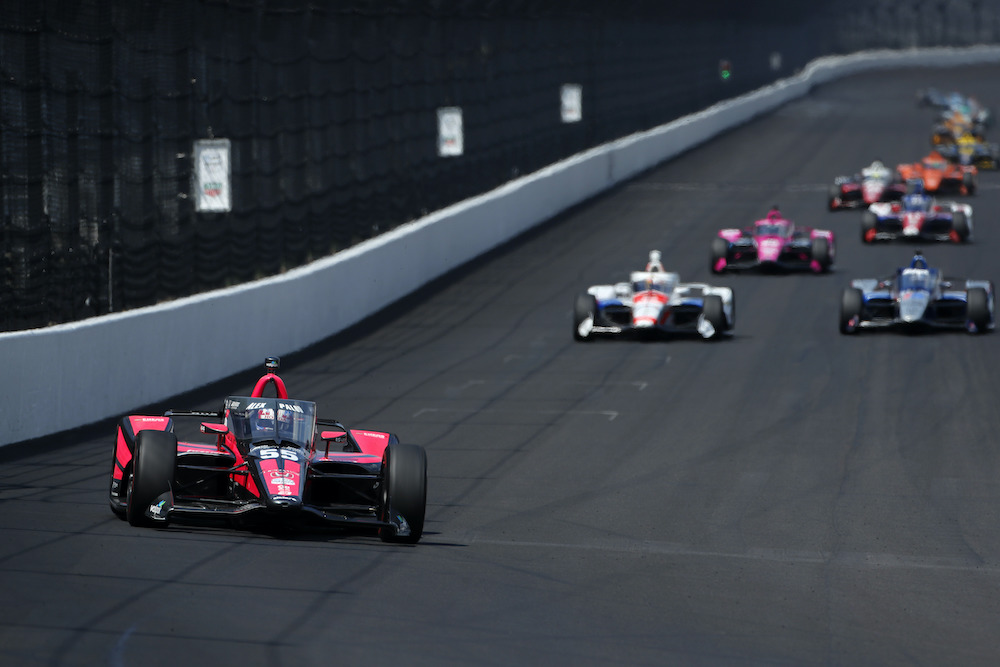
The Speedway's outside wall does a fairly effective job of enforcing track limits. Phillip Abbott/Motorsport Images
Q: I was saddened to read about the death of John Crichton-Stuart, 7th Marquess of Bute, better known as Johnny Dumfries when he was driving for Lotus in F1 and Group C Jaguars in the 1980s. I discovered a curio about his career -- one of his final race starts happened in a Pontiac Firebird, in a GM Player's support race at the 1992 Indy Vancouver. Can you shed any light on what Dumfries was doing in the CART paddock in summer 1992? And any other famous names unexpectedly appearing on the undercard of races you've covered?
Richard, Oxfordshire
RM: I remember hearing that Dumfries was in the CART paddock that year at Vancouver and tracked him down. He said racing was still in his blood and these Firebirds were fun to throw around. Tommy Byrne showed up at an Indy Lights race, and all I knew was that he kicked Senna’s ass in a Formula Ford a few times, and wouldn't it be great to see him in an IndyCar? But it never happened.
Q: As we approach April 1, one of the best gotchas ever was from you, Robin Miller, when you wrote for The Indianapolis Star and reported that A.J. Fort had bought the Indianapolis Motor Speedway and that he was going to have the Texas Rangers be the officials. For a couple hours, you really messed with my teenage mind. Thanks for the memories!
Todd J. Burnworth, Fort Wayne, IN
RM: That was fun, and also the last time anyone was allowed to write an April Fool’s story at The Star because one of the local TV stations led off their telecast like it was really true. I think I also wrote A.J. was going to charge all the CART teams $5,000 as an entry fee, and Tex liked that.
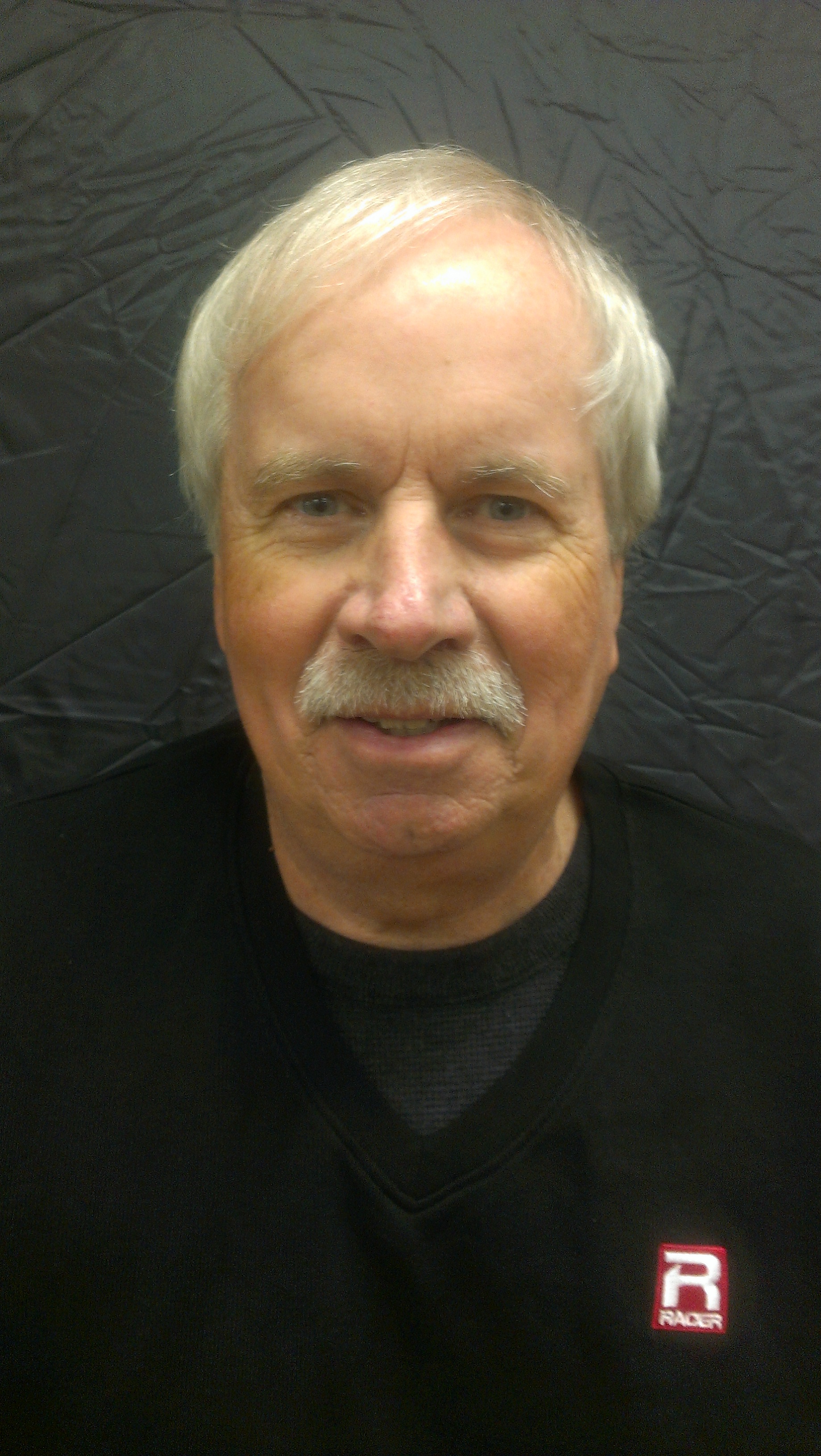
Robin Miller
Robin Miller flunked out of Ball State after two quarters, but got a job stooging for Jim Hurtubise at the 1968 Indianapolis 500 when Herk's was the last roadster to ever make the race. He got hired at The Indianapolis Star a month later and talked his way into the sports department, where he began covering USAC and IndyCar racing. He got fired at The Star for being anti-Tony George, but ESPN hired him to write and do RPM2Nite. Then he went to SPEED and worked on WIND TUNNEL and SPEED REPORT. He started at RACER when SPEED folded, and went on to write for RACER.com and RACER magazine while also working for NBCSN on IndyCar telecasts.
Read Robin Miller's articles
Latest News
Comments
Comments are disabled until you accept Social Networking Cookies. Update cookie preferences
If the dialog doesn't appear, ad-blockers are often the cause; try disabling yours or see our Social Features Support.