Courtesy of Mecum Auctions
El Paso to Talladega: The kaleidoscopic life of Marty Robbins
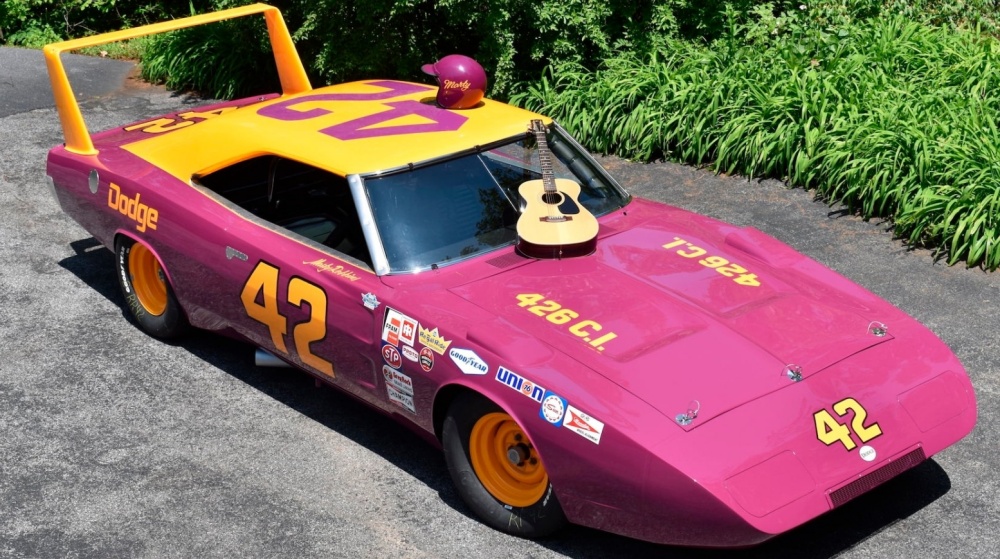
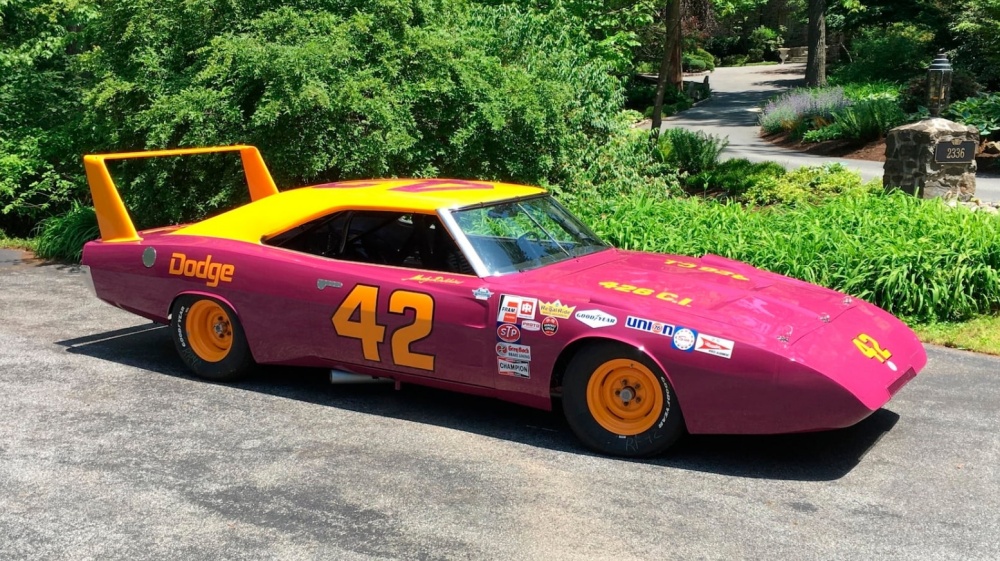
There was a day, not that long ago, that we did not recognize someone singing outlaw ballads at the Grand Ole Opry on Saturday night, still with grease under his nails from running a NASCAR race earlier that afternoon, as being terribly disparate. Marty Robbins surely didn't see the two things as anything other than Saturday's "to-do" list. He was that kind of guy – the kind that not only country music was built on, but also that we can’t seem to produce anymore. If you don’t know Marty Robbins, you likely know his music; he recorded more than 500 songs, won two Grammy Awards, scored 16 number-one hits, and was inducted into the Country Music Hall of Fame. When he wasn't headlining the Opry, he drove a magenta and chartreuse Dodge Charger at Talladega at speeds that would make Nashville record label execs wet their fancy suit pants today. He cemented himself as one of the greatest of the cowboy troubadours while not just driving in NASCAR races, but being competitive, and often on the same day. This was his life. He wasn’t “building a brand” or doing the spidery work of marketing to sell more records; he did it because it never once occurred to him that he shouldn't.
Courtesy of Mecum Auctions
The two worlds Robbins inhabited – outlaw country music and stock car racing – were, in the 1960s and '70s, closer relatives than most fans of either category might recognize today. Both were working-class, Southern-rooted, and deeply suspicious of anyone who thought they were too good for either. Both rewarded raw talent over pedigree and valued someone who showed up and did the work over one who merely talked about it. Both operated on a kind of unspoken code of respect that ran deeper than anything written down or spelled out in contracts. And both, frankly, could get you killed. Robbins moved between these worlds as naturally as most people move between rooms in their own house, because to him, they were just rooms in the same house.
Who is Marty Robbins?
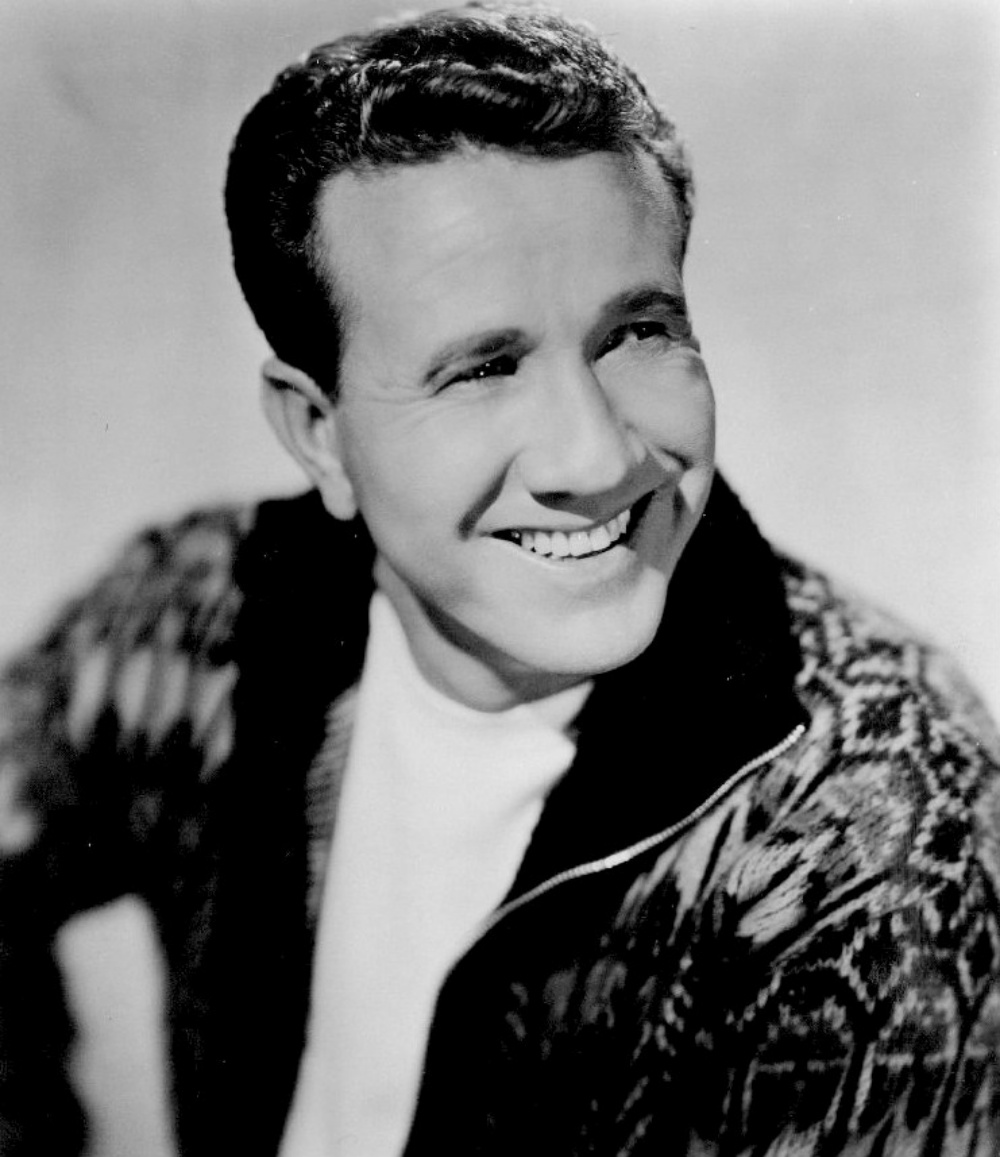
Let’s start here. Marty Robbins is not only an American music icon, but he is a sort of American mascot, for better or worse. At 12, Marty and his nine siblings and their mother, a Paiute tribeswoman, moved from Glendale, Arizona, where he was born, to Phoenix. It was here that “Texas” Bob Heckle, Robbins' grandfather – a Paiute medicine man and storyteller – wrapped young Marty in tall tales of the Wild West. Between his upbringing led by native storytellers and a three-year stint in the Pacific during WWII, where he learned to play guitar, the roots of the cowboy balladeer dug deep into American culture.
Wikimedia Commons
After his time in the Navy, Marty and his wife, Marizona, started their family. Marty put all that time on the ship, learning to play guitar, to work as a local singer-songwriter. It wasn’t long before Robins was a known figure on the Grand Ole Opry, where Little Jimmy Dickens, another country legend, hooked him up with the suits at Columbia Records. In 1952, Robbins dropped his first hit single, “I’ll Go on Alone,” rocketing to the top of country music charts.
Marty Robbins went on to record a pile of hit cowboy songs about outlaws, beautiful Mexican girls falling in love with tall, handsome gunfighters, border towns, and the final moments of scary men. These songs started by capitalizing on the 1950s obsession with the American West, but would eventually come to define it, no matter how romanticized and whitewashed his version was.
How the voice of the angels became the most beloved racer in the NASCAR garage
The singing cowboy came to racing the way most serious enthusiasts do – through youthful dreams. Little Martin Robinson grew up rooting for the Bettenhausens and Jimmy Bryan at Indianapolis, the way other kids rooted for baseball teams. When Little Jimmy Dickens brought him to Nashville and the Grand Ole Opry made him a star, his new home was within earshot of racing at the Fairgrounds. By the summer of 1959, he and his son Ronny were watching a micro-midget race north of town when Robbins decided he was done being a spectator. As any good American might, Marty bought a race car. Then he bought another one. We know how this goes.
Columbia Records
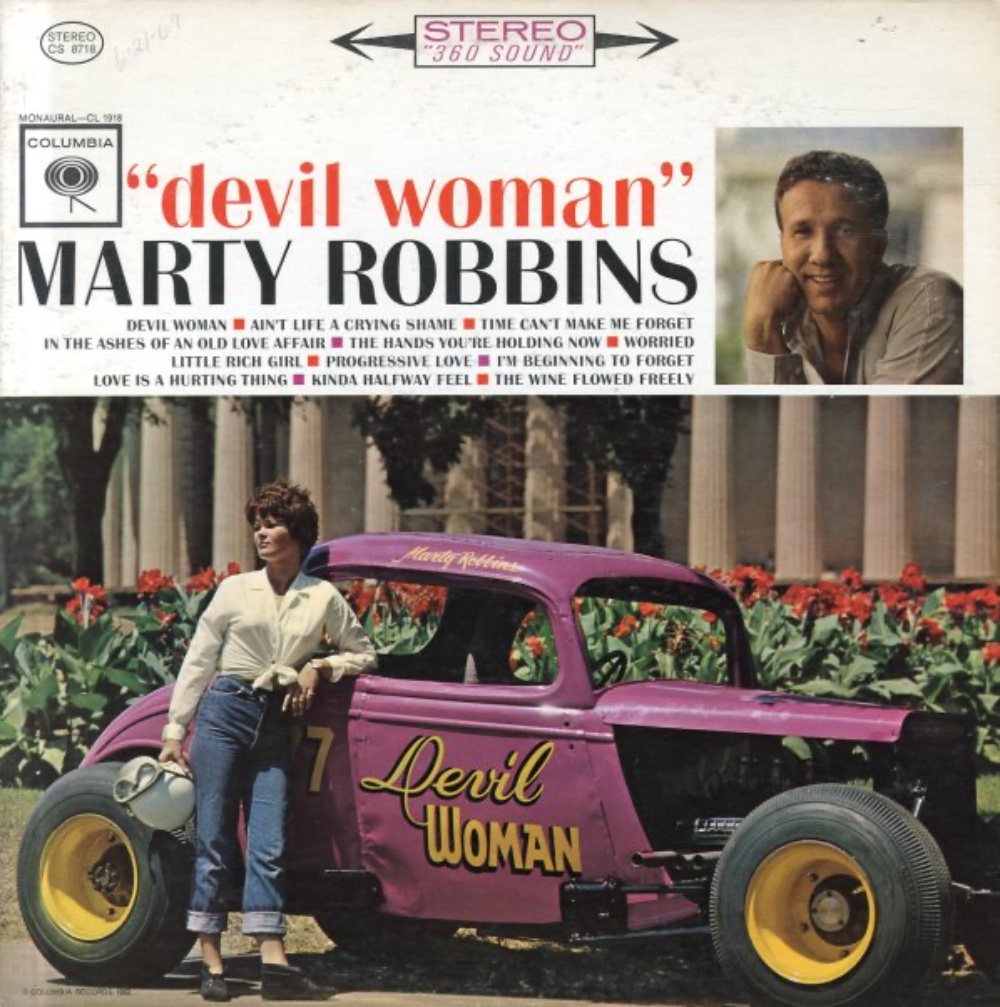
His first serious machine was a 1934 Ford coupe – the very same "Devil Woman" car featured on the cover of his album of the same name – purchased from a local racing legend named Preacher Hamilton (what a name!), whose son Bobby would later become a name familiar to most NASCAR fans today.
Throughout the 1960s, Robbins spent his weekends either performing to sold-out crowds or racing at the Nashville Fairgrounds, sometimes doing both in the same night – running the Saturday feature race and then sprinting across town to make his regular appearance on the Grand Ole Opry. In fact, he eventually asked for the last spot on the Opry specifically so he’d have enough time to race, get cleaned up, and make it over there to that bend in the Cumberland River. The image of that is almost too good: a man in a firesuit arriving slightly breathless to sing "El Paso" to an auditorium full of people who had watched a series of rhinestone singers, with no idea where he'd just been.
He made his NASCAR Grand National debut on July 30, 1966, in a race at Nashville that Richard Petty won. Robbins finished 25th out of 28 cars, nursing an oil leak, which I think is a strong way to start a motorsports career – humbled, but not deterred. Over the next 13 years, he competed in 35 races between 1966 and 1982, scoring one top-five and six top-tens.
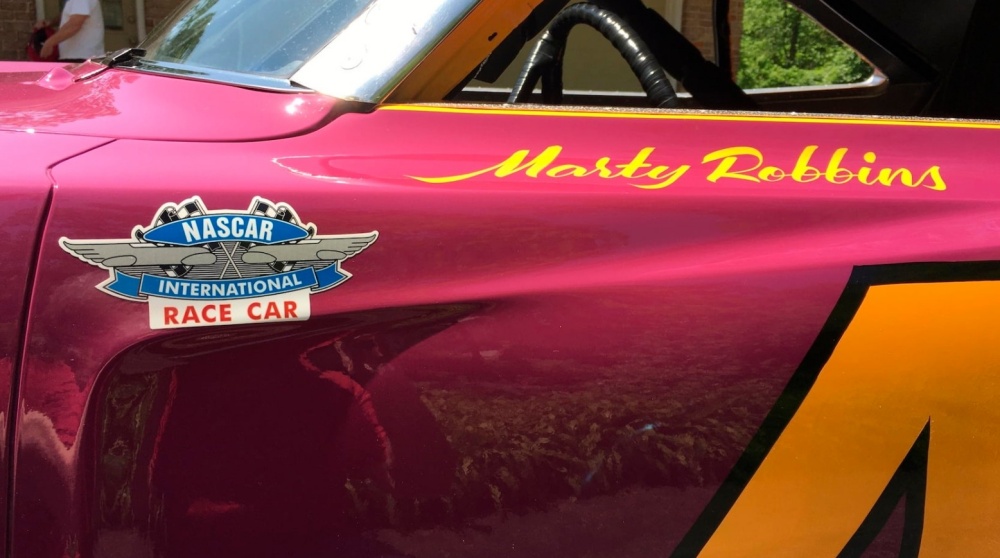
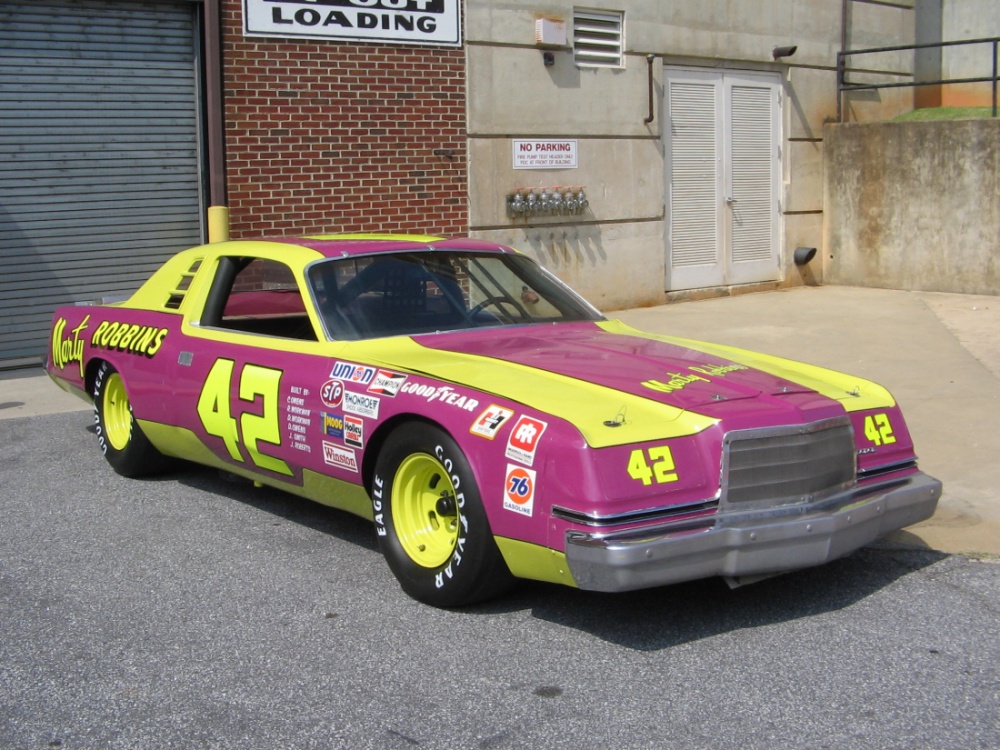
He drove what must be the coolest car in series history. His cars were built and maintained by NASCAR Hall of Famer Cotton Owens (these names!). They wore a distinctive two-toned magenta and chartreuse paint scheme that was, much like everything else about Marty Robbins, impossible to ignore and entirely his own. Seriously, these cars and their paint schemes scream, “Hurry up! I gotta get to the Opry after this.”
Was Marty Robbins any good at racing?
The statistics tell a respectable story. His best finish came at Michigan International Speedway's Motor State 400, where he finished fifth. He had strong runs at Darlington, where two of his top-10 finishes came, and at Talladega, where he belonged less as a celebrity novelty and more as a legitimate competitor.
But the numbers don't tell the most endearing and enduring part of who Robbins was on and off the track. At the 1974 Charlotte 500, Robbins deliberately drove his car into the wall rather than broadside *through* Richard Childress's stopped car on the racing surface. He took 37 stitches to the face, a broken tailbone, several broken ribs, and two black eyes. Childress later said Robbins may have saved his life. That is not the act of a man who showed up for the attention. That is a racing driver.
NASCAR
"I know this. No one had a better time at the racetrack than Marty Robbins. He was so happy to be at the racetrack. He wasn't a singing star when he was with us in the garage. He was just one of the guys. That's why people always liked him so much." - Richard Petty
The garage knew it too. Richard Petty, who befriended Robbins and helped keep his fellow Dodge driver in good equipment, said of him: "No one had a better time at the racetrack than Marty Robbins. He wasn't a singing star when he was with us in the garage. He was just one of the guys." Bobby Allison, who had a famous door-to-door Labor Day battle with Robbins at the Nashville Fairgrounds that locals still talk about, said he had real, raw talent and the rarer quality of knowing how to listen. In a sport where respect is the only currency that matters, Marty Robbins was solvent.
He kept racing until the very end. His last NASCAR start came on Nov. 7, 1982, at the Atlanta Journal 500, in a Junior Johnson-built Buick Regal. He died one month and one day later, on December 8, 1982, of heart failure – his third major cardiac event, the first having come in 1969 when he became, at that time, the first person to undergo a triple bypass operation. He had kept performing and racing after that, too, because that was the only pace he knew.
Courtesy of Mecum Acutions
The following year, NASCAR named the race at Fairgrounds Speedway in Nashville the Marty Robbins 420 in his honor. It ended in a fitting 1-2 finish by Darrell Waltrip and Bobby Allison – two of his oldest Nashville rivals, who understood exactly what they were racing for that afternoon.
There is a firesuit on display at Ryman Auditorium in Nashville and a movie poster on display at the NASCAR Hall of Fame. No other man has earned a place in both rooms. I know I said at the top that Marty Robbins lived two lives, but he didn’t. He lived one life; one very full life. Hats off for the speeding, singing cowboy.

Peter Corn
Peter Corn is an automotive writer and storyteller. Peter has spent nearly a decade writing about cars, trucks, and motorcycles for some of the best publications in the business. He believes the best automotive stories aren't really about the machines at all, but instead, the people who love them.
Read Peter Corn's articles
Latest News
Comments
Comments are disabled until you accept Social Networking Cookies. Update cookie preferences
If the dialog doesn't appear, ad-blockers are often the cause; try disabling yours or see our Social Features Support.