Images courtesy McLaren
JR Hildebrand takes on the McLaren Senna GTR
“Yeah, just leave a bit of a margin on the rumble strips here...”
Let me level with you. Sitting right seat isn’t something a racecar driver enjoys.
“...OK, up through the gears into Agostini...”
...especially in a DRS-enabled, 814hp, firebreathing McLaren Senna GTR that’s just been switched to slicks on a cold, damp day at the Snetterton Circuit in Norfolk, England.
“S**t, that was late!”
...with an IndyCar driver (that would be me) behind the wheel.
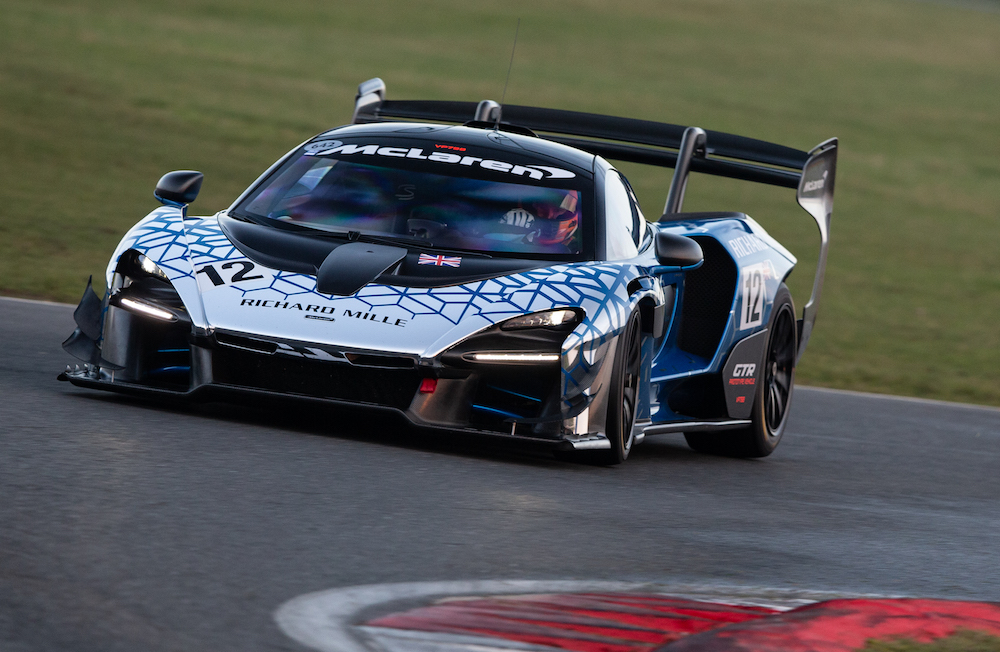
The Senna GTR is an enigma. It’s everything we believe motorsport should be and everything it isn’t, all at the same time. Its reason for being is pure: an exercise in innovation and technology ultra-focused on performance, conceived and built by McLaren simply because it could.
But its existence has little, if anything, to do with the traditional framework of competition or homologation. Today’s motorsport landscape doesn’t justify the existence of this car; instead, the booming hypercar market, craving ever-more-extreme machines, has driven its creation.
That all 75 GTRs -- a way-faster-than-a-GT3, fully race-spec progeny of the McLaren Senna that can only be driven on a race track, yet has nowhere to actually race -- sold out within weeks of being announced is a bizarre dynamic that speaks volumes about the current state of flux of both motorsports and the automotive industry. Fresh off a transatlantic flight and driving up to Snetterton, I ponder this until my brain starts to hurt. Then I park, catch my first glimpse of the GTR, and suddenly none of it matters.
Racecars are dead. Long live racecars.
Seeing the GTR alongside the street-version McLaren Senna in the garage instantly and massively changed my perception of the car I’d previously experienced on a race track. The original Senna is unquestionably the most uncompromisingly track-focused street car on the planet. Just the look of it -- the feeling of its vicious, 4-liter, twin-turbo V8 resonating through the carbon chassis and seats at idle; and its single-minded purposefulness -- have been enough to scare people away. But now, sitting next to the GTR, it seems tame enough for grandma to take out for a grocery run.
Though the two cars share an obvious resemblance and shape, it’s amazing to really see what shedding all regulations (as in, those from any motorsport sanctioning body, as well as any pretensions of road-going legality) can produce.
The extremity of the car’s aerodynamic design hits me first, but it’s more than that. The GTR’s proportions appear completely different from the first Senna. The massive, swan neck-mounted, active rear wing hangs off the back of the car, with LMP-style endplates that connect to the body, while an enormous diffuser extends far beyond the bodywork. A longer, wider, re-profiled splitter and more aggressive, angular bodywork similarly transform and extend the front end.
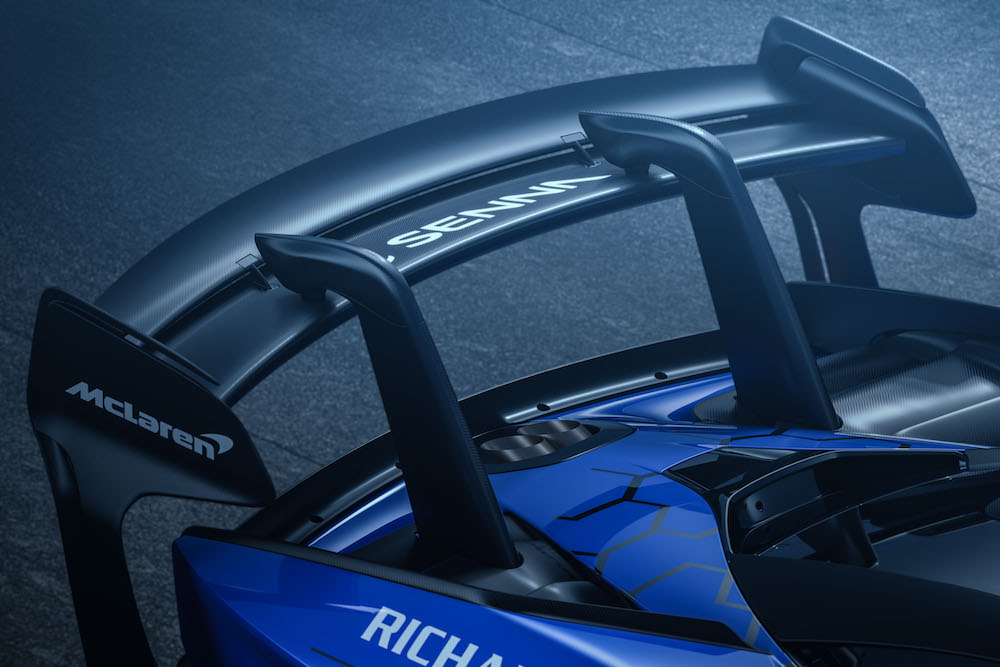
The body is wider, as is the track, and the front wheels are noticeably more cambered and now tucked up into the front fenders, courtesy of the GTR being more than an inch lower than the street car.
There are no rounded edges; no softening for style or road-going practicality. Every surface is sharp, from the vortex generators carved into the side of the splitter, to the blueish-purple tips of the center-exit exhaust. This is the car that the Senna always wanted to be and it’s something to behold.
For me, however, the real question isn’t how much more insane the GTR is compared to the Senna street car, nor is it specifically how fast it is because, frankly, it better be fast. The road-going Senna is already in the same neighborhood of weight and downforce as a GTE racecar, but with appreciably more power. Taking it to another level, the $1.65m GTR gets proper slick tires, a bespoke derivative of the 720S GT3 car’s lighter and fully-adjustable suspension system, an additional 25hp from an unrestricted wastegate and exhaust setup, and an aero makeover in conjunction with McLaren’s Formula 1 aerodynamicists that’s resulted in a 20 percent increase in overall downforce and an incredible 50 percent gain in aero efficiency.
So what I really want to know is, does it feel like a racecar? From my perspective, that’s where a car like this, a car that has all this freedom of development, design, technology and engineering, but for the most part will be in the hands of amateur drivers on track days, could come up short.
It only takes a couple of laps to find out.
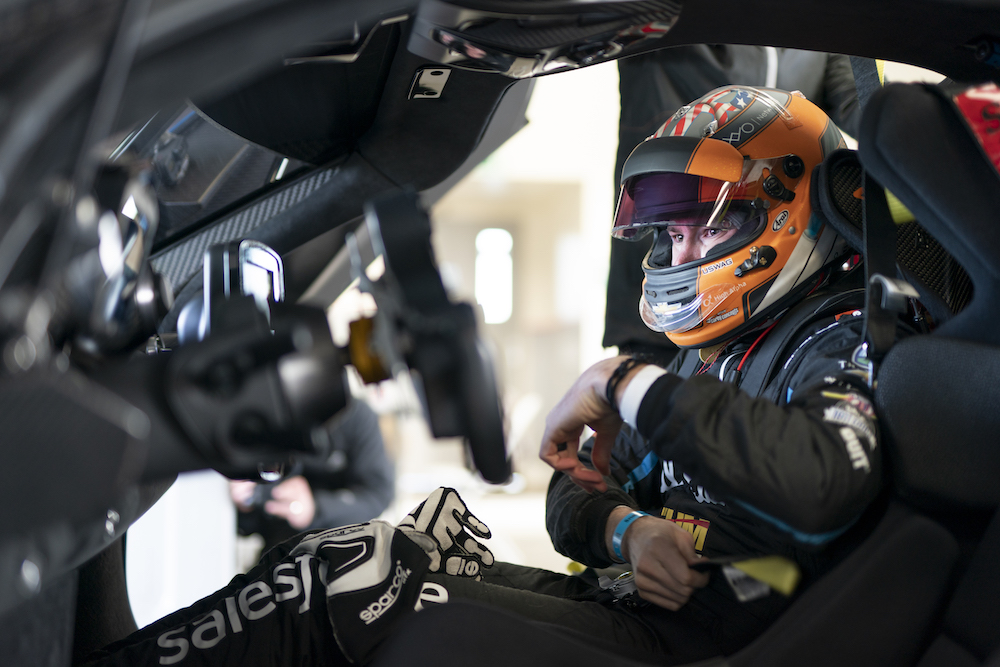
Rob Bell, lead development driver for the GTR, as well a factory racer for McLaren’s 720S GT3 customer racing program, has just decided that the track has dried enough to fit slicks. He’s switched the rotary knobs for engine performance and traction/stability control on the carbon butterfly-shaped steering wheel to their full “Race” positions, so I leave them there as Charlie Hollings slides into the passenger seat alongside me.
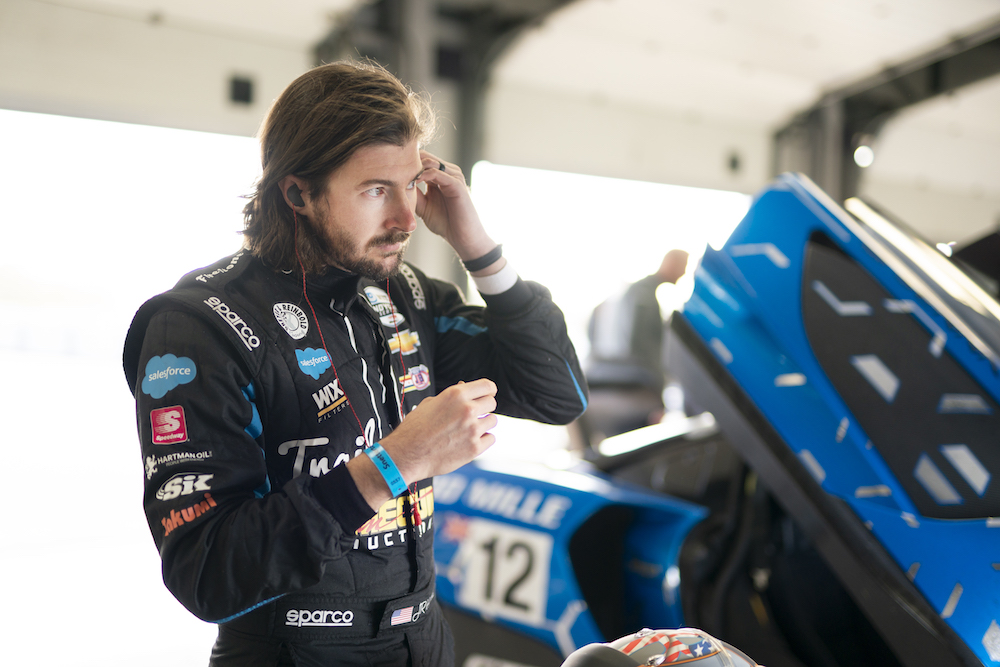
Charlie, a great guy and an excellent driver himself, is one of McLaren’s driver coaches for these kind of outings. Still, we don’t need to talk about it to know that neither of us is really loving this arrangement. I sense that sitting right seat isn’t his favorite place in the world anyway, but add in the fact that the Snetterton asphalt is cold and damp, we’re in this car, and the racecar driver alongside him hasn’t flown 5,500 miles just to go cruise around, and this is pretty much worst-case scenario. For him. He knows that I’d just as soon drive the car by myself, all things being equal. We both kind of glance at each other like, “Sorry, mate,” then I hit the start button on the roof, the car erupts into life with an ear-shattering backfire, and away we go.
I drive calmly out of the pits and through the double apex Riches; then roll into the throttle down the straight toward the Montreal hairpin. Before I ever quite get to full wick, the violent power of the GTR kicks in, angrily firing us back into the seats and lighting up the tires all at once. “Woah, s**t!” I think to myself. The big slicks aren’t yet up to temp, so the minimally invasive traction control doesn’t really do anything much, leaving me fighting to keep the car from wildly hooking and grabbing, while keeping up with rev lights that, despite the lack of full traction up through a couple gears, are ripping through RPMs like nobody’s business.
I love that feeling.
The only way to get a car to really work is to get heat in the tires, and the only way to do that is to just get with the program. At first I focus on the lower-speed infield section to push the car, figuring I’ll work my way up to the higher-commitment areas. I imagine Charlie at least appreciated that.
Within a couple of laps the tires are in and I feel pretty comfortable with the general feeling of the car, so I decide to use the fourth corner of the track -- the second-gear, 140-degree, left-hander Agostini hairpin that you come into with heavy braking from the top of fifth -- to really test the limits of grip.
The GTR screams up through the gears, right to the last moment when I finally let off and hit the brakes, upon which it instantly hunkers down and stabilizes in a way a car without active aerodynamics just can’t. In concert, the rear wing angle increases while the active front flaps reduce angle to shift aero-balance rearward. That all serves to drastically counteract the effect of the car’s weight transfer and the sensitivity that lowering a giant splitter to the ground and mechanically reducing rear tire load would add as the car dives forward under braking.
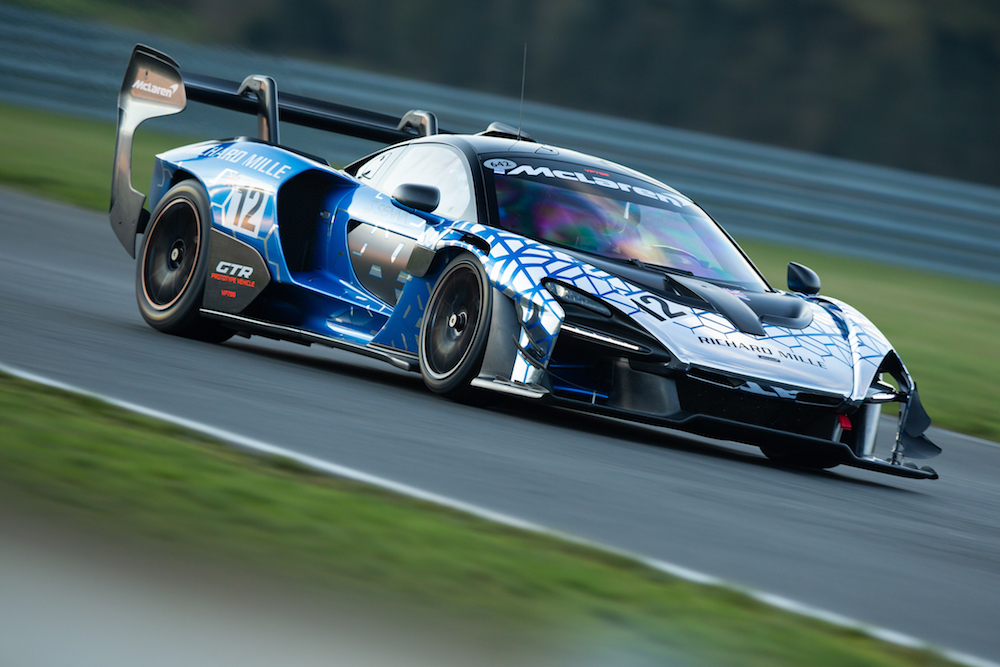
It means that even though I’m braking late -- which gets Charlie’s attention -- there’s room to brake deeper still because there aren’t the usual nasty byproducts of exploring those limits. That he and I are both caught off-guard is testament to just how capable this car is, given the baseline of comparison that each of us have.
Then, unlike the Senna street car, which has a noticeable amount of built-in understeer, the GTR very responsively carves through the center of the corner once I release the brakes. I learn to quickly transition to throttle and lean delicately on the TC and ESC for rotation and drive out, leaving curved patches of rubber from the center to the exit of every corner as the car yaws then hooks up to launch down the next straight.
The McLaren folks have mercy on Charlie and let him out after just a couple of laps. He’s been very helpful in getting to know the track and we have a quick laugh about our shared epiphany. “S**t, it is fast isn’t it...”
I get back in, this time solo and fitted with a fresh set of Pirelli slicks. After a few installation laps to get the tires up to temperature, then a quick pit visit to bleed pressures down, I’m left to my own devices.
Fully up to speed now, I keep getting those little tinges of excitement and adrenaline that only come when you’re really feeling the speed of a car. Like when you come off Turn 4 at Indy to take the green in qualifying and feel the revs building a little faster than they had been in practice -- you just know that it’s going to be good and you get a brief, cool rush through your synapses.
The GTR inspires enough confidence to be driven hard with its active aero, general handling attitude, and electronics, but out at the limit it still requires sensitive fingertips. The car is reactive and can even be quite neutral, depending on how I manage my inputs, which is exactly as it should be. It’s that ability to manipulate how the car works that I was really looking for, and in combination with the absolute ferocity of the GTR, that’s what gives me that feeling.
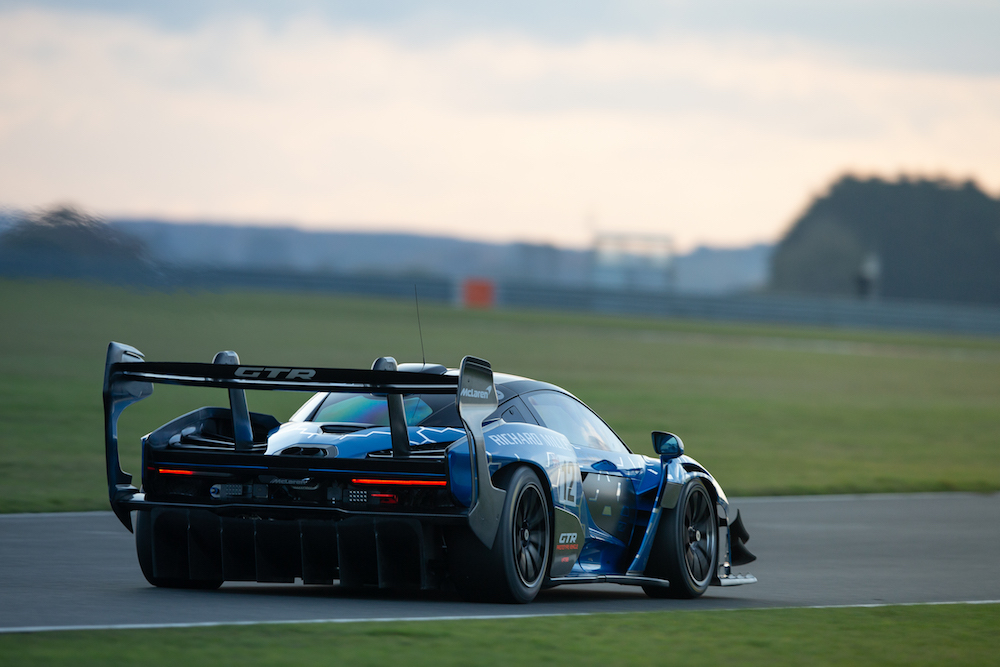
As a racecar driver, that’s all you can ask for, and as a total package, it’s not something we experience all that frequently anymore. So, whatever the reasons for a car like the GTR to exist, I’m certainly thankful that it does, and I look forward to whatever comes out of Woking next.

JR Hildebrand
Read JR Hildebrand's articles
Latest News
Comments
Comments are disabled until you accept Social Networking Cookies. Update cookie preferences
If the dialog doesn't appear, ad-blockers are often the cause; try disabling yours or see our Social Features Support.