INSIGHT: Hypercar beyond Aston Martin and Toyota
The start of the 2019/20 FIA World Endurance Championship opener is just weeks away, but the countdown to the 2020/21 season – the first for the new Le Mans Hypercar Prototype regulations – has also begun.
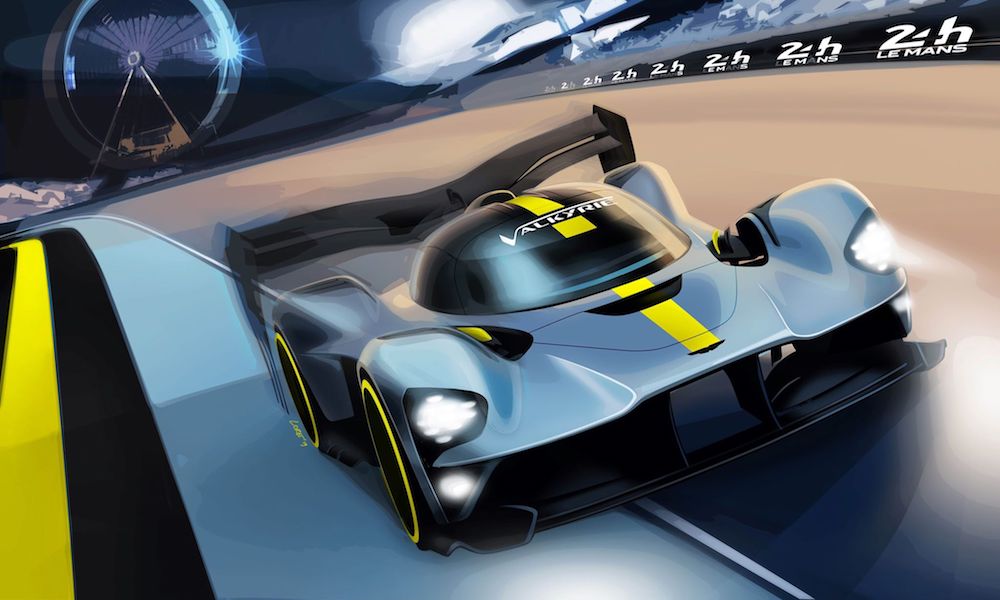
Toyota and Aston Martin are the two big players in the midst of tireless work behind the scenes to get ready for the debut of their challengers in Year 1 of the new regulations. But there’s more to the new rules than just the prospect of a titanic battle between Toyota and Aston Martin. And since the day the regulations were confirmed at Le Mans, there’s been plenty of reaction to sort through.
The natural place to start is the state of the other major OEMs still showing interest in the regulations.
Ferrari? Well the attempt to appease the Italian marque by shoehorning GTE Plus into the new set of rules didn’t work, so it remains to be seen what level of interest it has. What about Ford? The Blue Oval looks to have its heart set on IMSA and a DPi program now its GTE Pro program has come to an end, following the confirmation that the ACO’s DPi ‘Plan B’ is a non-starter.
And then there’s Bentley. While director of motorsport Brian Gush told RACER recently that the former Le Mans-winning brand hasn’t been involved in the technical working groups, it still, unsurprisingly, has a desire to be back racing at Le Mans. It hasn’t been involved in prototype racing since its move to designing, building and racing GT3 cars, but it must not be forgotten that it did come very close to a DPi program: it had an engine mule and completed an aero study before its plans fell apart.
“Le Mans is always a great place with a great spirit,” Gush told RACER. “We’re always interested in the new regulations, we’re following them closely. If there was half a chance to come back, we would.
“I’ll be listening with interest. You will need to see a number of manufacturers get on board before we get more momentum. I’m interested in what the organizers have to say before I can form any opinions.”
Alpine also declared interest at Le Mans; Signatech Alpine team manager Phillipe Sinault telling the public at Scrutineering that the French brand was more than just interested in a ‘Hypercar’ program. He did, however, backpeddle somewhat when approached by RACER later in the week.
“I want to explain that of course, for Alpine, I would love to see us race in the top class and go for overall race wins once more,” he said. “It is not surprising that any manufacturer, or that Nico [Lapierre] (who also spoke out about Alpine’s LMP1 hopes), would want the same thing. But the reality is that we have not even started making the decision-making process.”
Porsche and McLaren, on the other hand, remain rather more serious prospects. Porsche has stated to RACER that if the costing fits there’s “no reason” for it not to come back, although it has kept quiet since the ACO conference; it’s focus instead upon the upcoming launch of its new GTE challenger next month.
McLaren has been laying the groundwork for a possible Hypercar program behind the scenes.Will it pull the trigger? Image by Bingham/LAT
McLaren, meanwhile, has again stressed its interest to the media. Before the Le Mans 24 Hours kicked off, Zak Brown and Gil de Ferran said that with the rules finalised and announced, now is the time for it to make a decision on a hypercar program. If the marque does come, it won’t be until Year 2 of the rules at the earliest, and with an effort run by McLaren Racing with support from Automotive, rather the customer racing arm that currently handles the GT3 and GT4 programs.
"We really have to be deciding this by the end of the summer latest in order to be ready for 2021 and do the job properly,” said de Ferran. “That means we absolutely need to have a clear road car plan by then.
"It's never easy to pull together a whole team of people. There are a lot of operational considerations, like personnel and so on, that we have to take into account. Also, in the Formula 1 world, we are going (in 2021) to have a whole new world in terms of the regulations, so there might be an opportunity to deploy people within McLaren in a different way. It is always a challenge to put a good race team together, but if we do it, we will try to do it in the right way as it would be a full commitment for a long period of time.”
Brown added that McLaren has been involved in discussions all the way, so it can confidently plan to deliver a program should it get the green light internally. Right now, no decisions have been made as to whether it would be a full works effort, semi-works, a customer effort, or indeed a combination of the three.
It has made real strides towards a program, though. McLaren is known to have undertaken an extensive engine program, believed to involve a development of its current turbo road car technology.
“It's not like we haven't been working on it,” Brown said. “We now know who is playing, how they are playing, and now we can finalize what our plans could look like, and then ultimately bring them forward for discussion.
"With DPi, or as [IMSA] would call it, DPi 2.0, they are working on these rules. We currently don't know what the future holds for DPi. I would say that the hypercar rules versus the current DPi rules... well, Hypercar fits more in line with what appeals to us to go racing, but we are waiting to find out what is DPi 2.0 look like moving forward.
“We want to race against our competition, so it's great that Aston's in. Hopefully we will see the Porsches, the Ferraris, the Lamborghinis. It’s great that Toyota's in. They are a great racing entity. We want to race against as many of our competitors as possible.”
The remaining prospects all come from either the privateer ranks or racing constructors. ByKolles and Glickenhaus remain firmly committed, ByKolles taking a break from full-time WEC action next season to focus on its Hypercar effort and Glickenhaus pushing hard in its rapidly expanding business to get its new road and race cars up and running to a tight timeframe.
Glickenhaus’ project is progressing nicely. Speaking to RACER, Jim Glickenhaus explained that the WEC program will, like Toyota’s, utilize a hybrid-powered prototype – with a twist. Glickenhaus will be producing a road-going version of its race car, the 007. It will likely be a two-car effort.
"We will be testing the car early next year,” he said. “We've engineered it completely. Our only question is what the ICE unit will be. Initially we were thinking [that] in keeping with our GM deal, we'd use that architecture, but we were approached by a very famous major OEM that was interested in having us use their engines for Le Mans, so we're investigating that.” (RACER believes more than one OEM is in play here for an engine deal).
"That's not a lock, but the statistics would stay the same. It'd be a 600 horsepower ICE with a 150hp KERS system.
"We're actually talking to customers; we may get more than two cars. The WEC and ACO estimated a cost for the customer, and we think we can sell a customer car for less than they estimated it would cost. These things always come back to haunt you, but I'll tell you because we're open.
“I don't know that we'll be able to do it, but our hope is that we could offer a customer car that would be raceable for five years, at a base price of approximately $2 million, and a similar amount for a full spares package, and it would be a very durable, raceable car.
"We haven't priced our road car yet. We are going to try and price it as economically as we can. But building these cars isn't inexpensive; we have huge development costs. But our goal with racing is that we love it, so we want to sell road cars to fund that.
The decision to go with a prototype for the new regs rather than a road car is simple for Glickenhaus. It believes it will have an advantage over road-going models like Aston Martin’s V12 normally aspirated, non-hybrid Valkyrie, even with Balance of Performance governing the formula.
“The BoP of this formula will be an interesting experience,” Glickenhaus said. “The prototype LMP1 cars, which will be us and Toyota, will have certain inherent advantages because the cars will meet the minimum weight easier. Even if you BoP them and don't one use the KERS system below certain RPMs, generally they will keep the front tires warmer, so I think the cars will still work better.
"I personally think it's going to be more difficult to take an existing hypercar and make it competitive. I'm not saying with BoP that we won't get there, but you have certain inherent issues. If you take a Valkyrie, which is an extraordinarily interesting car with a V12, it won't be as fuel efficient as a twin-turbo V6. It's the laws of physics. So how will they deal with that? They can do it, but it's an interesting issue.”
Glickenhaus hopes to have its 007 testing early next year ahead of the season, an ambitious timeline when you consider the size of the operation. It is growing though, and is in the process of moving its road car production facility to the old Highcroft Racing base in Danbury, Connecticut. This allows it to keep its race car HQ, which will be pushing hard to produce the new 004 (a GT2 spec car, convertible to a GT3 car) and the 007 over the next year, separate.
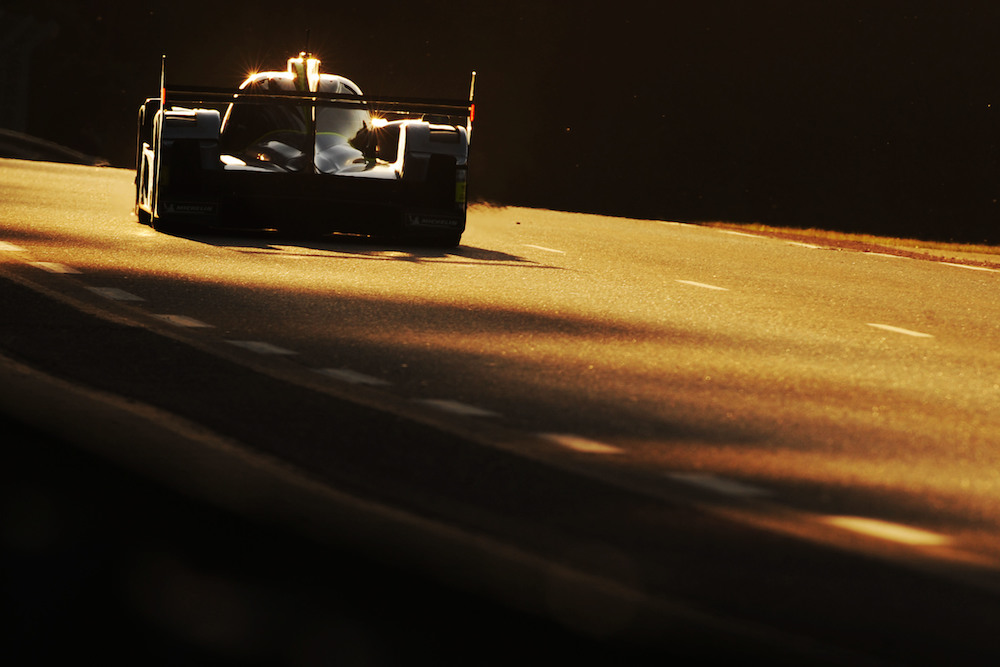
ByKolles will take a sabbatical from on-track competition during the upcoming season in order to focus its resources on its Hypercar program. Image by LAT
Another real prospect is a privateer team running additional Aston Martin Valkyries as part of the brand’s commitment to Year 1 of the new formula of “at least two” cars.
Beyond that, current LMP2 constructors ORECA and Ligier are known to be currently working on partnering with a manufacturer for a program, in addition to exploring options to help produce cars for privateer teams. And ORECA’s Hughes de Chaunac is confident that this new ruleset will attract further manufacturer interest.
“We have started working on several car [design] options,” de Chaunac, who has been a driving force behind ORECA’s partnership with Rebellion Racing in LMP1, told RACER. “Our engineers need to increase the pace now and start talking with one or more manufacturers. Whether it is a French manufacturer or not is not critical. Our objective is September / October 2020 but [ORECA being ready] could happen later on. Our hard deadline, in any case, is Le Mans 2021.
“Our biggest challenge in the end will be time management. We are really short on time, and we need to be fast, creative and innovative. This is a new way of addressing this [new] set of regulations as there is a BoP now. In essence, there is no longer a point in developing something very complex.
“We don’t have many details about the BoP, yet it is a process through which teams are able to enter and remain in a series. The advantage of the BoP is that it prevents people from spending high sums of money as you aren’t able to enjoy the benefits of over-developing a car anymore.
“With a low budget, you can convince OEMs to join the competition now. You no longer need to spend a lot of money. ORECA is currently looking at partnering with an OEM. There are several discussions ongoing. It is also great to have the option to go hybrid or non-hybrid. That is something we pushed for.”
There is also a chance we’ll see current LMP1 non-hybrid teams back for more beyond next seasons, but no decisions are expected any time soon.
There have been false starts with LMP1 privateers though, in particular over the performance gap between privateer and factory entries in recent seasons. The existing teams (SMP and Rebellion), and constructors (Dallara, Ginetta and ORECA), are going to want to see real evidence that the suggested budgets are attainable, and that the balance of performance process can deliver true competition between factory and non-factory cars, before committing.
Further complicating the matter, Vincent Beaumesnil, Sporting Director of the ACO, said at Sebring that it was envisaged that during Year 1 for the Hypercar regulations would also create the opportunity for the current LMP1 non-hybrids to be grandfathered in.
“We have done this in the past with every major rules transition,” he said.
There is no confirmation as to whether that would last more than a single season. It will be interesting to see how many, if any, current LMP1s are on the grid past next season…

Stephen Kilbey
UK-based Stephen Kilbey is RACER.com's FIA World Endurance Championship correspondent, and is also Deputy Editor of Dailysportscar.com He has a first-class honours degree in Sports Journalism and is a previous winner of the UK Guild of Motoring Writers Sir William Lyons Award.
Read Stephen Kilbey's articles
Latest News

Comments
Comments are disabled until you accept Social Networking Cookies. Update cookie preferences
If the dialog doesn't appear, ad-blockers are often the cause; try disabling yours or see our Social Features Support.