Autocross Handling Secrets: Swaybars
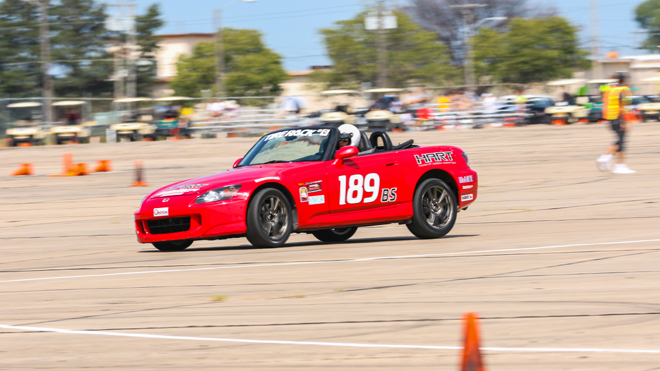
In the world of competitive SCCA autocross, swaybar modifications are a must. When it comes to SCCA's autocross rules, if your car came with a swaybar, chances are you're allowed to change it – and if it didn't come with one, you can probably add it. This works out well because a correctly adjusted swaybar can be a highly effective tuning tool for making any car faster.
"Swaybars," reveals Guy Ankeny, who works in the Damper Works division of FR Sport, "are one of the most important things on your car."
And Ankeny should know. Beyond being one of the go-to suspension authorities in the SCCA's autocross community, he's also a multi-time SCCA Solo National Champion who has turned wrenches on everything from Solo cars to professional race sedans to formula cars.
"Stable doesn't mean fast," he explains. "Stable means easy to drive, and is generally more confidence-inspiring."
For SCCA's softly sprung Street-category machines, taking advantage of the rules allowance to change the swaybar of your choice can make a big difference not only in corner grip, but also transitional speed, as well as how your car accelerates off a turn.
"For a rear-wheel-drive car, a front bar is for sure the best way to go," says Ankeny. "The thing the front bar does is not only keep the front of the car from leaning so it will transition quicker and keep the car flatter pretty much everywhere – which is a great thing – it also gets more rear grip."
A rear swaybar, Ankeny explains, generally takes away rear grip, basically lifting the inside tire. "So, if you are having power-down issues, you surely wouldn't want to put a bigger bar on the rear of a rear-wheel-drive car."
If you happen to pilot a front-wheel-drive or all-wheel-drive car, your choices, unfortunately, are slightly less clear. One school of thought is to run a bigger front swaybar to help limit body roll and minimize camber loss, but that typically comes at the cost of acceleration, as the swaybar transfers load from the outside to the inside tire causing it to try and lift.
"A front-wheel-drive car is obviously slightly different because you are limited by inside wheel spin and other things, so you let that dictate what size swaybar [you run] – more wheel spin on a stiffer [front] bar and less wheel spin on a softer bar if you don't have a limited slip," says Ankeny.
Because of the tendency for the larger front swaybar to increase wheel spin on a front-drive car, the better choice is typically a larger rear swaybar. A larger rear bar helps free up the rear of the car while transferring load to the front-drive tires. You may give up some transitional speed with the relatively softer front setup, but this is typically more than made up for by the ability to rotate the car in long-radius turns and the added corner exit grip the front tires gain. The same is often true for all-wheel-drive cars.
"Most of the all-wheel-drive guys will run a bigger rear swaybar because they can't make the car rotate," says Ankeny. "You don't want the car lifting the inside rear tire but, at the same point, steady state, the cars generally understeer so badly that you have to mask it with something else."
In Part 2 of this series, we'll look at how swaybar choice differs for SCCA autocross classes that allow spring changes.

Latest News

Comments
Comments are disabled until you accept Social Networking Cookies. Update cookie preferences
If the dialog doesn't appear, ad-blockers are often the cause; try disabling yours or see our Social Features Support.