2018 F1 tire testing to start before pre-season
Pirelli will start its preparations for the 2018 Formula 1 season before pre-season testing gets underway next month.
The tire manufacturer has 25 testing days it can use to develop its 2018 tires, as part of new regulations introduced last year. While pre-season testing for the coming year doesn't get underway until Feb. 27, Pirelli has confirmed to RACER it will begin track running looking ahead to next season early next month.
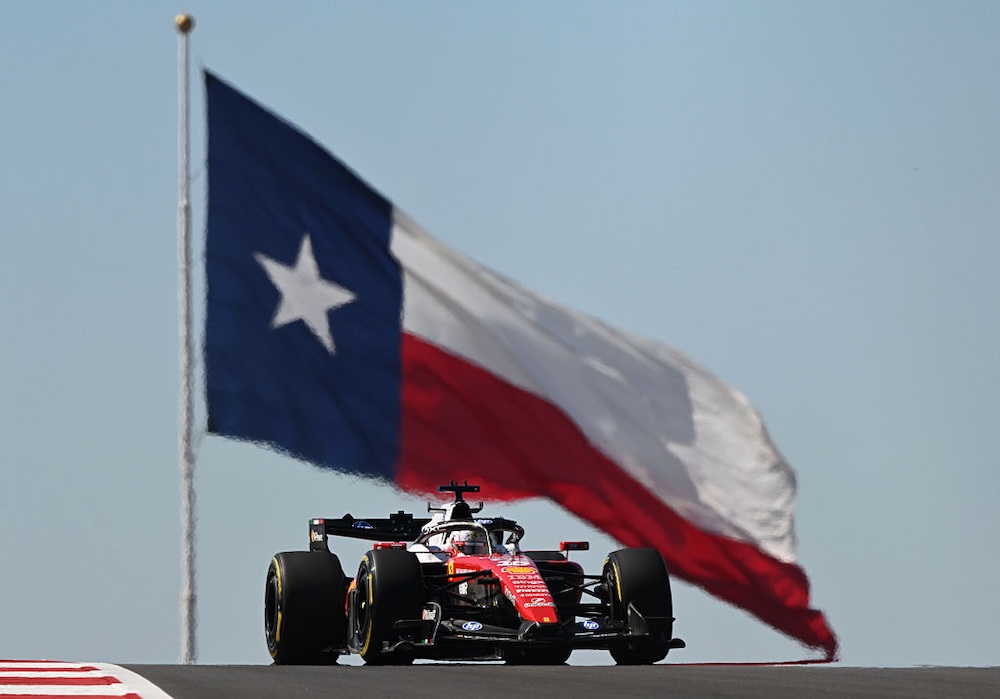
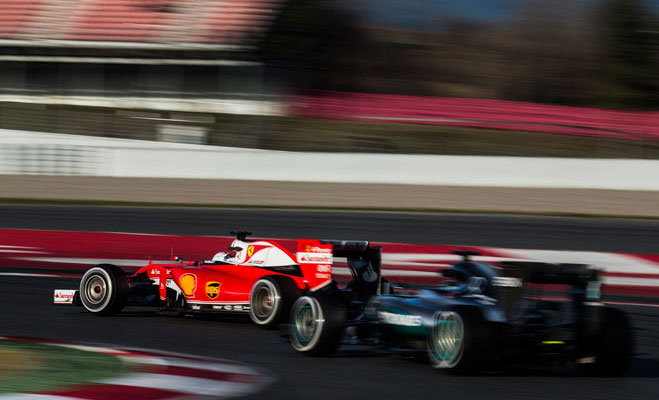
A two-day test will take place at the Fiorano test track in Italy from Feb. 9-10, with Ferrari carrying out wet tire running for Pirelli using a mule car. Ferrari was one of three teams – also including Mercedes and Red Bull – to provide a mule car for the purpose of Pirelli's tire testing last year.
The extra tire testing has been necessitated by new regulations that will be introduced this season. Wider tires will offer more grip and are designed to allow drivers to push for longer periods of a race, with the new tires coming in alongside aerodynamic changes. The additional width has an impact on the tread patterns of the wet tire compounds, which is why Pirelli is keen to start further testing as early as possible.
On top of the 2018 testing, Pirelli will also receive one day to test wet tires during the pre-season tests in Barcelona. The tire manufacturer has confirmed it will artificially soak the Circuit de Barcelona-Catalunya if required in order to simulate wet conditions and ensure all teams carry out running on the wet and intermediate compounds.
Eight of the 11 teams have yet to sample the wet tires, while Mercedes, Red Bull and Ferrari all did so during blind tests and therefore were unaware of which structure and compound they were driving.
The teams see the tires as one of the crucial performance differentiators, with McLaren technical director Tim Goss (pictured) recently telling the team's website it has been an area of major focus.
"Understanding what the tires are actually going to do has been a huge challenge," Goss said. "The 2017 tires are slightly larger in diameter, but, more significantly, they are wider. Imagine the old 2016 rear tire now going on the front of the car, and a similar-sized increase on the rear tire to accommodate.
"Pirelli ran a very intensive test program during 2016 to develop the new tires, with the support of three teams. They got lots of mileage under their belts throughout 2016, and all that data has been provided to all the other teams. But, from all of that testing, trying to piece together what we think the tires are going to do in terms of performance, degradation, thermal stability etc., that's still quite challenging.
"And there's a couple of reasons for that: even nowadays, it's still quite difficult to understand tire behavior – even if you go track-testing. Additionally, the 2016 mule cars won't behave in the same way as the 2017 cars – so what we're trying to do is identify which areas of performance are attached to the tire and which to the mule car. That's a major challenge.
"We're pretty close to knowing what we're going to get from the tires, but really understanding how they'll sync with the new regulations will be quite a challenge. In pre-season testing, we will learn a lot."

Latest News

Comments
Comments are disabled until you accept Social Networking Cookies. Update cookie preferences
If the dialog doesn't appear, ad-blockers are often the cause; try disabling yours or see our Social Features Support.