.jpg?environment=live)
BUXTON: Passing Judgment
It's been quite the couple of weeks of upbeat news in Formula 1 circles. With Billy Bottas finally confirmed at Mercedes, Flip Flop flip-flopping back to Williams and Liberty finalizing the deal to buy F1, there's been a steady stream of positivity following the sadness surrounding the latest demise of Manor.
Hidden behind the big headlines, though, were some optimistic noises coming from a lecture given by the FIA's new Deputy F1 Race Director, Laurent Mekies, in which he stated that the stewarding process in 2017 would be streamlined through the use of improved technology, allowing clearer and quicker decisions. While 2016 actually saw a decrease in the number of penalties handed down in Formula 1, the controversies surrounding those decisions were vociferous.
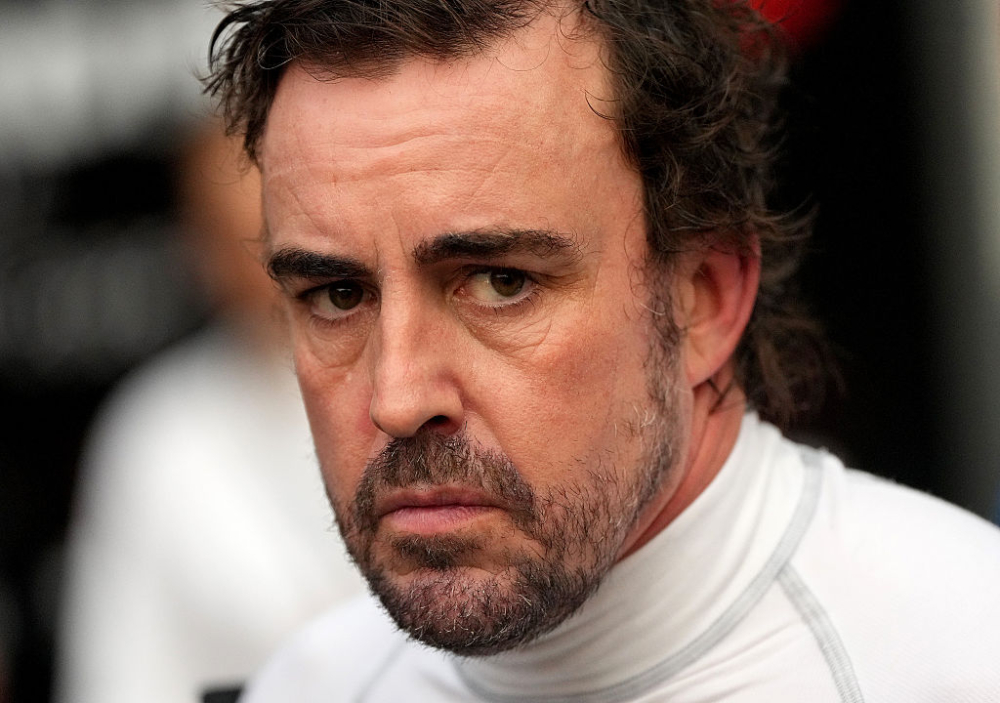
Comments made over the winter by BRDC president and sometime FIA steward Derek Warwick (pictured, right, with FIA president Jean Todt) hit the nail plum on the head, for me. The sport seems to have fallen into a trap of aiming to please the big guns, the Alonsos and the Vettels most notably, in its application of racing penalties and blue flag etiquette. Quite apart from the seemingly constant bleating of multiple world champions being a fairly poor advertisement for the sport, and by no small mark for the drivers themselves, the pandering to their discontent has created a restriction of the art of racing.
"We need to come back and help the back end of the grid, I think. Take away blue flags. Take away all these penalties. Let's get back to harder, harsher racing," he said. Quite right, too.
It was somewhat ironic that, after leading the charge against Max Verstappen's questionable defensive methods in 2016, it should be Sebastian Vettel who was the first to suffer the ignominy of being penalized under the newly clarified rules on moving under braking, thus denying him a podium he himself had inherited after Verstappen had been penalized for cutting a corner in Mexico. That Verstappen was never found guilty of exceeding the rules on defensive driving speaks volumes about just how much fuss was made over something on the limit of acceptability but not actually against the rules. And yet while much was made of Verstappen's driving, few showed the same vindictiveness toward the often-penalized eventual world champion, who proved time and again that both his overtaking and defensive acumen was clunky at best.
Even then, however, one must ask if penalties were the right thing to hand down. Do we really want overtaking to be easy? Is the banging of wheels and a bit of carbon fiber going awry not part of what makes the sport so exciting? If we argue that drivers must be allowed to overtake, we cannot then deny them that same opportunity to defend.
F1 has seemingly sanitized itself, with the FIA and the stewards' office naively complicit in its apparent self-castration. But for the first time, those at the center of the problem have started to recognize that the tide needs to turn for the sport to prosper.
Garry Connelly, the chairman of the FIA stewards, went on the record at the end of last year following a post-season discussion on Formula 1 stewarding in Vienna, and admitted that greater consistency is required across the board. He mooted the potential for regular conferences after every three or four races in which the stewards could go over recent decisions and converge on a unanimous method of judgment. As a first step, it's a good start.
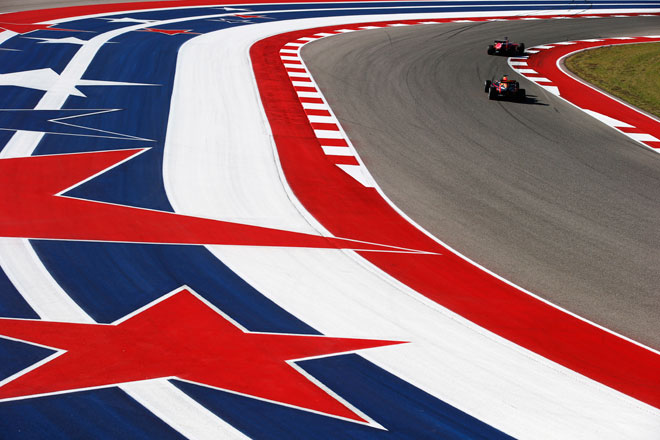
The irony, of course, is that it was at the FIA's own behest that racing circuits made the move from the once fashionable gravel traps to the vast swathes of run-off that so typify modern racetracks. It was considered that run-off was safer than gravel, and of course in many ways it is. Reducing risk, however, means that one also reduces the challenge. Mistakes are not punished. Adequacy becomes enough where once only the exceptional could flourish. And so, for perfectly honorable reasons, the sport is the maker of its own dilemma.
How do we fix it?
In short, the entire concept of the manner in which the sport is stewarded, seems to me to be in need of revolution. As things exist today, Charlie Whiting as Race Director and his new deputy Mekies will flag up an incident they see as debatable to the stewards. The panel of stewards then go away and look at the data and the replays, debate the points, determine culpability, decide on a suitable punishment, notify Charlie who then hands down the judgment. The process is long and archaic and completely unfit for a sport whose many sporting and competitive intricacies can change by the corner, never mind by the lap.
I cannot think of another sport on earth that would take anywhere from five minutes to, at times, the duration of the game to decide whether a foul had been committed or a goal scored. I cannot conceive of another contest in which a play would be examined after the final whistle in order to ascertain acceptability.
As the old adage says, too many cooks spoil the broth.
In most sports you have a referee. He, or she, who must be obeyed. The referee is aided by linesmen. And, often, you will have your video referee or fourth umpire, whose role it is, either as an individual or as a team, to look at the video evidence to provide and answer of which those charged with deciding in real time could not be certain.
In soccer, you don't get to stand in front of a panel of stewards and argue your case. You don't get a room of people watching a tackle over and over and over. The referee sees what he sees and you get a card, yellow or red, a warning or a sending off. In rugby, if you foul badly enough you get sin-binned, just as you do in hockey. In the NFL a player can be ejected. Not after 30 minutes of debate but there and then. On the spot. No argument.
But could the same immediacy work in F1?
Toward the end of last season, I had an interesting chat with a few folks in the FIA about the idea of "penalty corners" or "joker laps." The idea had gained some real traction and interest not just from the FIA but from the teams, too. The concept had originally come from Olav Mol, he of the award-winning NSFW Dutch F1 commentary, and was based in part on that which exists in the FIA World Rallycross Championship.
The idea went as follows. At all F1 tracks, a "joker" corner would be designed. This corner would be built at a part of the track that has the most run-off, possibly the corner which is most often cut. It would be used solely in the event of a driver needing to be penalized for either exceeding track limits or for allowing his racing etiquette to have fallen below an acceptable level. The "joker" would add approximately one second to the overall lap time by increasing the length of the lap.
You could do it everywhere. Even Monaco where a cone on the outside cobbled run-off at Ste Devote would create the perfect long way around.
The "joker" would have to be served immediately, within the lap of it being handed down. No arguments, no excuses, no debate. Get it served, get it done.
The downside for the teams and drivers, they would argue, of course, is that very lack of debate. The upside is precisely the same.
Today, if an infraction occurs, there is a delay until a judgment is passed. There is then a further delay until the penalty is served. All of this means that the moment has long since passed and the excitement of the battle as it was, ceases to be relevant.
Imagine, for a moment, the Mexican Grand Prix last season. When Max Verstappen cut the first corner, just imagine he'd been judged immediately to have exceeded track limits and thus was handed a joker. Next lap, he takes his joker, in so doing losing a second. It penalizes him and puts him either into the clutches of the battle he was trying to avoid, or at the back of the pack he was at one time leading. It penalizes, but keeps the driver in the fight. It punishes and it enthralls.
But in order to make it work, you'd need a referee. Just as in rallycross, you'd need one person whose responsibility it was to make the ultimate call. Alone.
It is a big responsibility, as on one person's head falls a huge amount of power. But with that power comes the requirement to use it wisely. It could be argued that one person is far less likely to make a sketchy choice than a group who have each other to back them up in the face of derision. And so, with one person in charge, it follows that more hard racing would fall through the net. Only the worst, most blatant and obvious fouls would be punished. An individual would be far less likely to punish a 50/50.
And, of course, this job wouldn't be permanent. As in all other sports, the role of referee would rotate weekend to weekend. If any referees fell below the level expected, they'd be pitched.
Have a linesman or two keeping an eye on track limits. Have a fourth official if you absolutely have to. And let Charlie Whiting be a Race Director. Allow him to be responsible solely for the larger picture, that of circuit suitability and safety, from initial inspections to the calling of flags and the releasing of the safety car. That, in itself, is a mammoth task and the one to which his focus should be singularly fixed. Let him chair driver briefings and oversee, with Jo Bauer, the technical regulation of the sport.
But leave the refereeing of the sport to a referee.
As always in F1, the biggest problems seem always to come from the over-complication of something intrinsically simple.

Latest News
Comments
Comments are disabled until you accept Social Networking Cookies. Update cookie preferences
If the dialog doesn't appear, ad-blockers are often the cause; try disabling yours or see our Social Features Support.