BUXTON: Operation 'Beast Mode'
It's that time of year again. With the New Year barely a week old and testing still two months away, news in Formula 1 land is fairly thin on the ground. Headlines revolve around car launch dates, frustrations over delays in pinning down those final few driver moves (OK, that's quite a pivotal one this year) and the annual pre-protests to the FIA over tech that one team can't figure out and wants the other teams to stop using.
It's also become the time of year when drivers' social media accounts switch from photos of beaches and ski slopes, to sweaty selfies in the gym.
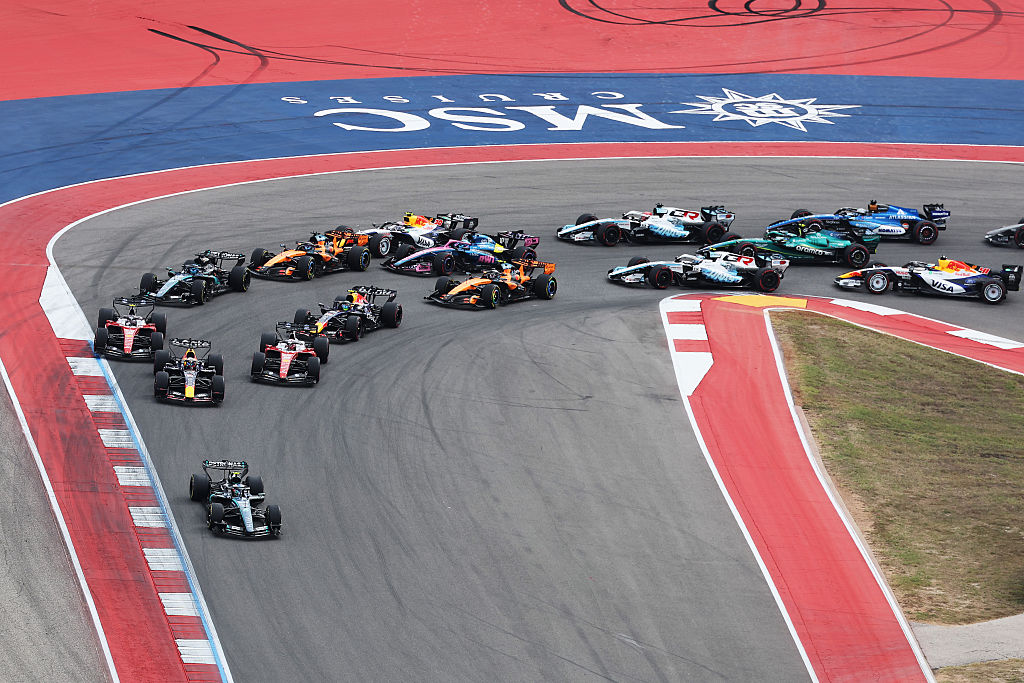
This year those posts have greater relevance however, as the shifting in technical regulations for 2017 has created a new formula which promises to be ultra-physical and a huge challenge for the current crop of Formula 1 driver. Drivers to have tested 2017 mules and Pirelli's new tires (pictured) confirm the physicality to be tremendous, with the earliest drivers to have run the tires suggesting that a few of their colleagues might struggle to see the flag in Australia, so remarkable was the increased strain placed on the pilot.
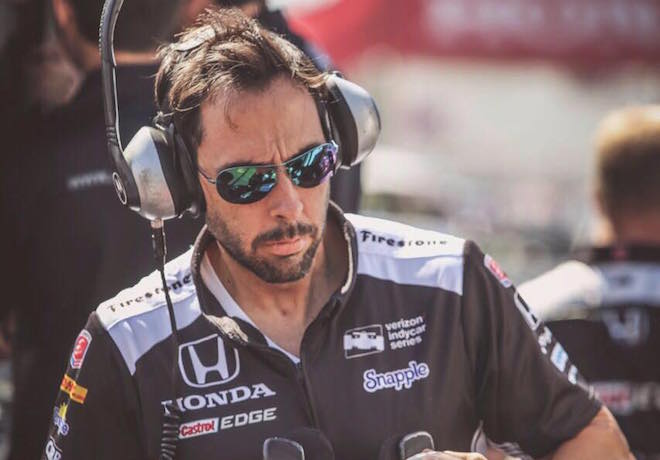
The next two months will thus be pivotal for Formula 1's class of 2017 as they and their coaches change up their gym routines for the new era. One man who knows only too well the challenges of shifting a driver's training program to suit a more physical formula is Carlos Corell. The Spaniard (main image) has worked with the likes of Charles Pic, Giedo van der Garde and Sergio Perez in his career, and last season he was responsible for transforming Alexander Rossi from a lean Formula 1 racer into an athlete capable of taking a heavy, raw IndyCar to the Borg Warner Trophy on his first attempt.
"The main target in Formula 1 over the past few years was being as light as possible," Corell explains. "That made our lives very difficult, especially with tall drivers like Alexander, because if you gain one or two kilos of muscle you were already over the weight limit. So the target was finding a balance with what we could consider optimal between body composition (muscle weight, fat and water) and performance.
"Let me explain. If we have a target of max 75kg (165lb) with kit (helmet, HANS and suit) and our particular driver's optimal weight to perform at 100 percent is 79kg (175lb), then either we have to lose weight and potential performance as we deal with sickness and fatigue, or we race at a higher weight and hit 100 percent performance."
Nobody ever chooses the second option. Your teammate will always be lighter. Thus faster.
As such, Formula 1 driver training has focused on gaining enough muscle to perform as close to 100 percent as possible while also keeping lean. It's why current F1 drivers resemble gangly teenagers more than they do muscle-bound brutes. A huge part of maintaining a lean but efficient physique revolves around a driver's diet, in order to keep their weight on target and keep their bodies optimally balanced to avoid issues with hydration, internal cell function and muscle recovery.
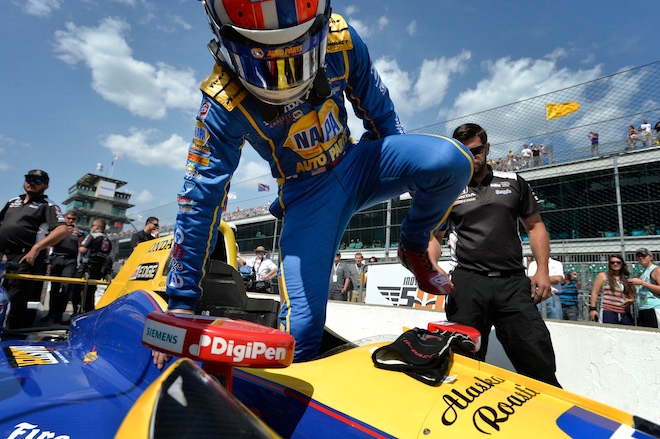
The move to IndyCar was late for Alexander Rossi and he had little time to prepare for the vast change in physicality that would come from a 1575lb car with wide tires and no power steering. The need for Rossi to put on muscle, however, gave Carlos greater freedom in his training plan (pictured).
"Going to IndyCar meant we could train the way we always wanted to train, just focus on gaining strength to deal with the car in any condition, without having to deal with the other issues... just focus on being the most fit you can be to drive those cars. Honestly, Alexander gained 17lb of pure muscle and he was still way under the weight limit ..."
With Formula 1 returning to more aerodynamically-focussed design specifications, the additional downforce produced by the cars in 2017 will cause cornering speeds to increase, and with them G-forces and physical strain. Pirelli's tires will grow by approximately 25 percent, meaning a larger contact patch with the road and more grip. The combination of the two could result in lap times dropping by as much as four seconds, and the demands placed on the driver increase tremendously. The minimum weight of an F1 car has also increased by 20kg (44lb) for 2017, but it is the increase in both aerodynamic and mechanical grip which will have possibly the greatest effect, increasing the resistance through the wheel and the physical exertion needed to turn the car.
But just because the weight limit has increased by 20kg, that doesn't mean the drivers can suddenly start putting on muscle.
"Keep in mind the teams will more than likely use the extra weight on the new aero and mechanical parts, so it is hard to say how much extra weight they will allow the drivers to put on," Corell notes. "As always, teams will want their drivers to be as light as possible to play around with the weight balance of the car. But if the drivers are allowed to increase their body weight, I would focus on strength.
"Of course, the neck is going to be one of the parts of the body that will suffer the most with these new changes, so obviously I would pay special attention to the neck and trapezius muscles, but I would not forget about core, shoulders and upper chest. Faster cars in the corners and bigger wheels means the steering will feel heavier so the drivers have got to be ready for that! In terms of diet, you would keep it the same but I simply would increase the daily nutrient intake according to their new weights.
"In one way, the new regulations could be great news for the bigger guys as, depending on how much the teams allow them to bulk up, they could train harder and get stronger. The problem I see is, they will always have a shorter, lighter teammate who will be able to gain, say, 10kg (22lb) while he is only allowed to gain 2-3... and we would be in the same situation as years ago – but hey, at least now they would be below the limits!"
The physicality could also be a challenge for the younger drivers. It was widely reported last year in Malaysia that Max Verstappen lost consciousness after one of the hottest practice sessions on record. While quickly refuted by the team, the very suggestion that drivers were already at the edge of their physical capabilities under the old regulations could cause some big question marks going into 2017.
"To be honest, I think the young guys are the ones who will have to work harder to get used to the new changes. They have never had to train for anything like this and the most important thing is that they have never raced cars like this either. Alonso or Hamilton, for example, already did. They know how it feels and how to train for it, but for young drivers it is a different story. That being said, I also think that, because they will be more concerned about how this new experience will be, these 'young guys' may be pushing harder than the 'old guys.' Some of them could be a surprise.
"But remember as well that the physical strength training is only one part of the game. Drivers have to concentrate on cardio, they have to work on reaction, coordination and ensure that every aspect of their craft is at the very top. It's the combination of all these factors that makes them the elite athletes they are."
Next time you see a driver's gym selfie, don't be surprised if he looks exhausted. 2017 looks set to give Formula 1 drivers their toughest physical challenge in years. Time to get training. Melbourne is less than 80 days away.
Presented by:


Latest News
Comments
Comments are disabled until you accept Social Networking Cookies. Update cookie preferences
If the dialog doesn't appear, ad-blockers are often the cause; try disabling yours or see our Social Features Support.