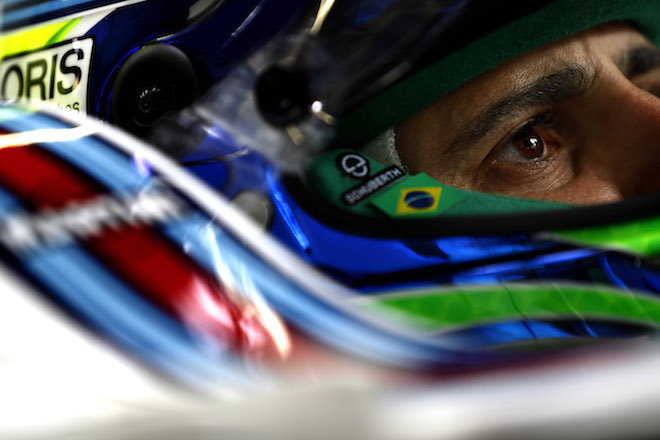
MEDLAND: Is Massa the right move for Williams?
The month of December is fast becoming Formula 1's most dramatic of the year, despite the lack of racing. The world champion quit, the technical boss of the most dominant team could be poised for a switch to a former employer, and a driver who is just over three weeks into retirement is lined up for a return.
Felipe Massa is currently on holiday with his family ahead of what was set to be his first Christmas as an ex-F1 driver. However, the Brazilian has quickly found himself at the center of the Williams merry-go-round as the futures of a number of key personnel remain unclear.
Massa's qualities are well-known, as we reflected upon here on RACER a week after what should have been his final race. But is he the right man for Williams to turn to if it allows Valtteri Bottas to join Mercedes? And perhaps more importantly: is a return the right move for Massa himself?
There are a number of factors in play that have left Williams trying to convince its former driver to reverse his decision to retire. Should Bottas leave, Massa is the only way the team would have a constant in its driver line-up, allowing it to understand its progress, rather than having to embed two new race drivers into the team at the same time as dealing with a complex new car at the start of a new set of regulations.
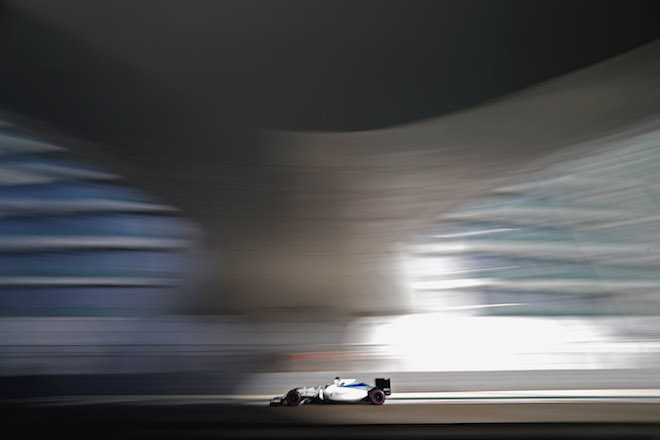
With the 2017 aerodynamic regulations in mind, Massa is attractive to Williams regardless of his history with the team. At 35 and with 14 years of F1 experience under his belt, the 11-time grand prix winner has driven brutal V10s, hugely aerodynamic V8s and the current V6 cars, which should provide a slight advantage as some of those aspects are combined next season. He was also at Ferrari in 2009 (PICTURED) – the last major aerodynamic change – and will have seen how the team recovered from a poor start to be much more competitive before he had his life-threatening accident at the Hungaroring.
However, the above isn't to say there aren't any downsides to having Massa next season. For one, his form tailed off as 2016 went on. Having scored 36 points in his opening five races of the year – compared to 29 for Bottas – Massa only added a further 17 points in the remaining 16 rounds. Bottas, on the other hand, scored 56 points across the same period. It is possible the results were partially due to Massa accepting it was his last season in F1 and not fighting for his future. But even if it wasn't the start of an overall decline, he would be in the same position next year, having been offered a one-year deal.
While he can also be blindingly quick at times, even Massa's closest ally in the form of head of vehicle performance and former race engineer Rob Smedley feels the Brazilian still doesn't always know why. Alongside experienced drivers, as he always has been since 2006 – Bottas, Fernando Alonso, Kimi Raikkonen and before that Michael Schumacher – that wasn't such a problem, but could it prove costly when paired with 18-year-old rookie Lance Stroll?
I understand that Massa does not want to let Williams down, not least because the team gave him a new lease of life after he joined from Ferrari in 2014. It speaks volumes about the sort of guy he is, as it was Williams that originally initiated his retirement by lining up Stroll. With no other competitive drive available, he opted to quit rather than drop down the grid. But it seemed that he became more and more at ease with that decision as the year went on.
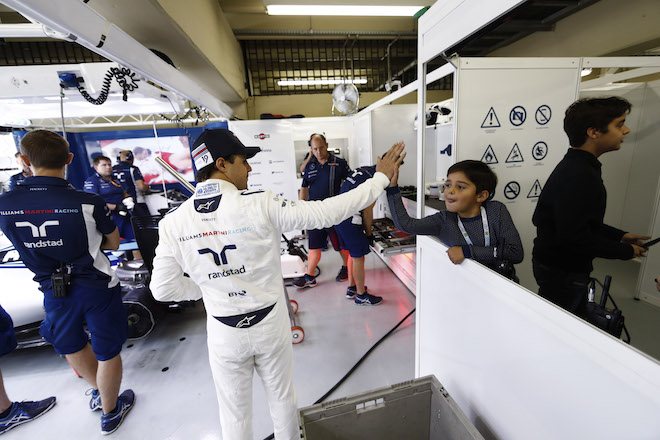
The more important question is whether a return is good for Massa, regardless of what the team needs. Granted, Williams made the classy gesture of allowing him to announce his departure on his own terms, but he has spent the time since them getting mentally ready to leave the sport that nearly killed him. The sight of an emotional Massa embracing his wife and son in the pit lane at Interlagos is one that stood out, because it seemed all three were relieved that his time in F1 was so nearly over.
What else does Massa have to prove? With a one-year deal on the table, it's highly unlikely that next season will provide him with the chance to add to his tally of race wins or go one better than that agonizing championship runner-up spot in 2008. When I spoke to him on the night before what we all thought was his final race in Abu Dhabi, Massa was ready to move on to new projects and spend more time being a father alongside racing. And it should not be forgotten that is one of the core reasons why Nico Rosberg – the man who has triggered the current scenario – made his decision to retire, too.
Williams is looking for a quick fix to the potential reality of losing Bottas. It would be harsh on the Finn if he were unable to take his chance at Mercedes, but Williams certainly doesn't have to approve his release. The team could also take a leaf out of the Mercedes book and look to hire a like-for-like replacement for Bottas, rather than return to the man who complemented him well.
The desire of title sponsor Martini to have at least one driver over the age of 25 complicates matters somewhat, but there appears to be a real fear among teams when it comes to hiring drivers from outside F1. Mark Webber – who has recent experience of switching categories – urged Williams to target the likes of LMP1 stars Brendon Hartley, Sebastien Buemi and Lucas di Grassi. The first two are of similar age to Bottas, and would therefore provide the potential for future stability rather than a stopgap in returning to Massa.
Then there are drivers such as 25-year-old Felix Rosenqvist (PICTURED) who has spent the year since winning the 2015 F3 title securing victories in Indy Lights and the Blancpain GT Series, achieving podiums in Formula E and Macau, and scoring points in DTM. The above are just examples, but they are also proof of the huge pool of talent that exists outside of F1.
If Williams is to let Bottas leave, 2017 provides an opportunity to target a longer-term replacement. With little crossover from the current cars, everyone starts from zero again, so it could be suggested that a new driver would be at less of a disadvantage. Hiring Massa would provide a relatively safe pair of hands, and also allow Williams to target existing F1 drivers to replace him at the end of next year. It would need to do so, because one season is unlikely to give Stroll enough experience to lead the team in 2018.
RACER's Formula 1 coverage is presented by Grand Prix Tours. Feel the power and the glory of Grand Prix racing now via Grand Prix Tours' Pick 8 competition.

Latest News
Comments
Comments are disabled until you accept Social Networking Cookies. Update cookie preferences
If the dialog doesn't appear, ad-blockers are often the cause; try disabling yours or see our Social Features Support.