SCCA: Writing motorsports history
When you first discovered the Sports Car Club of America, it was probably because you had developed an interest in some form of sportscar competition. Perhaps a friend had convinced you to come out to a local SCCA region's Solo event and race your way around the pylons in your daily driver. Maybe the guy (or gal) down the street told you about their Club Racing exploits at the last neighborhood cookout and convinced you to come crew for them at the races the next weekend. Or maybe you went to a professional racing weekend where SCCA classes were running and you got caught up in the excitement of being part of a real racing organization. It's doubtful, however, that anyone has ever joined the SCCA because of their historical interests – which is a shame really, because the Sports Car Club of America has an important place in the history of American motorsports.
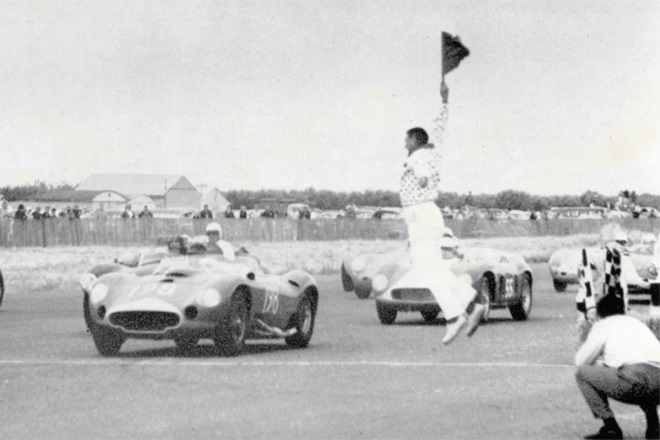
It was SCCA members like John Fitch and Briggs Cunningham who first went to Europe and proved that American cars and drivers could compete head to head with Europe's best. It was SCCA members like Cameron Argetsinger and Bill Milliken who brought European style road racing to America at Watkins Glen, N.Y., in 1948. It was SCCA member Alec Ulmann who brought the Europeans themselves to America for the Sebring endurance races and the first U.S. Grand Prix. It was SCCA visionaries like Tracy Bird and John Bishop who guided SCCA from a strictly amateur organization to one that staged the premier road racing series in U.S. history like the Can-Am and Trans Am series of the 1960s and '70s. It was SCCA members like Cliff Tufte of Road America fame who built the first permanent road racing tracks in this country. And it was designer/builder/drivers like Jim Hall and Dan Gurney who reshaped the technology of racecars with innovations that rocked the motorsports world.
It was SCCA's Donna Mae Mimms who, in 1963, became the first woman to win a U.S. racing National Championship in her pink Austin-Healey. It was a single Club member, Larry Dent, who proved that SCCA is, and forever shall be, a membership-driven Club when he almost single-handedly brought a stop to the near merger of SCCA and the United States Auto Club in the 1960s. Many American racing heavyweights, like Roger Penske and Michael Andretti, began their careers as drivers in the SCCA amateur ranks.
I have been proud to be a part of documenting some of SCCA's history in the 60th Anniversary photo album, The Gentlemen's Club, about the first 30 years of the Club, and in the two popular books on our old racetracks, Ghost Tracks and More Ghost Tracks. The interest in these and the many historical articles that have been published in SportsCar magazine, SCCA's official publication, prove that, although people probably did not join the SCCA because of an interest in its history, they often found themselves drawn to it because the Club has played such a key role in the growth of auto racing in this country.
I remember a magazine ad from years ago, in which a Triumph Spitfire sat alongside a World War II Spitfire aircraft, with a strikingly attractive young lady sitting on the back of the car. The ad caption read "You get the car, the girl...and a piece of history." I like to believe that when you get your SCCA membership card you get the fellowship of the Club, you get the excitement of the competition and you, in fact, become a piece of America's racing history.

Latest News

Comments
Comments are disabled until you accept Social Networking Cookies. Update cookie preferences
If the dialog doesn't appear, ad-blockers are often the cause; try disabling yours or see our Social Features Support.