MILLER: The tough guys' perspectives
The aftermath of the MAVTV 500 at Fontana still lingers as people that weren’t even fans of IndyCar racing can’t quit talking about how exciting it was while the drivers were divided on whether it was Russian Roulette at 215mph or a wild ride in a dangerous profession.
It was also the topic of discussion at our weekly lunch at Paragon (not the dirt track) on the west side of Indianapolis as former drivers and mechanics break bread – and balls – on any number of subjects.
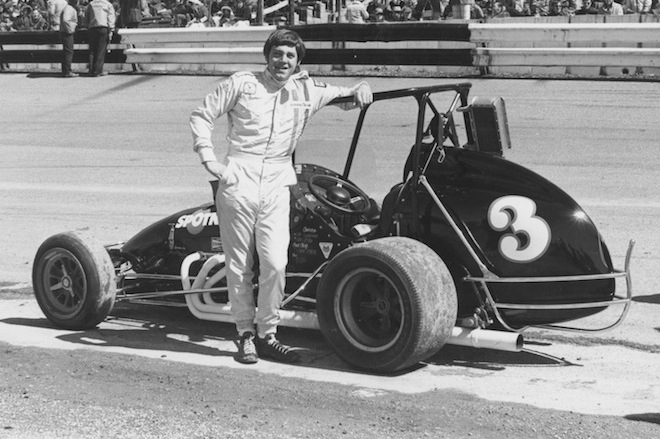
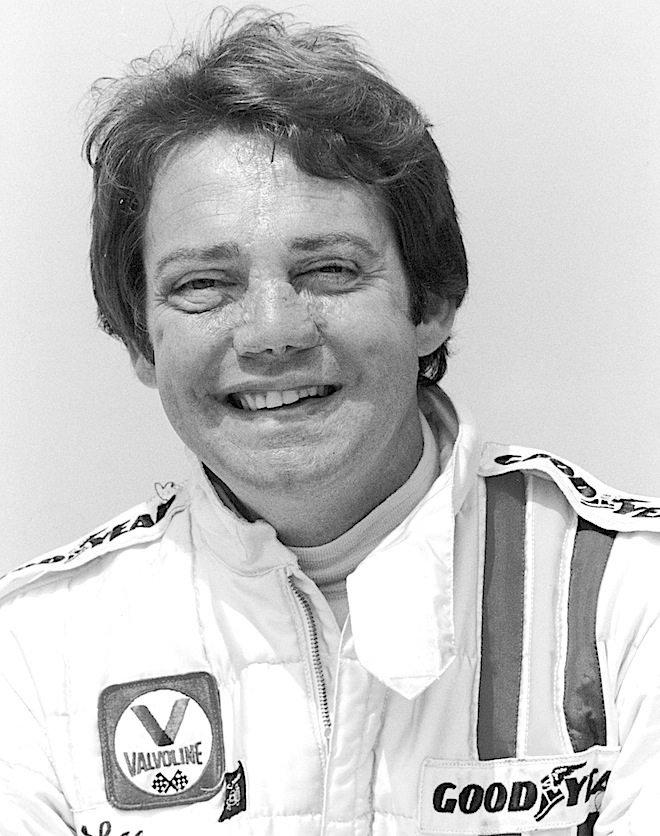
But sitting next to Lee Kunzman (ABOVE) and across from Merle Bettenhausen and Pancho Carter always seems to put things in perspective whenever we start discussing the latest race, something that happened in ‘60s or a particularly brave driver from days gone by.
Kunzman, a midget/sprint ace ticketed for stardom that was terribly burned in a 1970 USAC sprint car crash before nearly dying in a 1974 Indy car test at Ontario Motor Speedway, is the poster boy for toughness. His scarred face can’t hide his crooked grin and a stroke makes walking an adventure sometimes, but his spirit is indomitable as he proved by making his victorious comeback in 1971.
A front-runner in USAC midgets, Bettenhausen hit the backstretch wall during his IndyCar debut at Michigan in 1972 and caught fire – losing his right arm in the process and being burned but was back in victory lane at a USAC midget show in August of 1973.
Already a USAC midget/sprint champion and two years after winning rookie-of-the-year honors in the 1974 Indianapolis 500, Carter crashed testing at Phoenix, was stuffed under the guardrail and almost died but returned to racing four months later – winning the USAC sprint feature at Indianapolis Raceway Park.
That trio embodies the grit of drivers back then and what they were willing to do in order to get back in a racecar.
“No, I never did,” responds Kunzman when asked if he considered quitting after either of his near-death accidents. “It increased my desire to do it, especially the first time. But I never got in a car and thought about danger or dying, I was more worried whether I was still good enough to do it. That’s what I questioned, my ability.”
Bettenhausen’s first memory following his MIS accident was seeing brother Gary as he was rolled out of the emergency room and hearing: “Well kid, do you still want to drive racecars?” Merle mumbled ‘yes’ and the next day “we talked about making a device to plug into my prosthesis so I could race again.”
Carter suffered a broken pelvis, ruptured bladder, shattered right elbow, fractured left forearm, some burns and a big blood loss but only had one thought. “The only thing that concerned me was if I was going to die or not but I never considered quitting. The doctor told [wife] Carla that I wasn’t going to be able to race again and she said to him, ‘You go tell him that.’”
James Hinchcliffe had the same “when can I race again?” reaction following his life-threatening crash last May and we can hope his comeback is as storybook as it was for this trio.
Ten months after his Missouri crash (which also broke his neck and right arm), Kunzman asked USAC to reinstate his license for a midget race in Cincinnati at Tri-County Speedway but was denied because he looked like hell and was still pretty weak. He went anyway, borrowed Chuck Gurney’s helmet, qualified and, against all odds, captured the 40-lap feature.
“I had my left arm taped to the steering wheel, I almost ran over the USAC official when I pulled in because I was too weak to get it out of gear and I was so $%%# tired I couldn’t take off my helmet,” recalls Kunzman with a hearty laugh. “I still had no nose, my eyes were bugged out and my bottom lip was hanging on but it sure felt good because I was back doing what I loved. And USAC had no choice but to issue me a license.”
(TOP) Kunzman preparing for battle on the high banks of Winchester. (ABOVE) Merle and Gary Bettenhausen – just two good arms between them – pictured here at Terre Haute.
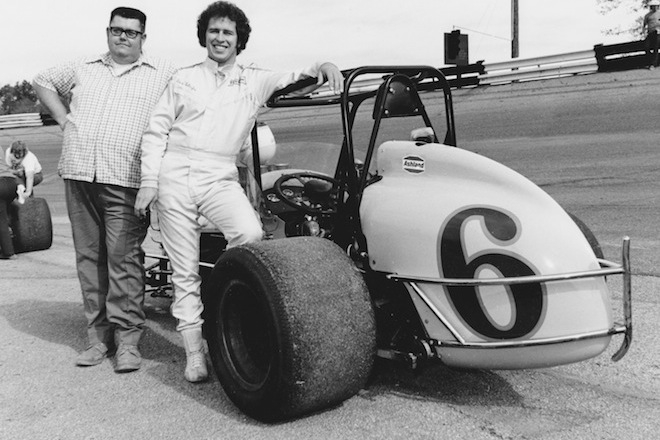
(ABOVE) Pancho Carter and crew chief Steve Stapp before PC conquered Salem in 1974. (BELOW RIGHT) Kunzman still bore the scars of battle in 1979 when he nearly won the Indy car race at Atlanta. (BOTTOM) For the Bettenhausens, the desire to race was never affected by the obvious perils.
Bettenhausen had success in midgets before trying Indy cars and his one-armed comeback at Johnson City, Tenn. was a thing of beauty.
Carter looked gaunt and hardly fit for the demands of a sprint car at IRP when he limped back into one in April of 1978. A special throttle assembly was constructed so he could use his thigh muscles to push down on it and both his arms were pinned and still on the mend. And somebody else had to put on his bandana because he couldn’t lift his arms that high.
But he didn’t need any help at speed – leading 31 of the 40 laps at IRP and then coming back the next day at Winchester to win a 40-lapper flag-to-flag to complete one of the most improbable and impressive comebacks ever.
“I thought I was ready to drive again but I’ll admit I didn’t think it would turn out like it did,” he said. “I couldn’t sleep after IRP so I called the USAC hotline to listen to the rundown and make sure it was true and it was.”
Kunzman’s critical head injuries at Ontario in ’74 required two years of rehab learning to talk and walk again yet he damn near won the IndyCar race at Atlanta in 1979 – losing to Johnny Rutherford by a couple of car lengths.
“Lee is my hero,” said Bettenhausen, who idolized brother Gary and tutored younger brother Tony. “And Pancho is right behind him. They are what racing is all about.”
Unless somebody asks a specific question, none of them ever talk about their accomplishments or brag about their toughness. But they all had opinions on the last IndyCar race and, as you might imagine, the old-schoolers weren’t enamored with some of the complaints.
“Best race I’ve seen in years, you didn’t know who was going to lead next and I thought it was exciting, I liked it,” said Kunzman, a four-time Indy 500 starter who was team manager for Buddy Lazier in the IRL’s early years. “But I hated to see guys crying about how dangerous it was afterwards. There are always crashes in 500-mile races and if there are some things you want to do to mellow things out, then talk about it privately after the race.”
Merle, whose father Tony lost his life at Indianapolis in 1961, was a little more blunt. “You’ve got to make people excited and there has to be an element of danger. Nobody wants to see anyone get hurt or killed but if it was a parade then instead of 3,000 people there would have been 300. If it’s too dangerous then drop to the back of the pack or get a different job.”
Carter, who won the 1981 Michigan 500 and spots for Dale Coyne’s team on ovals these days, says he doesn’t understand the sudden outcry of cars getting upside down. “In 1984 I flipped end-over-end down the backstretch at MIS and Gordon Johncock called in on his radio and yelled: ‘Pancho Carter just killed himself,’ so it was a lot more violent than [Ryan] Briscoe’s shunt and it’s just part of open wheel racing at high speed.
“I didn’t think Fontana was all that crazy. Everyone had a throttle, brake and steering wheel so you had choices. If you want to race, then race. If not, back off and wait for another opportunity.
“If you want to follow each other single file, then get in the Shriner’s Parade.”
Can’t wait until lunch after Milwaukee and Pocono.

Latest News
Comments
Comments are disabled until you accept Social Networking Cookies. Update cookie preferences
If the dialog doesn't appear, ad-blockers are often the cause; try disabling yours or see our Social Features Support.