.jpg?environment=live)
Marshall Pruett’s Tech Mailbag for October 24 presented by Axial
Enter to Win an AX90035 SCX10™ 2012 Jeep® Wrangler Unlimited C/R Edition 1/10th Scale Electric 4WD – RTR.
Please click here for complete contest rules and information!
After a long hiatus, the Tech Mailbag is back with a series of wide-ranging questions that have come in over the last few months. With the IndyCar and sports car off-seasons under way, we’ll have more Tech Mailbags to offer on a regular basis and need new questions. We've also split this edition into two parts with the second set to appear on Monday. -MP
First off, I am wondering about the durability requirements for the LMP1-H hybrid energy storage devices. Correct me if I am wrong, but the teams are allowed two engines per season, three under some particular condition related to Le Mans. The question is, does that include the hybrid system and more importantly the energy storage device? I would imagine the Audi flywheel system wouldn't have too many potential issues, but the Porsche battery and Toyota super-capacitor, I don't know.
Second, if I remember correctly, when KERS was introduced to F1, there was the requirement that the use of it not increase the engine RPM above the limit. Is that still the case? And how do/did they do it? I would guess a differential, but I can't quite picture it.
Third, was there some change to the WEC/Le Mans rules to accommodate the Toyota method for leaving the pits? I thought the engine had to fire without outside assistance before the car was allowed to leave. Don't get me wrong, I think it is a creative decision. I also thought the vehicle had to be neutralized before crews could touch it. Does a charged hybrid system not count against that?
From the video you posted, I loved McNish's comments about the types of tracks being built now, can we get over the Tilke designs already please (long straights into hairpins are pretty boring, try a chicane maybe), and the shout out to Road Atlanta being a real man's track. I still think the comeback he led at Petit Le Mans after starting 2 laps down following a warm-up crash was one of the most amazing drives I have seen.
Daniel, Atlanta
LMP1 hybrid units are not, at present, subject to the same kind of use limits found on other drivetrain components, but each unit is presented for marking and has its usage tracked by the ACO and FIA. I'm told you might see limits put in place in the future.
I'm not 100 percent clear on your second question, but I think the answer is the rule was intended to prevent KERS from being a tool that could take an engine running at its then-maximum of 18,000 revs and boost it over that limit. Any power source that feeds the drive system will influence revs.
Keep in mind the ACO championed the all-electric pit launch with Peugeot's 908 Hybrid. Nic Minassian drove the car out of the box and onto the track under electric power during a public demonstration at Silverstone in 2008, making Toyota's similar routine today exactly what the organizers envisioned.
Peugeot Hybrid prototype (Peugeot image)
Touching the surface of LMP1-H cars isn't a concern.
I've never been a fan of Tilke's work, but that's hardly an original comment for me to make. I haven't seen many Tilke fan sites pop up – let's put it that way. I do appreciate some sections of tracks he's designed, but I try to remind myself that he hasn't had the same blank canvas that designers had back in the day. It's like comparing a Mustang built in the Sixties to the ones produced today. The regulations require many things that take the raw experience of the original design and cast them into history's garbage can.
Heard one of the announcers during the Fontana IndyCar race say that Scott Dixon had 16 tear-offs on his helmet visor – that seems like an awful lot! Does there come a point where optical quality starts to degrade as the number increases? How is clarity maintained as the tear-offs are initially applied to the visor? Seems they would have to be applied very carefully to avoid wrinkles, creases, etc.
Chris Pericak, Charlottesville, VA
I asked Dixie to help with the answer:
“It would have been 15 or 16. The Racing Optics guys do 3- and 6-packs, and we did a combination of them for Fontana. Typically we’ll run nine. Indy we’ll run a few more, but it’s not as bad as Texas or Fontana. It’s more of a precaution. Also, the thing with Fontana, is you’d put some darker tear-offs on top to use while it’s still a little bit light outside and pull those once it gets fully dark. With the old tear-offs, the thick ones, there’s no way you use that many, but the new ones are super thin, so you can build up a bunch of them without losing any quality. You can see out just fine.”
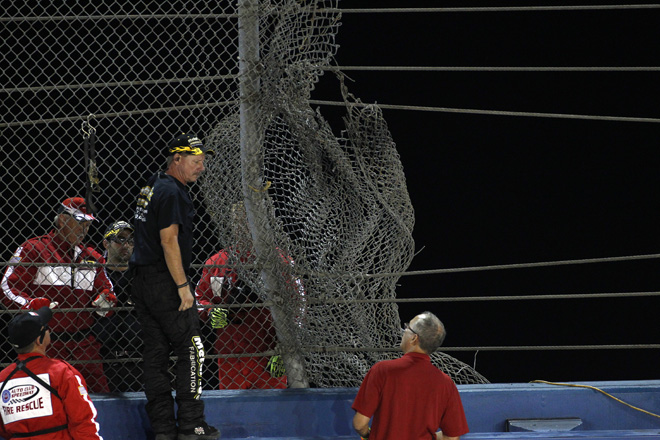
http://www.reddit.com/r/INDYCAR/comments/2fcqv5/aleshins_crash_got_me_wondering_ignoring_things/
I'd be interested in your dissection of the pros/cons of various approaches, from pie-in-the-sky-no-restraints, to feasible but costly, to likely to happen (hopefully the answer isn't "nothing"). I'm sure there are other proposals that the IndyCar fan base isn't aware of, beyond what I've mentioned here.
Peter, Fishers, IN
Great question, Peter. The first note I’ll make is the topic of oval safety advancement needs to be discussed in pre-and post-SAFER Barrier terms. If we’re talking about genuine advancements, there’s nothing that comes to mind, at least on the track side of the equation, that has been done since the SAFER was introduced in the 1990s. That’s a LONG time to have such an important part of our sport remain stagnant.
We’ve seen some tracks make an effort to improve the safety of what they currently have in place – putting tires in front of things that could be problematic if they were hit, but without an active, responsible, and powerful organization to require improvements, it’s hard to see how improved oval safety standards become a priority in America.
Yes, the FIA, through ACCUS, is the responsible party, but I have yet to see someone with real authority step up and take charge. Tracks are independently owned, which makes mandatory upgrades and investments in new safety technologies all but impossible. And who spends the money to test new ideas? At the moment, we have no one in charge of such things for ovals. It’s a troubling void.
I’m not trying to dodge your question, but there’s a practical side to the answer that shouldn’t be overlooked. We can’t even get oval tracks to agree on using one style of fencing or whether the mounting poles should be on the inside or outside of those fences.
Taller SAFER walls would seem like a smart move, but surely we’d want to see some testing done and some comparative data to review before taking action. I doubt the tracks will pay for the testing, much less fork out the money to buy all of the extra barrier material. If NASCAR demanded it, sure, I bet it would happen, but IndyCar isn’t in a position to demand anything from its oval partners right now.
Frankly, the one thing IndyCar can control is its cars. Airbag technology continues to grow – how about inflatable Kevlar bags that deploy and protect a driver’s legs, and another that enveloped the cockpit in the event of a crash that exceeds certain G and speed thresholds? I’ve already written about the need for canopies, of some shape or form, to be developed. I’d love to see more crushable structure extending out from the DW12’s cockpit sides – akin to what Dallara did with its Formula E chassis – to aid the carbon-fiber floor in side impacts.
Protect a driver’s exposed head, add a greater cocoon of safety around the rest of a driver’s body inside the cockpit, and with those measures in place, I think we’d have some fairly robust actions in place to rely on when the next big speedway crash happens in an Indy car.
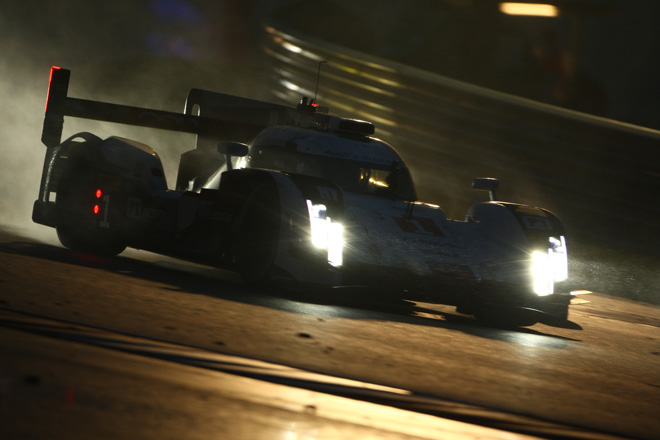
A tech question I have is, I kind of thought that Porsche's entry into the WEC and the 24 hours of Le Mans was to maybe race again and win at the 24 Hours of Daytona. This was before the American Le Mans series died. But now with IMSA using P2 cars and the WEC cars way above the IMSA cars I do not see that happening.
I have read that Jim France/IMSA is trying to put new tech guidelines together for 2015 or 2016. Are they trying to get anywhere close to WEC/ACO cars or will just do their own thing and forget the WEC/ACO.
I remember last year attending the Laguna Seca races and seeing I think it was the Level 5 P2 car and asking them when they were going to Le Mans. One of the crew members said this car will be going very shortly. That was kind of neat seeing a car that was actually going to race at Le Mans. I also remember the Flying Lizard Porsche 911 GT3 RSR heading for Le Mans also after the Laguna Seca race.
I seem to remember hearing or reading that their maybe there is some bad blood between the France family and the ACO in France. We are NACAR and do what we want.
So other than the WEC coming to Austin, will we ever see a Le Mans spec car race in the states and especially race at 24 Hours of Daytona or at Laguna Seca?
Kurt Brogger
We'll see IMSA go to the new global standard for P2 cars in 2017. As for whether we will ever see an American sports car series include P1 cars, I am confident it will happen. History tells us sports car sanctioning bodies come and go and new ones appear every couple of years, so while IMSA does not permit P1s, there's no telling how long IMSA will be around, or whether another sanctioning body will be established where P1s are allowed. Change is a constant in sports car racing, and the lack of P1s at Daytona, Sebring, etc., will change at some point without question.
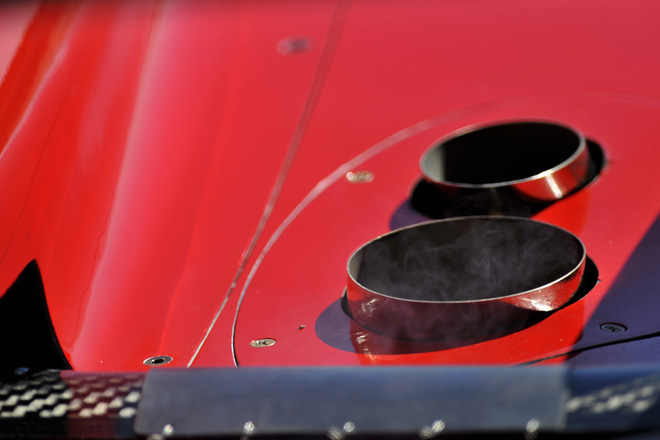
Joey
It’s an open item for teams to manipulate, and also an area that Chevy and Honda spent considerable time exploring in CFD and wind tunnels when the DW12s went into service. One came to the determination an aero advantage existed with the hole sealed, while the other found an improvement with it left open, and both of their findings were influenced by how open or restricted they went with the sidepod radiator inlets. I then watched as teams affiliated with both manufacturers appeared to adopt the other’s findings, and by 2014, I pretty much gave up trying to make sense of whether one was better than the other!
I heard a lot of chatter on the radio at Mid-Ohio about fuel mappings. For example, I heard some teams say go to mapping three or five and the highest I heard was eight. I could be wrong but I think the higher the mapping, the more conservative because Dixon was told to go to mapping eight on the final lap and we saw how that almost ended badly. How many fuel mappings are there for each team? Does it vary from team to team? How different is each mapping from one another?
Also, would it be possible for IndyCar to adopt Code 60 especially for simple spins and stalls?
Raymond, Flemington, NJ
Engine manufacturers tend to create a table of maps for their clients and look to standardize them as much as possible, but teams definitely have input on where those maps are placed. IndyCar limits the "fuel trim" adjustments to eight positions. Many teams prefer to have their yellow maps in the last slot on the dial so drivers don’t have to worry about clicking to a specific position – they can just crank the knob until it stops.
Depending on the series, you can have plenty of maps to choose from, so it differs, but in general, you’ll have full rich and then gradients. Some teams might want Slot 1 at 100%, Slot 2 at 98%, Slot 3 at 95%, and the next team might want it 100/99/98. Another could ask for 100/95/90. And with IndyCar, you also have turbo boost to manipulate and drive-by-wire throttles where individual mapping has really taken off. This is an area most teams, drivers and manufacturers are reluctant to discuss – traction control isn’t allowed, but with some of the throttle and boost response adjustments that can be created in software mapping, you can get close to limiting undesirable wheelspin. Or, at the other end of the spectrum, if you’re looking to help the car rotate on a street course, for example, a more aggressive throttle map could induce wheelspin…lots of options to consider.
It would be possible for a Code 60 in IndyCar, but we rarely see spins and stalls that take up a lot of time.
When the new IndyCar aero kits come out next year, what will the rules be regarding them? Do the teams have to run them “as is”, or will they be allowed to tweak them to their own liking?
Chris Blackwell, Concord, N.C.
At the moment, the rules call for each kit to be homologated by the AK manufacturers and used as-delivered by the teams. I’ve heard talk of IndyCar looking at small areas for teams to tinker with, but have not seen anything concrete on that happening – at least in 2015.
I was watching some old CART videos to remind myself what races with different-looking cars was like and I have a couple of questions:
I noticed in some of the oval races that the guys running Lolas were taking different lines through the corners than the guys running Reynards. Was this a chassis thing, an aero thing, a tire thing or a driver thing? Might the differing aero kits in 2015 lead to drivers of one brand driving different lines than drivers of the other? Is that asking too much?
I was also reminded that some of the Reynards had fins over the engine cover (particularly Team KOOL Green), yet most did not. Was this at all functional or was it just benign premium advertising space? Is there room in the IndyCar regs for 2015 for fins over the engine cover? What is the purpose of these fins on LMP cars?
s2000_moose
That’s a new one to me. Lolas, Reynards, or any other chassis do not have a line of their own, or one that fits one chassis better than the other. If one model has a tendency to understeer or oversteer on an oval, and teams are unable to engineer that trait to a happier place, you’ll definitely see drivers taking lines to account for the OS/US, but that’s more a case of driving around a fundamental problem.
If one AK has more downforce on the bigger ovals without a related drag penalty, you could see more aggressive lines if it won’t burn the tires off the car. The old Indy car fins were about increased stability in yaw, and in sports cars, they were introduced as mandatory pieces for the same reason, albeit with a lot more real estate, to reduce the tendency for prototypes to blow over in big yaw moments.
Alex Tagliani (Reynard) leads Jimmy Vasser (Lola) at Homestead in 2000.
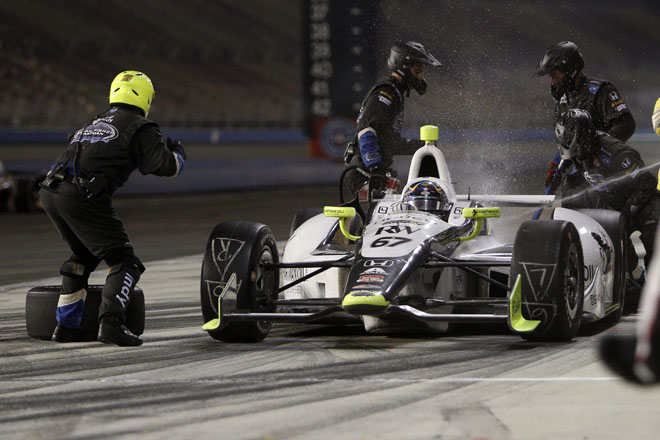
Rob Peterson, Rochester, N.Y. (2 hrs north of Watkins Glen)
Let’s work backward. I covered the exhaust outlet item above, so I hope that answers your question on that one; I don’t actually recall what was found in Simon’s airbox (a Penske contract, possibly?), but something about an easily removable paper filter comes to mind; and I don’t think IndyCar needs to force teams to use the high-flow radiator in high ambient temperatures. You can rest assured the engine manufacturers will make sure their teams do not blow up their painfully expensive powerplants because they failed to fit the right radiator.
I have a question about the displays on IndyCar steering wheels. From the testing videos I've seen, the wheel on the IL-15 has a LCD display roughly the size of a smartphone that shows gear selection in large, clear numbers, along with other parameters. I've seen similar displays on some F1 wheels as well, but on the DW12 I don't recall ever seeing anything other than a narrow red LED matrix display like they've been using for the last 10 years or more.
As I understand, the drivers have a number of wheels to choose from and the teams have some flexibility in the layout of buttons and controls. Do none of the wheels available have the larger, seemingly clearer LCD displays, or do the drivers choose to go with the older-style display? Will the race-spec IL-15 have the LCD display or is that a special wheel used for testing?
Brandon, Hebron, KY
IndyCar did a deal with the good folks at Cosworth Electronics (the artist formerly known as Pi Research), which is why you see the same dash display on the DW12 that was introduced in CART, and later used in Champ Car. The IL15 was a clean-sheet commission from Andersen Promotions, and the dash you’ve seen in testing is what will be used in competition.
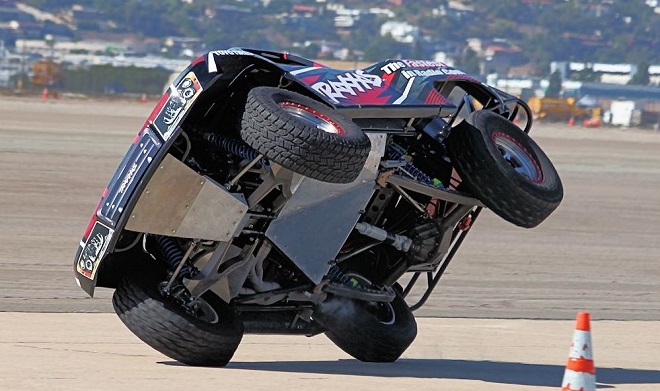
Mitchell Arenbac
All depends on what you think is missing or needs to be improved with those three series. Power has never been an issue in NASCAR, and they don’t have much downforce, nor do they use their brakes, barring the two road course races. F1 could use more power, has the lightest brakes in racing and does have a lot of downforce. IndyCar has good power, light brakes, and tons of downforce.
A lot of people think downforce=easy to drive. You can certainly have too much downforce and make a car easier to drive on the limit than it should be, but I can’t recall a series where excessive downforce led to average drivers looking like rock stars. Reducing downforce would indeed make cars that rely on downforce harder to drive, but remember that downforce is for the corners, so if people want to see powerful cars fly on the straights then slow to a crawl to tip-toe through the twisty bits, taking away downforce will certainly make that a reality.
I’d rather see series like F1 and IndyCar work to lower downforce levels to make going flat through the fastest corners something only the most talented teams and drivers can achieve, rather than something almost anyone can accomplish. That tweak, compared to a wholesale drop in downforce, would be welcome.
Who has the advantage in humid environments? Is it a turbocharged engine – self-cramming the humid air creating its own conditioned combustion chamber. Or is it the naturally aspirated engine – trying to take as deep of a breath as possible at speeds.
Justin Driggers
Lots of variables to consider here, but in general, watery air is treated the same when it hits the combustion chamber of a turbo or NA engine.
With the recent penalties for running over air hoses in IndyCar I was wondering why teams use air guns that require air hoses? Couldn't they use guns with small compressed air cylinders? Especially in F1 where the cost would not be an issue, although they have the overhead booms to keep the hoses out of the way. Or how about electric guns – too much spark risk?
Tim Elder
The mount-a-cylinder-to-the-guy’s-back idea has been floated in most series where pit stops are performed. The thought of a car pulling away with stuck air gun or trapped hose attached to someone ends the conversation immediately. An electric wheel gun could be an option, but with hundreds of pounds of torque required, the size of the motor and subsequent weight of the gun and moving pieces would be a concern.
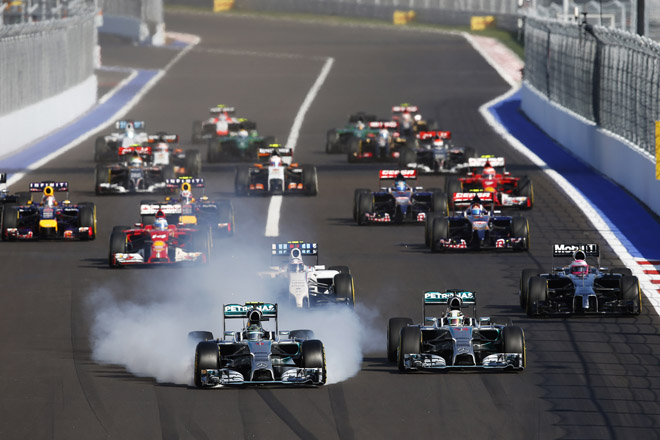
Giu, Sao Paulo, Brazil
Hi Giu. Based on a few other Tech Mailbag questions you’ve sent on a similar theme, you clearly don’t like dirty air. As long as F1 cars have wings and downforce-producing items, air will be disturbed and dirty air will trail the cars.
Will IndyCar need to pass for some BoP thing when teams start to testing aero kits?
Chip Toone
Unless a kit is exceptionally poor, which won’t happen, IndyCar has no intention of using BoP. They have the only-if-it’s-WAAAAAAY-off rule for engines, too.
My biggest doubt about aero kits: Will small teams like Herta's or Foyt's be able to use Dallara's current kit to save some bucks at least for a few races? Racing against Honda and Chevy aero kits on track?...
Giu, Sao Paulo, Brazil
Hi again, Giu. We’re talking about $75,000 per car for an aero kit, and while money is tight in IndyCar, it’s a small expenditure. Teams are allowed to stick with the stock Dallara DW12 bodywork, but it’s a guaranteed way to finish last at every race. What’s the better choice to make: saving money up front by not purchasing aero kits, or losing all your sponsors at the end of the year because you had the slowest car in the field… ;-)
Love the Mailbag, it’s a great read. My question is fundamentally what are the differences between the PWC spec cars such as the CTS-V.R and the Acura and the GT3 spec cars? I've been told that the PWC cars are tubeframe-based, not production-based.
Devin, Greenville, S.C.
All PWC cars are production-based. Tubeframe cars are not allowed. With the SCCA as its sanctioning body, PWC has used its own specification all along; I’ve built a GT car to PWC regulations, and it was rather easy, to be honest. With PWC allowing GT3-spec cars into its GT category, it simply opened the door for cars built to a global FIA spec rather than limiting its class to cars conforming to SCCA Pro Racing’s spec.
As for what’s different between the two, there isn’t much. Both allow lots of power and aero, and then work to tune the cars to fit among the other cars in the class. The big difference is GT3 homologation is a rather robust procedure intended for manufacturers with some volume of production in mind. The low-buck Subaru WRX STI that I put together was a one-off, and was built and entered privately. For the rest of PWC’s classes, you can pretty much build anything that would fit and show up to race.
As I understand it, gearbox lubricants are an open area of innovation for IndyCar teams. What are teams using? From my casual fan view, it looks like Schmidt-Peterson is tied in with Lucas, and Penske is tied in with Shell, but what brands are the other teams using? Are they using off-the-shelf oils or super-special, mega-expensive bespoke miracle lubes? Tell us what you know.
Gene, Saratoga Springs, NY
Some teams have associations – Penske with Mobil 1, SPM with Lucas Oil, as you mention, and most have some sort of relationship with a petroleum vendor. Most use a special blend they have made to their specs, and it varies from circuit to circuit. Thicker oil for road courses, thinner for ovals, something with a viscosity close to water for a four-lap qualifying run at Indy…
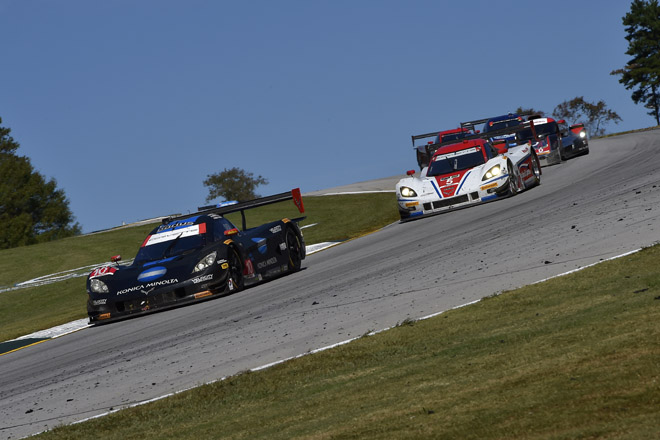
In terms of the Corvette Daytona Prototypes, it was stated that Action Express, Spirit of Daytona, and one other team whose name slips my mind were all running Coyote chassis cars, and the rest Dallaras. What, if any notable differences are there between the Coyote chassis and the Dallara chassis and is there any particular advantage to using one or the other at a particular track?
Nick, Maryland
My 12-year-old son and I watch a lot of races together and he was excited to see the hybrids in F1, so we discussed aspects of their technology. Because of this, as a school science project, he demonstrated to his class how a thermoelectric generator worked, using the teacher’s coffee and a glass of water. The 1” x 1” wafer spun a small fan by converting the temperature differential into electricity.
That said, do any of the teams in either F1 or WEC use this technology in their cars? As hot as these power units run, would there be enough temperature differential to be effective? I guessed Porsche might use it in their exhaust recovery but simply don’t know.
Oh, my son got an A+ on his project!
Jonathan Charles
Jonathan, your son sounds like an awesome kid; I hope he considers a career as a designer or engineer. Racing is starving for young talent in both roles these days. Thermoelectric conversion isn’t used very much at the moment, and the only serious example that comes to mind is Porsche’s 919 Hybrid, which utilizes a secondary exhaust-driven ERS system – although, as I’ve written before, I’m hesitant to believe anything Porsche says about its 919s.
It’s less ‘thermal’ and more ‘solar,’ but the Aston Martin Racing team uses a roof-mounted panel to capture energy from the sun through photovoltaic cells to power its air conditioning system.

Latest News

Comments
Comments are disabled until you accept Social Networking Cookies. Update cookie preferences
If the dialog doesn't appear, ad-blockers are often the cause; try disabling yours or see our Social Features Support.