.jpg?environment=live)
Marshall Pruett’s Racing Tech Mailbag for June 26
The Tech Mailbag is back! If you have questions about the technical side of racing, send them to PruettsTechMailbag@Racer.com. We can't guarantee your letter will be published, but Marshall will always reply.
Q: I watched the 24 Hours of Le Mans, and after watching a 2.0-liter V4 turbo hybrid, compete with a 4.0-liter V6 turbodiesel hybrid, and a 3.7-liter V8 naturally aspirated hybrid producing a combined total horsepower of 980+. My question is why doesn’t IndyCar open up the formula? Every time the question comes up it is always about costs, but that is nonsense. It is truly about control. Penske, Ganassi, and Andretti combined with the appointed lackeys that they helped choose want a series that is their playpen, and screw the fans! Audi, Porsche, and Toyota have these engines NOW so there is no new money needs to provide three different engines to run with the two lumps we now have! Oh, but they won’t fit in the car, well, unless you allow Audi, Toyota, and Porsche to bring their own chassis. But that won’t work not because the chassis they have can’t be reskinned as an open-wheel racecar. But because the owner-run series doesn’t want to lose their playpen!
I totally believe with ONE move the Speedway could start open-wheel racing on the path to becoming once again the pinnacle of racing: MAKE THE “500” A STANDALONE RACE...PAYING $500,000 TO START, AND $10,000,000 TO WIN. (The math works this way.....the $20,000,000 pi**ed away on IRL teams, coupled with the current prize money would cover the prize money [$20,000,000 plus $13.400,000 equals $34,400,000 to cover $29,900,000 needed!!!!!]). Spin off the series to whatever fool wants it and when it dies from lack of TV viewership maybe we’ll get something new and exciting since the cars run at the NEW Indy will be sitting around so why not race them! I refuse to give up!!!
Ted Wolfram
MP: I’m a sucker for a good rant, and this is a perfect question to start off the mailbag. On your first question, it really, truly, honestly…genuinely is about costs. The first question might be, “But Chevy and Honda and other manufacturers make zillions of dollars, so what’s up with the talk about limited budgets to do open-tech engines?” The answer isn’t rooted in technology, but Return On Investment. If IndyCar reached more viewers, manufacturers (and sponsors) would spend more money. You’d spend millions on advertising your product on national television if you knew 50 million people would see it. But you wouldn’t spend that kind of money to advertise in the local newspaper to reach 50,000. Right now IndyCar is the proverbial newspaper, and it’s increasing its reach, but there’s no way a manufacturer could justify the expenses involved with LMP1-level technology for a domestic championship like IndyCar.
For an international series like WEC, manufacturers will absolutely spend that kind of money and can justify it to their boards, but they’d spend a fraction of that budget if they were limited to racing in North America, Australia, or Japan. As for having multiple chassis offerings, I love the idea, grew up with and worked on different Indy car chassis, but the world has changed since spec racing became the norm. I don’t see how we’re going to get away from it anytime soon. It would be awesome if your conspiracy theory about Penske/Ganassi/Andretti keeping the series locked down was true, but it’s not that simple or juicy. Big, cool technology comes when the ROI is high and the audience size is significant. Of the many things IndyCar is trying to fix and global sports car racing has going for it, this is it – the most creative cars are in the WEC, not F1, not IndyCar, and not F1. Hopefully that changes for the latter three.
Q: For IndyCar, are the road and street course differentials open, or do they have some limited-slip functionality? Are there sensors on the rear wheels so that the ECU can determine how fast the wheels are spinning?
I know traction control is illegal, but I also know that in the past this has been very difficult to enforce. The benefits are too tempting and engineers are too creative. Listening to the engines in person at the GP of Indy through the 7-8-9 complex was interesting.
Then comes word of Penske being accused of implementing TC for the GP of Indy. Wouldn't it be easier to allow McLaren to implement traction control in a defined way and get it over with? OR if you're not going to go to full TC, at least allow non-linear drive-by-wire. This is the kind of thing that is common in road cars these days. Why not in racecars?
What are your thoughts?
Ed Joras
MP: Ed: road/street diffs are not open. Wheel speed sensors are used on all four corners of pretty much every car with an onboard data system, including Indy cars. I get to watch most popular forms of racing up close at least once a year, with IndyCar and sports car races happening at least a dozen times each, and I’ve yet to see a series that asks more of its drivers than the Verizon IndyCar Series. No power steering, no traction control, and the wrestling match that ensues is simply brilliant to behold. Ruining it with traction control, which is a great safety device for commuter cars but hardly fits in a sport where driver talent, rather than electronics, is what people come to see, would make no sense to me.
The TC issues from the GP of Indy have, retroactively, been dismissed by IndyCar. There’s a fuzzy area on how much drivers can tailor throttle response and if/where that throttle sensitivity adjustment strays into a form of traction control, but the series clarified its expectation after the GP and I don’t anticipate it being an issue going forward.
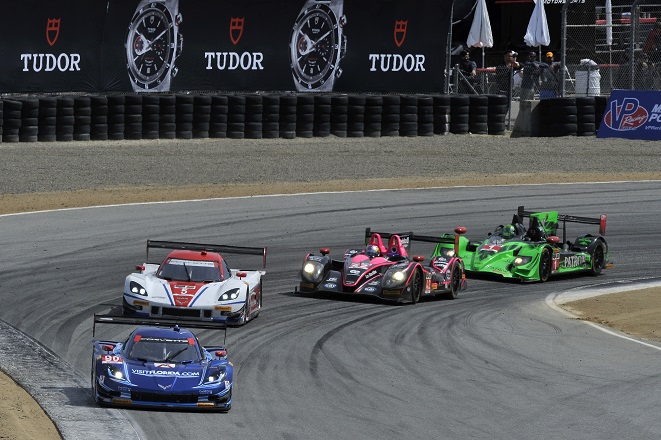
Are any DPs still running the old steel brakes in TUSCC? Is there a weight benefit for not using carbon brakes as was proposed long ago, and if so might removing it help shrink the weight and cornering speed gaps between DPs and P2sin any meaningful way?
Andrew in Baltimore
MP: All DPs are on carbon brakes. IMSA’s Scot Elkins helped with the rest of your question:
"The weight penalty for not running carbon was removed prior to the season in order to encourage everyone to run carbon. The gaps with DP and P2 are not actually in the corners; we are still dealing with a bit of a top-speed issue, and unfortunately weight does not help in that area much.”
Q: "The series docked Honda 10 points each for changing engines on cars driven by Takuma Sato, Marco Andretti and Ryan Hunter-Reay." Say what?! New engines prior to the Texas race?! None of them finished and two caught fire! Bad Honda updates on those bullets?
Ron, Boone, IA
MP: Those were engines with some decent mileage – Indy and Detroit – that broke. Honda, which earned the distinction of becoming the first IndyCar manufacturer to reach the 2000-mile rebuild threshold in 2012, hasn’t had an easy time in that regard under the new 2500-mile limit.
Q: The new Firestone IndyCar live tire chart was fascinating, and I was wondering if there was an archive for other races?
Eric Harkrader
MP: This was the URL (http://www.bridgestonemediagallery.com/firestone.cfm), but it has apparently changed/been discontinued. I wish they’d bring it back.
Q: Two questions about the current spec IndyCar Brembo brakes: 1. How common is a rotor failure such as that which befell Jack Hawksworth a couple weeks back? 2. I've read a couple anecdotes that the teams/drivers are less than happy with the current Brembo carbon/carbon package; is this the case, and if so, what gives? I was under the impression that these were "near F1" quality...
JB Hogan, San Diego
MP: Outright disc failures have not been a common occurrence. I’m not saying they haven’t happened, but it isn’t a big concern among teams. It’s true that teams and drivers were, um, “less than complimentary” about the spec brakes that came with the DW12. Big temperature variances from discs on either side of the car and short component lifespans were the notable (and costly) grievances. 2012 was a steady chorus of anti-Brembo chants, it improved somewhat in 2013, and by 2014, I think everyone has simply learned to live with what they have.
Q: Long-time Miller mail bagger. First-time Tech Mailbag. In the article “Formula 1 warned over possible customer cars return,” what does this mean to Gene Haas and is attempt to enter F1 in 2016? I had read that he was considering having Dallara build him a car until he could design one on his own. Is this article saying he could not do this or are they talking about parts?Joe MullinsLexington, KY
MP: Under the current rules, Haas could hire Dallara to build a car for him. Haas could not, however, go to a McLaren or Williams and pay to have a few extra cars made for his drivers to use.
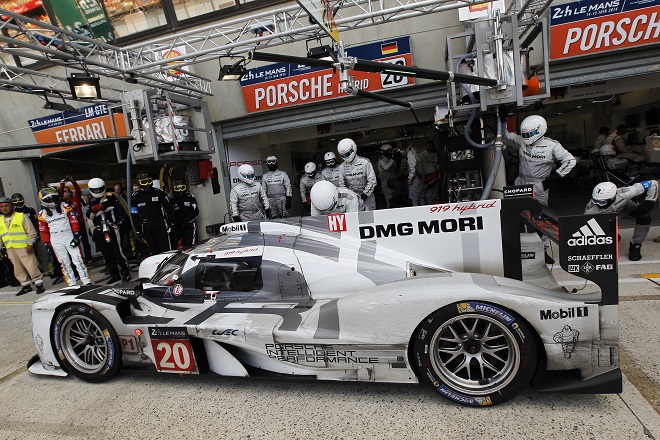
Benjamin Fischer, Stuttgart, Germany
MP: After the huge engine-related setbacks they suffered later last year, I’m actually surprised Porsche filled the 919 with as much technology as it has. Those issues required almost an entirely new engine to be produced and pushed their testing program back something like six months. The unique exhaust-diversion ERS system Porsche developed is indeed different than the shaft-driven turbo ERS systems found in F1 (and on Audi’s R18 for a short while in testing). I’d guess they stuck with the highly complex turbo ERS system they penned to get through Silverstone, Spa and Le Mans, and would, as you rightly suspect, look at ways to incorporate a shaft-driven ERS element to improve turbo lag. Having said all of that, Porsche has also been caught in more than one lie about the technology they said they were or weren’t using on the 919, so for all we know, it might have been in place all along…
Q: Lots of engine questions today...IndyCar rules for this year require that engines go 2500 miles between rebuilds. What constitutes a rebuild? What engine maintenance is allowed within the 2500 miles and what parts or activities are prohibited? Are the engines taken out of the cars and returned to Honda or Chevy for study and maintenance between every event, or do they stay with the teams through their active lifecycle? Are the teams allowed to do any work on the engines or is that all the responsibility of the manufacturer? Finally, can different teams with the same engine configure their engine differently for a particular event, or does the manufacturer determine the optimal engine set up and every team gets the same?
Mathieu Mcgowan
MP: Most of the reciprocating parts would be up for replacement, with bigger, costlier items like crankshafts, heads, the block and any other big items receiving careful inspection for re-use. Also keep in mind some areas like pistons, valves, wastegates, and a few other items are always open for updates, so rather than use like-for-like replacements, manufacturers will often use a rebuild to put new specification upgrades into service. Changing spark plugs, injectors and lubricants is about as far as the series will allow manufacturers to go for routine maintenance.
IndyCar handles the assignment of engines from manufacturers to teams, and unless an engine is going back for a rebuild or inspection (if a problem occurred), they’ll stay in the car after the race. Teams will check oil levels during warm-up, and handle the installs/removals, but pretty much everything between the exhaust headers and below the overhead air intake is the domain of a Chevy or Honda engine tech.
Engine techs will alter engine mapping insofar as driver preference is concerned, but they won’t stray from the base calibrations. Driver A won’t get more or less power or torque than Driver B, but based on how the two drivers apply the throttle or prefer to carry speed through a corner, tweaks can be made to aid throttle response, for example, to better suit their style of driving.
Q: Is the ACO/FIA looking to expand the hybrid concept to the GTE categories anytime soon?
Zach Anderson
MP: That has been an ongoing bone of contention. At least one manufacturer (Honda) has been pushing for it for a few years, but with the recent breakdown in GT convergence talks, I suspect hybrid GTE regs are off the table.
Q: During the Montreal GP I heard a few radio transmissions from drivers asking for more power and replies of asking when/where they need the boost. So I'm assuming the "push-to-pass" button is now handled by the race engineers?
Jake
MP: F1 drivers consult their teams on using extra power to get the all-clear based on the new per-lap fuel flow restrictions and to understand how their engine’s temperatures and pressures are doing. It isn’t so much a case of engineers making the call, but the state of technology and resource management requiring drivers to get more info on whether using that extra power makes sense at the time.
Q: Marshall, you had posted an article about the Houston fences not having the third pole. What has ever come from this? Has IndyCar released an investigation? Will the fences have this third pole this weekend at the Grand Prix of Houston?
Matt Fraver, Columbus, OH
MP: When I spoke with the series shortly after the crash, they did say a report would be published, but as I learned later in the year, it was a mistake and the findings of the accident investigation would be kept internal. Frankly, that’s the norm. You sent this in before I wrote it, but as RACER reported on Monday, third poles will be used in spectator and high risk areas.
Q: I have been self-teaching aerodynamics and have learned that wings with a straight leading edge produce more lift (or for cars downforce) but more drag than wings with swept-back leading edges. Prototypes and open-wheel cars with low-drag, high-speed aero configurations still have wings with straight leading edges. Is this because of regulations or do they still not go fast enough to see the gains of swept back wings?
2) With the safety cell on the new IL15 Indy Lights car apparently being the same as on the DW12, will Dallara be seeing any money savings no longer having to manufacture two different safety cells?
Victor, New Haven, CT
MP: You’re referring to the chord profile of a wing. Yes, you’ll find thinner chords on low-drag wing profiles, and thicker chords on high-downforce elements, as a general rule. Multi-element wing designs, as you’ll find in most open-wheel series and with some prototypes (IMSA’s DP’s went to a dual-element rear wing for 2014), it’s all about the combined profile of the elements working together. In contrast, take a look at the rear wing on one of A.J. Foyt’s late '70s Coyote Indy cars (pictured, ABOVE, photo by the author) – there’s about a half-mile between the top and bottom of the rear wing element and that was because that’s the only way they knew how to make big downforce. Today, that same amount of downforce would be produced by a series of thin elements forming a similar upswept profile. The IL15’s tub is brand-new. It features a cockpit that’s virtually identical to the DW12, but it is not the DW12 tub itself.
Q: The new road at Indianapolis Motor Speedway proved to be very racy for IndyCar at the Grand Prix. IMSA had testing there on June 18. Was that test to determine the exact track layout? Or will the TUDOR United SportsCar Championship Series race there use the same layout as IndyCar? If not, can you explain the differences and how that will effect lap times? It’s always fun to compare lap times between cars and series, but it’s hard to know how the track layout may have changed.
Thank you and really appreciate your Tech Mailbag.
Mark, Discovery Bay, CA
MP: Hi Mark – thanks for the kind words from a fellow NorCal resident. The test was a data gathering exercise, and as Scot Elkins shared in a response to your questions:
“It was to determine the tire type that would be used by Continental tire and to test the new layout of the circuit. We have two types of tire to use in the P, PC and GTD classes and the test helped determine which of these will be used for the race. Of course the layout helped determine the tire as the new layout does not use the oval section of T1. That said, IMSA will use the exact layout in which IndyCar used in the early May race.”
Q: I was wondering if you could enlighten us on how the engine manufacturer process works. From what I understand, Cosworth has the resources and are ready to start making engines for Indycars, but they just need backing from a big automaker. So, if Audi were to step in and team up with Cosworth, would Cosworth make the engines and just emblazon it with an Audi logo, or would Audi have some responsibility in making the engines as well? Or does Cosworth need extra funds from an OEM to assist the process? I don't know how all this works, but I was hoping you could shed some light on this, as Chevy and Honda are clamoring for a third OEM.
Alex, Bainbridge Island, WA
MP: As I understand Cosworth’s position from a previous conversation with its owner Kevin Kalkhoven, they are ready to provide a turn-key solution and badge the engine in the name of any company that comes to a financial agreement to subsidize the project. Cosworth’s a specialist racing engine constructor for hire, and with an IndyCar design ready to go, all they need is a willing manufacturer to bankroll the program. It’s no different than what Chevy does with Ilmor, although GM Racing does have an active role in engine development and specifications. If Audi chose to race in IndyCar, they’d do the whole thing on their own, but Cosworth would be a perfect solution for the majority of auto manufacturers that do not have a dedicated racing division.
Q: I recently had a bit of an argument with someone over the nature of the DW12's rollbar, and thought it would be a good thing to shoot off to you for more information. I once got a close-up hands-on look at a bare carbon DW12 tub and noted there were no gaps around the roolhoop, indicating it's a molded part of the tub. I was told at the time that this was indeed the case, but I do not know for certain that the person who said so knew everything.
I am currently being told that the carbon fiber part of the rollbar is merely a removable "shroud" around the steel rollhoop within, but obviously this does not line up with what I saw and was told. I never questioned what I'd seen/heard because it made sense given the commonality of carbon fiber/aluminum honeycomb construction of a carbon fiber tub.So I figure, let's shoot this inquiry off to you and use it to educate the masses. What parts are molded into the tub? How exactly is the steel roll hoop built into the tub? In fact, why not go over the entirety of tub construction for others who are unaware?
Formula Fox
MP: The roll hoop is made from steel and bolted to the top of the tub. A carbon shroud, as you pointed out, covers it and acts as an aerodynamic device. Before shrouds, manufacturers left the roll hoop sitting out and exposed in the airstream.
Q: Greetings from the Texas swamplands (Houston). What is the deal with those ridiculous-looking LMP 1 shark fins? Do they serve an aero purpose or is it another one of those IndyCar rear fenders deals that serve the interests of the sanctioning body to the loss of the racers and fans? On a more global view (F1, Indycar, NASCAR, LMP1) when & why did making the race cars have severely ugly elements become the default position of the top sanctioning bodies?
Stephen Archer
MP: They were implemented to reduce the likelihood of blow-overs. I’m in the minority on this one – I don’t mind the fins, but also wouldn’t be too upset if they went away. I’d say the current generation of Sprint Cup cars look better than anything I’ve seen since the late 1980s, but definitely agree with the fugly open-wheelers we have in IndyCar and F1 today.
Q: Since my home track is Pocono and IndyCar is new there, is there anyway you can have a driver explain what the minimum/maximum speeds are along with gear changes? I really enjoy that part of watching the race knowing what the drivers are going through and doing behind the wheel.
Chad Frankenfield
MP: I asked a certain Indy 500 winner named Ryan Hunter-Reay to help on this one:
“208mph in T1, 216 in T2, 214 in T3, and 222 at the end of front straight. In race conditions we use 6th gear as a tow gear, downshifting to 5th mid-corner of T1 and running in 5th around the remainder of the lap on new tires. On older tires we will downshift to 4th gear at times through the tricky T3. Sometimes from 6th to 4th for T3 depending on traffic. Hope that helps!”
this Q&A with Derrick Walker
where he was asked, "Can the DW12 take the speed of a place like Michigan?" And Derrick replied:"The track can take the speed, that's no problem and the cars can take the speed. The equation that we always struggle with is how fast is fast enough? We can hurdle around Indianapolis at 245 to 246mph with the car we have right now, we just haven't changed those rules. So if we went to Michigan and decided the speed we wanted to see for good racing – it's not about the track, we just have to look at the specification of the car.
"Like we gave them 300 lbs. of downforce here and just like that we made the racing better so we can take it away just as quickly and in a lot of different ways as well. Plus we have boost power and turbochargers so we can take away some engine power relatively easy."
After reading that, I began to wonder, were there any kind of discussions to reduce boost power and downforce at Texas? I'd assume there were, but I don't know for sure. Since the race was ultimately canceled, the teams and manufacturers could not come up with a solution, but I have always wondered why not? Could they not reduce the power or downforce enough?
What happened behind the scenes? What solutions were discussed and why did none of them work? And how could this situation have come up in the first place, I know the teams tested at Texas beforehand? I've tried to do some research (read: Googling), but I have not found an answer.
Kaspar, an IndyCar fan from Estonia
MP: Hi Kaspar – great questions. I can’t say on the behind-the-scenes rationale that came into play, but I can tell you that flexibility, either with the rules, power levels or other in-weekend adjustments, really weren’t a part of the culture at that time. Today, IndyCar or IMSA would make the kind of tweaks you suggested in an instant if they thought it would increase safety and save the event from being canceled. I do recall some drivers pointing out the concerns about excessive speed prior to the race, but drivers weren’t as united and directly connected to a Derrick Walker type like they are today.
It’s not meant to be a simple whitewashing of the issue, but I can say the times were just different back then. Lowering speeds would involve something close to what the IRL ran – and those cars were already fast at Texas, so with a war between two rival open-wheel series, I’m sure some of the geniuses at CART saw no value in sticking around and running IRL speeds in their turbocharged rockets. Add in the genuinely scary accounts coming back from the CART drivers who were on the verge of blacking out while lapping, and the ordeal was more of instant concern and mild panic than one of a simple problem to methodically work through.
Your take on the situation is perfect: people remember the speeds being the issue, but it was a failure of pre-event management and crisis management more than anything else.
Q: In your Le Mans photos (and in many other photos I’ve seen over the last few years) your photos posted on to your Le Mans update for Tuesday show one of the Toyota’s and another car with the brake rotor/upright shrouds in a front view, one I’ve not seen before. Anyway, what purpose do these shrouds serve? I understand how brake ducts work and how the air can flow through uprights or be pumped through the center of a brake rotor and the function of a backing plate with the duct built in, but these all-encompassing shrouds have me baffled. Is there purpose to retain heat in the carbon brakes? Carbon brake cars don’t seem to have brake ducts like iron brake rotor racing cars. Do tell, oh wise one! :)
Bryan Cohn, Webb City, MO
PS: I’ve been trying to find where to buy one of those helmet visor shields with little luck as no one has them for sale on their website. It’s a missed opportunity after their public debut in such a positive way after the Indy GP. I guess I’ll resort to old school methods, the phone!
MP: Hi Bryan – they serve three purposes. The first, as you mentioned, is for brake cooling. The second is for aerodynamic purposes – to clean up and streamline the inner wheel airflow, and third is to retain the massive heat (as much as possible) inside the shroud. The last item is big on managing tire life and temperatures; instead of having a thousand degrees or more of carbon brake heat dumped into the wheel and tire in every braking zone, the shrouds allow the tires to operate in a more linear fashion which extends their life. Triple-stinting tires would be a real challenge these days without them.
Audi front motor generator unit (Marshall Pruett photo)
Q: Can you explain in some more detail to what extent the low-drag trim goes to? Is every single body panel altered, or more so just wing? I noticed Jordan Taylor mentioning the Corvette C7 has had some Le Mans alterations as well, any input?
Will
MP: On a GT car like the C7.R, the team can turn up the downforce (which increases drag) by flowing more air through the radiator ducting and other front ducting, by using tall louvers over the front wheels, by adjusting the ride height to have more rake in the chassis which creates more underbody downforce, and then by increasing the rear wing angle. Going in the opposite direction at Le Mans (or Daytona) involves doing the opposite – reducing the front through-flow as much as possible, going with low, flush or no louvers, minimizing rake, lowering the rear wing height and reducing the angle itself. In general, the more air that can be send around the car and over smoother, lower protrusions, the faster it will go do to reduced drag and downforce.
Q: Marshall, you joked with Allan McNish about "drivers riding mini-bicycles inside the cars" to power the car. Well, a similar powertrain system has been invented several decades ago in my country.
My father has told me that a Uruguayan mechanic/driver invented a power stick, which pumped an air compressor or something like that and added some power to the wheels. In the straights he pumped the stick like... a skier, to accelerate faster than anyone. He of course beat everyone until his innovation was outlawed by the annoyed authorities.
Ignacio
MP: That’s awesome, Ignacio. Thanks for the story!
Q: Just watched your video on the Nissan ZEOD at Le Mans and comparing it to the DeltaWing of a couple of years ago it seems like a more polished, more integrated package. It also seems like Ben Bowlby and Nissan threw every trick they could think of at it.
Now, I know there was this intellectual property case between DeltaWing and Nissan/Bowlby, what is the current status of that? I thought DeltaWing was trying to get a restraining order to keep them from running at Le Mans? Seems a bit moot at this point. The technological exercise and the publicity that goes with a garage 56 run has happened. Now the lawsuit seems pointless. Thoughts?
Pete Arnold, MD
MP: The ZEOD is a cool piece of kit, and Bowlby is a genius. Can’t wait to see what the brain inside that crazy ginger’s head cranks out for Nissan’s P1 car. I spoke with Don Panoz at Le Mans and got an update on the areas he felt were going in his favor. I also got an update from another source on areas where they have gone in the defendant’s favor. I can’t speak to a man’s rationale or need to sue another man, or an organization like Nissan – that’s Don’s prerogative.
As an outsider who broke the story and has a decent feel for where it’s heading, I’ll say the lawsuit has passed the point of making any impact to those outside of the court case, won’t make a billionaire like Don much richer or poorer depending on how the various judges rule, and really seems like it’s going to stay rooted in its origins of Don feeling used and slighted and being determined to make the parties he’s sued pay for the ways he feels he’s been wronged. It certainly isn’t good for the sport, isn’t going to help Nissan, which has shied away from big LMP1-level projects, from going about its business, and isn’t going to drive people to buy DeltaWing road cars to a greater degree than they might have been inclined to before the lawsuit.
Just know this: Don isn’t doing this to make friends, Nissan isn’t backing down, and I hope the lawsuit quickly fades from our collective memories without either side coming out any worse for wear.
Q: I heard that Coyote's bespoke DP bodywork would be ready for testing after Sebring, but I haven't heard a peep since. Is it a matter of finding a customer, or is there some other issue?
Brett Morris
MP: From what I’ve heard, progress has been limited and nothing has been put in front of the series for review or approval.
Q: I am having a hard time grasping the concept of how this hybrid technology works in conjunction with the combustion engines in Formula 1 and LMP1. The commentators talk about the electric motor giving the cars a burst of up to 1000hp. If the combustion engine has 750 and the hybrid system adds 250, how exactly does the hybrid system "add" to the total output to come up with 1000? Obviously I can do the math but could you explain how this works in reality? It seems to me if you have a car using the maximum 750hp and then flip a switch to turn on a 250hp electric motor it still wouldn't go any faster since 250 is less than 750. I know that the hybrid system does make the cars faster but my non engineering mind can't figure out exactly how.
Randy Holbrook Resaca, GA
MP: Think of it like electronic nitrous oxide. In F1, the KERS systems feed their power through the rear transaxle, so it’s an extra power boost through the rear tires. In LMP1-H, you have the cool addition of electric motors installed at the front of the car, providing all-wheel-drive. With the P1 hybrids, the KERS power is now available at any speed (it was previously restricted to 50mph and above), and is tied into the cars’ electronics system to act in a fairly seamless manner. When full KERS power is deployed by the Porsche and Toyota P1-H drivers, who have the monster 6 megajoule capacity, they get a giant kick in the tail. Audi uses the lesser 2MJ option – the same amount F1 teams have – and it still helps quite a bit.
With their gas or diesel engines driving the rear wheels and the KERS power driving the front wheels, you have that big number being put down in the back and the smaller number up front. As long as the power feeds the wheels, it will be felt by the driver and seen in the lap times.

Latest News


Comments
Comments are disabled until you accept Social Networking Cookies. Update cookie preferences
If the dialog doesn't appear, ad-blockers are often the cause; try disabling yours or see our Social Features Support.