.jpg?environment=live)
Marshall Pruett's Tech Mailbag for April 10
Welcome to Marshall Pruett’s new Racing Tech Mailbag on RACER.com. If you have questions about the technical side of the sport for Pruett, who spent most of his life working as a mechanic and engineer in open-wheel and sports car racing, send them to PruettsTechMailbag@Racer.com. We can't guarantee your letter will be published, but Marshall will always reply.
After watching the on board cameras from Pocono and Fontana I noticed on a straightaway the wheel is slightly turned to the right but yet the cars stay straight. I am starting to pick up on the technical side of racing but I was not quite sure about this. Why are the wheels slightly turned like that?
Chad Frankenfield
MP: You have a few things at play here but the primary item is stagger. With tire stagger being used to help turn cars in the corners, that turning force is also present on the straights. To keep the car from turning left, drivers steer to the right to counteract those forces.
Why is it so hard to put a starter in Indy cars? This technology has been around for a long time. You need a battery and a high-torque motor... Look at every single car being made today for inspiration. Even snowblowers and lawn mowers are equipped with starters these days. It would get rid of a lot of issues and cautions.
Max from Cleveland
MP: As we mentioned in a recent Mailbag, anti-stall technology is now mandatory and it’s meant to keep engines running when cars are stopped on course. Is it 100 percent bullet-proof? No, but starters are also known to fail. As for fitting starters to Indy cars, the DW12 isn’t designed to accept them, so a fairly comprehensive and expensive retrofitting process would be required. If it’s going to happen, it would be with the next-generation chassis, whenever that appears, but I wouldn’t hold your breath.
I am a little confused by the F1 "noise" controversy. Mainly I don't understand why this engine formula comes off sounding so bad. Granted, I have not seen either the DW12 or this new generation of F1 formula in person, but I don't understand why the F1 cars sound so awful compared to Indy cars (on TV at least). The Chevy/Honda V6 turbos sound throaty, torquey and fast. The F1 V6 turbo formula sounds like a dying dog. What is the big difference. Is it something technical with the formula, the turbo size or configuration, the energy recovery system, or something else? The F1 cars pull several thousand more RPM, so it can't be that. Or, is F1 productions just not capturing the true sound of the cars, which Will Buxton said is not as bad as it seems?
Scott B. Gainesville, FL
MP: I haven’t seen or heard them run in person yet, but based on in-car audio and what we’ve heard from NBCSN’s F1 broadcasts, they aren’t particularly inspiring. You have a single turbo and a cannon-sized exhaust for the 1.6-liter F1 turbos, and I imagine some sound quality improvements could be made by going to a smaller diameter, but as the series acknowledged this week, there’s no easy answer to producing more volume from turbo engines without altering the rules.
IndyCar’s 2.2-liter turbos, based on in-car and broadcast sounds, are a bit more pleasing to the ear, I’d say, but it isn’t a night-and-day difference. In person, IndyCar’s engines are a bit too quiet and also suffered from the same criticism and call for more noise when they appeared in 2012.
One of the things that made F1’s previous turbo era a much better listening experience was the variety of engines. They all conformed to a maximum of 1.5 liters, but the rest was pretty much open. You had inline-4s, V6s, V8s, single and twin turbos, different electronics systems, RPMs, fuels, etc. Painting everyone into essentially the same 1.6-liter, V6 single-turbo, 15,000 rpm box doesn’t really help with turbo audio variety. I wasn’t a fan of the 2.4-liter V8 sounds that preceded the turbos, but take another step back to the spec V10s and those sounds, despite no one being able to tell one exhaust note from another, sent chills down your spine.
I wonder how much the single-tailpipe rule affects F1 sound vs. Indycar. Also turbo placement and specific plumbing.
I don't really object to the new sound. Rather I am trying to understand why it is so different from Indycar when both have such a similar configuration?
Randall
MP: It plays a part, for sure. Honda used a single turbo and single exhaust outlet through 2013, and I always thought it sounded meaner than what Chevy’s twin-turbo/twin exhausts. Now, with both on 2.2-liter twin-turbo V6s, it’s hard to tell them apart unless you’re up close. Playing with exhaust outlet sizing is part of tuning a turbo engine; go too small and too much backpressure is built, while going too large can reduce some of that needed pressure. Like an instrument, the sizing can also affect the intensity of the sound energy produced from the engine.
Could you describe the function of the displays and buttons/switches on an Indycar steering wheel? Thanks!
Michael Kuiken
MP: Each driver has a customized steering wheel with the buttons and switches both required by their engine manufacturer, the series and whatever items they want or need. The electronic dash is a standard item, supplied by Cosworth Electronics, which provides everything from shift lights to lap times to fuel consumption data. Every aspect of the display is programmable, meaning drivers can have the info placed where they want it. There are also multiple pages of information, which drivers and mechanics thumb through to pull up whatever they are looking for. I asked Sarah Fisher Hartman Racing’s Josef Newgarden to help explain how his steering wheel is configured:
On the left, the first is the radio button which is the main button – the one that gets the most use. Purple is reverse, which almost never gets used, yellow is neutral. Black is the weight jacker for left-front weight.
The blue is pit speed limit, the orange is to reset the fuel counter and we use that every time we pit so we know how much we burned, the red is my overtake button for extra power, and black is right-front weight jacker weight.
Of the two toggles, the left one isn’t used – it used to be for the soft rev limit adjuster. The right toggle is used to page through the three pages of information we have on the dash.
The rotary knob is setup different for everyone. One slot is a safety map, a few is for different power and torque maps and then we have slots for cautions.
Just watching your compilation of in-car footage from St. Pete and noticed something I've not seen before – or else I wasn't paying close enough attention last season. The Gurney flaps are only about 2/3 the width of the rear wings. Is that a mandated thing or simply the effect of the DW12's aerodynamics?
Darrick Smith
MP: Other than wicker height, teams are allowed to shape them in the manner you’ve seen or other profiles that fit their needs. Keep in mind that the driver’s helmet, roll hoop and air intake all conspire to disturb the air flowing to the middle of the rear wing, while the outer portions receive clean air. You’ll often see teams using tall(er) wickers, as you’ve spotted, in the middle to account for the downforce loss.
Is the upper element in the front wing of a DW12 mandatory? The cars would look so much better just with the main plane, more '90s Indy car, especially from the front.
Carlos Villalobos
MP: Yes, they’re mandatory.
Really enjoy reading your tech mailbag. In my next life I plan to come back as a racecar engineer. Excluding fuel weight, I am curious why F1 cars are so much lighter than Indy cars, both the current models as well as cars from the past 20 years. They both are and have been roughly the same size, about the same dimensional size engines, both have carbon fiber tubs, about the same amount of wings, etc. Plus I would think all the KERS devices would make F1 heavier or at least about the same. And yet it is a substantial difference. What accounts for this reduced weight?
David, Greensboro, N.C.
MP: Why wait for the next life, David? Simply put, it’s the rules. But those rules are also written to account for teams with ridiculous budgets, facilities and manufacturing capabilities. An Indy car could be manufactured to weigh as little as an F1 car, and I’m guessing none but Ganassi and Penske could afford to buy one. And I do mean one! As a submarine geek, it’s the difference between producing an old diesel sub and a cutting-edge nuclear sub. As Indy cars also race on ovals, the amount of cladding and protection is greater than what F1 cars require, and that adds weight. Reducing weight is possibly the most expensive task in motor racing, so for a customer-based series like IndyCar, it makes no sense to build featherweight cars that cost a fortune – especially when everyone will have the same thing.
Consider the following three drivers: Dario Franchitti was arguably the best IndyCar driver between 2004 and 2011, the last year of the IR07. He won 2.9 races per year and had an average finish of 6.4. After the DW12 debuted in 2012, Franchitti won once in 2 years and had an average finish of 10.9.
Jenson Button won one race between 2000 and 2008, and had an average finish of 10.5. After the major rule changes for the 2009 season, Jenson has won 2.8 races per year and had an average finish of 6.7.
Finally, Jeff Gordon won 5.2 races each year between 1993 and the Generation 4 car races in 2007. Gordon's average finish in the Gen 4 car was 7.3. After the Car of Tomorrow debuted in a partial 2007 season, Gordon has won 1.5 times per year and had an average finish of 14.1.
Admittedly, there were other factors that influenced these performance changes. Dario only had two seasons to adapt to the DW12, Button's improvement coincided with his move to better F1 teams, and Gordon's decline happened as he aged and the competition in Cup improved. And I don't want to take away anything from these drivers – they're all stellar. But I still think that there is about the same amount of skill in some drivers that just doesn't match well with the rules package of the time.
Is this theory off base?
Kyle in Raleigh
MP: There’s some merit to it, Kyle, but there are other factors to consider. Had Button been with Ferrari or McLaren from the outset, his career would have gone in a much different direction from the start. Some drivers peak at different stages; Dario is the first to say that despite winning a lot of races in CART, it took many factors – more maturity, responsibilities, etc. – before everything began to click for him in the IRL. Some drivers are able to tap into the best version of themselves and hold onto it, while others struggle and have on and off years.
And some, as you rightly suggest, are better matched to some cars than others. Sebastien Bourdais will tell you how much he hates oversteer, and if that’s all the DW12 did, he’d be miserable and slow. Go back and read his comments about driving for Toro Rosso in F1 – it’s the definition of a driver and car being mismatched.
Meanwhile, Scott Dixon would be far less effective if the DW12 was a big understeering heap. Provided a chassis can be tuned to something close to what a driver wants, which is true of the DW12, 2014 Sprint Cup cars, and so on, it comes down to what the driver and his or her engineer can come up with. And while we’re on the topic, how many drivers have gone from winners to losers with a change in engineers, or losers to winners? It’s a complex puzzle with the car in the middle of it all, but plenty of other factors that influence success or failure.
Thought you might be interested in the following video on the development/build of iRacing’s latest offering, the BMW Z4 GT3.
David
MP: Thanks, David – this is awesome.
Can the engineers in IMSA or Indycar make changes to the engine electronics remotely? That is, without physically connecting say a laptop to the car?
In series that still allow traction control, can that be adjusted turn by turn, as it can be in MotoGP?
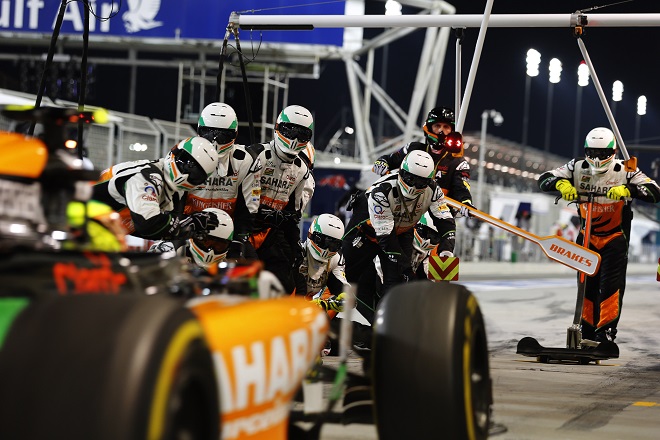
Is it possible to optimize set up for an Indycar so well for Red tres that you destroy its performance on Black Tires? Is it possible to make small changes during a pit stop to optimize Red vs Black performance?
Ed Joras
MP: Fuel flow restrictions in racing…a stupid gimmick. I’m all for advancing road car fuel economy through racing exploits, but fail to see how this moves the needle. With only Mercedes-Benz, Renault and Ferrari making the new fuel-limited F1 engines, it’s hardly revolutionizing the industry. Coming up with ways to reduce fossil fuel dependency – I’m all for it.
No, changes cannot be made from the pits to the car via telemetry. Traction control can be adjusted at any time by the driver. Yes, it is possible, but not advisable. Devising a setup that creates a balanced car on Reds and Blacks is the goal, and you’ll usually see crew members making front wing adjustments to shift the aero balance forwards or backwards to suit whichever type of tire is being installed.
I have a question I've asked a few people before but never really heard an answer: How are turns, on street and road courses specifically, numbered? An example for my confusion comes from Long Beach, since it is the track I have been going to for so long and has two great examples. The right-hand turn around the fountain is not counted as a turn, just the left-hand turn in (2) and out (3) of the complex? Also the mythical Turn 7. Looking at the track map I see a significant kink but at the track it is nothing noticeable. They come out of Turn 6 and drift out to the wall before setting up for Turn 8. Just curious if there are rules that classify turns.
Curtis Cleveland, Long Beach Calif.
MP: There are rules for many track-related items, but I can’t think of any governing the numbering of corners. You raise a great point, and there are a few tracks that sport “turns” which hardly fit the definition.
Watching the Stadium Super Trucks at St Pete, I was thinking if that package could work for IndyCars. I mean, they have almost no downforce at all and they use those light brakes where you gotta start braking so much earlier and your car came all lose around to the end of the straights...and with lots of torque it gets even more lose on the corner's exits too. This is awesome. It's a real beast! I once asked JR Hildebrand about it but he told me, "If we have more power and less downforce (on Indycar) it would be impossible to drive"...like.. "Pick just one, dude." But theres too much downforce in IndyCar, and they cant put 200hp on the cars right now. Look at V8 Supercar with very less downforce and light brakes, it's like the best racing series in the world! Do you think it could work for IndyCar?
Whoops... little update here: It looks that the drivers were asked, "Do you want less downforce on the cars for 2014?" and they've said NO.... true?
Giu Canbera
MP: I don’t see much that’s wrong with the quality of racing in IndyCar right now. Why fundamentally alter something that doesn’t need it? Teams tried less downforce in road course testing and found it make the cars especially nervous under braking and extended the braking zones. Seeing how most passes happen under braking, making it harder to brake makes it harder to pass… That’s why drivers asked for the downforce levels to stay the same.
In the IndyCar season-opening St. Petersburg race, Takuma Sato dominated early using sticker Reds, but as the race progressed, he was relegated to the back of the field. Part of the reason I would suspect this happens is that teams such as Penske and Ganassi have quicker pit stops and "better" race strategy (saving fuel and tires for parts of the run and then going all out in others).
This type of race progression has played out in the past, and usually it's the smaller teams that maybe start out really well and then struggle as the race continues. What do you think are the major factors that contribute to this? Is it that the bigger teams are able to better set their cars up for race day vs. qualifying? Or is it an inherent engineering advantage?
Jonathan, Los Angeles, Calif.
MP: Had the Foyt team pitted Taku earlier, I suspect the race would have played out a bit differently. He wore out his Reds, found his car wasn’t balanced to his liking on Blacks, took a while to make the in-cockpit adjustments necessary to bring the car closer to his liking, and by that point, Power was gone. If he’d been in sooner and was able to sort the balance on Blacks faster, Power might not have had such an easy time whittling down Sato’s advantage. It was more of an error of judgment on strategy than any inherent deficiency they have or advantage the big teams have.
A few weeks ago several articles were published centered around an interview that Kevin Kalkhoven gave to the press. The focus of the interview was the statement made by Kalkhoven that Cosworth was ready to produce an engine for IndyCar. The tenor of the interview left me with the impression that Cosworth is ready to go NOW but is unable to do so for lack of a badging partner. In the interview Kalkhovan made no secret of the fact that Indycar rules requiring a badging partner is holding up the works and he expected some help from IndyCar to expedite the process.
IndyCar officials responded that they were very much interested in a Cosworth-manufactured engine but finding a partner would take time. They stated their goals were to have the engine tested at the Indy 500 in 2016 with full production commencing in 2017. I get the impression from these statements that IndyCar is foot-dragging on this matter. Have you received any word from Kevin Kalkhoven of his reaction to these statements ? As I see it if a partner is found a new engine could be tested in the final 2 races this season with full production commencing in 2015.
Bob Marston, Fremont Calif.
MP: Hello to a fellow resident of Fremont! Kevin’s comments were a bit cheeky; it’s not IndyCar’s responsibility to find a spouse for Cosworth. If IndyCar had a manufacturer ready to come in and needed a willing partner, sure, connecting then with Kevin would make sense, but seeing how Cosworth is a for-profit company, I’d say the owner is the one in charge of drumming up business.
You mentioned on Pg 2 of your last mailbag that F1 cars and Indy cars had not raced on the same track: Don’t forget that Champ Car raced at Circuit Gilles Villeneuve from 2002-'06 and F1 has been there for a while now. And the tack configuration was the same. In 2006 Bourdais' best time was 1:20:005. Alonso who also won the race had a time of 1:15:350.
Love the mailbag and hate to bring this to your attention, keep up the world class journalism.
Alexi Cousineau
MP: No worries at all, Alexi – I appreciate the reminder and correction. As much as I hate getting things wrong, it’s part of the business. Sad thing is, I'm well aware of the Montreal Champ Car events, but drew a total blank.
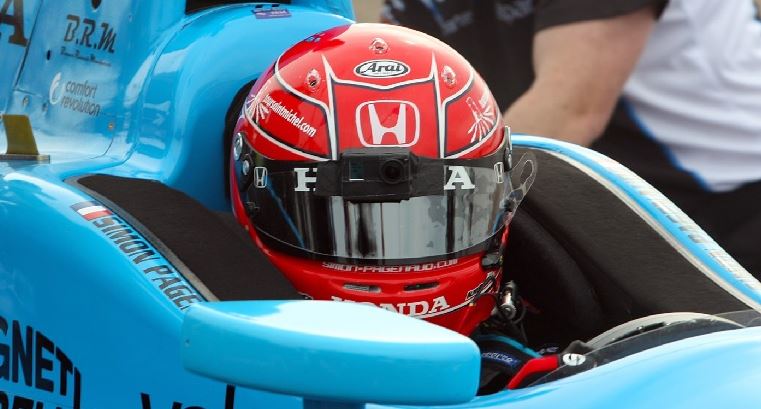
Darrick, Brownsburg, Ind.
MP: Right in the middle of the visor strip. We use some sturdy gaffers’ tape – you can pick up the helmet with the camera, and since we use it without the plastic GoPro case, it’s really light – just a few ounces. Because the camera’s microphone gets blasted by the air rushing over it, I drop a digital audio recorder in the sidepod (or elsewhere, depending on the vehicle) to overlay proper sound in the editing process. And I don’t manipulate the audio, for what it’s worth. Other than increasing the volume to the right output level, it’s completely raw.
I'm very concerned that IndyCar removed the 10-place grid penalty for an unapproved engine change. Now the only punishment a manufacturer receives for requesting a premature engine change is a loss of manufacturer points in a manufacturers' championship that few people know of or care about.
The 10-spot grid penalty rule was a major factor in limiting engine costs for the manufacturers. Now there is nothing to keep one manufacturer from ordering engine changes/upgrades at every race. If one manufacturer gets a bigger budget, they will be able to dominate the other manufacturer and force it out of IndyCar.
I know the 10-spot grid penalty wasn't ideal for fans, but I'm a firm believer that IndyCar needs to protect manufacturers from themselves, especially to maintain the multiple engine suppliers that most people believe are crucial to the health of the series. Is there a way for IndyCar to give this rule some more teeth without punishing drivers for the manufacturer's changes?
Kyle
MP: I hear what you’re saying, Kyle, but manufacturers were able to do the same thing before the penalty was changed. Other than a rule limiting total budget expenditure, nothing can protect manufacturers from themselves…other than themselves. And that’s precisely what we have had so far. The cost to supply IndyCar engines is uncomfortably high for Chevy and Honda, and neither company has a blank checkbook to draw from. This really isn’t a problem to be concerned about.
Pretty much all major forms of motorsport have implemented paddle shifting, which has obvious advantages to the heel-and-toe method used when having to clutch. But the driver is still initiating the gear shifts. Why? Is there an advantage to the driver doing the shifting, or have the regulators deemed computer-controlled, automatic shifting to be too much of a driver aid, like active suspension or traction control? I would think that high-tech automatic shifting would be able to optimize power delivery and fuel economy.
I seems like the racing series' have settled into an awkward middle ground on this issue. I love the dance that the Aussie V8 drivers do while getting around a lap – that looks like it takes tremendous skill. On the other side, with the focus on fuel economy in F1 and Le Mans a fully-automated solution would seem to be better. So here we sit with neither, so I see the rule-makers fingerprints on this. Am I right?
M McGowan
MP: I’d say it’s more of an image thing, to be honest. There was a time in F1 and DTM where shifting was automated, but few people like the idea of drivers being made partially redundant. Shifting was once an art form, but thanks to Ferrari’s John Barnard in 1989, and the auto industry’s adoption of paddle shifting, it’s here to stay. It’s also one of the last big innovations racing gave to the car buyer.
If you asked drivers who have competed in all three series – CART, Champ Car, and DW12 – what car would they tell you was the most fun car to drive and why?
Robert Thibault
MP: When I’ve asked this of the current and past drivers who spanned the three series, most have pointed to CART in 1999 as the pinnacle. Ridiculous power and, while there was still a tire war, gummy rubber in qualifying. I need to do a video series with Dario, Montoya, Helio and some of the other studs from that era to relate just how crazy the cars were to drive. I can tell you that from my perspective, and having worked in CART during the ’99 season, the cars were fearsome to behold.
I just finished watching NBC Sports' coverage of F1 Malaysia practice where I heard Will Buxton say we owe anti-lock brakes on our street cars to F1. I flew Air Force C-130s constructed in 1961 that used this technology. Sounds like an opportunity for an updated book on the beginnings of automotive technology. What do you think is the best?
Tom Phillips
MP: I can’t really say for automobile tech books, but among racing tech books, it’s hard to boil it down. Here’s a few to start with on the Indy car side. All three are excellent, with Huntington’s book standing out for its in-depth look from the early days of open-wheel racing. Feel free to ask about sports car and F1 tech book recommendations in future mailbags.
http://www.amazon.com/Design-Development-INDY-Roger-Huntington/dp/0895861038
http://www.amazon.com/Anatomy-Development-Indy-Race-Car/dp/0879388749/ref=pd_sim_b_1?ie=UTF8&refRID=0RT477Z3BQ2R3C84ARQT
http://www.amazon.com/Inside-Racing-Technology-Discussions-Technical/dp/0964641402/ref=pd_sim_b_2?ie=UTF8&refRID=0RT477Z3BQ2R3C84ARQT
After Dan Wheldon’s death at Las Vegas Motor Speedway in October 2011 there was a lot of talk about needing to make the catch fences safer. I was wondering if anything has been sone in that area. Have some of the fences been changed or modified? Is it beinbg researched? IS IndyCar a big sponsor of that research like it was with the SAFER walls? Or has it just been dropped?
John Womack
MP: Most of what I’ve seen done has involved adding more SAFER barriers or tire barriers in places where they should have been, but that’s not to say a wide-scale effort has been in motion since Dan’s death. I’ve had a few people contact me since Las Vegas to mention they had ideas for new barriers, and even had one person show me a mockup of his concept, but I’m unaware of actual changes or new barrier technologies being implemented in North American road racing.
I have been studying the engine photographs that you published March 24. On the Chevrolet engines, there appear to be two exhaust pipes on the right side of the vehicle, one smaller diameter and the other bigger. What are their purposes?
While on the Honda engine, there appears to be two pipes on the right and three pipes on the left side of the car. Again, what are all of these pipes venting?
Tom Obertynski
MP: You’re seeing the primary exhaust outlet from each cylinder bank exiting the hot side of the turbo, and the second pipe is for the wastegate. Chevy and Honda have the same configuration this year; what you might be referring to is the 2012-2013 single-turbo Honda which used an extra piece of tubing to vent its header bags – the rushing exhaust gases and air passing over the tube would pull hot air from the header bags, reducing temperatures within the engine bay.

Latest News


Comments
Comments are disabled until you accept Social Networking Cookies. Update cookie preferences
If the dialog doesn't appear, ad-blockers are often the cause; try disabling yours or see our Social Features Support.