Pauline Ballet/Getty Images
How do diffusers work?
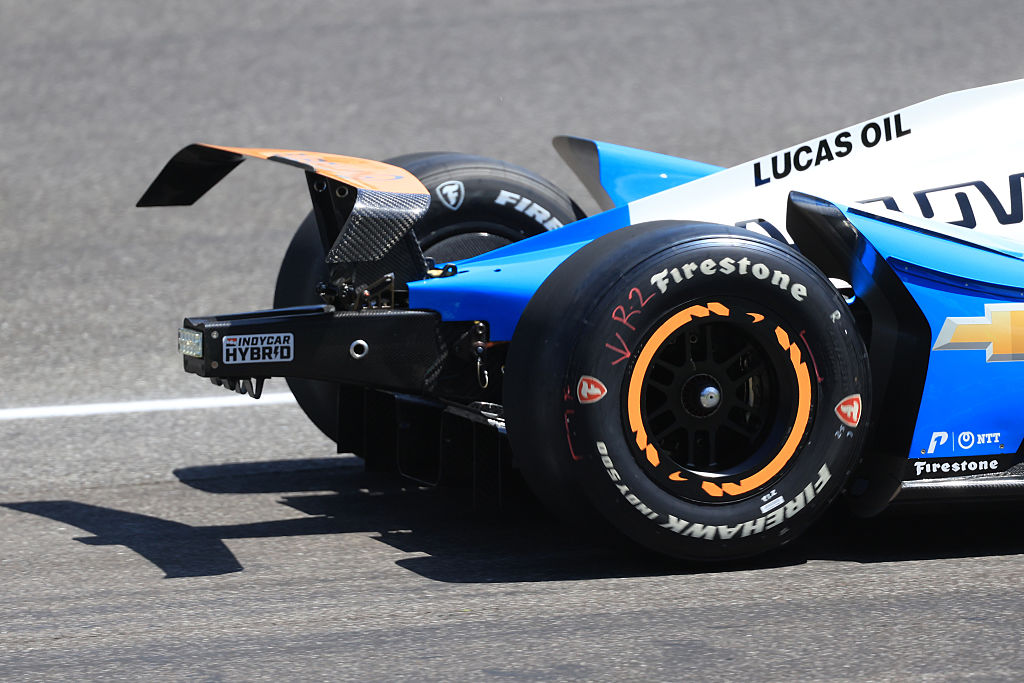
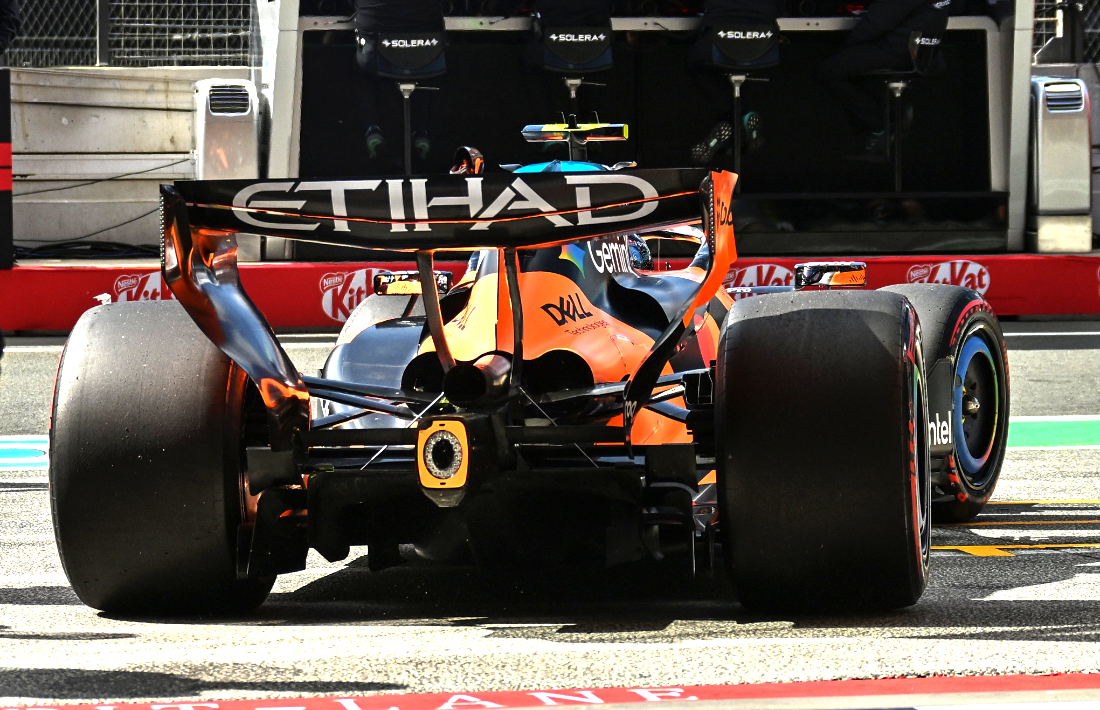
A diffuser is the aerodynamic component at the rear underside of a race car that helps generate downforce from the car's floor – often more efficiently than wings, since it produces less drag per unit of downforce.
The short answer to how they work: A diffuser accelerates air under the car to create a low-pressure zone (generating downforce), then gradually re-expands that airflow as it exits at the rear so it doesn't separate and become turbulent. Since this method produces less drag than wings for equivalent downforce, it's become the aerodynamic centerpiece of modern high-downforce race car design.
The core physics
The diffuser works by accelerating airflow underneath the car, then expanding that airflow back out to ambient pressure as it exits at the rear.
As air is forced through the narrow gap between the flat underfloor and the track surface, it speeds up. This follows the same fluid dynamics principle – Bernoulli's principle – that governs wings. Faster-moving air has lower pressure.
This creates a low-pressure zone underneath the car, and since normal atmospheric pressure is pushing down on top of the car, that pressure differential effectively sucks the car down onto the track, generating downforce without the drag penalty of a wing doing the same job.
The diffuser itself sits at the back of this underfloor tunnel, angled upward, and its job is to gradually expand the airflow back to normal atmospheric pressure as it exits the car. If the air expanded too abruptly, it would separate from the surfaces and become turbulent, killing the low-pressure effect. So the diffuser's gradual upward ramp shape is what lets the airflow unwind smoothly and efficiently.
Why the shape matters
The diffuser is typically made of multiple channels/strakes (vertical fins) that help manage and straighten the airflow as it exits, preventing it from becoming turbulent or unstable.
The angle and length of the diffuser ramp affect how much the airflow can be expanded before it separates. A longer, more gradual ramp generally allows more downforce to be extracted, but is limited by regulations (ride height rules, floor edge rules, diffuser height/length limits) in most series.
Diffuser performance is also highly sensitive to ride height. The closer the floor is to the ground, the faster the air is forced to travel through the tunnel, generating more downforce. This is why teams run cars as low as regulations and track bumps allow, and why hitting bumps or curbs that suddenly change ride height can cause a sudden, dangerous loss of downforce. This is part of what's called "porpoising," seen dramatically in F1's 2022-23 ground effect era, where cars would violently bounce as the underfloor airflow stalled and re-attached repeatedly at very low ride heights).
Ground effect
This diffuser effect is part of the broader concept of ground effect aerodynamics – using the entire underside of the car, not just wings, to generate downforce by exploiting the small gap between the car and the track.
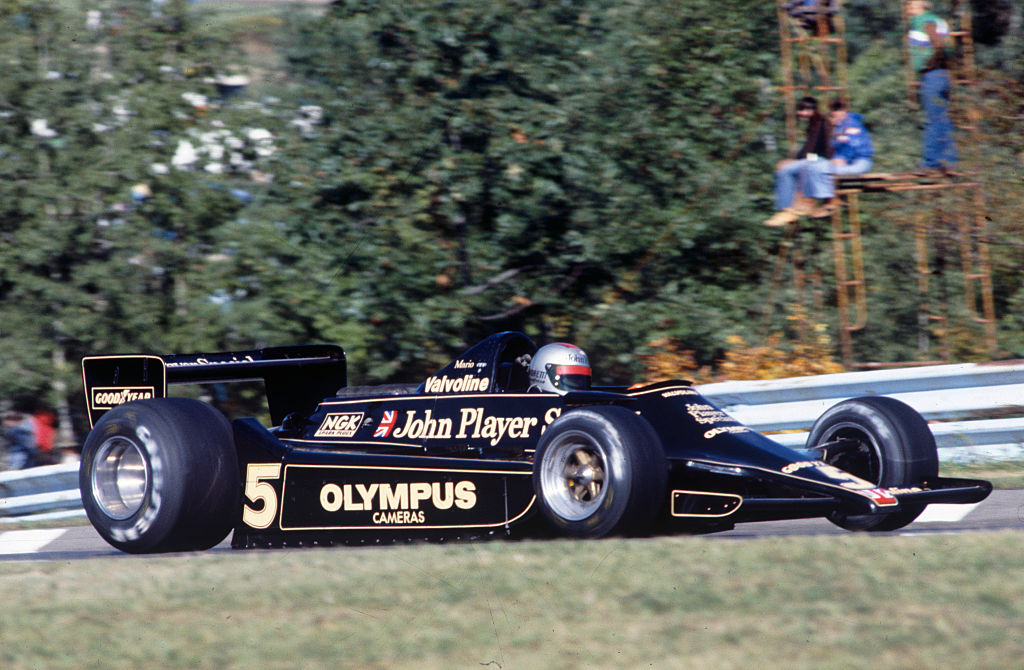
Ground effect was pioneered in F1 in the late 1970s (most famously by Lotus with sliding skirts sealing the sides of the underfloor tunnels), and became so powerful and dangerous that it was banned via flat-floor regulations from 1983. Teams were generating so much downforce that cornering G-forces became a serious safety concern, especially if the ground effect seal failed suddenly at speed.
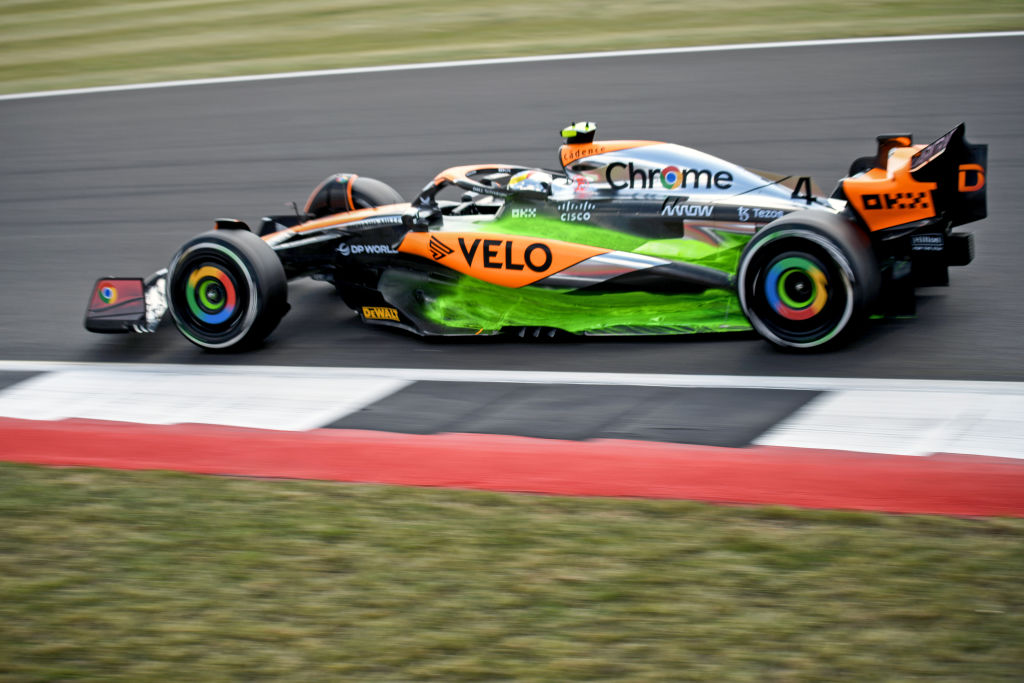
F1's 2022 regulations reintroduced ground effect underfloor tunnels (without the banned sliding skirts) specifically to shift downforce generation away from wings and toward the floor. Floor-generated downforce is less disrupted by a car following closely behind another, which was part of the effort to improve close racing and overtaking.
Why diffusers/ground effect are more efficient than wings
A wing generates downforce by disrupting airflow directly, which inherently creates significant drag as a byproduct.
A diffuser/underfloor tunnel generates downforce by accelerating and then smoothly re-expanding airflow, which can potentially create much less drag for the same amount of downforce compared to a wing.
This is why modern race car designers, especially in F1, prioritize maximizing floor-generated downforce before adding wing-generated downforce. It's the more efficient way to get grip without paying as heavy a drag penalty.
Differences across series
F1: Extremely sophisticated underfloor tunnel and diffuser designs are central to current-generation cars' performance, following the 2022 ground effect regulation change.
IndyCar: Also uses underbody tunnels as part of its aero kit, contributing meaningfully to the car's total downforce, especially on road/street courses.
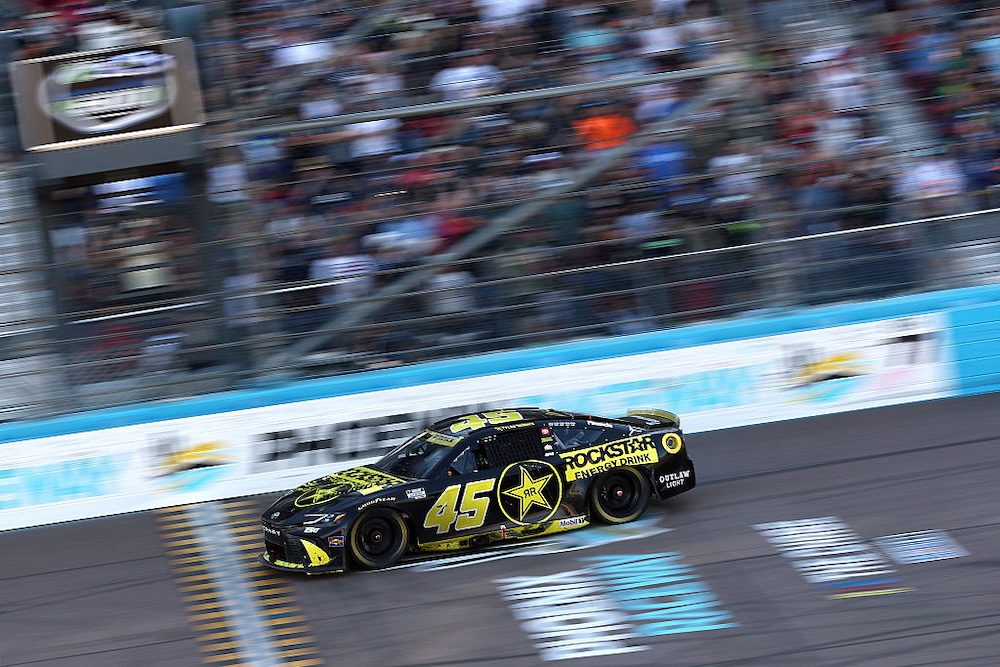
NASCAR: Uses a much simpler diffuser/underbody design given its stock car-based rules. Downforce contribution from the underfloor is comparatively minor next to F1/IndyCar, consistent with NASCAR's overall lower reliance on complex aerodynamics.
Sports prototypes (WEC Hypercar, IMSA GTP): Use underbody ground effect tunnels extensively too, balanced against regulations designed to cap overall downforce levels for safety and cost-control reasons (Balance of Performance rules).
Latest News

Comments
Comments are disabled until you accept Social Networking Cookies. Update cookie preferences
If the dialog doesn't appear, ad-blockers are often the cause; try disabling yours or see our Social Features Support.