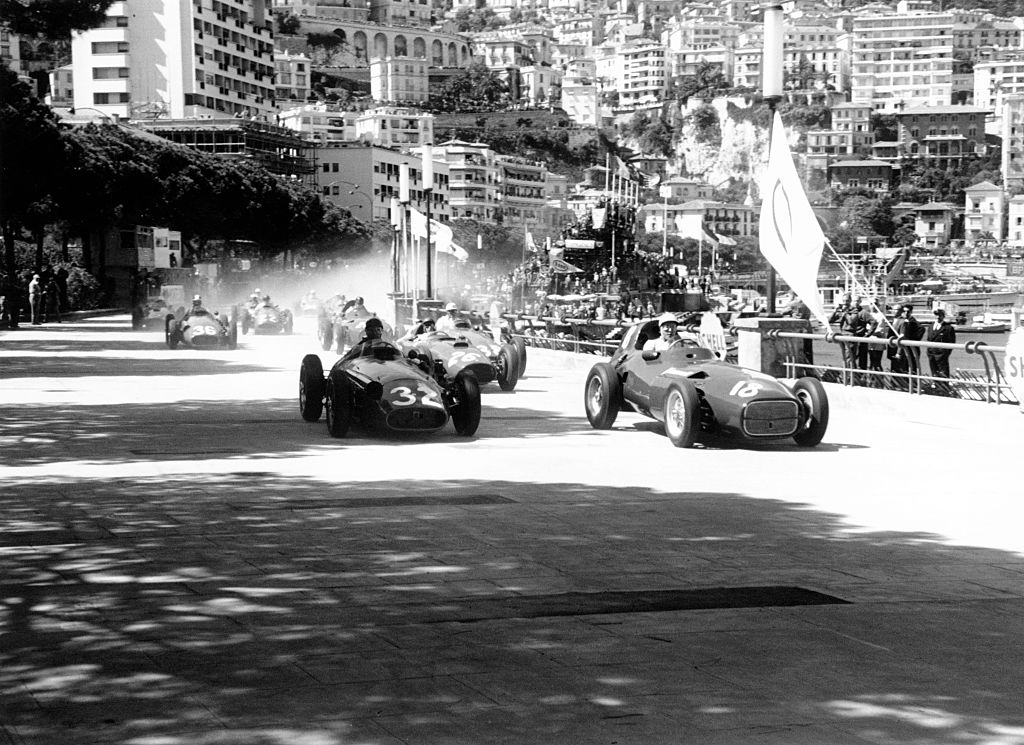
1957 Monaco Grand Prix. Getty Images
How Formula 1 cars have evolved
1950s: Front-engine Grand Prix cars
The first F1 World Championship in 1950 was contested by front-engine cars descended directly from pre-war Grand Prix racing, with cylindrical bodies, exposed wheels, narrow tires, and engines mounted ahead of the driver. Alfa Romeo dominated early on, followed by Mercedes and then Ferrari and Maserati. Chassis were simple steel tube-frame designs, and horsepower was in the 200-260 range. Safety was minimal: no seatbelts, no roll bars, and unsurprisingly, fatalities were common.
Late 1950s–1960s: The rear-engine revolution
Cooper pioneered mounting the engine behind the driver, proving the layout's handling advantages, and by 1961 every competitive team had switched. This decade also brought the Lotus 25 (1962) – the first fully stressed aluminum monocoque chassis, replacing the old tube-frame designs and dramatically improving rigidity and safety. The Ford-Cosworth DFV engine debuted in 1967 and became the sport's dominant power unit for over a decade, available to smaller privateer teams and democratizing competitiveness.
1970s: Wings and ground effects
Aerodynamics arrived in force. Front and rear wings appeared early in the decade, generating downforce for the first time. Colin Chapman's Lotus 78/79 introduced ground-effect aerodynamics (venturi tunnels under the sidepods creating a suction effect), revolutionizing cornering speeds. Turbocharging entered F1 via Renault in 1977, initially unreliable but foreshadowing the next era. Safety improved with fireproof suits, better barriers, and the founding of driver safety advocacy.
1980s: The turbo era
Turbocharged engines exploded in power: qualifying "grenade" engines reportedly produced 1,000+ horsepower for a single hot lap. Carbon-fiber monocoques arrived (McLaren MP4/1, 1981), replacing aluminum and dramatically improving crash safety. Ground effects were banned in 1983 over safety concerns about cars porpoising and grounding out at speed. By the late '80s, turbo boost was restricted and then banned outright for 1989, pushing the sport back to naturally-aspirated engines.
1990s: Electronics and driver aids
Active suspension, traction control, semi-automatic paddle-shift gearboxes, and launch control all emerged, peaking with the dominant Williams cars of 1992-93. Most electronic driver aids were banned from 1994 onward after safety and ‘authenticity’ concerns, especially following Ayrton Senna's death that year, which triggered a major safety overhaul (higher cockpit sides, stronger crash structures, the HANS device development began).
2000s: Aero sophistication and V10s/V8s
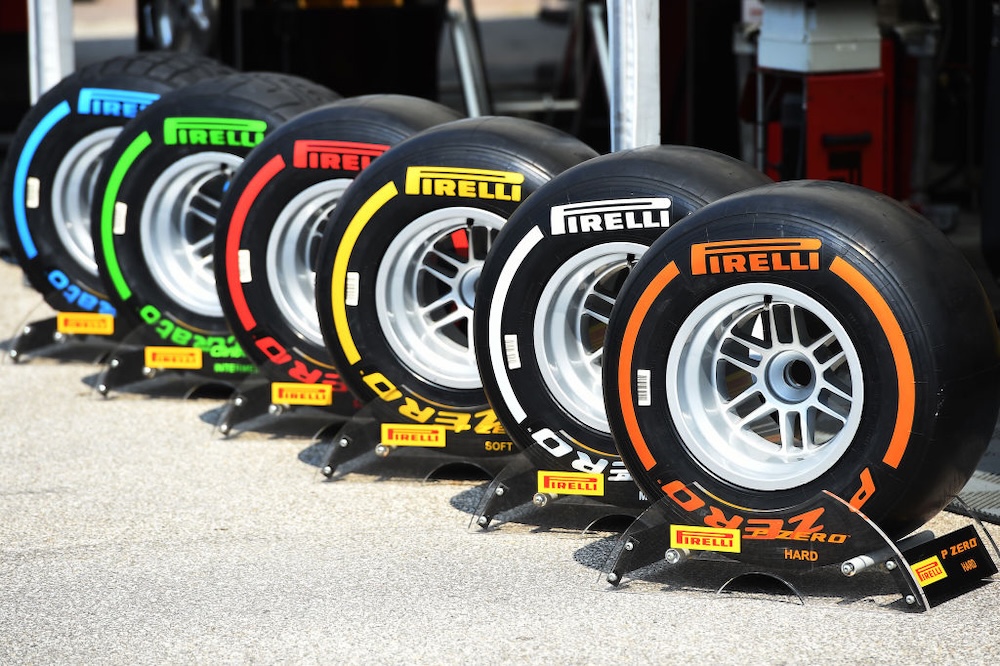
Naturally aspirated V10 engines screamed to 19,000+ RPM by mid-decade before being replaced by smaller V8s in 2006 to control costs and speeds. Aerodynamic development became incredibly refined – intricate winglets, barge boards, and bargeboards proliferated until regulations tried repeatedly to simplify the bodywork to aid overtaking. A tire war between Michelin and Bridgestone pushed grip and speeds higher until a single-supplier rule returned.
2014: The hybrid turbo era begins
A massive regulatory shift introduced the current-style power unit concept: 1.6L turbocharged V6 engines paired with sophisticated hybrid systems (MGU-K and MGU-H), reclaiming energy from braking and exhaust heat. This made F1 engines the most thermally efficient in the world, but also dramatically more complex and expensive, entrenching manufacturer dominance.
2017–2021: Wider, faster cars
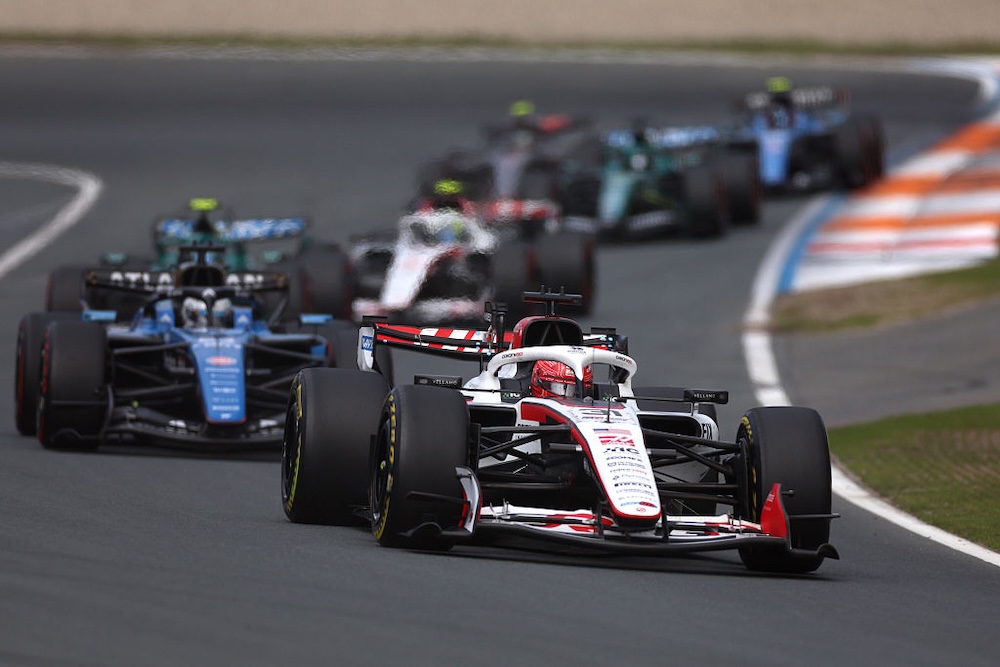
Regulations widened cars and tires substantially in 2017 to increase cornering speeds and visual aggression. DRS (Drag Reduction System, introduced 2011) became the primary overtaking aid, letting a chasing car open its rear wing in designated zones to reduce drag.
2022: Ground effects return
A major regulatory reset brought ground-effect aerodynamics back (banned since 1983) specifically to reduce "dirty air" turbulence and enable closer racing/overtaking, alongside larger 18-inch wheels (replacing 13-inch) and simplified bodywork to cut the complex winglets that had proliferated.
2026: The current era
A dramatic hybrid rebalancing (removing the MGU-H, tripling MGU-K power to 350kW for a near 50/50 combustion/electric split), active aerodynamics (movable wings for straightline/cornering modes replacing DRS), smaller/lighter cars, and fully sustainable fuel, alongside new manufacturers (Audi, Honda's return, Red Bull's in-house engine).
Latest News
Comments
Comments are disabled until you accept Social Networking Cookies. Update cookie preferences
If the dialog doesn't appear, ad-blockers are often the cause; try disabling yours or see our Social Features Support.