Mark Sutton/Getty Images
What do the different colored tires mean in F1?
F1 uses different tire compounds (essentially a specific formula and construction) because tires represent a fundamental trade-off between grip and durability. Giving teams choices between that trade-off, plus mandating they use more than one, is a deliberate way to create strategic variation and more interesting racing.
Softer tire compounds use a more pliable rubber that generates more grip and faster lap times, but they degrade faster. The tread wears down quicker, and the tire loses performance sooner.
Harder compounds last much longer but provide less outright grip, so cars are slower on them, especially over a single fast lap.
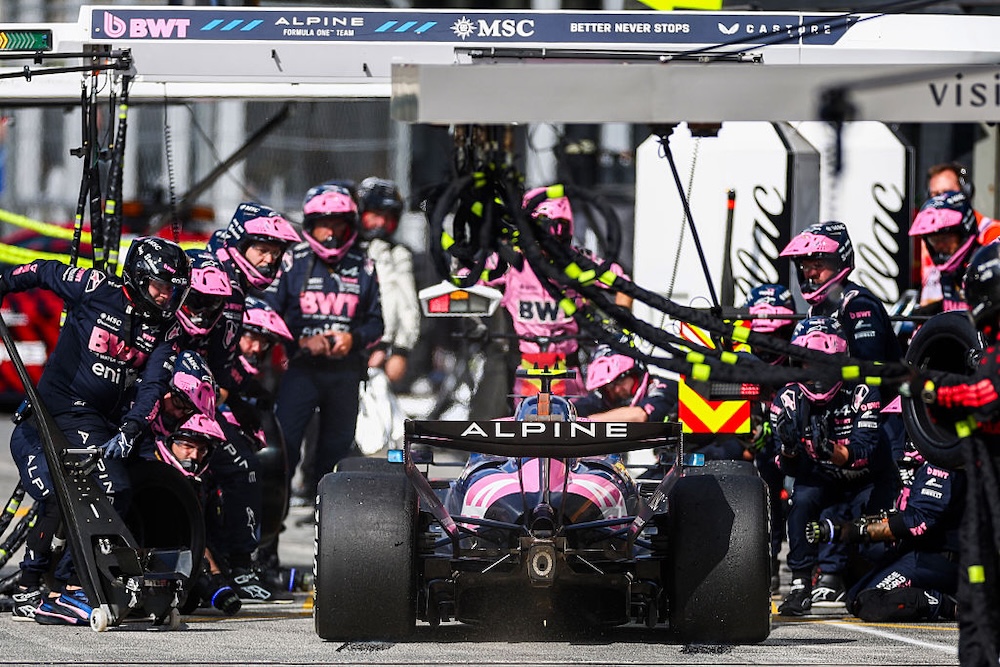
This trade-off forces strategic decisions: pit early on soft tires for pace, or run longer on hards to reduce pit stops? It also creates on-track variation, since cars on different tire ages/compounds have different grip levels, which affects overtaking and race unpredictability.
Track surface, temperature, and abrasiveness vary hugely from circuit to circuit, so Pirelli (F1's sole tire supplier since 2011) brings different compound choices to each race weekend to suit those conditions.
The color-coding system
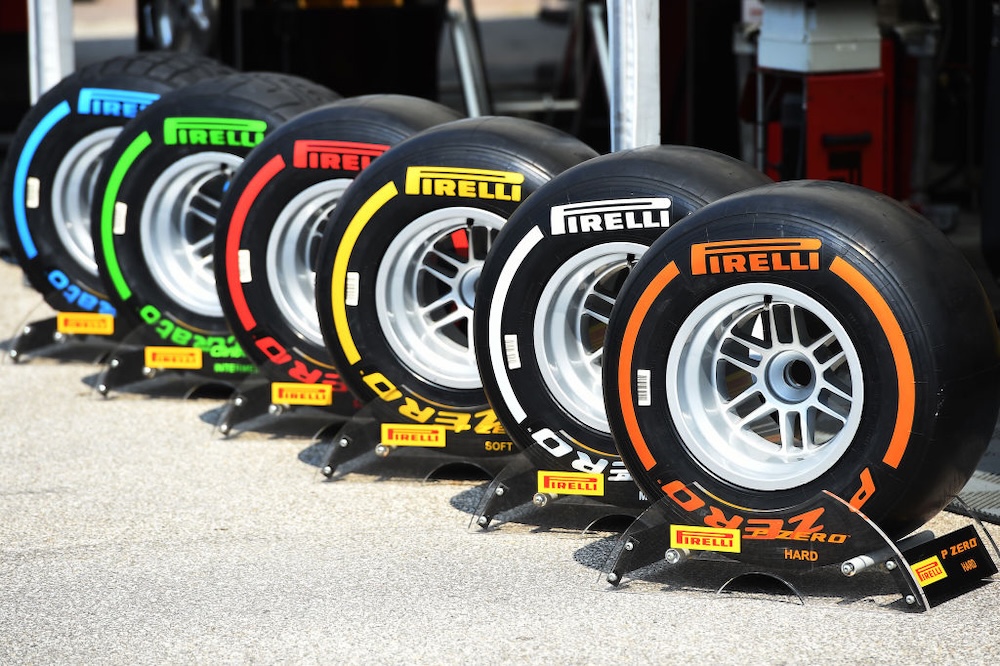
Pirelli's dry-weather slick tires are numbered C1 through C6 (hardest to softest), and at each race weekend, Pirelli selects three of those six compounds to bring, labeled and color-coded relative to each other for that specific weekend:
- Hard: white sidewall. The most durable, least grippy of the three compounds brought to that race.
- Medium: yellow sidewall. The middle option, balancing pace and durability.
- Soft: red sidewall. The grippiest, fastest, but shortest-lived compound of the three.
Because only three of the six compounds are chosen per race (and which three depends on the circuit), a "soft" tire at one race might actually be a harder underlying compound than the "hard" tire at a different, more demanding circuit. The colors are always relative to that specific race weekend's selection, not an absolute compound identity.
Wet-weather tires have their own separate, distinct compounds and colors:
- Intermediate: green sidewall: For damp or drying track conditions, with light tread grooves.
- Full wet: blue sidewall. For heavy rain, with deeper tread patterns to disperse standing water.
The mandatory-use rule
In a dry race, drivers must use at least two different dry compounds during the race, meaning a driver can't just start on the fastest soft tire and stay on it the whole race even if it held up. This single rule is one of the biggest drivers of pit-stop strategy variation in every dry F1 race, since it guarantees at least one mandatory stop and forces teams to plan around when to make the compound switch.
Latest News
Comments
Comments are disabled until you accept Social Networking Cookies. Update cookie preferences
If the dialog doesn't appear, ad-blockers are often the cause; try disabling yours or see our Social Features Support.