Ryan Rupprecht/Lumen via Getty Images
How are IndyCar and Formula 1 different?
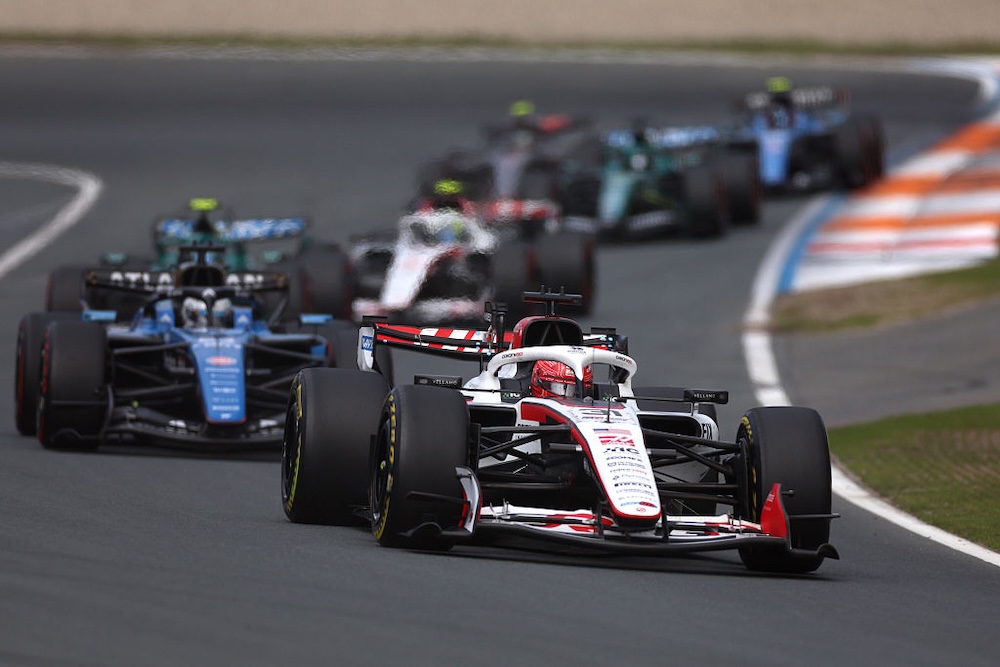
To the casual bystander, Formula 1 cars and IndyCars look basically the same: pointy-shaped with big wings and tires, and a driver in the middle. But once you move beyond the basic silhouette, the differences between the two quickly become apparent.
CHASSIS PHILOSOPHY
F1: Constructor chassis
Each team designs and builds its own carbon fiber monocoque within FIA regulations. Ferrari, Red Bull, Mercedes, McLaren, etc. all run genuinely different cars – different aero concepts, suspension geometry, sidepod designs, cooling packages. A part from a Ferrari could not be fitted to a McLaren, for example – and might not even fit on a Ferrari from earlier in the same season. This is why F1 sees such big performance swings between teams (a correct or wrong concept can be worth seconds a lap), and why development spending is so central to the sport. The chassis itself is a competitive weapon.
IndyCar: Spec chassis
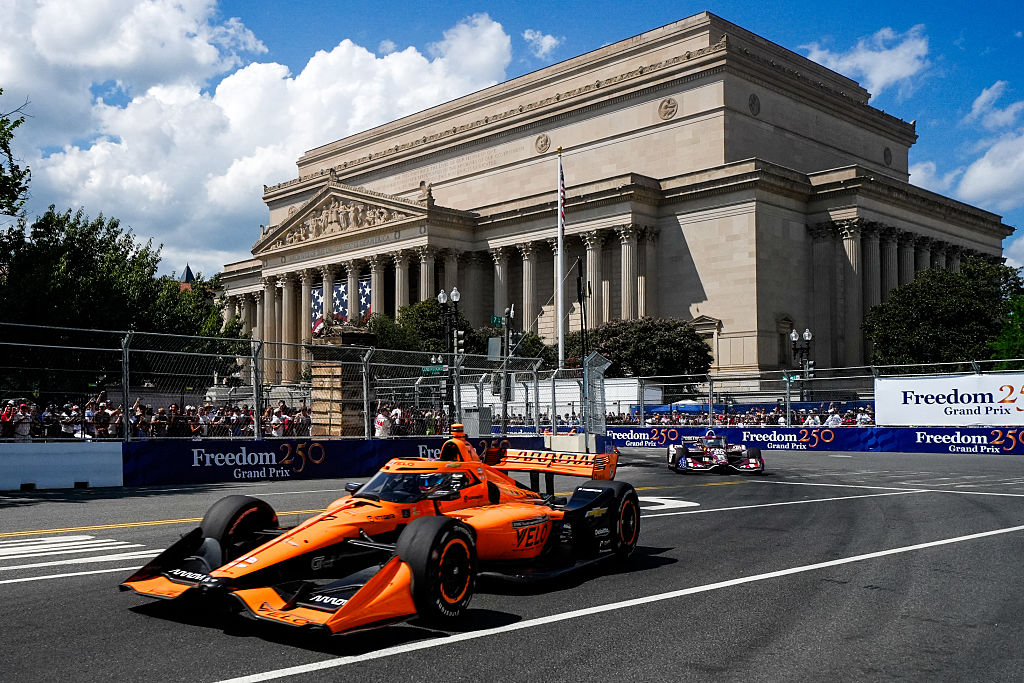
Every car on the grid uses the same Dallara-built tub – currently the DW12/IR-18, in use since 2012 with updates along the way (universal aero kit in 2018, the aeroscreen in 2020, hybrid unit added in 2024). It's a carbon fiber monocoque with a honeycomb Kevlar structure, with double A-arm pushrod suspension front and rear.
Teams can't touch the fundamental structure. They're tuning dampers, springs, and setup within a fixed design, not engineering a different car. This is deliberate. It caps costs and keeps the field mechanically close, so races are decided more by driver skill, strategy, and pit work than by who has the best-funded engineering department.
That's really the philosophical crux: F1 lets chassis design be a major axis of competition, IndyCar deliberately removes it as one.
IndyCars do not have power steering
The current-model IndyCar is renowned for its lack of power steering, making it much more physically demanding and a handful to drive, especially on street courses where there's constant, heavy steering input at low speed (unlike F1 or a road car, there's no assist helping turn those front wheels).
As a result, IndyCar drivers need serious upper-body and neck strength (compounded by the g-forces on ovals). Fatigue is a real limiting factor in a way F1 drivers don't experience to the same degree, since F1 cars do have power steering.
Without power assist, drivers get more direct, unfiltered feedback through the wheel. Some drivers/purists see this as a feature, not a bug, since it rewards precision and strength. However, the absence of power steering has also been cited as one reason the car can be tough for lighter/smaller-framed drivers to adapt to.
IndyCar's upcoming IR-28 chassis (debuting in 2028) will not have power steering at launch either, but IndyCar VP Mike O'Gara has floated adding a sports car-style electric power assist after initial testing, so this could change in a few years. For now, though, it remains one of the most talked-about physical differences between the two series.
ENGINES
F1
F1 engines are a complex, six-element hybrid power unit where electric deployment strategy is a huge part of racecraft. Nearly half the power comes from the battery/motor system.
At the core is a 1.6L V6 turbocharged internal combustion engine. Coupled with that is the MGU-K, which harvests energy under braking and deploys it for acceleration. Their combined output is around 800kW, or roughly 1,070 horsepower.
Cars run on advanced sustainable fuel derived from non-food sources or genuine waste rather than new fossil carbon.
Under the previous set of engine rules, which ended in 2025, there was also an MGU-H, which used exhaust gas flow to reclaim energy. Under the current formula that been removed in favor of a much bigger electric contribution.
IndyCar
Every car runs a 2.2-liter, twin-turbocharged V6 supplied by either Honda or Chevrolet with the cylinder bore capped at 95mm and a max rpm of 12,000. Unlike F1, teams don't design their own engine architecture; they just choose a manufacturer.
Since 2024 the engine has been paired with a hybrid Energy Recovery Unit that captures energy under braking and redeploys it on driver demand, but it's a much smaller add-on than F1's system – roughly an additional 60 horsepower on top of the base engine.
With the hybrid engaged in ‘push to pass’, a 2026 IndyCar produces over 800 horsepower total – a comparable peak number to F1, but reached very differently (mostly combustion, a small electric boost).
Power output is track-dependent: IndyCar varies turbo boost by circuit, with lower boost/power on superspeedways for safety, higher on short ovals and road courses.
A much bigger step is coming. In 2028, alongside the new IR-28 chassis, Honda and Chevrolet will introduce an all-new 2.4-liter twin-turbocharged V6 with a more powerful hybrid unit.
TRACKS
This is one of the areas where the two series diverge most dramatically.
F1
Formula 1 utilizes road and street circuits only – no ovals, ever. Circuits range from purpose-built road courses (Silverstone, Suzuka, Circuit of The Americas) to street circuits (Monaco, Singapore, Las Vegas). Corners, elevation change, and technical sequences dominate; overtaking is often engineered into the track design (DRS zones under the old rules, now active aero/overtake mode for 2026).
IndyCar
The IndyCar Series runs all four track types in a single season – permanent road courses, temporary street circuits, short ovals, and superspeedways (most famously Indianapolis Motor Speedway). This variety is a defining feature of the series: teams and drivers have to completely reconfigure the car's aero and suspension setup between an oval weekend and a street-circuit weekend, sometimes within consecutive race weeks.
It also means IndyCar drivers need a broader skill set – drafting and pack racing at 220+ mph on ovals is a completely different discipline from braking hard into a 90-degree street circuit corner.
The Indianapolis 500, run on the 2.5-mile Indy oval, has no real equivalent in F1. Nothing in the F1 calendar asks drivers to run flat-out, inches from other cars, at sustained high speed for 500 miles.
BUDGETS
The difference between F1 and IndyCar from the standpoint of budgets and resources is immense. F1's spending goes into R&D and in-house engineering because the car itself is the competitive battleground. IndyCar deliberately strips that lever out via spec parts, so budgets go toward people, setup, strategy and reliability rather than chassis or engine innovation, which is why the cost gap is so much larger than the performance gap between the two series' lap times.
F1
The FIA's cost cap for 2026 is $215 million per team for a season of 24 races or fewer, up sharply from the previous $145 million set in 2021. The jump largely reflects new items being folded into the cap (like depreciation) rather than teams simply getting a bigger checkbook.
That cap covers a two-car team's entire performance operation. So, chassis design, aero development, race ops, most staff salaries. Driver pay, the three highest-paid staff, marketing, and hospitality all sit outside the cap.
Engine manufacturers have their own separate cap, rising to $190 million per season from 2026. This means a factory team running its own power unit program (Ferrari, Mercedes, Red Bull) is really operating under a combined budget well north of $300–400 million once you add it all up.
Before the cost cap existed, Ferrari and Mercedes were reportedly spending $400 million or more annually, so the cap was specifically designed to close the gap between giants and independents, though the biggest, most efficient teams remain advantaged even within a shared ceiling.
IndyCar
No cost cap exists in IndyCar, but the spec chassis/engine structure keeps spending far lower naturally. IndyCar teams spend roughly $7–14 million per car annually, and that figure has been climbing. Teams reported 20-40%+ cost increases around 2024, largely driven by the hybrid system retrofit.
A competitive IndyCar entry could once be fielded for $3–6 million per car in the late 2010s; a 2024 F1 team, by contrast, operated a two-car team under a roughly $135 million cap… and that's before adding items the cap excludes.
Put simply, a top-tier IndyCar team's budget is roughly a tenth of F1's cost cap. You could fund the entire IndyCar grid for the cost of about two F1 teams.
Team size / structure
F1: Historically massive organizations – some of the largest F1 teams have employed around 1,000 people when you count the full factory operation (design, manufacturing, race team, marketing). Even under the cost cap, F1 teams remain large engineering organizations because they're building the entire car in-house.
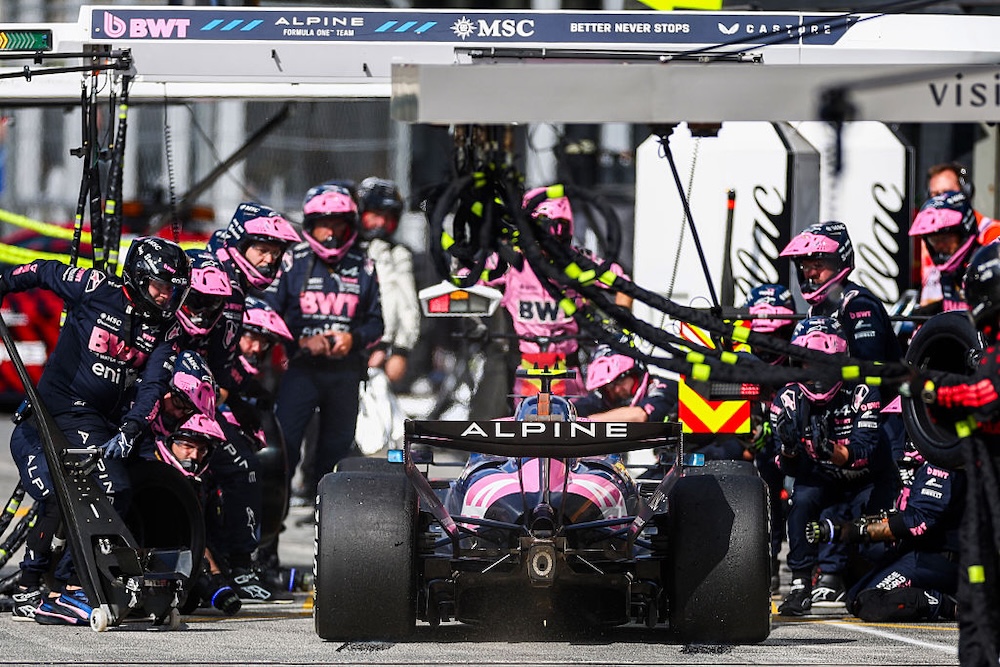
IndyCar: Much leaner – teams don't need in-house chassis designers, aerodynamicists building bespoke bodywork, or engine development departments, since Dallara and the two engine manufacturers handle that centrally. A top-level IndyCar team might top out around $10 million for the full season, versus F1 teams spending $80–300 million, and team headcounts scale accordingly – nowhere near F1's four-figure staff counts.
Cars per team: F1 teams are limited to exactly two cars. IndyCar teams can field a maximum of three full-time cars under the series’ charter system, but some add a fourth car for the Indy 500.
COCKPIT PROTECTION
Both championships feature cockpit protection systems developed around the same era, but they take very different engineering approaches to protecting the driver's head from debris and impacts.
F1's Halo
A titanium three-pronged structure that sits above and around the cockpit. Essentially an open frame, not an enclosure.
Introduced in 2018 after years of controversy (many thought it looked ugly and worried it would trap drivers in a fire or block visibility).
Purely structural. It's not solid, so it doesn't fully seal the cockpit or protect against wind/debris the way a screen would. It's designed to deflect large objects (a flying wheel, debris) and can withstand huge loads.
Widely credited with saving lives, most famously Romain Grosjean's fiery 2020 crash in Bahrain, and it's deflected wheels and debris in numerous other incidents.
IndyCar's Aeroscreen
A curved, laminated polycarbonate windscreen mounted on a titanium frame, much closer to a full windshield, fully enclosing the front and sides of the driver's head.
Introduced in 2020, developed with Red Bull Advanced Technologies (the F1 team's tech arm) and PPG for the screen material.
Because IndyCar races ovals at very high speeds with cars running close together, and historically has had serious incidents with debris and flying parts, a fully enclosed screen made more sense than an open halo. It stops small debris and tire fragments, not just large objects.
Comes with a heating/defog system and a drinking tube integrated into the frame, since it fully encloses the cockpit area in front of the driver.
OTHER KEY DIFFERENCES...
Weight/aero impact
The aeroscreen is heavier and affects airflow to the engine and rear wing more, requiring real aerodynamic reworking of the car. The halo is lighter and was easier to bolt onto an existing design.
Visibility trade-offs
Drivers initially complained about warping/glare through the aeroscreen's curved polycarbonate in certain light, but huge progress has been made in that area since. Meanwhile, the halo's open structure means F1 drivers deal with a physical bar in their peripheral vision instead.
Both are now considered essential safety features and it's hard to picture either series without them. The upcoming IndyCar IR-28 chassis (debuting in 2028) will keep an integrated aeroscreen but with a sleeker, more aerodynamically refined design.
Latest News

Comments
Comments are disabled until you accept Social Networking Cookies. Update cookie preferences
If the dialog doesn't appear, ad-blockers are often the cause; try disabling yours or see our Social Features Support.