Cybertruck was the future pickup no one wants today
After years of talk of lasers and bulletproofing and the future, the Technoking of Tesla also promised the Cybertruck would change everything, that it would make traditional pickups obsolete. Now, after only three and a half years, Tesla is preparing to wind down Cybertruck production in 2027 due to poor sales. The stainless-steel spectacle may end up as a monument to the era where selling the future seemed more important than actually building it.
The Tesla Cybertruck was supposed to make the Ford F-150 obsolete. It was supposed to render a century of pickup-truck engineering irrelevant, usher in a new era of automotive design better suited for Alderan than Earth. The silver truck was meant to be the proof that Elon Musk could do for trucks what he had done for electric cars. It was going to be bulletproof, practically indestructible, eviscerate rain with lasers and, according to Musk, eventually sell a quarter-million examples every year. Instead, it appears to be sunsetting. This garish monument to automotive disruption gets the axe just as soon as Tesla has a new show pony to parade around.
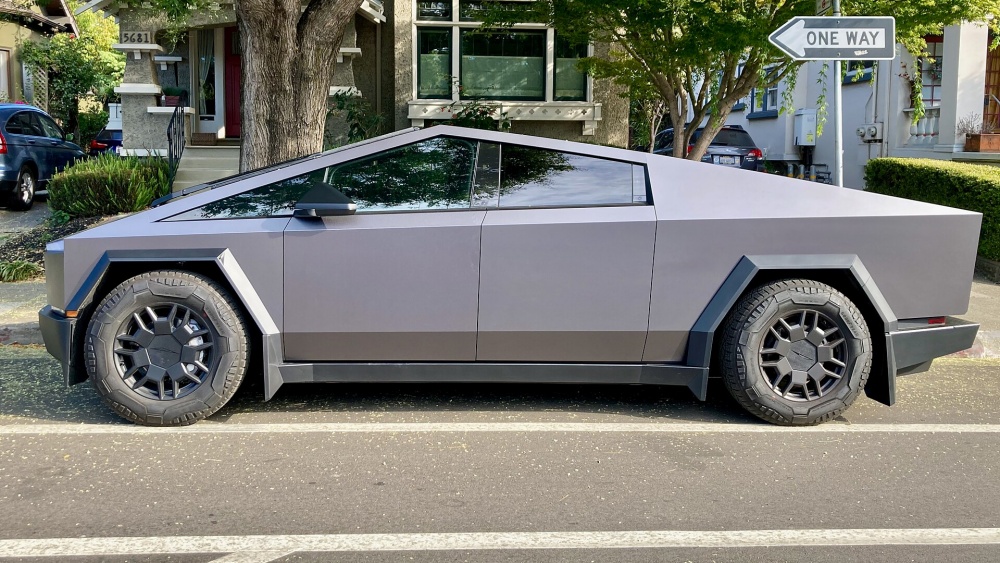
Musk announced this morning that Tesla will wind down Cybertruck production at its Gigafactory Texas facility around the middle of 2027, making room for increased production of the company’s Cybercab robotaxi. The announcement, delivered in the usual fashion via a post on X, doesn’t explicitly rule out production moving elsewhere. Still, Texas is currently the only facility equipped to build the unusual electric pickup. For all practical purposes, the Cybertruck’s days appear numbered and officially counting down.
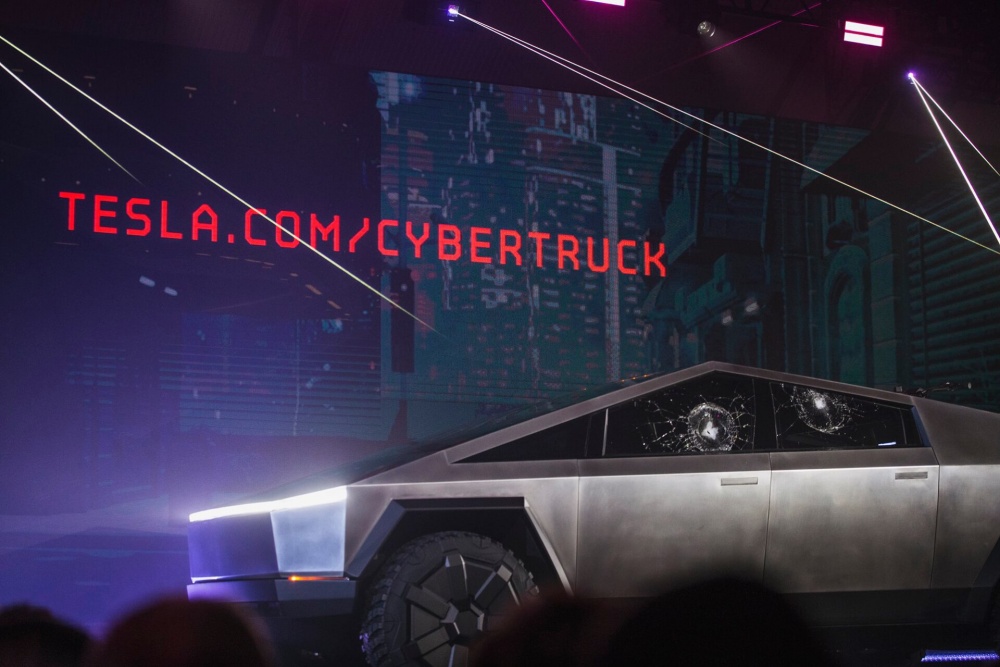
It’s a remarkably short life for a vehicle that spent years being sold as the future of the automobile. First unveiled in 2019, the Cybertruck didn’t reach customers until late 2023, making its pre-order time longer than its actual production. This is in part due to massive production delays, overpromising sci-fi features, and a handful of revisions to the promises made onstage.
And what a strange little chapter in automotive history it has been.
The truck that was going to make trucks obsolete
At the Cybertruck’s original unveiling in November 2019, Musk aimed at the traditional American pickup. He showed the audience the front ends of a Ford F-150, Chevrolet Silverado, and Ram 1500, arguing that trucks had looked essentially the same for a century. His point was that the industry had become complacent, and that Tesla was going to blow the whole thing up. This was, admittedly, pretty exciting at the time.
The Cybertruck, with its angular stainless-steel body, armored-glass promises, and design that appeared to have escaped from an unfinished PlayStation game from the ’90s, was the answer. Musk called it “a better truck than a truck,” promising a vehicle that would combine the utility of a conventional pickup with the performance and technology of a Tesla. The company even designed its production ambitions around an eventual capacity of 250,000 vehicles annually.
There was just one problem: People who buy trucks tend to like – you know – trucks.
Traditional pickups aren’t popular because Ford, Chevrolet and Ram haven’t figured out how to make them look futuristic enough. They’re popular because decades of development have produced vehicles that meet the expectations of people who use them. They have a silhouette that is cultural as much as it is practical. The general design of a cab up front and a distinct bed in the back not only works, but we love it. Tesla decided – in its hubris – that it knew better, and truck buyers did not care.
The Cybertruck certainly attracted attention. It also attracted buyers who wanted something different, and there’s no denying that it had a genuinely unique and refreshing identity in a marketplace often accused of producing variations on the same basic theme. But attention and sales are two very different things.
Tesla doesn’t publish Cybertruck sales separately, making exact figures difficult to establish. According to Kelley Blue Book estimates, U.S. sales fell from 38,965 in 2024 to 20,237 in 2025, a decline of nearly 48 percent. For the third quarter of 2026, Tesla reported just 8,295 deliveries across its entire "other models" category, which includes the Cybertruck and several other vehicles.
That’s a hair short of 250,000 a year.
The final boss of hype machines
To be fair, the Cybertruck didn’t come out at the easiest time. It would be easy to blame the Cybertruck’s failure on timing, even its looks. It’s an extreme design, but honestly, that’s the thing’s strongest quality. It was a rolling declaration that its owner wanted something different, and for a while, that was enough to generate enormous interest. It’s also worth noting that in 2019, when Cybretruck was first unwrapped, everything was different. The Cybertruck was just exciting. It wasn’t a loaded cultural item tied to politics, crypto scams, and an international symbol for male loneliness. Back then, it was fresh, a clean slate, one that was a much-needed departure from the endless sea of formless cars making our roads more boring by the day. The Cybertruck’s future was bright and unmarred, but it didn’t last long that way.
The problem was that Tesla seemed to be more interested in hype than in making the thing. Attention is nice, but you can’t pay the power bill with likes. The company had built a vehicle around the idea that people would eventually want what Musk told them they should want. It wasn’t an entirely unreasonable bet. Tesla had already convinced millions of people to reconsider electric cars, and the company had a history of making established automakers look too serious and unimaginative. But there’s a difference between convincing someone to buy an electric sedan and convincing someone who has only known F-150s for generations that they should suddenly drive a stainless-steel series of stacked triangles.
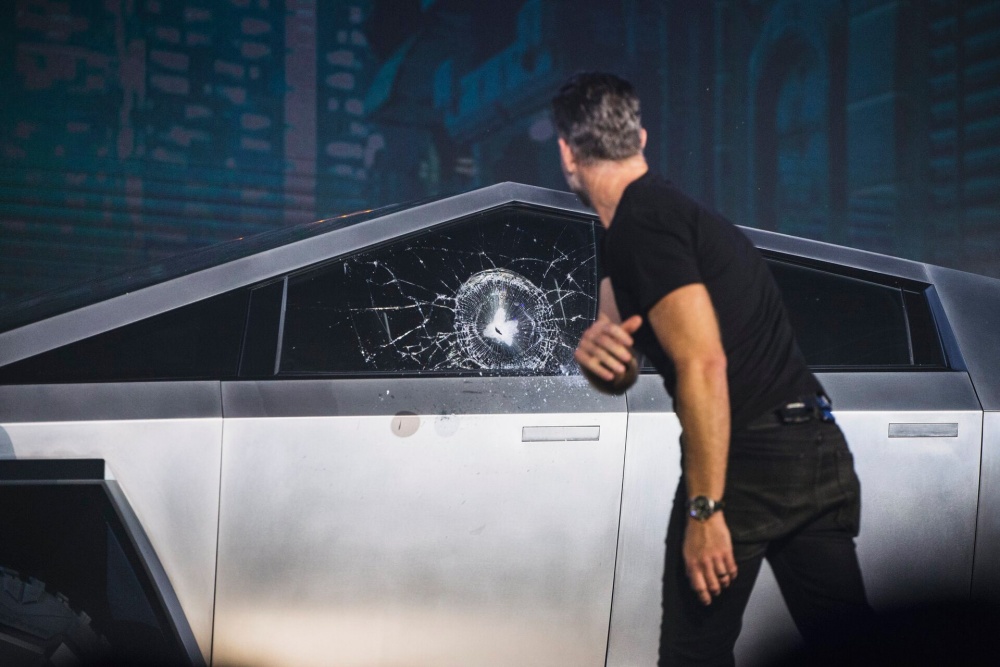
Even Musk seemed to recognize the scale of the challenge. During a 2023 earnings call, shortly before customer deliveries began, he admitted, "We dug our own grave with Cybertruck," acknowledging the enormous difficulty of bringing the vehicle to market and scaling production. That wasn’t exactly the sort of confidence one expects from a company preparing to revolutionize an entire automotive segment.
And the Cybertruck wasn’t heading toward a particularly healthy corner of the EV market. Electric pickups have struggled to find an audience in a way electric sedans and crossovers haven’t. It makes sense, though. Full-size pickup trucks are the best-selling segment in America. The F-150 remains the highest-selling model in America for more years than we can count. The Ford F-150 Lightning, a much more conventional interpretation of an electric pickup, also failed to reach the sales volumes Ford had anticipated. Ford eventually ended Lightning production as it reconsidered its electric-vehicle strategy. The Rivian R1T and Chevrolet Silverado EV haven't exactly set the world on fire, either. Again, this makes sense. The nature of pickup trucks is, at least for now, given the infrastructure in America, antithetical to electrification.
That context matters. The Cybertruck wasn't the only electric pickup struggling to find buyers. The sales struggle of the entire segment suggests that electric trucks across the board aren’t exactly what the people want, but Tesla’s particular approach, which involved rejecting much of what made traditional pickups popular in the first place, certainly didn't help.
The future is as unknown as it’s always been
Perhaps the most revealing part of the Cybertruck’s impending demise is what Tesla plans to do with the factory space. The company is shifting its attention toward the Cybercab, a two-seat autonomous vehicle that Musk envisions as the foundation of a massive robotaxi business.
It’s a familiar story by now. Tesla makes an enormous promise, presents a vehicle that looks like it belongs several decades ahead of its time, and asks everyone to imagine the world that will eventually grow around it. The Cybercab is the next big idea. The flying roboto super car is another, just as the Cybertruck was the big idea before it.
There is, of course, nothing inherently wrong with ambitious engineering. It’s fun and puts pressure on others to innovate. This is good. The automobile industry needs people willing to take risks, challenge established conventions, and occasionally build something that looks completely ridiculous. Without that willingness, we’d probably still be arguing about whether an electric starter motor was a sensible alternative to a hand crank. But we also need to employ wisdom and discernment when we hear sci-fi promises from a company that is quickly growing infamous for overpromising and underdelivering.
There’s a difference between ambitious engineering and the kind of speculative product development that treats a compelling presentation as evidence of value. Tesla’s original Cybertruck ambitions were enormous, and the company built its production strategy around a market that never materialized. Now it’s clearing the decks for another futuristic product whose eventual commercial success remains an open question.
The irony is that the traditional automakers Musk spent so much time criticizing are still here, making trucks that people actually buy. Ford, Chevrolet and Ram didn’t need to re-invent the pickup to keep selling millions of them. They only needed to keep making vehicles that customers already understood and wanted.
The Cybertruck will probably remain on American roads for years. Its owners aren’t going anywhere, and the vehicle’s unusual engineering and unmistakable appearance will make it a curiosity for a long time. There may even be some future collector interest in what will likely become a relatively short-lived but extreme chapter in Tesla's history. That kind of feels like the perfect storm of collectability.
But its legacy will be considerably more complicated than Musk’s original promises. The Cybertruck was a vehicle that became almost impossible to separate from the timing of Elon Musk and his slicing entry into right-wing politics. It will likely be cemented as a representation of a particular strain of tech-world thinking in which conventional wisdom was something to be bulldozed. At the same time, market demand was something that could be willed into existence.
For a few years, the Cybertruck seemed to embody that worldview perfectly. It was loud, polarizing, unapologetically strange and convinced of its own importance. It also promised far more than it could deliver. The Cybertruck didn’t make the F-150 obsolete. It didn't revolutionize the pickup market or sell a quarter-million units a year. It didn’t even manage to outlast the enthusiasm surrounding it.
Despite how charged the Cybertruck topic is, it is undeniably one of the most interesting corners of car culture. The Cybertruck wasn't just a failed attempt at building a better pickup. It was a particularly shiny, stainless-steel testament to an era when the promise of what something could become was often worth considerably more than what it actually was.

Peter Corn
Peter Corn is an automotive writer and storyteller. Peter has spent nearly a decade writing about cars, trucks, and motorcycles for some of the best publications in the business. He believes the best automotive stories aren't really about the machines at all, but instead, the people who love them.
Read Peter Corn's articles
Latest News
Comments
Comments are disabled until you accept Social Networking Cookies. Update cookie preferences
If the dialog doesn't appear, ad-blockers are often the cause; try disabling yours or see our Social Features Support.